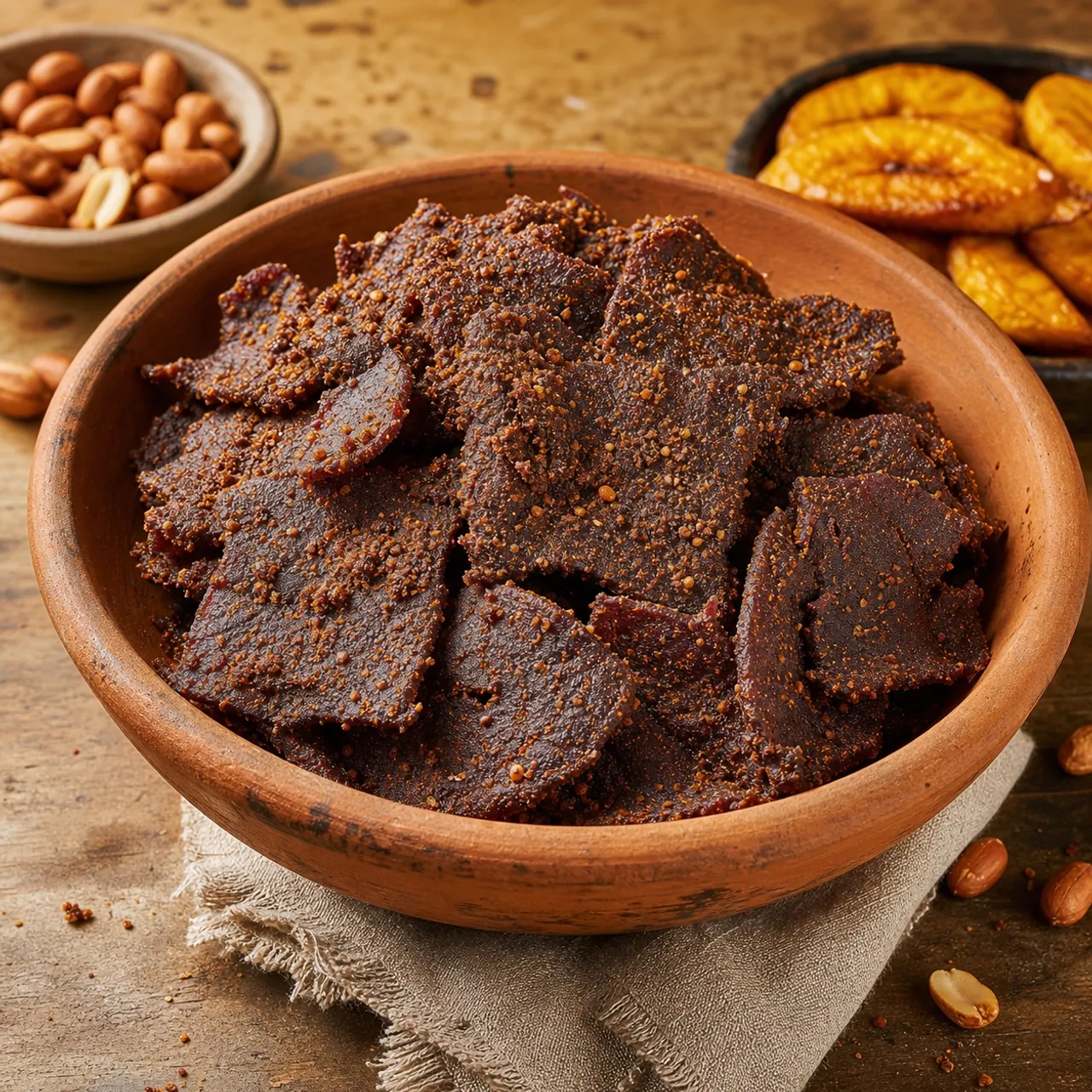
 West African Images are for illustrative purposes only, may be inaccurate, and do not guarantee the presence or absence of specific ingredients.
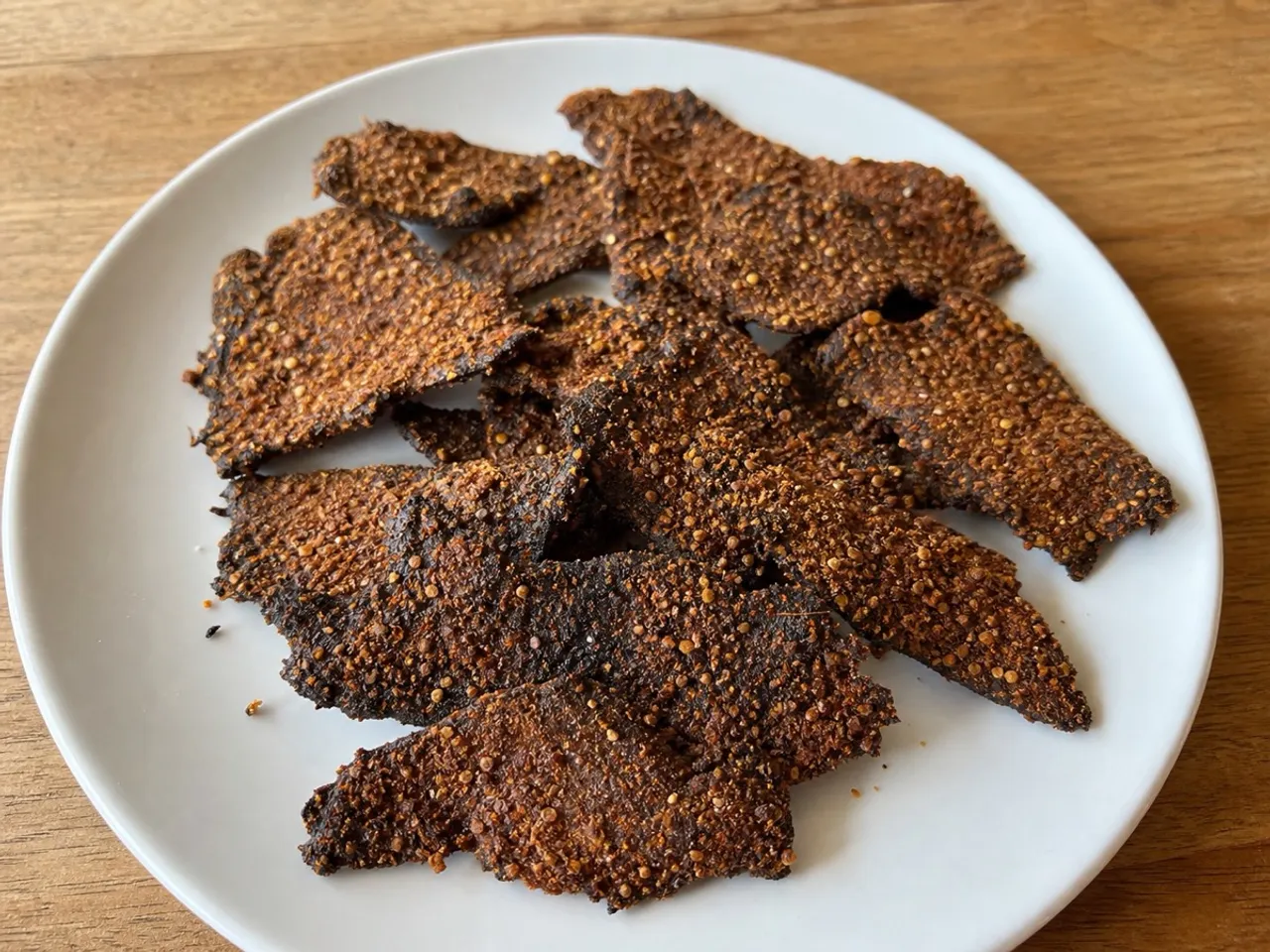 Serving Images are for illustrative purposes only, may be inaccurate, and do not guarantee the presence or absence of specific ingredients.
Kilishi
Nigeria's answer to jerky — thinly sliced beef coated in a paste of peanuts, spices, and chile, then sun-dried and grilled to intensely flavored, chewy perfection.
Contains common allergens
In the app, Listahan checks these against your household automatically.
Instructions
7 steps- 1
Freeze the beef for 30 minutes to firm it up, then slice it with the grain into paper-thin sheets, about 1/8 inch thick.
- 2
Lay the beef sheets flat on wire racks and dry in a low oven, 170F, or in full sun for 3 to 4 hours, until firm but still pliable.
- 3
Whisk the ground peanuts, ginger, cloves, cayenne, garlic powder, crushed bouillon, and salt with the water into a thick, spreadable paste.
- 4
Coat both sides of each dried beef sheet generously with the peanut paste, working it into the surface with your hands.
- 5
Return the coated sheets to the racks and dry again for another 2 to 3 hours, until the paste sets into a firm crust.
- 6
Grill the kilishi over hot charcoal or under a broiler for 1 to 2 minutes per side, until the spice crust is toasted and fragrant but not burnt.
- 7
Let cool completely before storing in an airtight container; the kilishi keeps at room temperature for weeks.
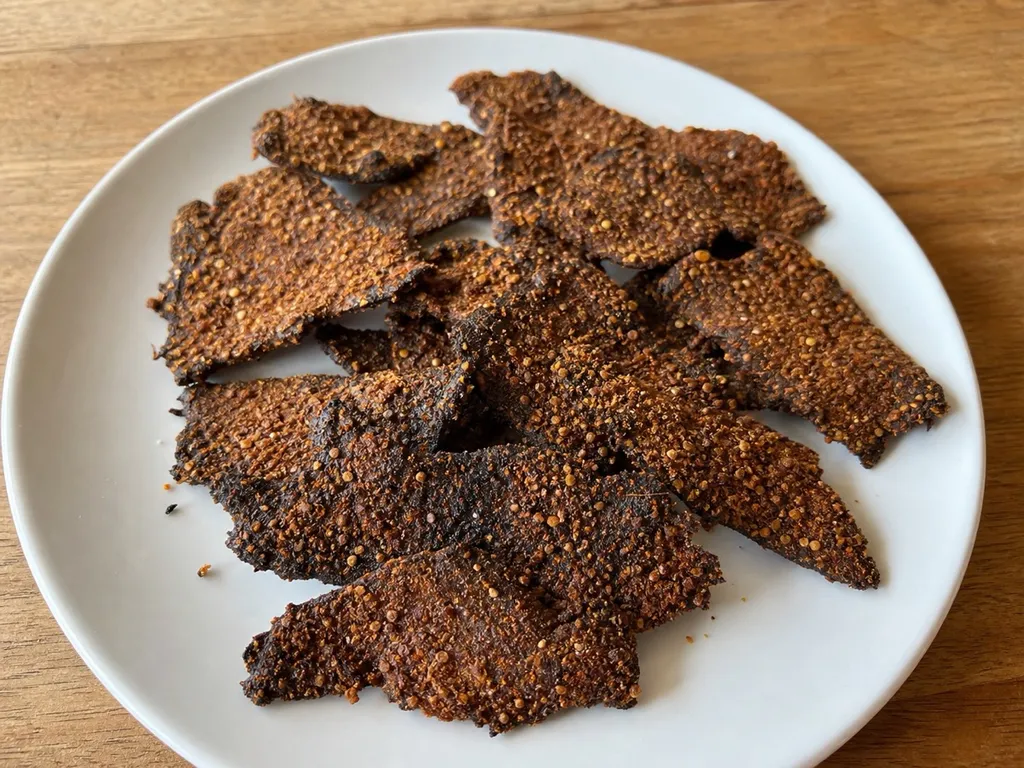 Images are for illustrative purposes only, may be inaccurate, and do not guarantee the presence or absence of specific ingredients.
Listahan Family Score™
64/100
Works for many families
Score reflects how well this recipe fits a typical busy household. In the app, your Family Score is personalized to your household's allergens, kids, and pantry.
Nutrition
per serving465
Calories
45 g
Protein
4 g
Carbs
27 g
Fat
Estimated per serving. Actual values depend on the brands and portions you use.
Listahan cooking guide
Chef notes & practical guide
Technique notes, ingredient swaps, serve-alongside ideas, storage guidance, and equipment for this recipe.
Cultural context
Kilishi is northern Nigeria's spiced dried beef, often called the Hausa answer to jerky, but built around a peanut-spice paste that sets it apart. Thin sheets of beef are sun-dried, coated in a slurry of ground peanuts, spices, and seasonings called labu, then briefly roasted to set the coating. The result is a deeply flavored, long-keeping snack tied to the cattle-herding traditions of the savanna.
Listahan note
This version slices the beef paper-thin, dries it, then coats it in a peanut-and-spice labu before a final roast, the steps that distinguish kilishi from plain jerky. It is built as a make-ahead snack with serious depth.
Technique cues
- Slice the beef as thin as you can, almost translucent, since thickness is what determines whether kilishi dries properly or stays leathery.
- Soak the dried sheets in the peanut-spice labu so the paste penetrates rather than just coating the surface, which is what gives kilishi its flavor.
- Roast only briefly at the end to set the coating; overdo it and the peanut paste scorches and turns bitter.
Kitchen flow
- Parallel prep
- Mix the peanut-spice labu while the sliced beef takes its first dry, so the paste is ready the moment the sheets are firm.
- Make-ahead
- Kilishi is built to be made ahead; finished and fully dried, it keeps for weeks in an airtight jar.
- Leftover move
- Crumble kilishi over rice or into a stew for an instant savory, peanutty boost.
- Cleanup rhythm
- Wash the blender right after making the labu, since the peanut paste dries hard and sticky on the blades.
Ingredient brief
Role, handling, and swap guidance for each key ingredient.
lean beef
the protein base
Purpose: Lean beef sliced thin dries into the firm, chewy sheets that hold the spice paste.
Handling: Trim all fat and slice paper-thin against the grain, then dry until firm.
Adaptation: Lean cuts of goat work, though beef is traditional.
ground peanuts (groundnut paste)
signature coating
Purpose: The peanut paste is the defining element of the labu, giving kilishi its nutty richness unlike ordinary jerky.
Handling: Blend roasted peanuts into a slurry with spices and a little water.
Adaptation: Sunflower-seed butter offers a nut-free coating for those with peanut allergies, though the flavor differs.
ground ginger and chili
warming spice
Purpose: Dried ginger and chili give the labu its warmth and gentle heat.
Handling: Grind and blend into the peanut slurry.
Adaptation: Adjust the chili down or up to taste; cayenne works for the heat.
ground spices and bouillon
savory seasoning
Purpose: A mix of savory spices and seasoning gives the labu its deep, addictive flavor.
Handling: Blend into the slurry so the coating is evenly seasoned.
Adaptation: A homemade spice blend lets you control the salt and additives.
Technique notes
- Dry the beef in a low oven or dehydrator if sun-drying is not practical, keeping the temperature low so it dries rather than cooks.
- Make sure the kilishi is fully dry before storing; any residual moisture shortens its shelf life sharply.
- Let the labu-coated sheets rest a few minutes before the final roast so the paste adheres and does not slide off.
Ingredient swaps
- Peanut-free direction
- Coat the beef in a sunflower-seed or tahini-based labu so peanut-allergic households can enjoy it.
- Lower-sodium direction
- Build the labu with a homemade spice blend and minimal added bouillon to control the salt.
- Lower-heat direction
- Cut the chili in the labu and lean on ginger and savory spices for a milder snack.
Serve alongside
- Sliced fresh tomato and onion
- Plain white rice
- Roasted plantain
- A simple green salad
- Chilled kunu
- Cold zobo
- Cold malt drink
Serving suggestions only — check pairings for your household's allergens.
Storage & reheating
- Store fully dried kilishi in an airtight jar at room temperature for up to two weeks, or refrigerate for longer keeping. Keep it away from moisture, which causes it to soften and spoil. It freezes well in sealed bags for a month or more and needs no thawing to eat.
Equipment
- Sharp knife or slicer for thin slicing
- Dehydrator or low oven
- Blender for the peanut labu
- Wire racks for drying
Make this household-aware
Listahan Pro checks this recipe against your household's allergens, finds pantry-aware swaps, builds the shopping list, and helps you plan the week around it.
Plan it in Listahan
Add Kilishi to your week, check it against your household's allergens, and build the shopping list automatically.
More West African recipes
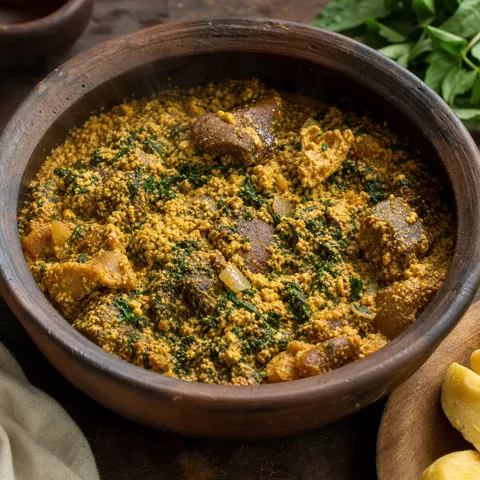 West African Lens Verified Images are for illustrative purposes only, may be inaccurate, and do not guarantee the presence or absence of specific ingredients.
Egusi Soup
Ground melon seeds simmered with palm oil, leafy greens, and bold spices into a rich, nutty stew that's a cornerstone of Nigerian home cooking.
 West African Lens Verified Images are for illustrative purposes only, may be inaccurate, and do not guarantee the presence or absence of specific ingredients.
Banku
A smooth, slightly tangy Ghanaian dough of fermented corn and cassava, cooked to a stretchy consistency — the perfect partner for okra stew or grilled tilapia.
 West African Lens Verified Images are for illustrative purposes only, may be inaccurate, and do not guarantee the presence or absence of specific ingredients.
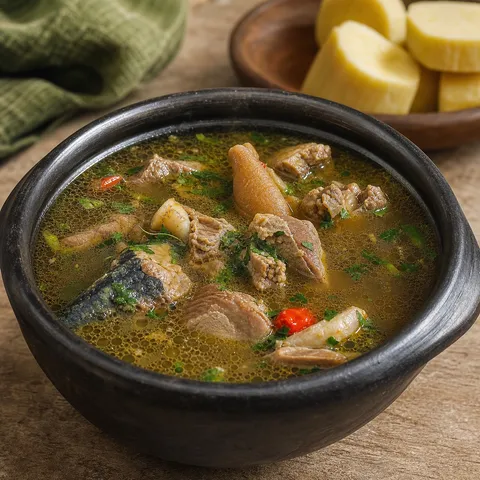
Pepper Soup
A piercingly spiced, crystal-clear broth simmered with goat meat or catfish and a blend of earthy Nigerian spices — warming, restorative, and intensely aromatic.