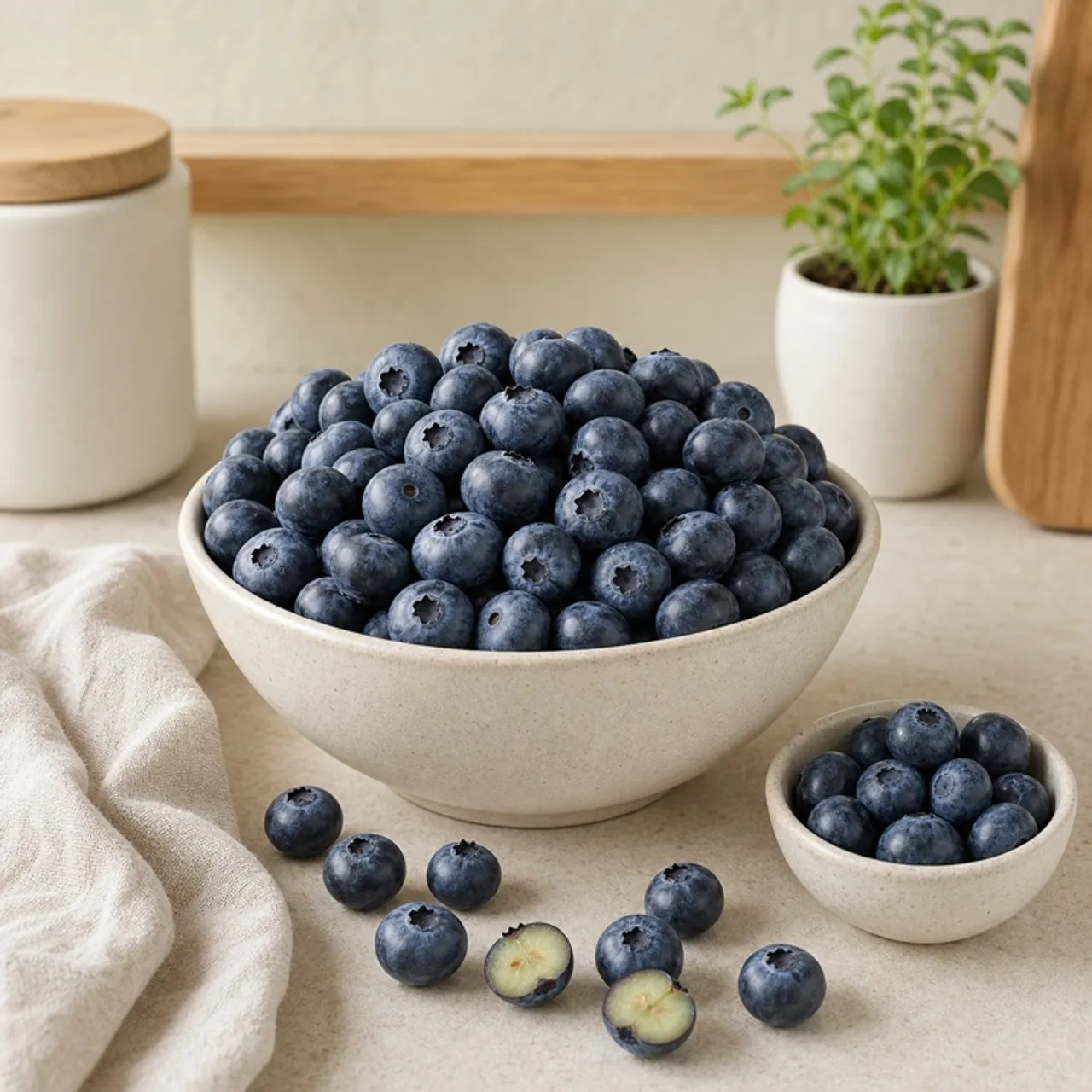
 Food Lens Images are for illustrative purposes only, may be inaccurate, and do not guarantee the presence or absence of specific ingredients.
 Food Lens · Produce
Blueberries
Sweet with a gentle tartness and a subtle earthy, floral background note; wild/lowbush blueberries are more intensely flavored than cultivated highbush varieties.
Lens VerifiedBlueberries are small, sweet-tart berries native to North America, eaten fresh, folded into baked goods, stirred into oatmeal and yogurt, or used in sauces and preserves in both sweet and savory applications.
Where it comes from
Blueberries are one of the few fruits commercially produced and native to North America, with wild blueberries harvested by Indigenous peoples across the eastern part of the continent long before European contact. They were used dried, fresh, and cooked in pemmican and stews as a food staple. Commercial cultivation was pioneered in the early 1900s in New Jersey, and production grew dramatically through the 20th century. Today the United States and Canada are the world's largest producers, and blueberries have become a beloved everyday fruit across North America and well beyond.
Varieties — Highbush blueberries are the most common supermarket variety — large, plump, and mild. Lowbush (wild) blueberries are smaller, more intensely flavored, and often sold frozen. Rabbiteye blueberries thrive in the American South. Wild blueberries from Maine and Canada are highly prized for baking.
Blueberries are deeply rooted in Indigenous North American food traditions — Mi'kmaq and other nations dried them for winter stores and traded them. Today they star in American and Canadian summer baking traditions from blueberry pie to grunt (a Maritime steamed berry dessert).
In a modern kitchen — Do not wash blueberries until just before eating — moisture speeds deterioration. Store dry in the refrigerator for up to 10 days. Frozen blueberries are excellent for baking and smoothies — use straight from the freezer in batter to prevent bleeding, or thaw and drain for compotes.
Buying it
Choose plump, firm blueberries with a consistent deep-blue to purple-black color and a silver-grey bloom (the waxy coating is natural and desirable — don't wipe it off). Avoid berries that are soft, shriveled, or stained red, which indicates underripeness. Shake the container — berries should move freely, not clump together.
Storing it
Store unwashed in the fridge, ideally in a container lined with a paper towel to absorb moisture. Rinse just before eating — washing early speeds mold growth. Use within about a week.
Keeps about 7 days in the fridge.
In season
Peak season is June–August, though it's available year-round.
Grown locally June-August in much of North America; imports keep blueberries available most of the year.
Out of blueberries? Good swaps
- Blackberries — Larger and tarter; use 1:1 in baking and compotes — chop or halve for more even distribution
- Cherries (pitted) — Sweeter and juicier; use same amount in pies, compotes, and sauces
- Frozen blueberries — Perfect 1:1 swap for fresh in baked goods and smoothies — add directly from frozen to batter to reduce staining
General cooking guidance — always check the labels on the products you use. Listahan’s allergen checks run automatically when you plan a recipe in the app. Not medical advice.
Recipes that use blueberries
Common questions about blueberries
Is blueberries vegan?
Blueberries is generally plant-based and suitable for a vegan diet, but brands differ — confirm on the label.
What can I use instead of blueberries?
Good swaps include Blackberries, Cherries (pitted), Frozen blueberries. Each behaves a little differently — see the swaps above for notes, and always check labels for allergens.
How do I store blueberries?
Store unwashed in the fridge, ideally in a container lined with a paper towel to absorb moisture. Rinse just before eating — washing early speeds mold growth. Use within about a week. It keeps about 7 days in the fridge.
More produce
See all


Make blueberries about your kitchen — with Listahan Pro
Everything above is free, forever. Pro adds the Household Lens — the same food, seen for your family:
-
Checked for each member
Flags blueberries per person against your household's allergies and school rules — not just a generic "contains" tag.
-
Pantry-aware
Knows whether you already have it, what is running low, and the best swap from what is in your kitchen tonight.
-
What it costs near you
A real price from the Presyo community index, so you can plan the budget — not guess.
-
Your household memory
Who likes it, plus your own private notes — brand, where you keep it, who skips it.
Allergen safety is always free — Pro adds the automation, never the safety.
Cook with blueberries — safely
Plan a recipe in Listahan and the household allergen check runs automatically — every plan, every swap, every lunchbox. Safety is never paywalled.