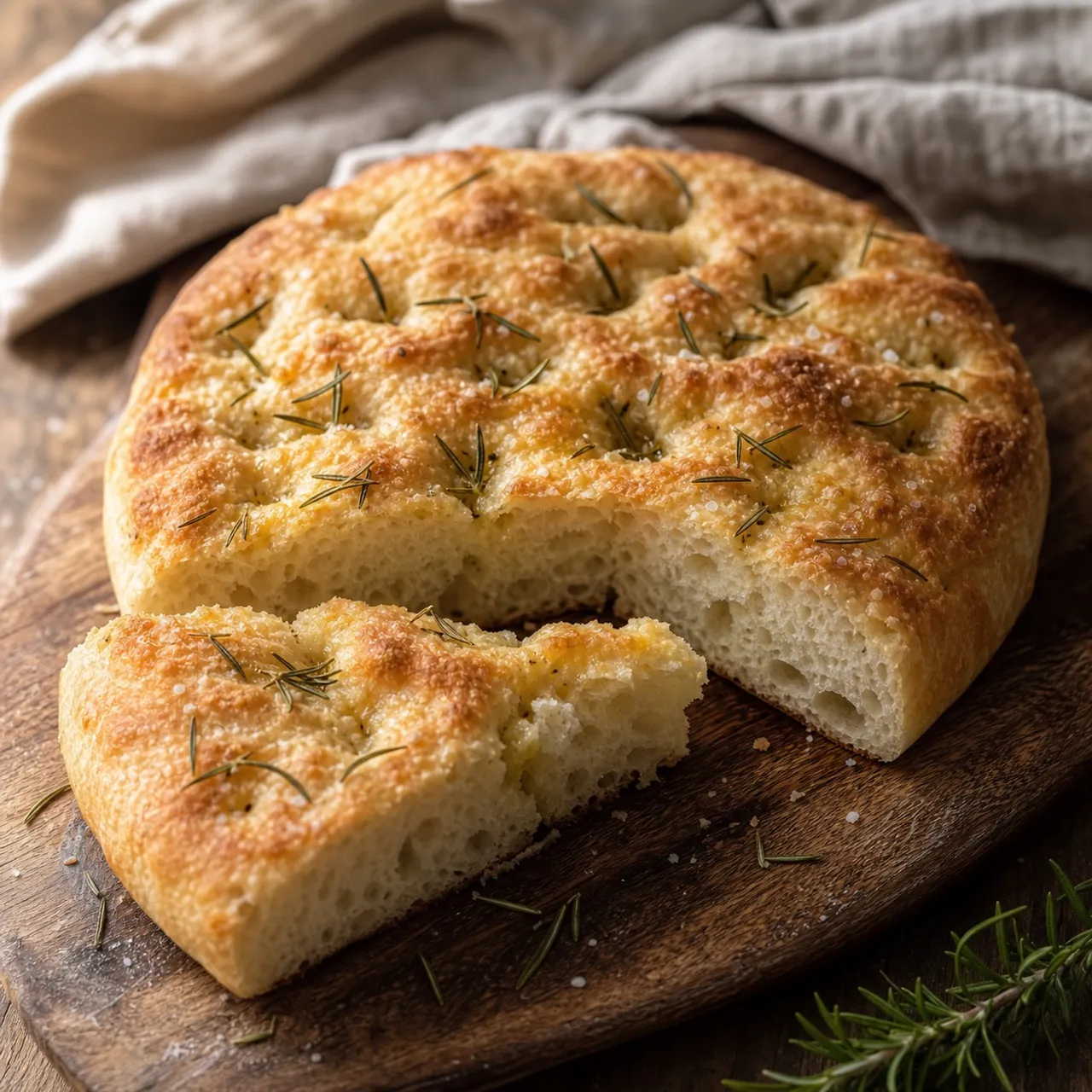
 Breads Images are for illustrative purposes only, may be inaccurate, and do not guarantee the presence or absence of specific ingredients.
 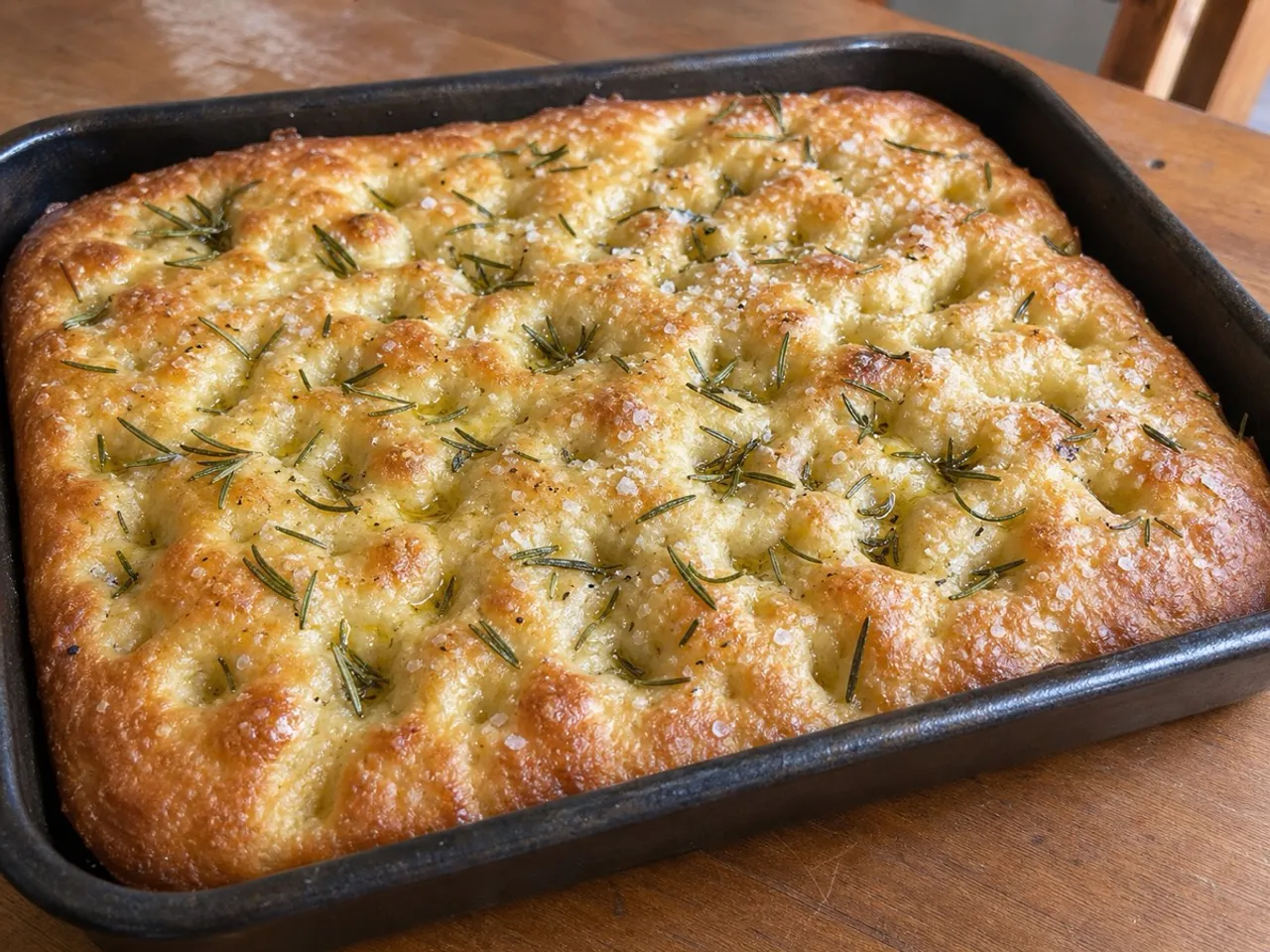 Serving Images are for illustrative purposes only, may be inaccurate, and do not guarantee the presence or absence of specific ingredients.
 Rosemary Focaccia
A pillowy, olive-oil-rich Italian flatbread dimpled with fingertips and topped with rosemary and flaky salt.
Contains common allergens
In the app, Listahan checks these against your household automatically.
Instructions
8 steps- 1
Whisk warm water, yeast, and sugar; let stand 5 minutes until foamy.
- 2
Add flour, salt, and 2 tablespoons olive oil; mix and knead 8 minutes into a wet, sticky dough.
- 3
Coat a bowl with 1 tablespoon olive oil, add dough, cover, and rise 1.5 hours until doubled.
- 4
Pour 2 tablespoons olive oil into a 9x13-inch pan, transfer dough on top, and stretch gently to fill the pan.
- 5
Cover and let rest 30 minutes until puffy.
- 6
Preheat oven to 425°F (220°C). Dimple the dough all over with oiled fingertips.
- 7
Drizzle remaining 1 tablespoon olive oil over the top, scatter rosemary and flaky salt into the dimples.
- 8
Bake 22-25 minutes until deep golden brown; cool 10 minutes in the pan before slicing.
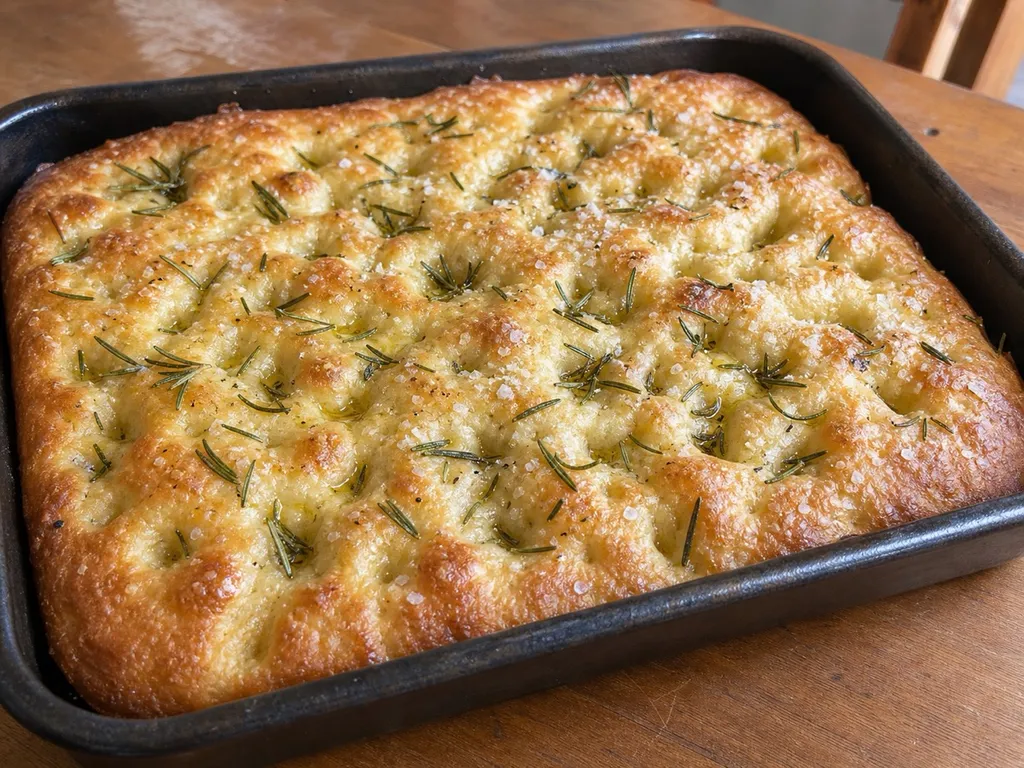 Images are for illustrative purposes only, may be inaccurate, and do not guarantee the presence or absence of specific ingredients.
 Listahan Family Score™
71/100
Good fit for most families
Score reflects how well this recipe fits a typical busy household. In the app, your Family Score is personalized to your household's allergens, kids, and pantry.
Nutrition
per serving215
Calories
4 g
Protein
33 g
Carbs
7 g
Fat
Estimated per serving. Actual values depend on the brands and portions you use.
Listahan cooking guide
Chef notes & practical guide
Technique notes, ingredient swaps, serve-alongside ideas, storage guidance, and equipment for this recipe.
Cultural context
Focaccia is an Italian flatbread closely associated with Liguria, especially around Genoa, where olive oil, salt, and a well-dimpled surface are central to the bread. Rosemary-topped versions are common in home kitchens and bakeries because the herb can handle high heat and perfumes the oil that settles into the dough.
Listahan note
This version prioritizes a wet, olive-oil-rich dough and a 9x13-inch pan, which gives a thick, soft focaccia with a crisp golden bottom. The timing is practical for a same-day bake without losing the puffy crumb that makes focaccia worth making at home.
Technique cues
- A sticky dough is correct here. Extra flour makes focaccia easier to handle but less pillowy after baking.
- Use the pan oil generously and spread the dough gently. The oil helps fry the bottom while the dough rises, creating the contrast between crisp edges and soft interior.
- Dimple with oiled fingertips all the way down toward the pan, but do not tear the dough. Those pockets catch olive oil, rosemary, and flaky salt.
Kitchen flow
- Parallel prep
- While the dough does its first rise, clear the counter, oil the baking pan, and strip the rosemary leaves so shaping is calm and quick.
- Make-ahead
- Mix and complete the first rise earlier in the day, then pan the dough and let it puff before baking when you want it warm.
- Leftover move
- Split leftover squares and toast them cut-side down for sandwiches, or cube them for crisp croutons in tomato soup.
- Cleanup rhythm
- Wipe oily bowls and measuring spoons with a paper towel before washing; soak the baking pan once the slices are out.
Ingredient brief
Role, handling, and swap guidance for each key ingredient.
Bread flour
Structure and chew
Purpose: Bread flour gives the dough enough strength to hold a high amount of water and still rise tall in the pan.
Handling: Measure by weight if possible, then mix until no dry patches remain before kneading.
Adaptation: All-purpose flour works, but the crumb will be a little softer and less chewy.
Warm water
Hydration base
Purpose: The high water amount is what makes the focaccia open, tender, and slightly glossy inside.
Handling: Use water that feels warm, not hot, so the yeast can wake up without being stressed.
Adaptation: Cooler water works with a longer rise; hot water can weaken the dough before it starts.
Instant yeast
Leavening
Purpose: Instant yeast gives the dough reliable lift during the long first rise and shorter pan rise.
Handling: Whisk it with warm water and sugar so you can see activity before adding the flour.
Adaptation: Active dry yeast can be used in the same amount, but give it the full foaming step before mixing the dough.
Olive oil, divided
Flavor and crust builder
Purpose: Olive oil enriches the dough, coats the pan, and helps the top bake into a fragrant, lightly crisp surface.
Handling: Use the measured oil in stages: some in the dough, some in the bowl, some in the pan, and the last drizzle on top.
Adaptation: A lighter olive oil gives a milder bread; a more peppery extra-virgin oil makes the flavor more pronounced.
Fresh rosemary leaves
Herbal topping
Purpose: Rosemary stands up to the hot oven and seasons the oil that pools in the dimples.
Handling: Strip the leaves from the stems and scatter them evenly so no one slice gets a harsh clump.
Adaptation: Dried rosemary can work in a smaller amount; rub it between your fingers first so the pieces are less woody.
Technique notes
- Knead until the dough looks stretchy and tacky rather than smooth like sandwich bread dough. Focaccia dough should still cling a bit.
- When stretching into the pan, stop if the dough snaps back. Let it rest 5 minutes, then continue so you keep the bubbles you have built.
- Bake to a deep golden brown, not pale yellow. The color is what gives the bottom and edges their best texture.
Ingredient swaps
- Gluten-free direction
- Use a gluten-free bread flour blend designed for yeast doughs, and expect a softer, less elastic dough that may need gentler spreading.
- Lower-salt direction
- Reduce the flaky sea salt on top first rather than cutting the salt in the dough, since dough salt affects flavor and structure.
- Herb variation
- Use thyme leaves or thinly sliced garlic instead of rosemary for a different aroma, but keep toppings light so they do not weigh down the rise.
- Weeknight shortcut
- Use a stand mixer for the kneading step, stopping when the dough pulls into a sticky, stretchy mass around the hook.
Serve alongside
- Ribollita
- Minestrone with white beans
- Caprese salad
- Roasted pepper and white bean salad
- Sparkling water with lemon
- Pinot grigio
- Unsweetened iced tea
Serving suggestions only — check pairings for your household's allergens.
Storage & reheating
- Refrigerate cooled slices tightly wrapped or sealed; the crumb will firm up but can be revived with heat.
- Reheat in a 350°F oven or toaster oven until the edges crisp and the center warms through.
- Freeze sliced focaccia in a sealed bag, then thaw at room temperature and reheat in the oven for the best texture.
Equipment
- Large mixing bowl
- 9x13-inch metal baking pan
- Flexible dough scraper
- Pastry brush
Make this household-aware
Listahan Pro checks this recipe against your household's allergens, finds pantry-aware swaps, builds the shopping list, and helps you plan the week around it.
Plan it in Listahan
Add Rosemary Focaccia to your week, check it against your household's allergens, and build the shopping list automatically.
More Breads recipes
Rice Crust for Quiches or Pies
A simple pressed crust made from cooked rice that holds savory quiche and pie fillings beautifully.
 Breads Lens Verified Images are for illustrative purposes only, may be inaccurate, and do not guarantee the presence or absence of specific ingredients.
 Kentucky Biscuits
Tall, flaky Southern-style biscuits with a tender crumb, perfect with butter and jam.
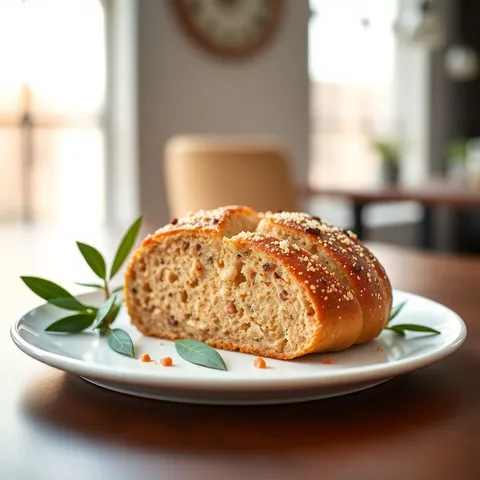 Breads Lens Verified Images are for illustrative purposes only, may be inaccurate, and do not guarantee the presence or absence of specific ingredients.
 Bread Machine Sage-Wheat Bread
A fragrant whole-wheat loaf scented with sage and a hint of cornmeal, made effortlessly in a bread machine.