 East African Images are for illustrative purposes only, may be inaccurate, and do not guarantee the presence or absence of specific ingredients.
  Serving Images are for illustrative purposes only, may be inaccurate, and do not guarantee the presence or absence of specific ingredients.
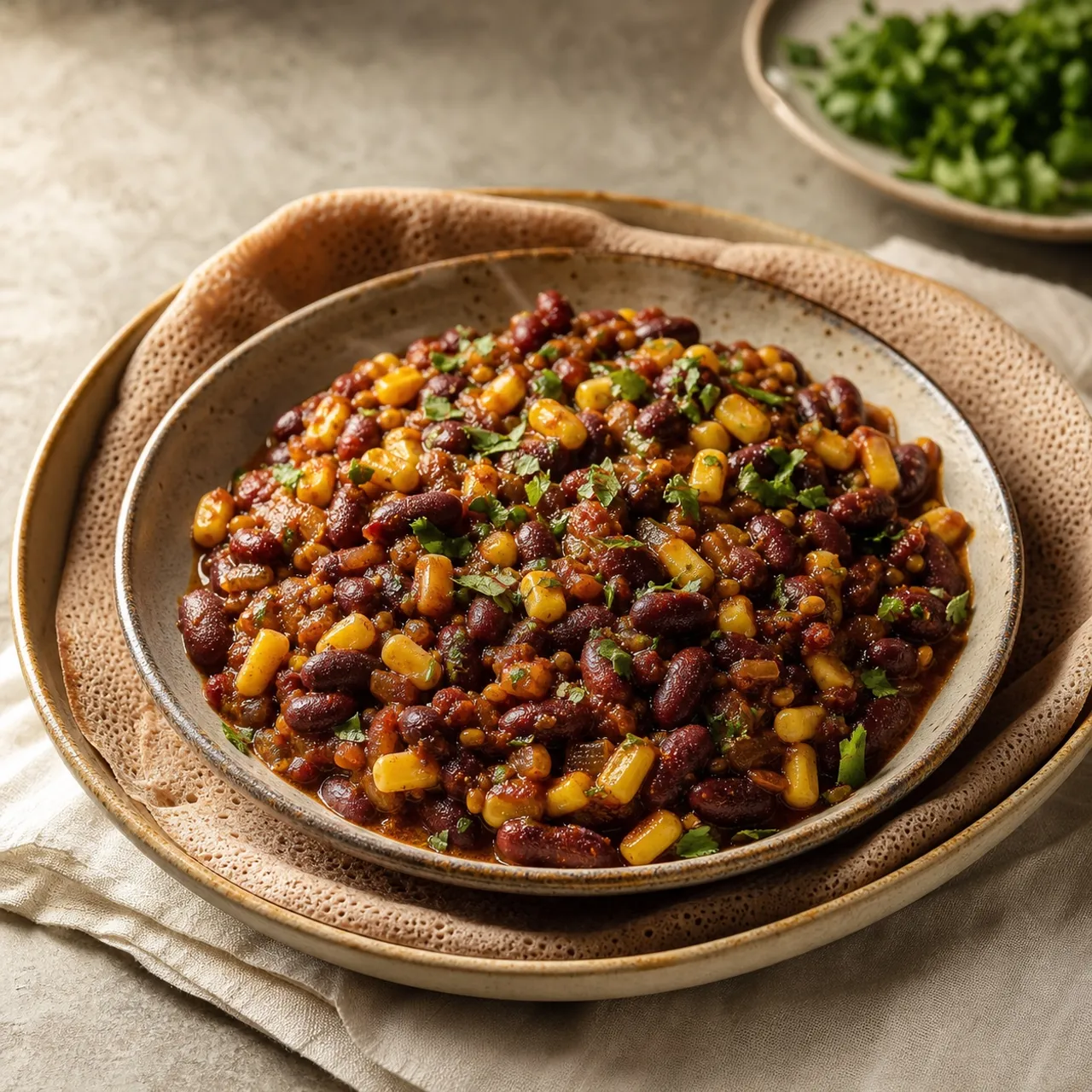
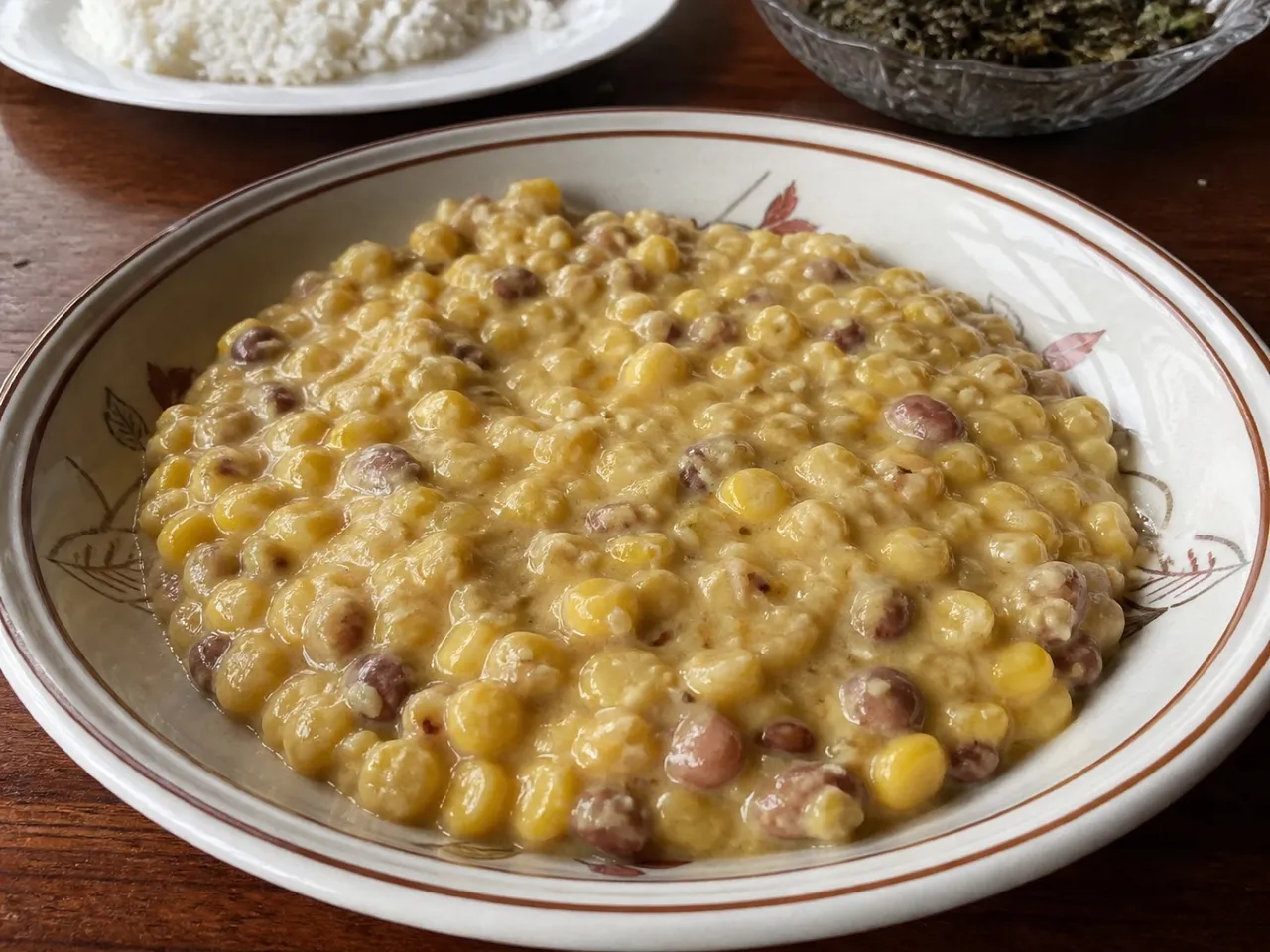
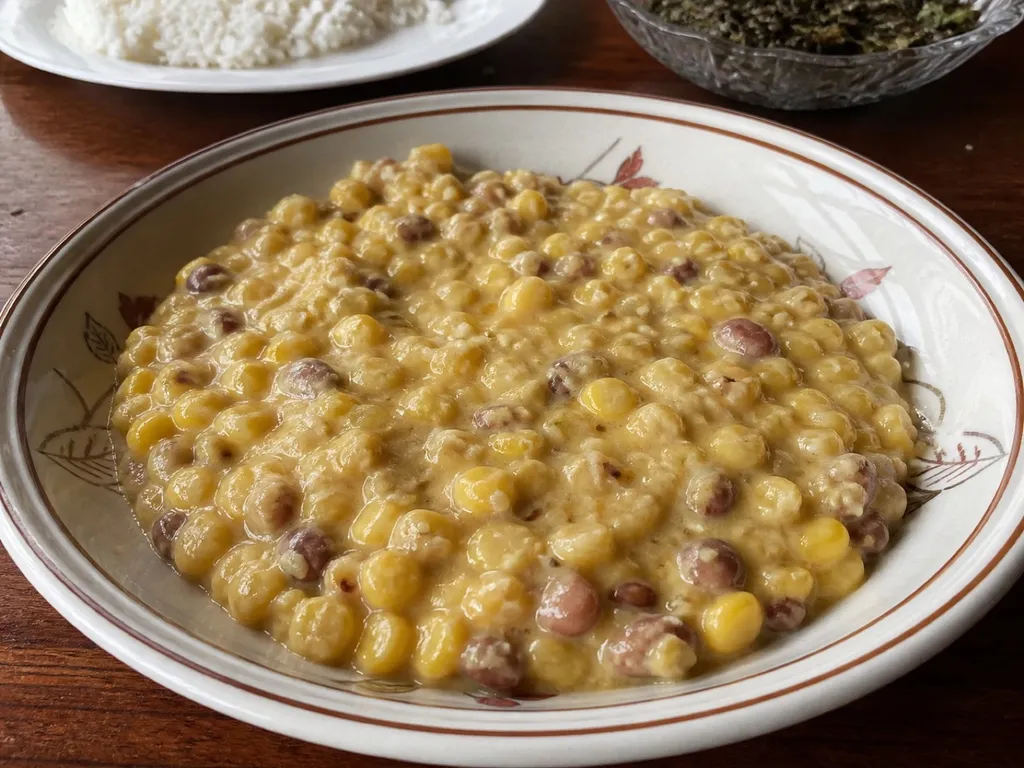
 Makande
Slow-simmered whole maize and beans enriched with coconut milk until the broth turns thick and subtly sweet — a Swahili coastal stew that's warmly satisfying.
No common allergens detected
Based on this recipe's ingredient list. Always verify with your own brands and labels.
Instructions
8 steps- 1
Drain the soaked maize and beans and place in a large pot with enough fresh water to cover generously.
- 2
Bring to a boil, then reduce heat and simmer for 1.5 hours, topping up water as needed, until the maize is tender but still slightly chewy and the beans are soft.
- 3
In a separate pan, heat a little oil and saute the onion for 5 to 7 minutes until soft, then add the garlic, ginger, and curry powder and cook for 1 minute until fragrant.
- 4
Add the tomatoes and cook for 5 minutes until they break down into a sauce.
- 5
Stir the onion and tomato mixture into the pot of maize and beans.
- 6
Pour in the coconut milk and simmer uncovered over low heat for 20 to 25 minutes, stirring occasionally, until the broth thickens and turns rich and creamy.
- 7
Season with salt to taste, adjusting until the coconut sweetness and savory depth are balanced.
- 8
Serve hot in bowls as a warming, substantial coastal stew.
 Images are for illustrative purposes only, may be inaccurate, and do not guarantee the presence or absence of specific ingredients.
 Listahan Family Score™
73/100
Good fit for most families
Score reflects how well this recipe fits a typical busy household. In the app, your Family Score is personalized to your household's allergens, kids, and pantry.
Nutrition
per serving220
Calories
2 g
Protein
6 g
Carbs
23 g
Fat
Estimated per serving. Actual values depend on the brands and portions you use.
Listahan cooking guide
Chef notes & practical guide
Technique notes, ingredient swaps, serve-alongside ideas, storage guidance, and equipment for this recipe.
Cultural context
Makande is a Kenyan coastal dish, particularly associated with the Swahili communities of Mombasa and the surrounding coast, where coconut is a kitchen staple. It is essentially githeri (maize and beans) finished with coconut milk, which transforms the plain boiled grain dish into something richer and slightly sweet. The combination reflects the Indian Ocean trade influence on coastal East African cooking, where coconut-based cooking techniques arrived with Yemeni, Indian, and Indonesian traders centuries ago.
Listahan note
This version stirs in the coconut milk only in the last 15 minutes of cooking so it thickens into a creamy coating for the grains rather than diluting into a thin broth.
Technique cues
- Like githeri, the dried maize requires a full overnight soak and a long cooking time; the coconut milk cannot compensate for under-cooked kernels, so fully tender grains before adding the coconut milk are non-negotiable.
- Shake the coconut milk can well before opening since the cream separates to the top; adding unmixed coconut milk produces an uneven, greasy sauce rather than a uniform creamy finish.
- Simmer the coconut milk over medium heat rather than boiling it hard; vigorous boiling breaks the emulsion and causes the fat to separate into greasy pools on the surface of the stew.
Kitchen flow
- Parallel prep
- Start the maize and beans boiling first, then dice the onion and measure the coconut milk while the grains cook through their long simmer.
- Make-ahead
- Cook the maize and beans completely in advance and refrigerate; finish with the onion sofrito and coconut milk just before serving in under 20 minutes.
- Leftover move
- Thin leftover makande with a splash of broth or water and serve it as a warm breakfast porridge-style dish with a soft-boiled egg on top.
- Cleanup rhythm
- One large pot handles everything from start to finish; deglaze while hot to prevent the coconut milk from sticking to the bottom.
Ingredient brief
Role, handling, and swap guidance for each key ingredient.
1.5 cups dried whole maize kernels (soaked overnight)
primary starch and body
Purpose: Dried whole maize provides the chewy, corn-forward base of the dish and the starch that gives the coconut sauce something substantial to cling to.
Handling: Drain and rinse after soaking, then cover with fresh water and cook until fully tender before the coconut milk is added.
Adaptation: Canned hominy (drained and rinsed) is a shortcut that skips the soaking stage and reduces total cook time to under 30 minutes.
1.5 cups dried red kidney beans (soaked overnight)
protein and creaminess
Purpose: Kidney beans add protein, a creamy interior, and a slight earthiness that balances the sweetness of the coconut milk.
Handling: Soak separately if possible so you can adjust cooking times; kidney beans typically cook faster than dried maize.
Adaptation: Canned black beans (rinsed) can substitute for the dried beans, adding them 10 minutes before the coconut milk.
1 can (400ml) coconut milk
creamy sauce and sweetness
Purpose: Coconut milk is the defining ingredient that distinguishes makande from plain githeri, providing sweetness, richness, and the characteristic creaminess of Swahili coastal cooking.
Handling: Shake well before opening and stir continuously for the first minute after adding to prevent the fat from separating.
Adaptation: Coconut cream (thinned with a quarter cup of water) gives a richer, more intensely coconut-flavored sauce for those who want more coconut presence.
1 onion (diced)
aromatic base
Purpose: Sauteed onion builds the savory foundation of the dish and prevents makande from tasting purely sweet and flat.
Handling: Cook until golden and translucent before adding the cooked grains; pale, undercooked onion does not contribute enough sweetness or depth.
Adaptation: Three shallots give a milder, more delicate sweetness and work particularly well with the coconut milk.
Technique notes
- If the maize and beans are fully cooked but the pot has too much liquid, drain some off before adding the coconut milk so the final sauce concentrates properly rather than staying thin and watery.
- Add a pinch of turmeric with the onion for a golden color that echoes the Swahili coastal spice tradition without significantly altering the flavor.
- The dish thickens considerably as it cools; add a few tablespoons of water when reheating to bring it back to a saucy consistency.
Ingredient swaps
- Vegan direction
- The dish is naturally vegan as written; all ingredients are plant-based.
- Light coconut milk option
- Use light coconut milk for a lower-fat version; the sauce will be thinner, so simmer uncovered for an extra 5 minutes to concentrate it.
- Gluten-free direction
- All ingredients are naturally gluten-free; this dish is inherently safe for gluten-free diets.
Serve alongside
- grilled whole fish with tamarind-chili glaze
- sukuma wiki (sauteed collard greens with tomato and garlic)
- kachumbari (fresh tomato and onion salad with lime)
- chapati flatbread for scooping
- cold fresh sugarcane juice
- iced hibiscus and ginger water
Serving suggestions only — check pairings for your household's allergens.
Storage & reheating
- Refrigerate in an airtight container for up to 3 days; the coconut sauce thickens significantly when cold.
- Reheat over low heat with a splash of water, stirring frequently to prevent the coconut milk from scorching on the bottom.
- Freeze (without the coconut milk portion if possible) for up to 1 month; the coconut milk can separate after freezing and thawing, though stirring vigorously while reheating usually recombines it.
Equipment
- large pot (5-quart minimum)
- wooden spoon
- colander for draining
- can opener
Make this household-aware
Listahan Pro checks this recipe against your household's allergens, finds pantry-aware swaps, builds the shopping list, and helps you plan the week around it.
Plan it in Listahan
Add Makande to your week, check it against your household's allergens, and build the shopping list automatically.
More East African recipes
 East African Lens Verified Images are for illustrative purposes only, may be inaccurate, and do not guarantee the presence or absence of specific ingredients.
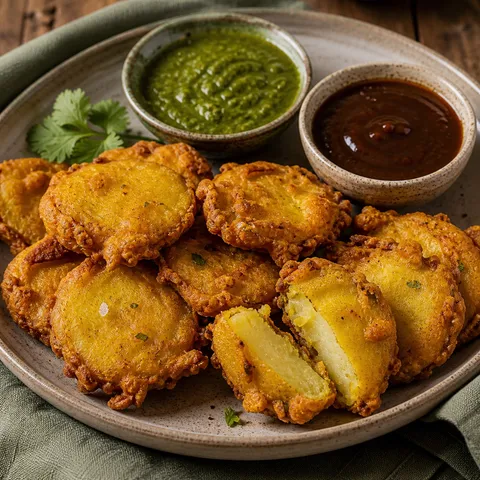
 Viazi Karai
A Zanzibari street favorite of soft boiled potatoes coated in a turmeric-yellow batter and deep-fried until crackling, served with fiery tamarind sauce.
 East African Lens Verified Images are for illustrative purposes only, may be inaccurate, and do not guarantee the presence or absence of specific ingredients.
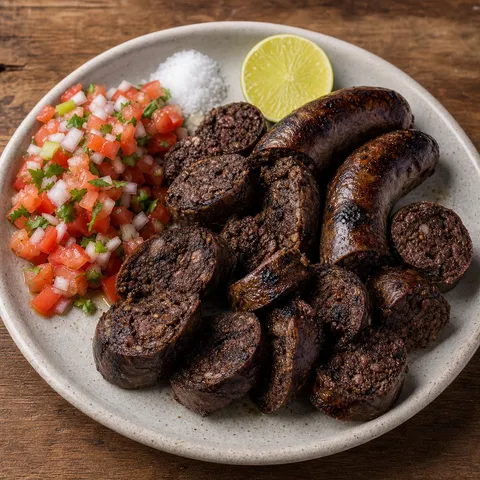
 Mutura
Kenyan spiced blood sausage stuffed with meat, onion, and herbs, then grilled until the casing crisps and snaps — a bold, smoky roadside delicacy.
 East African Lens Verified Images are for illustrative purposes only, may be inaccurate, and do not guarantee the presence or absence of specific ingredients.
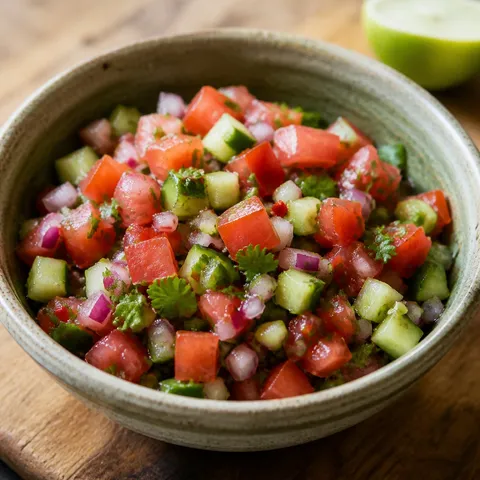
 Kachumbari
Bright, refreshing salad of ripe tomatoes and sharp raw onion, spiked with chili and lime — the cool, crisp counterpoint to rich East African grills.