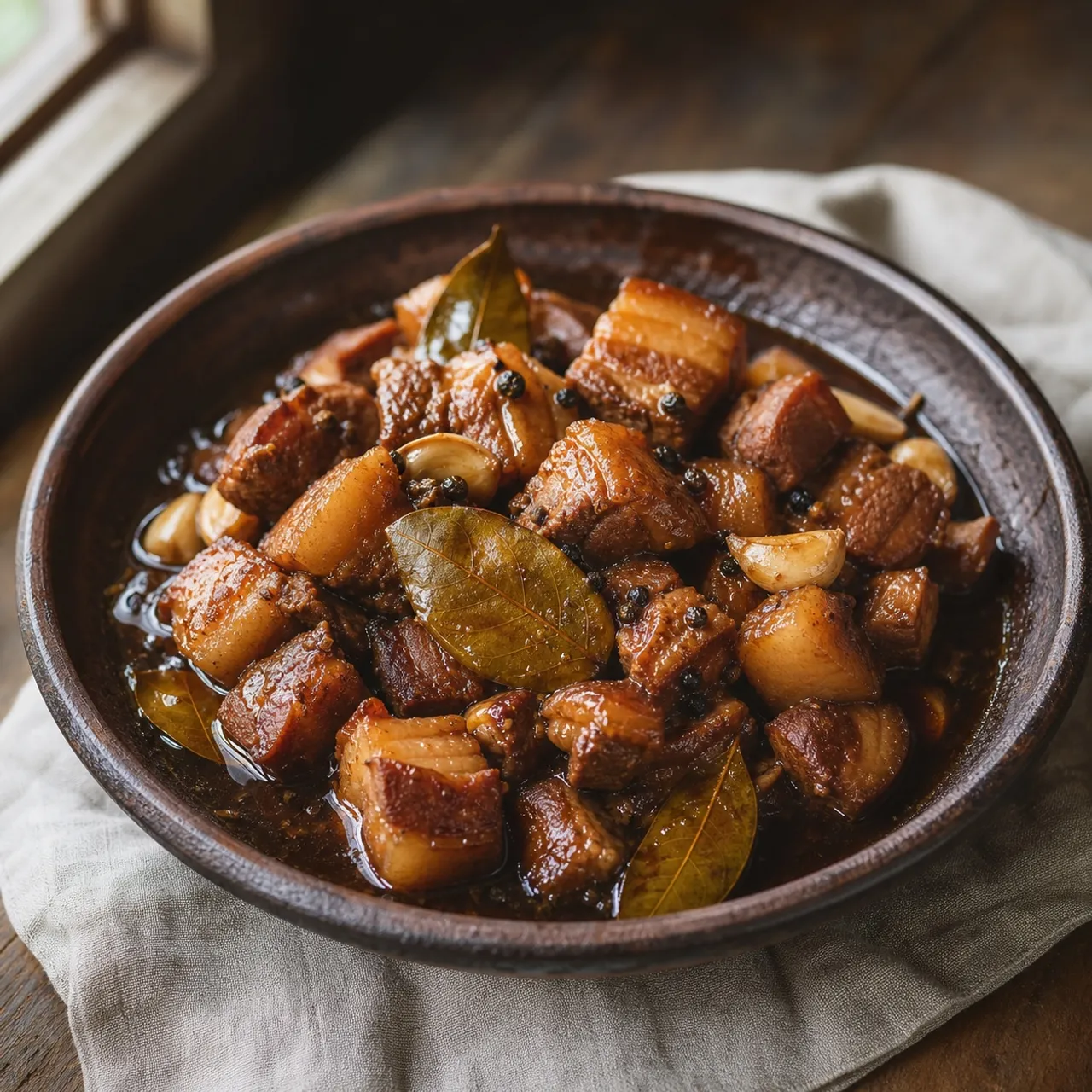
 Filipino Images are for illustrative purposes only, may be inaccurate, and do not guarantee the presence or absence of specific ingredients.
 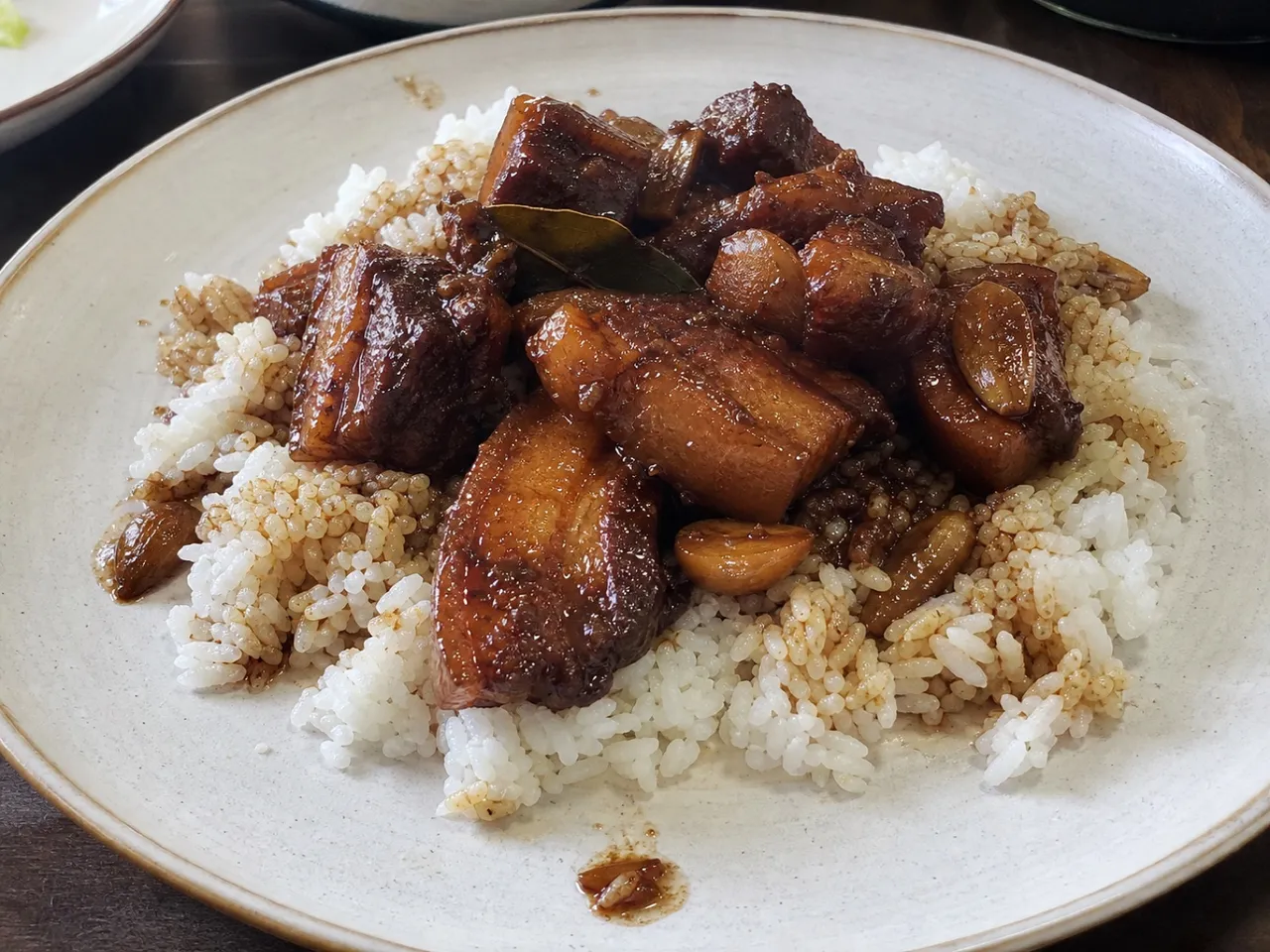 Serving Images are for illustrative purposes only, may be inaccurate, and do not guarantee the presence or absence of specific ingredients.
 Pork Adobo
The quintessential Filipino braise of pork belly simmered in soy sauce, vinegar, garlic, bay, and peppercorns until glossy and tender.
Contains common allergens
In the app, Listahan checks these against your household automatically.
Good to know
- One-pot
Matched from this dish's own ingredients and timing. Browse more: one-pot dinners
Instructions
6 steps- 1
In a bowl, combine the pork belly, soy sauce, smashed garlic, bay leaves, and cracked peppercorns, then marinate at room temperature for 20 minutes while you prep.
- 2
Heat the oil in a heavy pot over medium-high, lift the pork from the marinade (reserve the liquid), and sear the cubes in batches for 4-5 minutes until deeply browned on at least two sides.
- 3
Return all the pork to the pot, pour in the reserved marinade and the water, and bring to a boil before lowering to a gentle simmer.
- 4
Cover and braise for 45 minutes, stirring occasionally, until the pork is fork-tender.
- 5
Pour in the vinegar but do NOT stir for 2 minutes, letting it boil off its raw sharpness, then stir and simmer uncovered for 10-15 minutes until the sauce reduces to a glossy, slightly syrupy glaze that coats the meat.
- 6
Taste and adjust with a splash more soy if needed, then serve hot over steamed white rice with plenty of sauce spooned over.
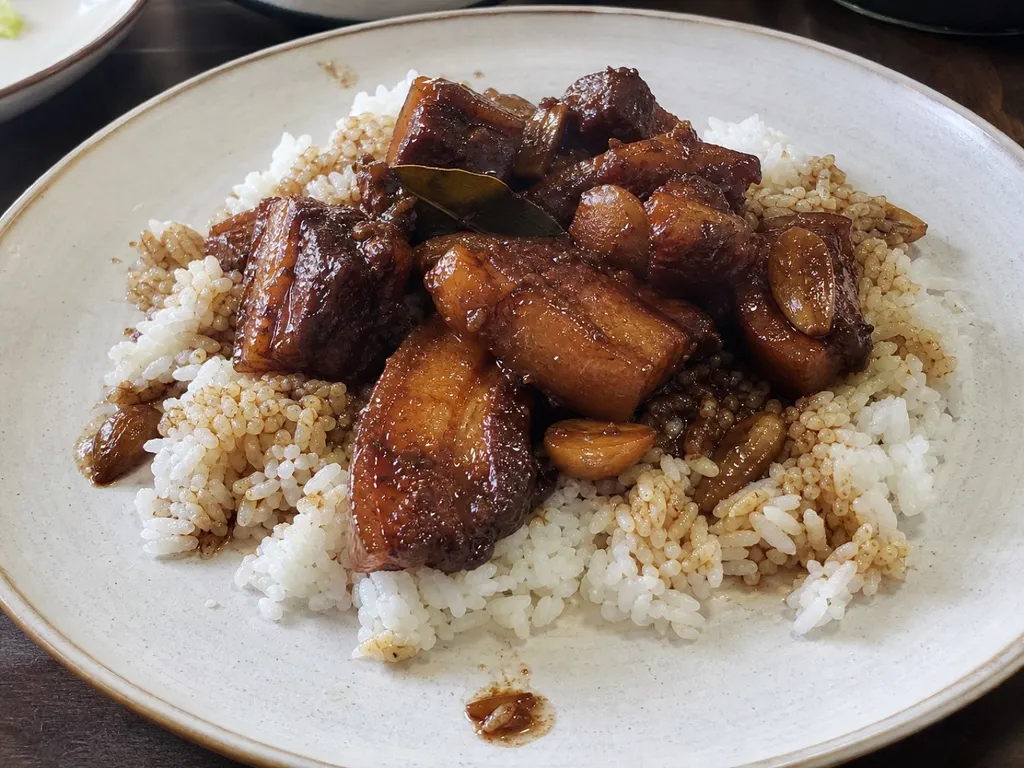 Images are for illustrative purposes only, may be inaccurate, and do not guarantee the presence or absence of specific ingredients.
 Listahan Family Score™
69/100
Works for many families
Score reflects how well this recipe fits a typical busy household. In the app, your Family Score is personalized to your household's allergens, kids, and pantry.
Nutrition
per serving490
Calories
51 g
Protein
4 g
Carbs
28 g
Fat
Estimated per serving. Actual values depend on the brands and portions you use.
Listahan cooking guide
Chef notes & practical guide
Technique notes, ingredient swaps, serve-alongside ideas, storage guidance, and equipment for this recipe.
Cultural context
Pork Adobo is the pork sibling of the Philippines' best-loved dish, belly braised in soy, vinegar, garlic, and bay until the sauce reduces to a glaze. As with chicken adobo, the method, browning, an undisturbed vinegar boil, and a long reduction, is the recipe. The pork's fat makes for an especially rich, lacquered sauce.
Listahan note
This version browns pork belly hard, lets the vinegar boil before stirring, and reduces patiently so the fat and sauce turn glossy and clinging.
Technique cues
- Brown the pork belly well; rendered fat enriches the whole sauce.
- Let the vinegar boil before stirring to round out the sharpness.
- Reduce until the sauce lacquers the pork.
Kitchen flow
- Parallel prep
- Start rice while the pork browns and the sauce reduces.
- Make-ahead
- Adobo deepens overnight; make ahead and reheat gently.
- Leftover move
- Shred leftover pork into garlic rice with a fried egg.
- Cleanup rhythm
- One pan; soak it right after serving so the glaze releases.
Ingredient brief
Role, handling, and swap guidance for each key ingredient.
Pork belly
Main protein
Purpose: Its fat renders into a rich, glossy sauce.
Handling: Cube and brown to render some fat first.
Adaptation: Pork shoulder is leaner but works.
Soy sauce
Salt and umami
Purpose: Builds the dark color and savory backbone.
Handling: Use regular soy for full intensity.
Adaptation: Tamari keeps it gluten-free.
Vinegar
Acid
Purpose: Provides the signature tang and cuts the pork's richness.
Handling: Let it boil before stirring.
Adaptation: Cane or white vinegar both work.
Garlic, bay, and peppercorns
Aromatics
Purpose: Build the deep, home-cooked flavor of adobo.
Handling: Smash the garlic and leave peppercorns whole.
Adaptation: Adjust to taste.
Technique notes
- Render the pork fat well; it is the soul of the sauce.
- Do not stir during the first vinegar boil.
- Stop reducing when the sauce coats a spoon and pools lightly.
Ingredient swaps
- Gluten-free direction
- Use certified gluten-free tamari and verify the vinegar.
- Leaner direction
- Use pork shoulder and skim excess fat before reducing.
- Lower-sodium direction
- Use low-sodium soy and reduce the sauce less aggressively.
Serve alongside
- Steamed white rice
- Garlic fried rice
- Sauteed greens
- Atchara (pickled papaya)
- Calamansi sparkling water
- Iced tea
- Light lager
Serving suggestions only — check pairings for your household's allergens.
Storage & reheating
- Refrigerate up to 4 days; the flavor deepens.
- Reheat gently with a splash of water to loosen the glaze.
- Freeze up to 2 months; thaw and simmer to revive the sauce.
Equipment
- Wide skillet or pot with lid
- Tongs
- Cutting board
- Rice cooker or pot
Make this household-aware
Listahan Pro checks this recipe against your household's allergens, finds pantry-aware swaps, builds the shopping list, and helps you plan the week around it.
Plan it in Listahan
Add Pork Adobo to your week, check it against your household's allergens, and build the shopping list automatically.
More Filipino recipes
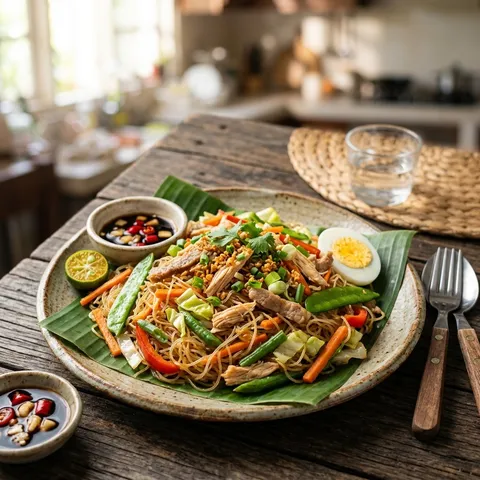 Filipino Lens Verified Images are for illustrative purposes only, may be inaccurate, and do not guarantee the presence or absence of specific ingredients.
 Pancit Bihon
Thin rice vermicelli stir-fried with chicken, shrimp, and vegetables in a savory soy-citrus sauce, a fixture at every Filipino celebration.
 Filipino Lens Verified Images are for illustrative purposes only, may be inaccurate, and do not guarantee the presence or absence of specific ingredients.
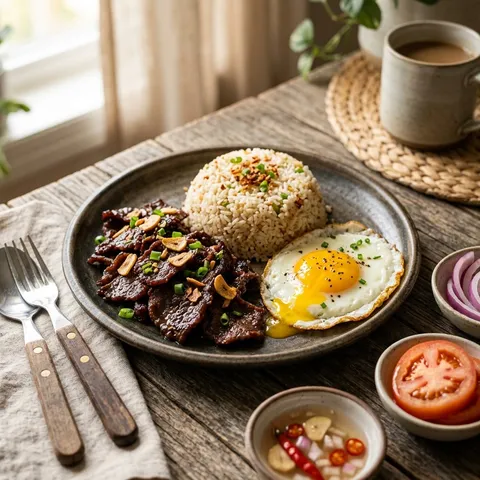
 Tapsilog
A hearty breakfast combo of marinated beef (tapa), garlic fried rice (sinangag), and a fried egg (itlog).
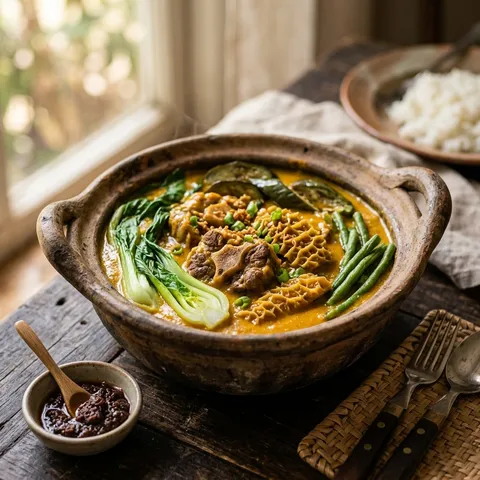 Filipino Lens Verified Images are for illustrative purposes only, may be inaccurate, and do not guarantee the presence or absence of specific ingredients.
 Kare-Kare
A rich peanut stew typically made with oxtail and vegetables, served with shrimp paste.