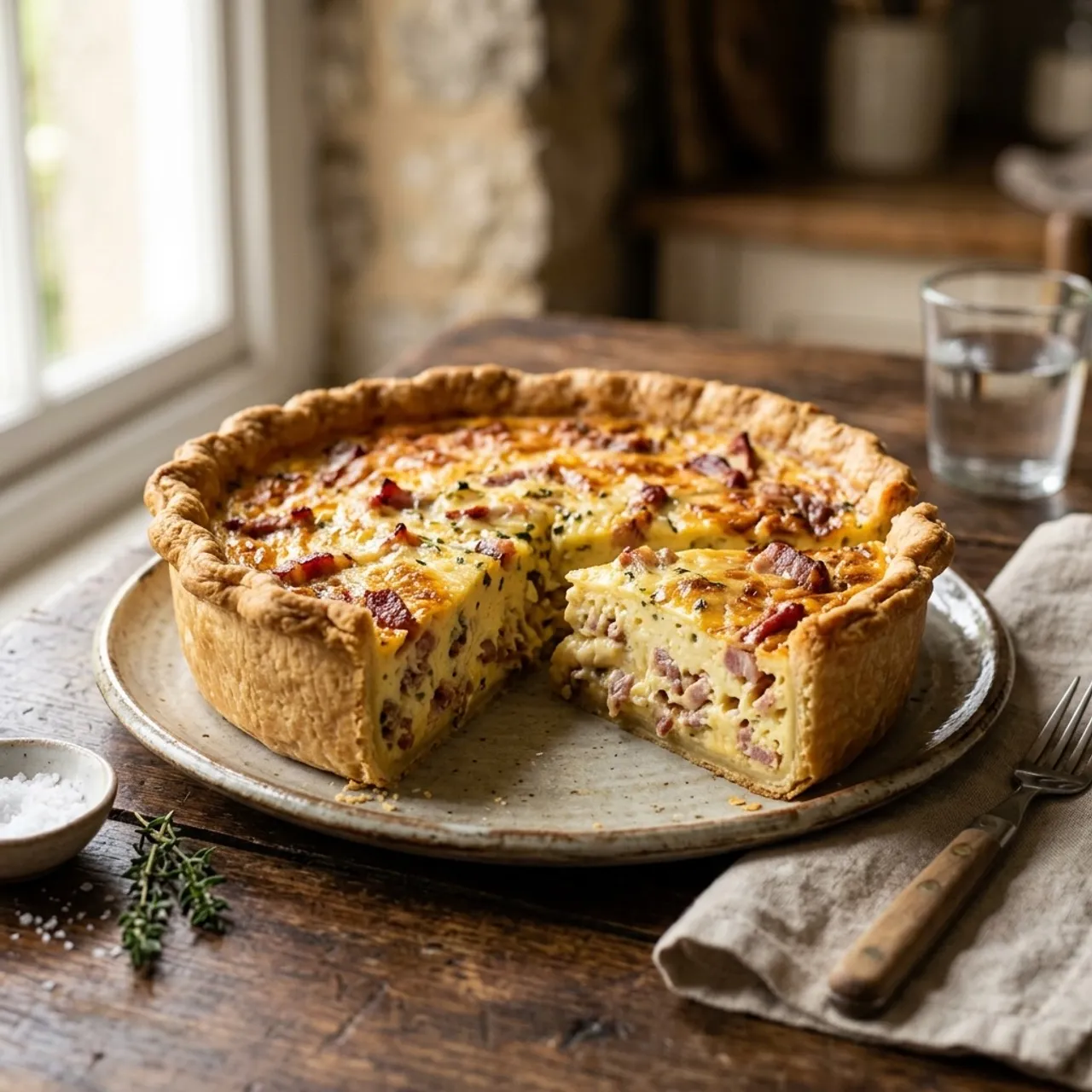
 French Images are for illustrative purposes only, may be inaccurate, and do not guarantee the presence or absence of specific ingredients.
 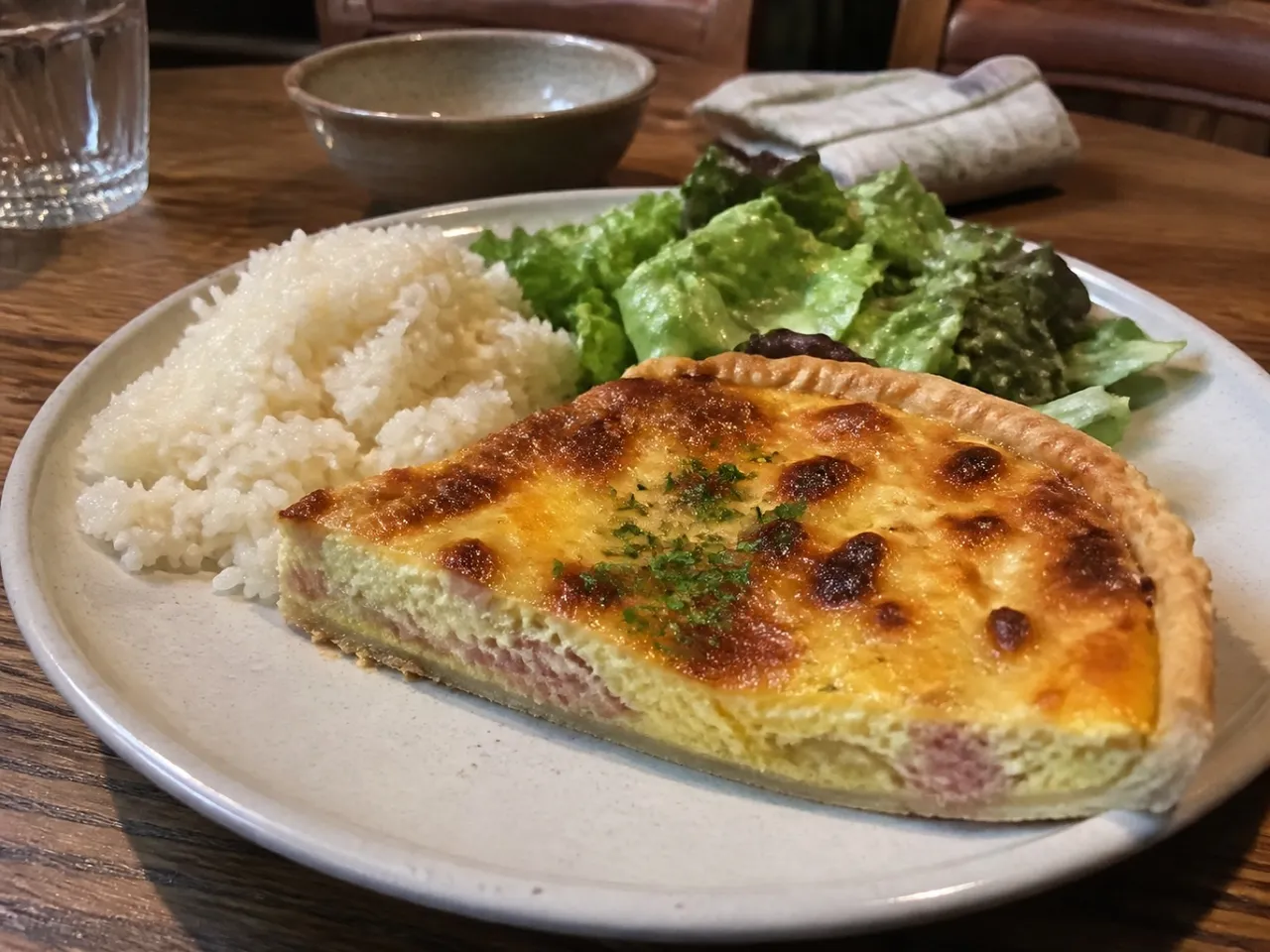 Serving Images are for illustrative purposes only, may be inaccurate, and do not guarantee the presence or absence of specific ingredients.
 Quiche Lorraine
Buttery shortcrust filled with a silky egg custard, smoky lardons, and Gruyère — a French bistro classic that works any time of day.
Contains common allergens
In the app, Listahan checks these against your household automatically.
Instructions
6 steps- 1
Preheat the oven to 375°F (190°C). Prepare your blind-baked crust in a 9-inch tart pan.
- 2
Fry the diced bacon in a skillet over medium heat until crisp and golden brown. Drain on paper towels and scatter evenly over the bottom of the baked crust.
- 3
Sprinkle the grated Gruyère cheese evenly over the bacon in the tart shell.
- 4
In a mixing bowl, whisk together the eggs, heavy cream, nutmeg, a pinch of salt, and a generous crack of black pepper until completely smooth and frothy.
- 5
Carefully pour the egg mixture over the cheese and bacon in the tart shell, filling it just below the rim.
- 6
Bake for 30-35 minutes, or until the filling is puffed, golden brown on top, and just set in the center with a slight jiggle. Let cool for 15 minutes before slicing.
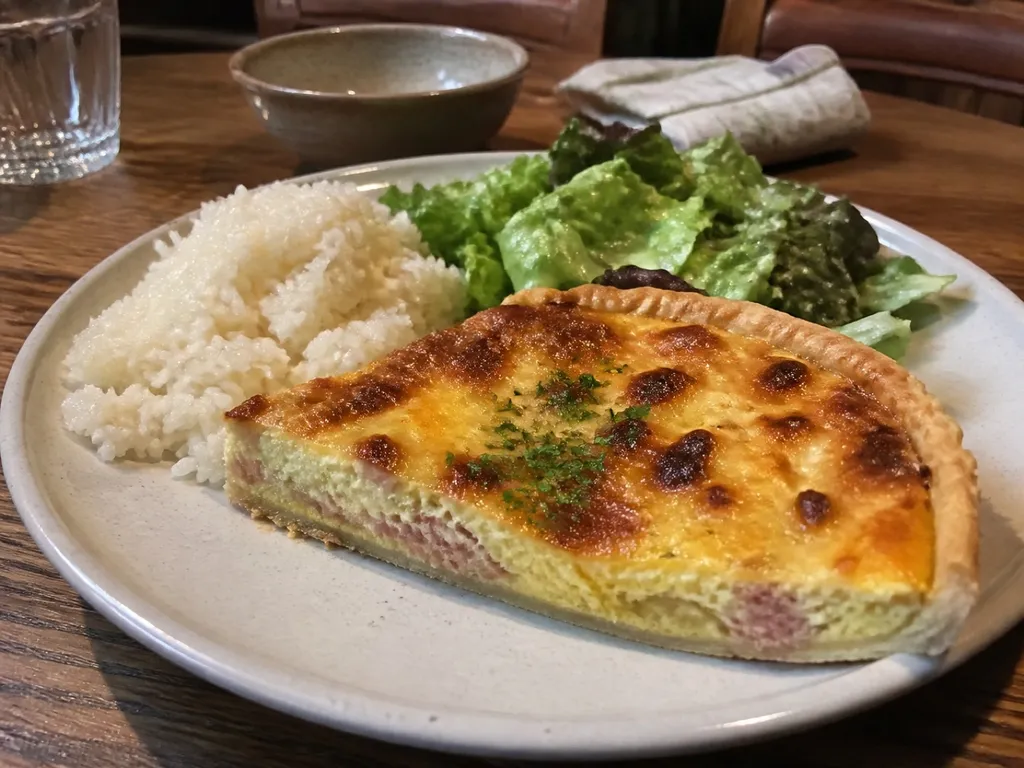 Images are for illustrative purposes only, may be inaccurate, and do not guarantee the presence or absence of specific ingredients.
 Listahan Family Score™
71/100
Good fit for most families
Score reflects how well this recipe fits a typical busy household. In the app, your Family Score is personalized to your household's allergens, kids, and pantry.
Nutrition
per serving2805
Calories
121 g
Protein
15 g
Carbs
252 g
Fat
Estimated per serving. Actual values depend on the brands and portions you use.
Listahan cooking guide
Chef notes & practical guide
Technique notes, ingredient swaps, serve-alongside ideas, storage guidance, and equipment for this recipe.
Cultural context
Quiche Lorraine comes from the Lorraine region in northeastern France, near the German border, and the name itself reflects the region's Germanic-French cultural history — 'quiche' derives from the German 'Kuchen,' meaning cake. The original version, documented as early as the sixteenth century, was a simple open tart filled with eggs, cream, and lardons; cheese was a later addition that became standard outside France. The dish became a defining comfort food in mid-twentieth century America during the postwar French cooking revival and has remained a brunch and lunch staple ever since.
Listahan note
This version keeps the custard ratio classic — enough cream to be rich but not so much that slices slide apart — and leans on quality bacon and Gruyere rather than add-ins.
Technique cues
- Blind-bake the pastry shell until it is pale golden and fully set before adding the custard — skipping this step guarantees a soggy bottom because the wet custard cannot crisp a raw shell.
- Strain the egg and cream mixture through a fine-mesh sieve before pouring it in; this removes any stringy egg threads and gives the finished custard an impossibly smooth, silky texture.
- Pull the quiche from the oven when the center still has a slight wobble — it will firm up as it rests for 10 minutes, and a fully set quiche in the oven will be rubbery by the time it reaches the table.
Kitchen flow
- Parallel prep
- Blind-bake the crust first; while it bakes, cook and drain the bacon, grate the cheese, and whisk the custard so everything is ready to assemble immediately.
- Make-ahead
- Bake the quiche up to 2 days ahead; cool completely, cover with plastic wrap, and refrigerate — reheat slices in a 300-degree oven for 10 minutes or serve at room temperature.
- Leftover move
- Cold quiche slices pack well for lunch the next day and taste excellent at room temperature alongside a green salad.
- Cleanup rhythm
- Line the blind-baking pan with foil before adding weights so cleanup of the pastry weights takes 30 seconds; wipe the skillet while the quiche bakes.
Ingredient brief
Role, handling, and swap guidance for each key ingredient.
all-butter pie crust or shortcrust pastry
structural shell
Purpose: An all-butter crust provides a rich, flaky base with enough structural strength to contain a liquid custard without buckling.
Handling: Press into a 9-inch tart pan with a removable bottom, chill for 30 minutes, then blind-bake with weights until set.
Adaptation: Store-bought refrigerated pie dough works and saves significant time; just make sure to blind-bake it the same way.
thick-cut bacon or lardons
smoky, salty filling
Purpose: Crispy bacon is the defining flavor element of Lorraine; it provides salt, smoke, and textural contrast in every bite of the silky custard.
Handling: Cook until crispy, drain on paper towels, and roughly chop before scattering over the crust.
Adaptation: Pancetta is more authentic to the French lard tradition; for a pork-free version, use smoked turkey breast cut into small cubes.
heavy cream
custard richness
Purpose: Heavy cream creates a set that is luxuriously smooth and rich; lower-fat dairy produces a thinner, more rubbery result.
Handling: Measure at room temperature and whisk with the eggs just until combined; avoid overbeating.
Adaptation: Half-and-half can replace up to half the heavy cream for a slightly lighter result without compromising the set.
eggs
custard structure
Purpose: Eggs are the setting agent; the ratio of whole eggs to cream determines whether the custard is firm enough to slice or too soft to hold.
Handling: Use large eggs at room temperature and whisk thoroughly with the cream before straining.
Adaptation: There is no structural substitute for eggs in this recipe; an egg-free version would require a completely different approach.
Gruyere cheese
nutty, melting richness
Purpose: Gruyere melts into the custard without releasing excess water, and its nutty, slightly sweet flavor complements both the egg richness and the smoky bacon.
Handling: Grate finely on a box grater and scatter half over the crust before adding the custard.
Adaptation: Emmental, Comte, or even Swiss cheese are authentic alternatives; sharp white cheddar works as a more accessible substitute.
Technique notes
- The classic French ratio is 1 cup heavy cream to 3 large eggs — memorize this and you can scale the recipe for any size tart pan without measuring.
- Place the filled tart pan on a preheated baking sheet in the oven; the direct bottom heat helps set the crust from below and reduces the chance of a wet pastry base.
- A whisper of freshly grated nutmeg in the custard is traditional and adds a warm, faintly spiced note that is impossible to identify but would be missed without it.
Ingredient swaps
- Gluten-free direction
- Use a certified gluten-free tart shell or press a mixture of almond flour and butter into the pan as a crustless base; the custard filling is naturally gluten-free.
- Lighter direction
- Substitute half-and-half for the cream and reduce the cheese by half; the texture will be less rich but still satisfying, and the set will hold for slicing.
- Vegetarian direction
- Replace the bacon with sauteed leeks and roasted cherry tomatoes; add a pinch of smoked paprika to the custard to compensate for the lost smokiness.
Serve alongside
- Frisee salad with Dijon vinaigrette
- Cornichons and grainy mustard
- Simple tomato salad with herbs
- Alsatian Pinot Gris or Riesling
- Sparkling water with lemon
Serving suggestions only — check pairings for your household's allergens.
Storage & reheating
- Refrigerate covered with plastic wrap for up to 3 days; the pastry softens slightly but the flavor remains good.
- Quiche does not freeze well because the custard weeps on thawing — make it fresh or store only in the refrigerator.
Equipment
- 9-inch tart pan with a removable bottom for clean slicing
- Pie weights or dried beans for blind-baking
- Fine-mesh strainer for a silky custard texture
Make this household-aware
Listahan Pro checks this recipe against your household's allergens, finds pantry-aware swaps, builds the shopping list, and helps you plan the week around it.
Plan it in Listahan
Add Quiche Lorraine to your week, check it against your household's allergens, and build the shopping list automatically.
More French recipes
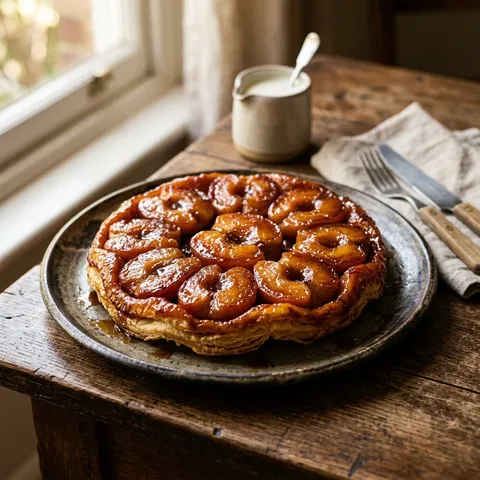 French Lens Verified Images are for illustrative purposes only, may be inaccurate, and do not guarantee the presence or absence of specific ingredients.
 Tarte Tatin
Apples cooked in caramel until jammy and burnished, then flipped onto buttery pastry — a rustic upside-down tart from the Loire Valley.
 French Lens Verified Images are for illustrative purposes only, may be inaccurate, and do not guarantee the presence or absence of specific ingredients.
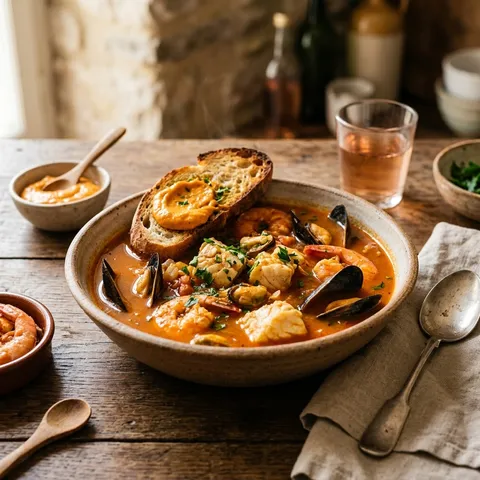
 Bouillabaisse
Marseille's legendary saffron-scented fisherman's stew, brimming with fresh seafood and served with garlicky rouille on toasted baguette.
 French Lens Verified Images are for illustrative purposes only, may be inaccurate, and do not guarantee the presence or absence of specific ingredients.
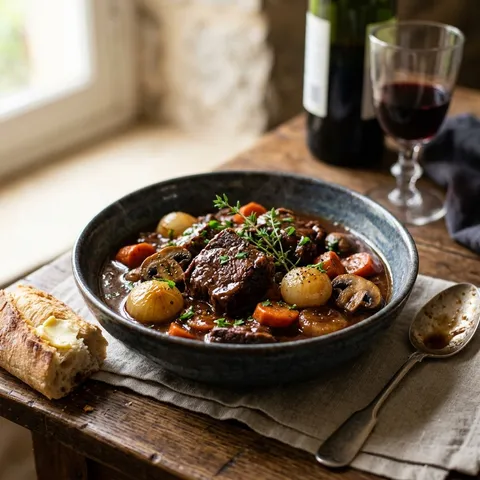
 Bœuf Bourguignon
Burgundy's legendary beef stew — rich, wine-dark, and fall-apart tender after hours of slow braising with carrots, mushrooms, and thyme.