 German Images are for illustrative purposes only, may be inaccurate, and do not guarantee the presence or absence of specific ingredients.
  Serving Images are for illustrative purposes only, may be inaccurate, and do not guarantee the presence or absence of specific ingredients.
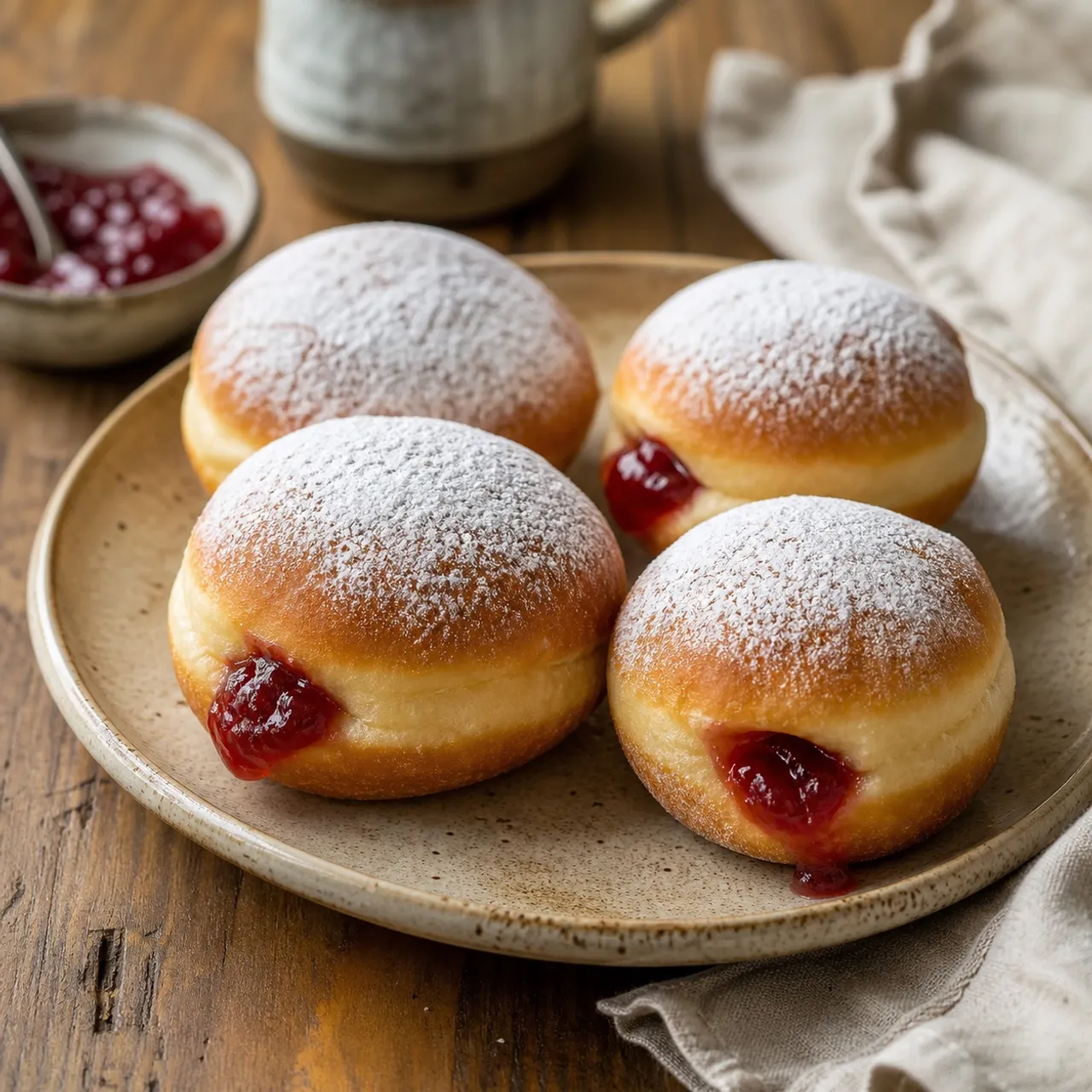
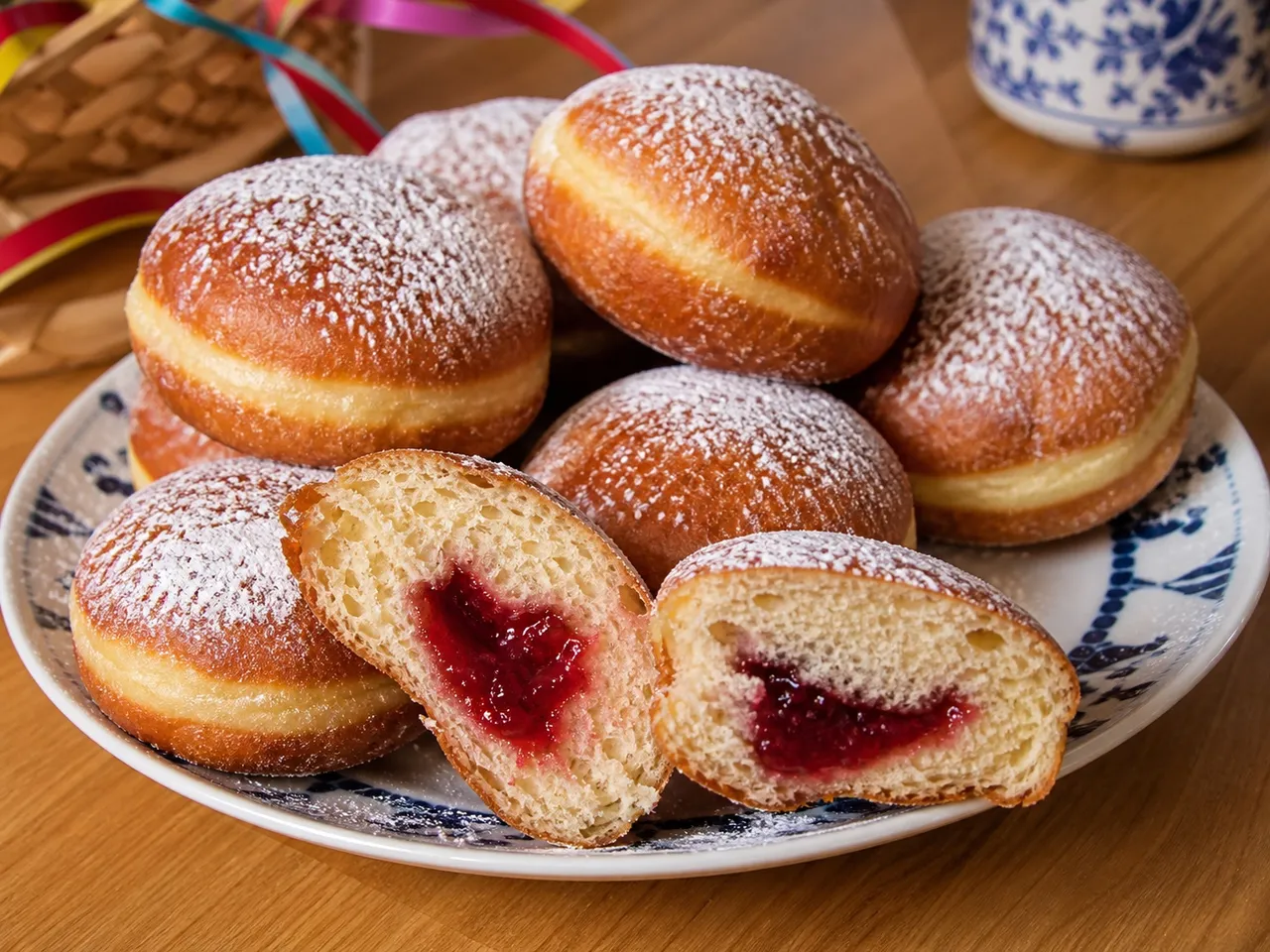
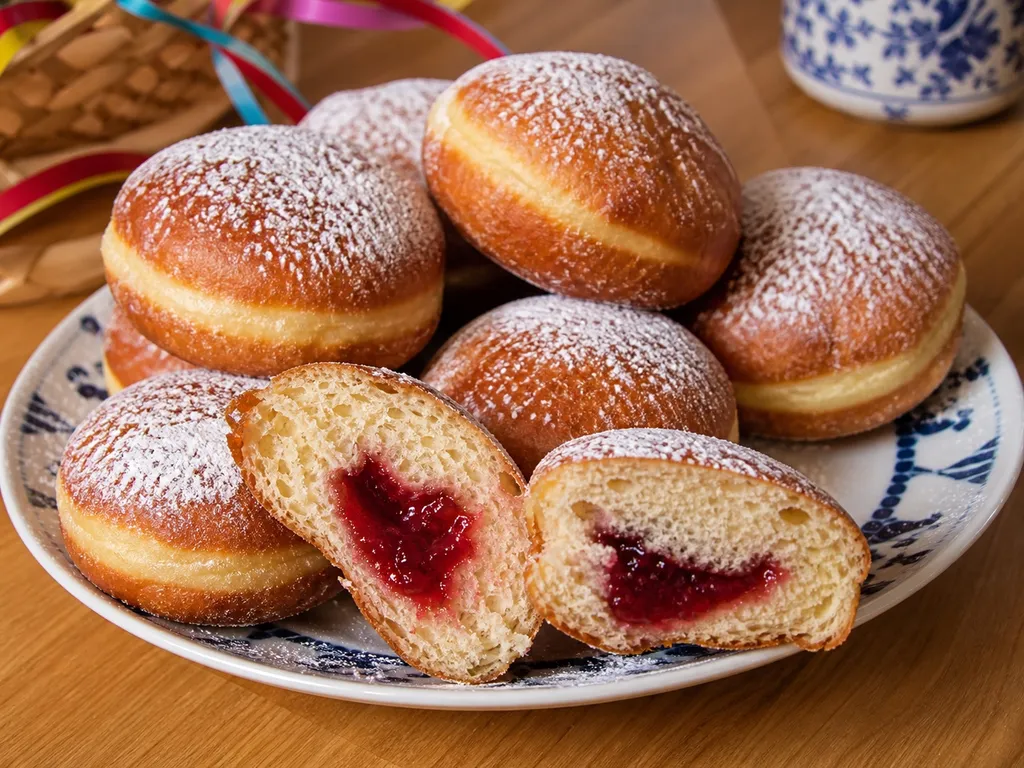
 Berliner (German Jelly Doughnuts)
Pillowy German jelly doughnuts, deep-fried to a golden finish and filled with sweet fruit jam, rolled in sugar for a classic bakery treat.
Contains common allergens
In the app, Listahan checks these against your household automatically.
Instructions
7 steps- 1
Combine flour, yeast, sugar, and salt, then mix in eggs, warm milk, and softened butter, kneading into a soft, smooth dough.
- 2
Cover and let the dough rise in a warm place for about 1 hour until doubled.
- 3
Punch down the dough and divide into 12 equal portions, shaping each into a smooth ball; let rise again for 30 minutes.
- 4
Heat vegetable oil in a deep pot to 170°C (340°F).
- 5
Fry the dough balls in batches for 2-3 minutes per side until deep golden brown, then drain on paper towels.
- 6
While still warm, roll each doughnut in granulated sugar.
- 7
Once cooled slightly, fill each doughnut with jam using a piping bag fitted with a narrow tip.
 Images are for illustrative purposes only, may be inaccurate, and do not guarantee the presence or absence of specific ingredients.
 Listahan Family Score™
76/100
Good fit for most families
Score reflects how well this recipe fits a typical busy household. In the app, your Family Score is personalized to your household's allergens, kids, and pantry.
Nutrition
per serving415
Calories
6 g
Protein
67 g
Carbs
13 g
Fat
Estimated per serving. Actual values depend on the brands and portions you use.
Listahan cooking guide
Chef notes & practical guide
Technique notes, ingredient swaps, serve-alongside ideas, storage guidance, and equipment for this recipe.
Cultural context
Berliner are the fried, jam-filled doughnuts traditionally eaten around Silvester (New Year's Eve) and during Karneval season, though confusingly they're simply called Pfannkuchen within Berlin itself. A long-standing prank tradition involves secretly filling one doughnut with mustard instead of jam to catch an unsuspecting guest.
Listahan note
This version rolls the fried doughnuts in sugar while still warm, since sugar won't stick properly once they've cooled, and fills them after they've cooled slightly so the warm jam doesn't melt through the dough.
Technique cues
- Fry at a steady 170C (340F); oil that's too hot browns the outside before the inside cooks through, leaving a doughy center.
- Roll the doughnuts in sugar the moment they come off the paper towels, while still warm, since the sugar won't cling to a cooled surface.
- Let the doughnuts cool slightly before piping in the jam; warm dough can cause the filling to seep out or the doughnut to collapse.
Kitchen flow
- Parallel prep
- Heat the frying oil to temperature while the shaped dough balls have their second rise, so both are ready together.
- Make-ahead
- Shape the dough balls a few hours ahead and let them rise slowly in the fridge; bring to room temperature before frying.
- Leftover move
- Day-old doughnuts are best split and toasted lightly, then dusted with a little extra sugar, rather than reheated whole.
- Cleanup rhythm
- Let the frying oil cool completely before straining and discarding or storing it, rather than handling it hot.
Ingredient brief
Role, handling, and swap guidance for each key ingredient.
All-purpose flour
Dough structure
Purpose: A soft, enriched dough gives the doughnuts their pillowy interior once fried.
Handling: Knead until smooth and elastic, then let it rise fully before shaping.
Adaptation: Bread flour gives a slightly chewier crumb if a firmer doughnut is preferred.
Instant yeast
Leavening
Purpose: Yeast gives the dough its light, airy rise, which is essential for a doughnut rather than a dense fried cake.
Handling: Activate in the warm milk before mixing into the dry ingredients.
Adaptation: Active dry yeast works if proofed in the warm milk for a few minutes first.
Raspberry or plum jam
Filling
Purpose: A generous jam filling is the signature feature of the Berliner, giving a burst of fruit in the center of each bite.
Handling: Use a piping bag fitted with a narrow tip to inject the jam evenly into the center.
Adaptation: Apricot or cherry jam both work as traditional alternative fillings.
Vegetable oil (for frying)
Cooking medium
Purpose: A neutral oil with a high smoke point fries the doughnuts evenly without adding unwanted flavor.
Handling: Heat to a steady 170C (340F) and monitor with a thermometer throughout frying.
Adaptation: Sunflower or canola oil both work equally well for deep frying.
Granulated sugar (for coating)
Finishing coat
Purpose: A sugar coating rolled on while the doughnuts are still warm gives the classic sweet, slightly crunchy exterior.
Handling: Roll each warm doughnut in a shallow bowl of sugar right after draining.
Adaptation: Cinnamon sugar gives a warmly spiced variation on the classic plain coating.
Technique notes
- Fry in small batches so the oil temperature doesn't drop, which is what leads to greasy, underdone doughnuts.
- Turn the doughnuts only once per side unless they're browning unevenly, since excess flipping can deflate the dough.
- Pipe the jam in from one side only, moving the tip slightly as you fill, so the jam distributes through the center rather than pooling in one spot.
Ingredient swaps
- Dairy-free direction
- Use a plant-based milk and butter in the dough; the frying and filling steps stay the same.
- Baked direction
- Bake the shaped dough balls at 190C (375F) for about 12 minutes for a lower-fat version, though the texture will be closer to a sweet roll than a classic fried doughnut.
- Lower-sugar direction
- Use a light dusting of sugar instead of a full roll, or skip the coating and dust with powdered sugar instead.
Serve alongside
- Extra jam for dipping
- Fresh berries
- Whipped cream on the side
- Filterkaffee (German drip coffee)
- Hot chocolate
- Sparkling wine for New Year's Eve
Serving suggestions only — check pairings for your household's allergens.
Storage & reheating
- Store at room temperature in an airtight container for up to 2 days.
- Best enjoyed the day they're made; briefly toasting day-old doughnuts helps refresh the texture.
- Freeze unfilled, cooled doughnuts for up to 1 month; thaw, then coat in sugar and fill with jam before serving.
Equipment
- Deep pot or fryer with thermometer
- Piping bag with a narrow tip
- Baking sheet for the second rise
Make this household-aware
Listahan Pro checks this recipe against your household's allergens, finds pantry-aware swaps, builds the shopping list, and helps you plan the week around it.
Plan it in Listahan
Add Berliner (German Jelly Doughnuts) to your week, check it against your household's allergens, and build the shopping list automatically.
More German recipes
 German Lens Verified Images are for illustrative purposes only, may be inaccurate, and do not guarantee the presence or absence of specific ingredients.
 Kartoffelsuppe (Creamy German Potato Soup)
A creamy, comforting German potato soup with leeks, carrots, and a smoky finish of fried sausage or bacon.
 German Lens Verified Images are for illustrative purposes only, may be inaccurate, and do not guarantee the presence or absence of specific ingredients.
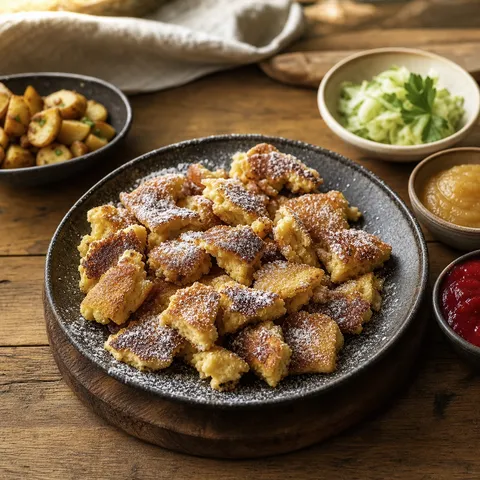
 Kaiserschmarrn (Shredded Sugared Pancake)
A fluffy shredded pancake dusted with powdered sugar and studded with golden raisins, torn into rustic pieces and served with stewed fruit compote.
 German Lens Verified Images are for illustrative purposes only, may be inaccurate, and do not guarantee the presence or absence of specific ingredients.
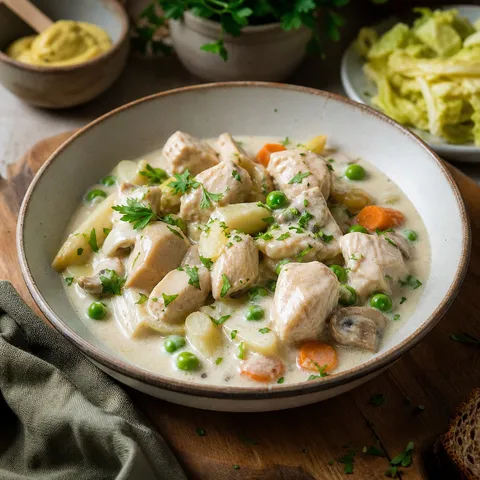
 Hühnerfrikassee (German Chicken Fricassee)
A comforting German chicken fricassee in a silky lemon-cream sauce studded with mushrooms, peas, and capers.