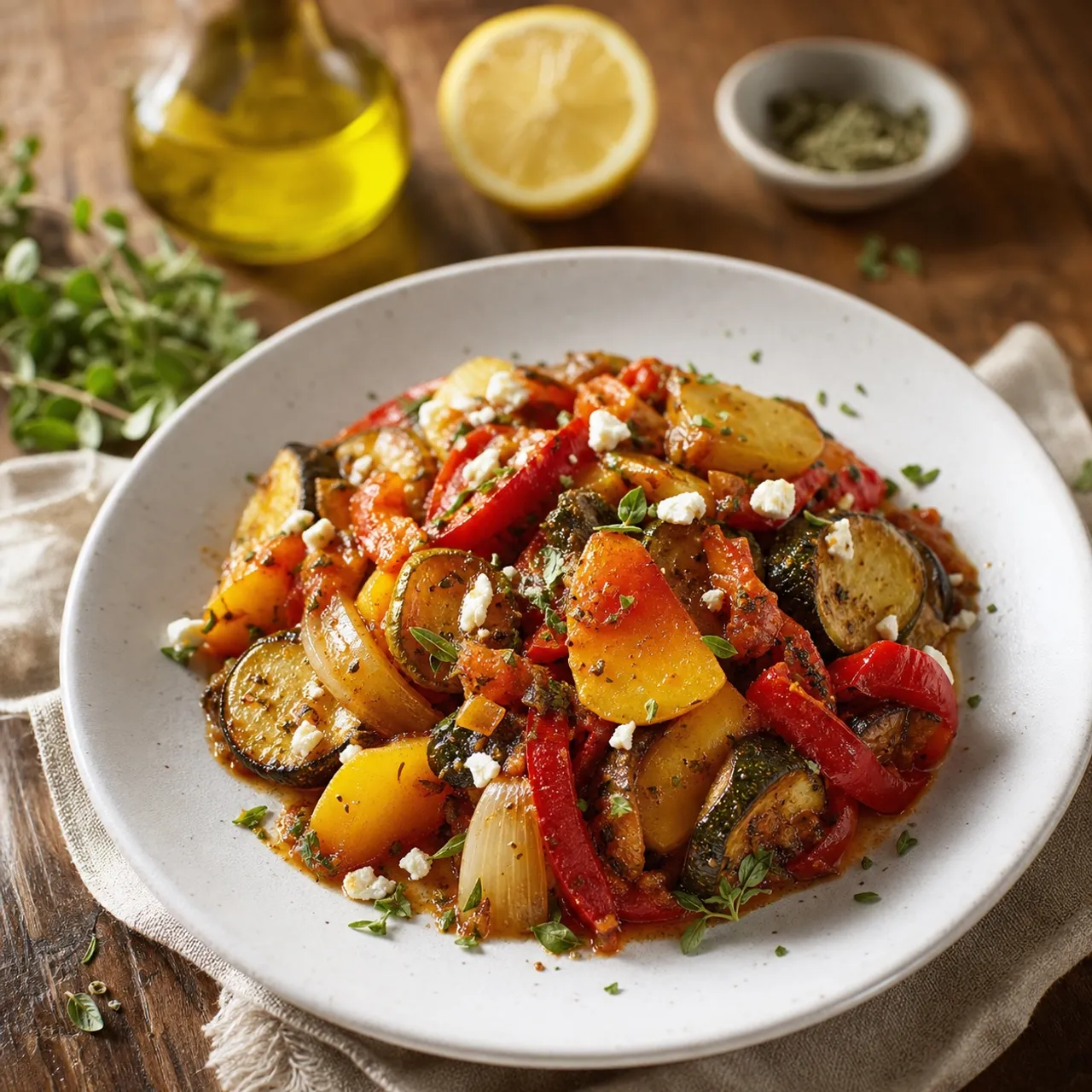
 Greek Images are for illustrative purposes only, may be inaccurate, and do not guarantee the presence or absence of specific ingredients.
 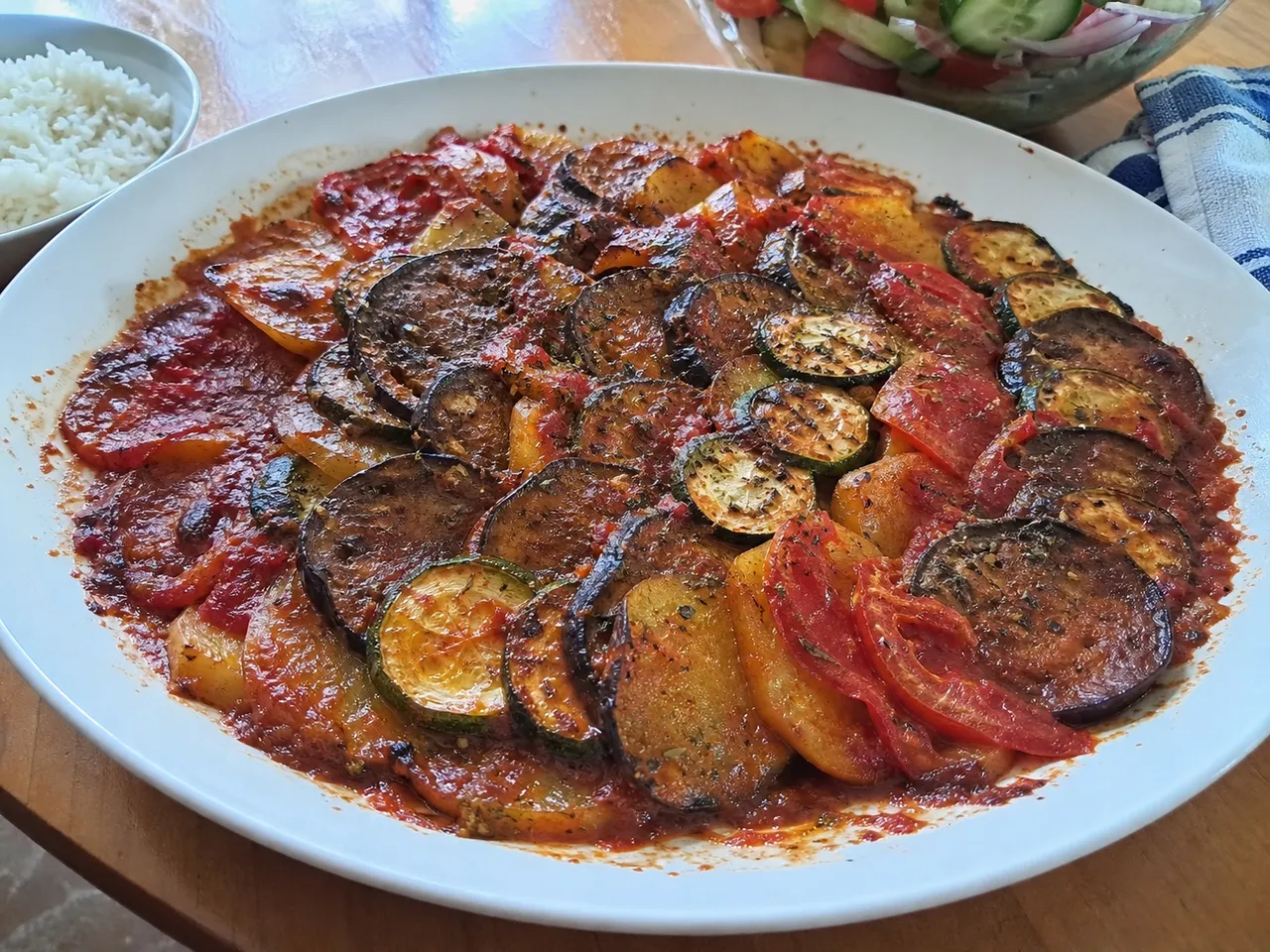 Serving Images are for illustrative purposes only, may be inaccurate, and do not guarantee the presence or absence of specific ingredients.
 Briam (Greek Roasted Vegetable Medley)
A colorful medley of zucchini, potatoes, eggplant, and tomatoes roasted slowly in olive oil and herbs until soft and caramelized.
No common allergens detected
Based on this recipe's ingredient list. Always verify with your own brands and labels.
Instructions
6 steps- 1
Preheat the oven to 400°F and lightly oil a large baking dish.
- 2
Whisk the tomato paste with the water and set aside.
- 3
Layer the potatoes, zucchini, eggplant, tomatoes, onion, and garlic in the baking dish, seasoning each layer lightly with salt, pepper, and oregano.
- 4
Pour the olive oil and the diluted tomato paste evenly over the vegetables.
- 5
Cover with foil and bake for 45 minutes, then remove the foil and bake for another 20-25 minutes until the vegetables are tender and lightly browned on top.
- 6
Garnish with fresh parsley and serve warm or at room temperature.
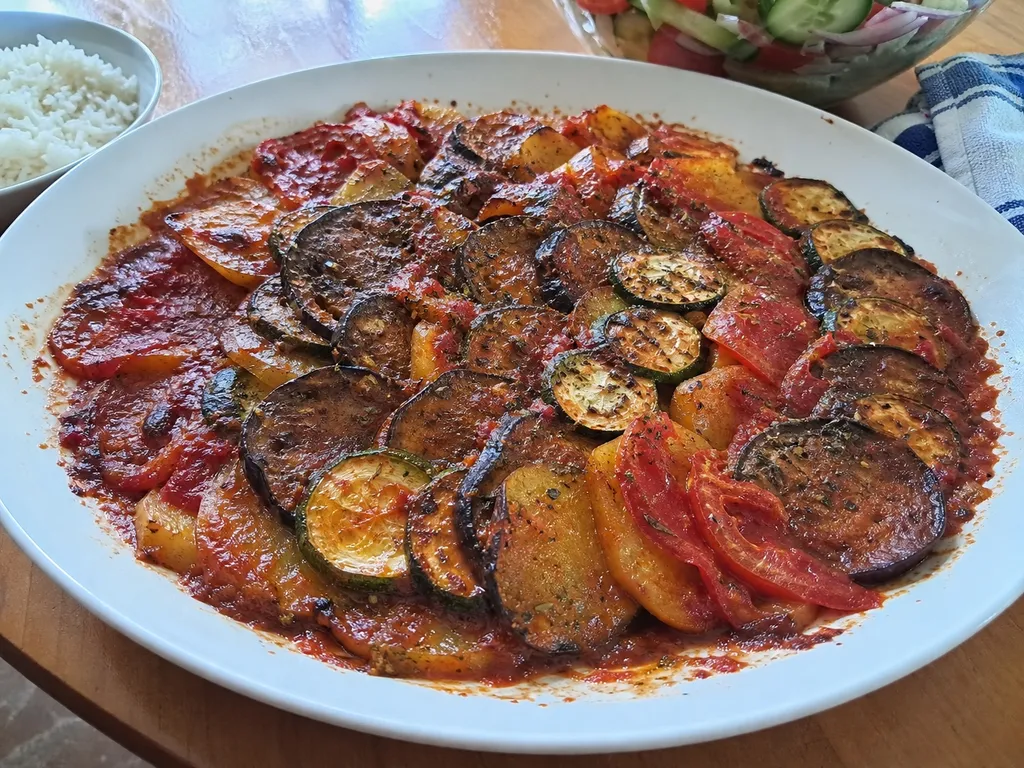 Images are for illustrative purposes only, may be inaccurate, and do not guarantee the presence or absence of specific ingredients.
 Listahan Family Score™
72/100
Good fit for most families
Score reflects how well this recipe fits a typical busy household. In the app, your Family Score is personalized to your household's allergens, kids, and pantry.
Nutrition
per serving280
Calories
4 g
Protein
27 g
Carbs
19 g
Fat
Estimated per serving. Actual values depend on the brands and portions you use.
Listahan cooking guide
Chef notes & practical guide
Technique notes, ingredient swaps, serve-alongside ideas, storage guidance, and equipment for this recipe.
Cultural context
Briam belongs to the broader family of ladera, meaning oiled dishes, in which vegetables are slow-braised in a generous amount of olive oil until meltingly soft, a cooking style rooted in the vegetable-forward, olive-oil-rich diet of the Greek islands and countryside.
Listahan note
This version layers the vegetables rather than tossing them, which lets each one cook a bit differently based on where it sits in the dish, and relies on a long covered bake before uncovering to caramelize the top.
Technique cues
- Slicing all the vegetables to a similar thickness matters more than it seems, uneven cuts mean some pieces turn to mush while others stay undercooked in the same bake.
- The initial covered bake traps steam that helps the vegetables soften through, while removing the foil for the final stretch is what lets the tops caramelize and concentrate in flavor.
- Diluting the tomato paste with water before pouring it over the vegetables helps it spread evenly through the dish rather than clumping in one spot.
Kitchen flow
- Parallel prep
- Slice all the vegetables while the oven preheats, laying them out by type so layering the dish goes quickly once everything is ready.
- Make-ahead
- Briam is traditionally served warm or at room temperature and actually tastes better after resting for an hour or two, making it genuinely easy to prep ahead.
- Leftover move
- Leftovers keep their flavor well and are traditionally eaten cold or at room temperature the next day, no reheating necessary.
- Cleanup rhythm
- Use a baking dish with high sides, the oil and tomato liquid can bubble up during the uncovered final bake and spill over a shallow pan.
Ingredient brief
Role, handling, and swap guidance for each key ingredient.
zucchini, eggplant, potatoes, and tomatoes
the medley itself
Purpose: each vegetable contributes something different, the potatoes add heft, eggplant turns silky, zucchini stays slightly firmer, and tomatoes break down into a light sauce
Handling: slice all four to a similar thickness, about a quarter inch, so they cook at roughly the same rate
Adaptation: yellow squash can stand in for some of the zucchini for color variety without changing the technique
onion and garlic
aromatic layer
Purpose: sliced and layered directly into the dish rather than pre-sauteed, they soften slowly alongside the other vegetables and season the whole pan as it bakes
Handling: slice the onion thinly and mince the garlic so both distribute their flavor evenly through the layers
Adaptation: shallots give a slightly sweeter, milder result if raw onion is too sharp
olive oil
the braising medium
Purpose: a generous, almost surprising amount of oil is what defines ladera-style cooking, it's what keeps the vegetables from drying out over a long bake and gives briam its silky richness
Handling: pour it evenly over the layered vegetables before covering the dish, don't skimp here
Adaptation: there's no good substitute, this dish depends on olive oil's flavor and its role in the braise
tomato paste
sauce base
Purpose: diluted with water and poured over the vegetables, it thickens slightly as it bakes and coats everything in a light, savory tomato sauce
Handling: whisk it into the water first so it doesn't clump when poured over the layered vegetables
Adaptation: a small can of crushed tomatoes can replace the paste-and-water combination for a slightly saucier result
Technique notes
- Check the dish partway through the covered bake and add a splash more water if the pan looks dry, different vegetables release different amounts of moisture.
- Don't rush uncovering the dish, the final 20-25 minutes uncovered is what develops the lightly caramelized, slightly charred tops that define good briam.
- Let the dish rest for at least 10 minutes after baking before serving, this lets the oil and juices settle back into the vegetables rather than pooling on top.
Ingredient swaps
- Vegan direction
- Wherever dairy shows up here, a neutral dairy-free butter or oil and a full-fat plant milk (oat or coconut work best for body) is the straightforward stand-in. This one leans on the tomato paste.
- Gluten-free direction
- Use a certified gluten-free 1:1 flour blend or gluten-free noodles/breadcrumbs in place of any wheat-based ingredient, and double-check packaged items for hidden wheat. This one leans on the tomato paste.
- Lower-oil direction
- Cut the olive oil by about a third and add a splash more water to compensate; the dish will be lighter but slightly less silky than the traditional version.
Serve alongside
- crusty bread
- feta cheese
- grilled fish
- a simple green salad
- a dry white wine
- rose
- sparkling water with lemon
Serving suggestions only — check pairings for your household's allergens.
Storage & reheating
- Keeps refrigerated for up to 5 days.
- Serve cold or at room temperature, or reheat gently covered in a low oven rather than the microwave, which can make the vegetables soggy in spots.
- Freezes reasonably well for up to 2 months, though texture softens somewhat after thawing.
Equipment
- large high-sided baking dish
- sharp knife or mandoline
- foil
- whisk (for the tomato paste and water)
Make this household-aware
Listahan Pro checks this recipe against your household's allergens, finds pantry-aware swaps, builds the shopping list, and helps you plan the week around it.
Plan it in Listahan
Add Briam (Greek Roasted Vegetable Medley) to your week, check it against your household's allergens, and build the shopping list automatically.
More Greek recipes
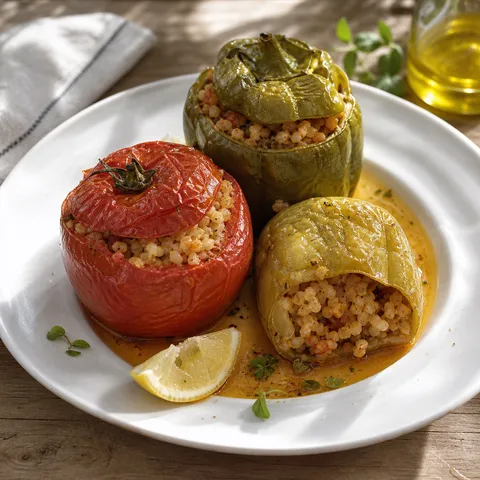 Greek Lens Verified Images are for illustrative purposes only, may be inaccurate, and do not guarantee the presence or absence of specific ingredients.
 Gemista (Stuffed Tomatoes and Peppers with Rice)
Ripe tomatoes and bell peppers hollowed out and stuffed with a savory herbed rice filling, then baked until tender and caramelized.
 Greek Lens Verified Images are for illustrative purposes only, may be inaccurate, and do not guarantee the presence or absence of specific ingredients.
 Kourabiedes (Greek Almond Butter Cookies)
Buttery, crumbly shortbread cookies studded with toasted almonds and generously dusted with powdered sugar.
 Greek Lens Verified Images are for illustrative purposes only, may be inaccurate, and do not guarantee the presence or absence of specific ingredients.
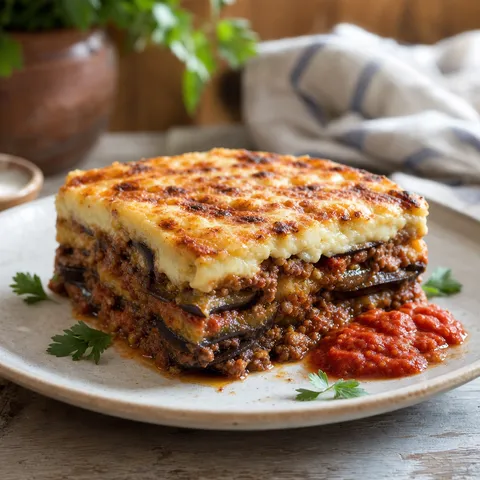
 Classic Moussaka
A rich, layered Greek casserole featuring roasted eggplant, a hearty spiced meat sauce, and a thick, creamy béchamel topping.