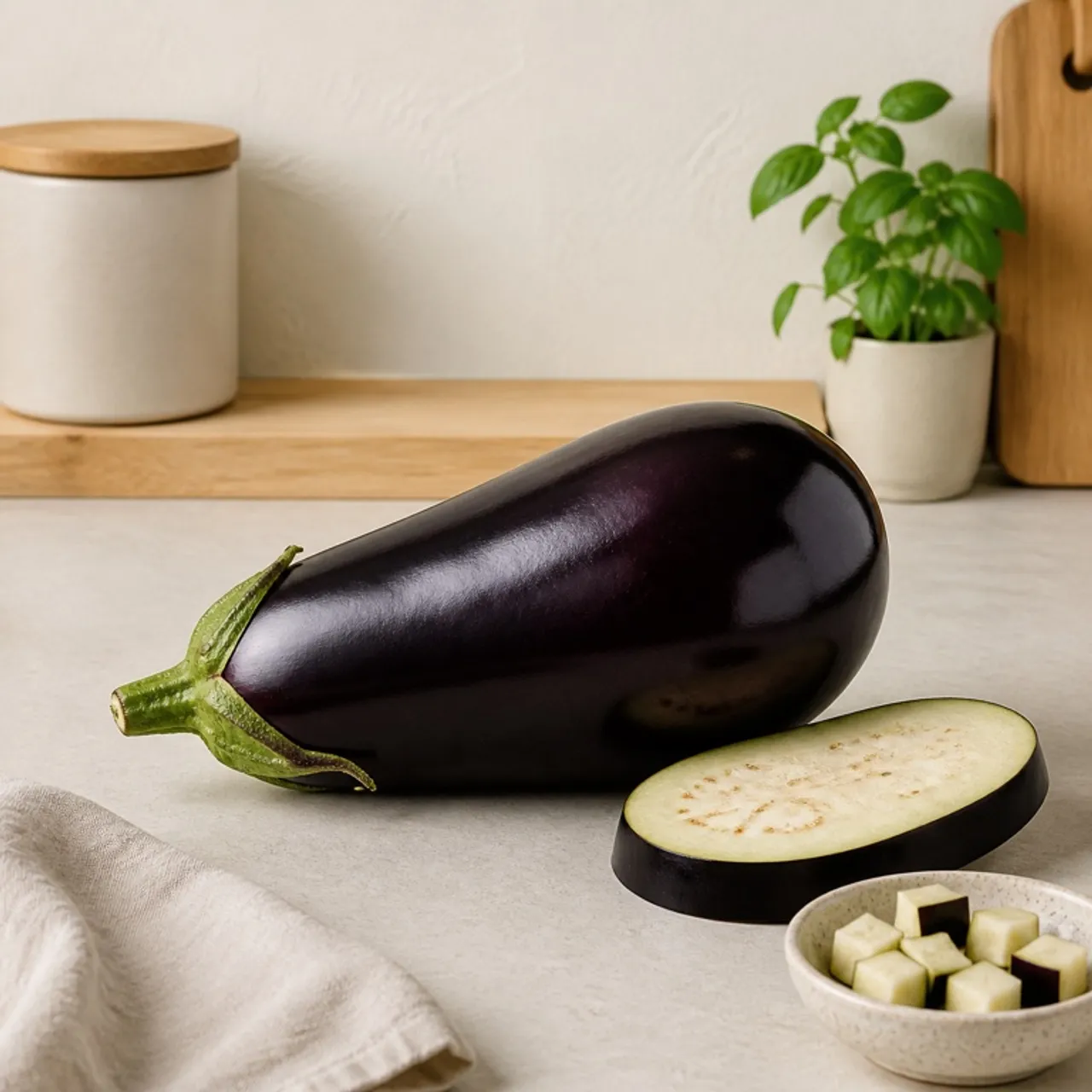
 Food Lens Images are for illustrative purposes only, may be inaccurate, and do not guarantee the presence or absence of specific ingredients.
 Food Lens · Produce
Eggplant
Mild and faintly bitter when raw; cooked flesh turns silky and absorbs surrounding flavors, developing a smoky depth when grilled or roasted.
Lens VerifiedEggplant (aubergine) is a spongy, mildly bitter vegetable-fruit with a meaty texture that absorbs flavors beautifully, making it central to grilled, roasted, braised, and fried dishes across the Mediterranean, Middle East, South Asia, and East Asia.
Where it comes from
Eggplant was first cultivated in India and traveled east to China and Japan, becoming deeply embedded in those cuisines centuries ago. Arab traders and later the Ottoman Empire spread it across the Middle East and into the Mediterranean, where it became a foundation of Greek, Turkish, and North African cooking. It arrived in the Americas via European colonizers and eventually gained widespread adoption in North America through immigration from all of those regions, becoming a versatile mainstay in multicultural home kitchens.
Varieties — Globe or Italian eggplant is the large, dark-purple variety most common in North American supermarkets. Chinese eggplant is long and slender with a delicate, slightly sweeter flavor. Japanese eggplant is similar to Chinese but shorter, with very tender skin. Indian (brinjal) varieties are small and round, often used whole. White eggplant is mild and creamy-fleshed.
Known as talong in Filipino cuisine, it's grilled whole for tortang talong (eggplant omelette); in Turkish cuisine it stars in dozens of dishes including Imam Bayildi and patlican kebab; baba ganoush (Levantine) and baingan bharta (Indian) both build on charred eggplant.
In a modern kitchen — Salting sliced eggplant for 20–30 minutes draws out bitterness and excess moisture, resulting in less oil absorption when frying. Rinse and pat dry before cooking.
Buying it
Choose eggplant that feels firm and heavy with taut, glossy skin and a green, fresh-looking calyx. Dull skin or soft spots indicate age. Smaller eggplants tend to have fewer seeds and less bitterness. Press gently — it should spring back.
Storing it
Refrigerate loosely wrapped and use within about a week — cold and moisture make it soften and brown quickly. Wrinkled skin or brown soft spots mean it's past its best.
Keeps about 7 days in the fridge.
In season
Peak season is July–September, though it's available year-round.
Eggplant is mainly a warm-season local crop in late summer; imported and greenhouse supply makes it available most of the year.
Out of eggplant? Good swaps
- Zucchini — Lighter and less meaty; works in stews and grilled dishes — use 1:1 but expect less body
- Portobello mushrooms — Similar meaty texture; great for grilling — use cap for cap, expect a more umami, earthier flavor
- Butternut squash — Sweeter and firmer; good in curries and stews — use same amount, adjust seasoning
General cooking guidance — always check the labels on the products you use. Listahan’s allergen checks run automatically when you plan a recipe in the app. Not medical advice.
Recipes that use eggplant
Common questions about eggplant
Is eggplant vegan?
Eggplant is generally plant-based and suitable for a vegan diet, but brands differ — confirm on the label.
What can I use instead of eggplant?
Good swaps include Zucchini, Portobello mushrooms, Butternut squash. Each behaves a little differently — see the swaps above for notes, and always check labels for allergens.
How do I store eggplant?
Refrigerate loosely wrapped and use within about a week — cold and moisture make it soften and brown quickly. Wrinkled skin or brown soft spots mean it's past its best. It keeps about 7 days in the fridge.
More produce
See all


Make eggplant about your kitchen — with Listahan Pro
Everything above is free, forever. Pro adds the Household Lens — the same food, seen for your family:
-
Checked for each member
Flags eggplant per person against your household's allergies and school rules — not just a generic "contains" tag.
-
Pantry-aware
Knows whether you already have it, what is running low, and the best swap from what is in your kitchen tonight.
-
What it costs near you
A real price from the Presyo community index, so you can plan the budget — not guess.
-
Your household memory
Who likes it, plus your own private notes — brand, where you keep it, who skips it.
Allergen safety is always free — Pro adds the automation, never the safety.
Cook with eggplant — safely
Plan a recipe in Listahan and the household allergen check runs automatically — every plan, every swap, every lunchbox. Safety is never paywalled.