 Greek Images are for illustrative purposes only, may be inaccurate, and do not guarantee the presence or absence of specific ingredients.
  Serving Images are for illustrative purposes only, may be inaccurate, and do not guarantee the presence or absence of specific ingredients.
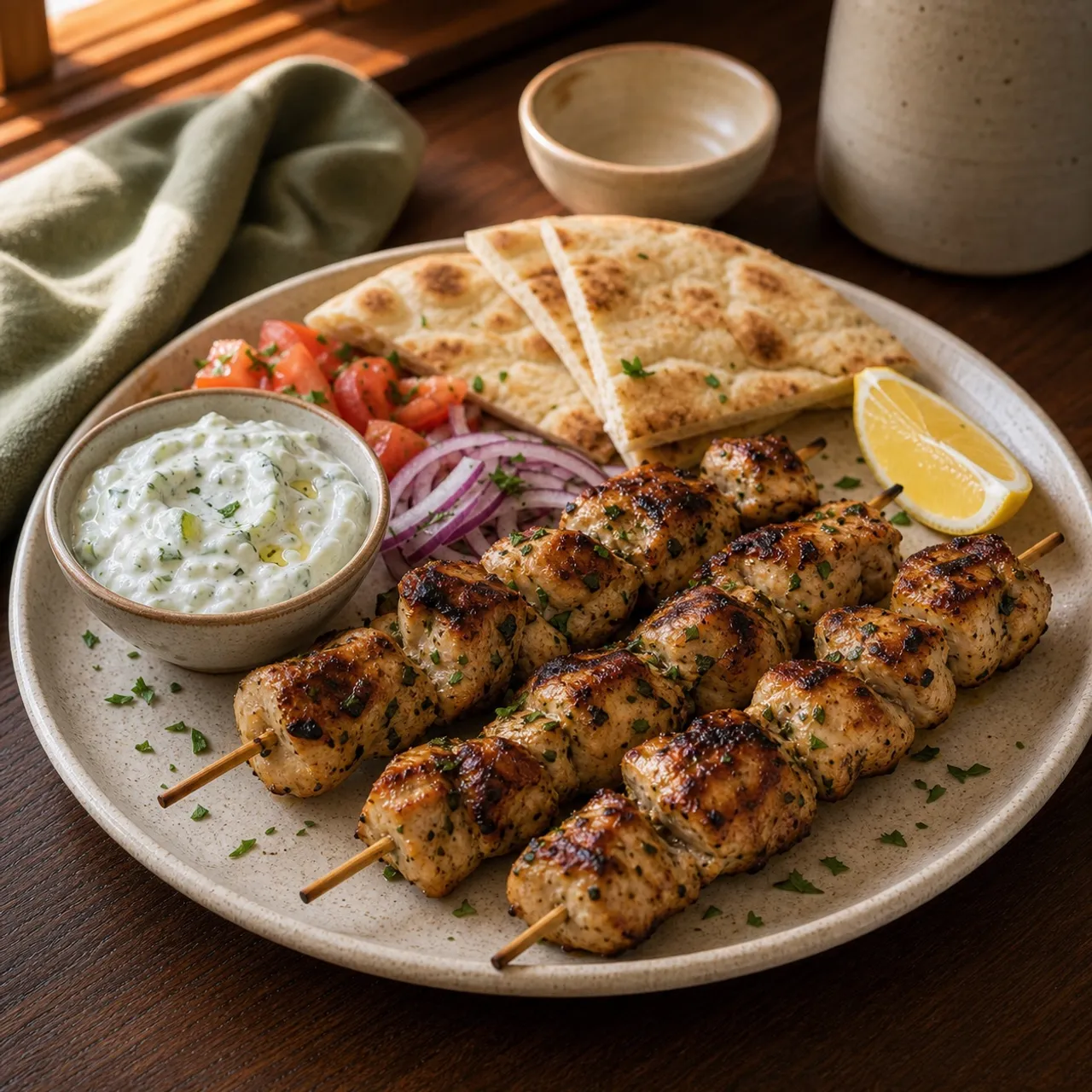
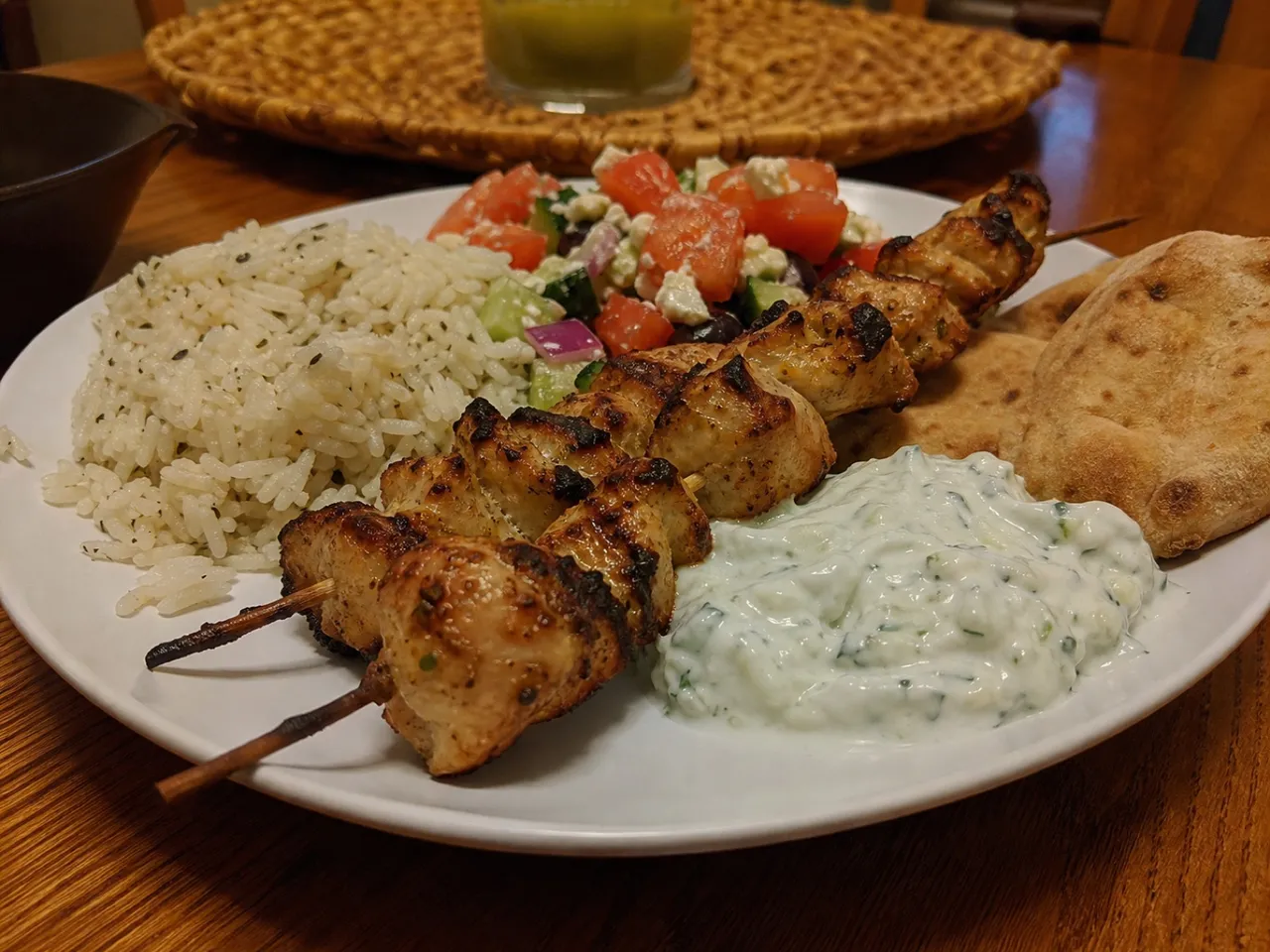
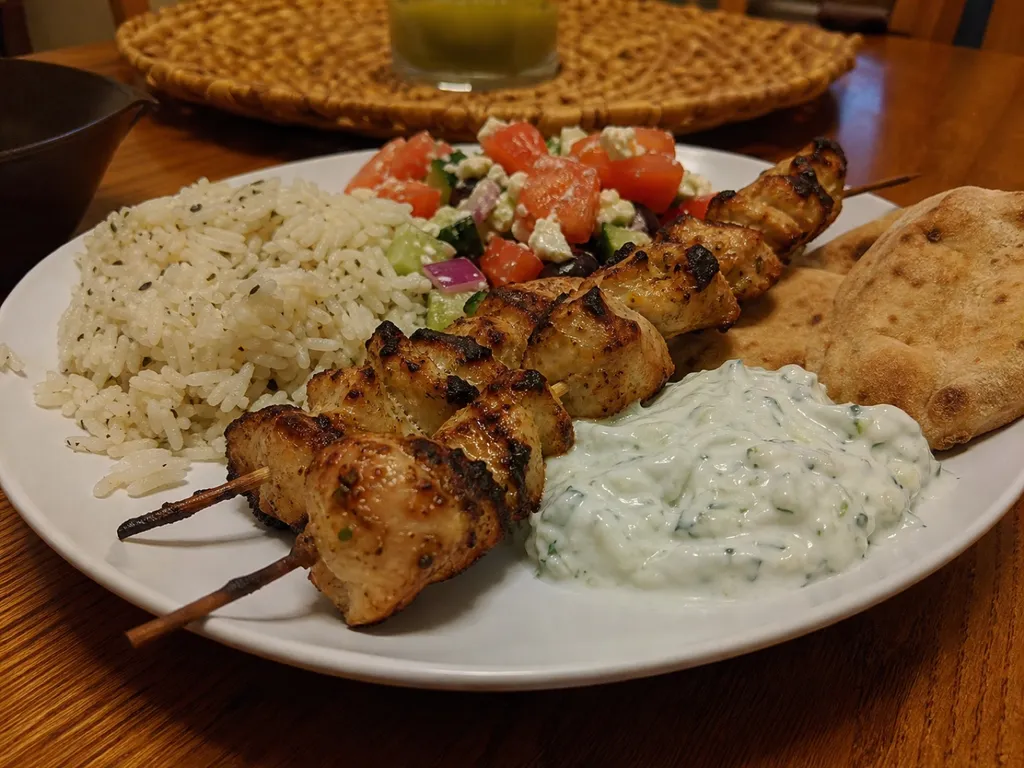
 Chicken Souvlaki with Tzatziki
Tender chunks of chicken marinated in lemon, garlic, and oregano, grilled on skewers and served with a cool, refreshing cucumber yogurt sauce.
Contains common allergens
In the app, Listahan checks these against your household automatically.
Good to know
- Ready in under 30 minutes
Matched from this dish's own ingredients and timing. Browse more: 30-minute meals
Instructions
5 steps- 1
Marinate Chicken: In a bowl, whisk together the olive oil, lemon juice, half the minced garlic, and oregano. Toss the chicken cubes in the marinade, cover, and chill for 2 to 4 hours.
- 2
Make Tzatziki: Combine the Greek yogurt, grated and drained cucumber, remaining garlic, and fresh dill. Season with salt and chill until ready to serve.
- 3
Skewer: Thread the marinated chicken pieces onto wooden or metal skewers (soak wooden skewers in water first).
- 4
Grill: Preheat a grill or grill pan over medium-high heat. Grill the skewers for 8-10 minutes, turning occasionally, until charred and cooked through.
- 5
Serve: Serve the skewers hot alongside warm pita bread and a generous scoop of tzatziki sauce.
 Images are for illustrative purposes only, may be inaccurate, and do not guarantee the presence or absence of specific ingredients.
 Listahan Family Score™
68/100
Works for many families
Score reflects how well this recipe fits a typical busy household. In the app, your Family Score is personalized to your household's allergens, kids, and pantry.
Nutrition
per serving455
Calories
59 g
Protein
6 g
Carbs
20 g
Fat
Estimated per serving. Actual values depend on the brands and portions you use.
Listahan cooking guide
Chef notes & practical guide
Technique notes, ingredient swaps, serve-alongside ideas, storage guidance, and equipment for this recipe.
Cultural context
Souvlaki has been a street food staple in Greece since antiquity, with skewered grilled meats referenced as far back as ancient Athenian texts. The word itself derives from the Greek 'souvla,' meaning skewer or spit, and the dish evolved across centuries as a practical, portable meal sold by vendors in city markets. Tzatziki, the cool yogurt-cucumber sauce that accompanies it, reflects the deep Ottoman and Levantine influence on Greek culinary tradition, appearing in essentially identical forms across Turkey and the Balkans under different names.
Listahan note
This version prioritizes a longer marinade for the chicken so the lemon and garlic fully penetrate the meat, and uses full-fat Greek yogurt in the tzatziki for a thicker, restaurant-quality texture.
Technique cues
- Let the chicken marinate for at least 2 hours and up to overnight — the lemon acid begins to firm the outer layer of meat, which helps the chicken char rather than steam on the grill.
- Squeeze shredded cucumber firmly in a clean kitchen towel before mixing it into the tzatziki; excess moisture will make the sauce watery and dilute the garlic and dill within an hour.
- Allow the grilled skewers to rest 3 to 4 minutes off the heat before serving so the juices redistribute — cutting immediately loses moisture onto the cutting board rather than into each bite.
Kitchen flow
- Parallel prep
- While the chicken marinates, make the tzatziki and store it in the fridge — it actually improves after 30 minutes as the garlic and dill mellow into the yogurt. Prep any pita or side salad while the grill preheats.
- Make-ahead
- The tzatziki keeps well refrigerated for up to 3 days; stir before serving. The chicken can marinate overnight, making this a true prep-ahead weeknight meal — just thread skewers and grill when ready.
- Leftover move
- Slice leftover chicken off the skewers and tuck into a pita with tzatziki and any remaining salad for a fast lunch wrap, or dice and fold into a grain bowl with cucumbers, olives, and feta.
- Cleanup rhythm
- Soak wooden skewers before use to prevent burning and disposal is easy. Let the grill cool slightly, then scrape the grates while still warm. The marinade bowl and tzatziki bowl are the main items to wash; there is no stovetop splatter.
Ingredient brief
Role, handling, and swap guidance for each key ingredient.
boneless, skinless chicken thighs
protein base
Purpose: Thighs have enough fat to stay moist over direct grill heat without drying out the way breasts often do on skewers.
Handling: Cut into roughly 1.5-inch cubes so each piece has enough surface area to char while staying juicy at the center.
Adaptation: Chicken breast works but benefits from an extra tablespoon of olive oil in the marinade and should be pulled from the grill just as it hits 160 F.
fresh lemon juice
marinade acid and brightener
Purpose: Lemon is the primary tenderizing agent in the marinade and its brightness carries through to the finished chicken even after grilling.
Handling: Squeeze and use immediately; bottled lemon juice lacks the volatile aromatics that make the marinade fragrant.
Adaptation: Red wine vinegar can substitute at half the quantity for a slightly deeper, less citrusy flavor profile.
full-fat Greek yogurt
tzatziki base
Purpose: Its thick, strained consistency holds shape and does not turn runny when combined with cucumber, garlic, and herbs.
Handling: Use straight from the container; if using regular plain yogurt, strain it through cheesecloth for 2 hours in the fridge first.
Adaptation: Labneh (strained yogurt cheese) produces an even richer, creamier tzatziki and is a direct 1:1 swap.
English cucumber
tzatziki body and freshness
Purpose: Its thin skin, fewer seeds, and lower water content make it easier to incorporate without turning the sauce watery.
Handling: Grate on the large holes of a box grater, then wring dry in a towel before adding to the yogurt.
Adaptation: Persian cucumbers work equally well and require no peeling; standard garden cucumbers should be peeled and seeded first.
dried oregano
marinade seasoning
Purpose: Greek dried oregano is more pungent and resinous than Italian varieties and is the herb most closely associated with the flavor signature of souvlaki.
Handling: Rub dried oregano between your palms before adding to the marinade to release its oils and intensify its aroma.
Adaptation: Fresh oregano can replace dried at a 3:1 ratio, though the flavor is more delicate and may be less assertive after marinating.
garlic cloves
aromatic for both marinade and tzatziki
Purpose: Garlic works double duty here, deepening the savory backbone of the chicken marinade and adding sharp heat to the cooling tzatziki.
Handling: Mince finely for the marinade so it adheres to the chicken; grate on a microplane for tzatziki so there are no raw chunks.
Adaptation: Garlic powder works in a pinch for the marinade (use half a teaspoon per clove) but will not replicate the fresh bite in tzatziki.
Technique notes
- If using wooden skewers, soak them in water for at least 30 minutes so they do not catch flame during grilling and char before the chicken finishes cooking.
- Get the grill or grill pan very hot before adding the skewers — a proper sear in the first 90 seconds sets a crust that seals in juices and creates the slightly smoky char that defines souvlaki.
- For tzatziki, add the garlic in two stages: half goes in right away for background flavor, and reserve half to stir in just before serving so you get both mellow and fresh garlic notes in one sauce.
Ingredient swaps
- Gluten-free direction
- Serve with rice or over a salad instead of pita bread — all other components are naturally gluten-free, making this an easy adaptation.
- Dairy-free direction
- Replace Greek yogurt in the tzatziki with a thick, unsweetened coconut or cashew yogurt; stir in a teaspoon of lemon juice to replicate the tang of dairy yogurt.
- Weeknight shortcut
- Use pre-cubed chicken from the butcher counter and a store-bought tzatziki to reduce active prep to under 15 minutes — just marinate for as long as you have, even 20 minutes adds noticeable flavor.
Serve alongside
- Greek Village Salad (Horiatiki) with olives and feta
- Warm pita bread with olive oil
- Lemon herb rice pilaf
- Roasted eggplant with tahini
- Chilled Assyrtiko white wine from Santorini
- Sparkling water with cucumber and mint
- Cold Mythos or Alpha lager
Serving suggestions only — check pairings for your household's allergens.
Storage & reheating
- Cooked chicken skewers keep refrigerated for up to 3 days in an airtight container; reheat briefly in a skillet over medium heat or in a 350 F oven for 8 minutes to restore some char without drying out.
- Tzatziki holds for up to 3 days refrigerated — give it a good stir before serving as some liquid separation is normal; do not freeze as the yogurt will break.
Equipment
- Metal or pre-soaked wooden skewers (12-inch length) for even heat distribution across the chicken pieces
- Cast-iron grill pan or outdoor grill for achieving proper char marks and smoky flavor
- Box grater for shredding cucumber quickly and evenly
- Microplane or fine grater for turning garlic into a paste that blends smoothly into tzatziki
Make this household-aware
Listahan Pro checks this recipe against your household's allergens, finds pantry-aware swaps, builds the shopping list, and helps you plan the week around it.
Plan it in Listahan
Add Chicken Souvlaki with Tzatziki to your week, check it against your household's allergens, and build the shopping list automatically.
More Greek recipes
 Greek Lens Verified Images are for illustrative purposes only, may be inaccurate, and do not guarantee the presence or absence of specific ingredients.
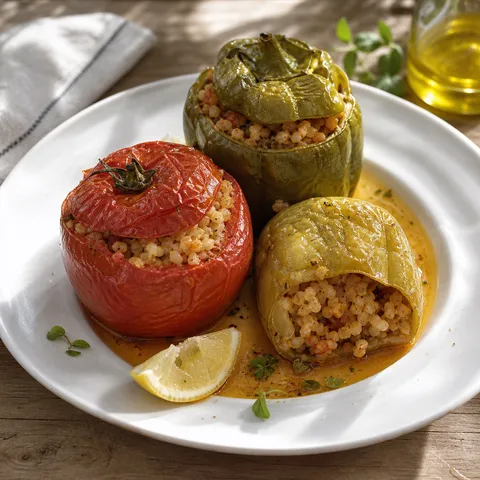
 Gemista (Stuffed Tomatoes and Peppers with Rice)
Ripe tomatoes and bell peppers hollowed out and stuffed with a savory herbed rice filling, then baked until tender and caramelized.
 Greek Lens Verified Images are for illustrative purposes only, may be inaccurate, and do not guarantee the presence or absence of specific ingredients.
 Kourabiedes (Greek Almond Butter Cookies)
Buttery, crumbly shortbread cookies studded with toasted almonds and generously dusted with powdered sugar.
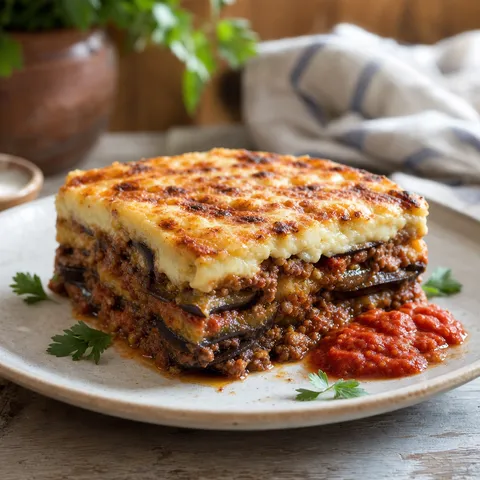 Greek Lens Verified Images are for illustrative purposes only, may be inaccurate, and do not guarantee the presence or absence of specific ingredients.
 Classic Moussaka
A rich, layered Greek casserole featuring roasted eggplant, a hearty spiced meat sauce, and a thick, creamy béchamel topping.