 Food Lens Images are for illustrative purposes only, may be inaccurate, and do not guarantee the presence or absence of specific ingredients.
 Food Lens · Recipe ingredients
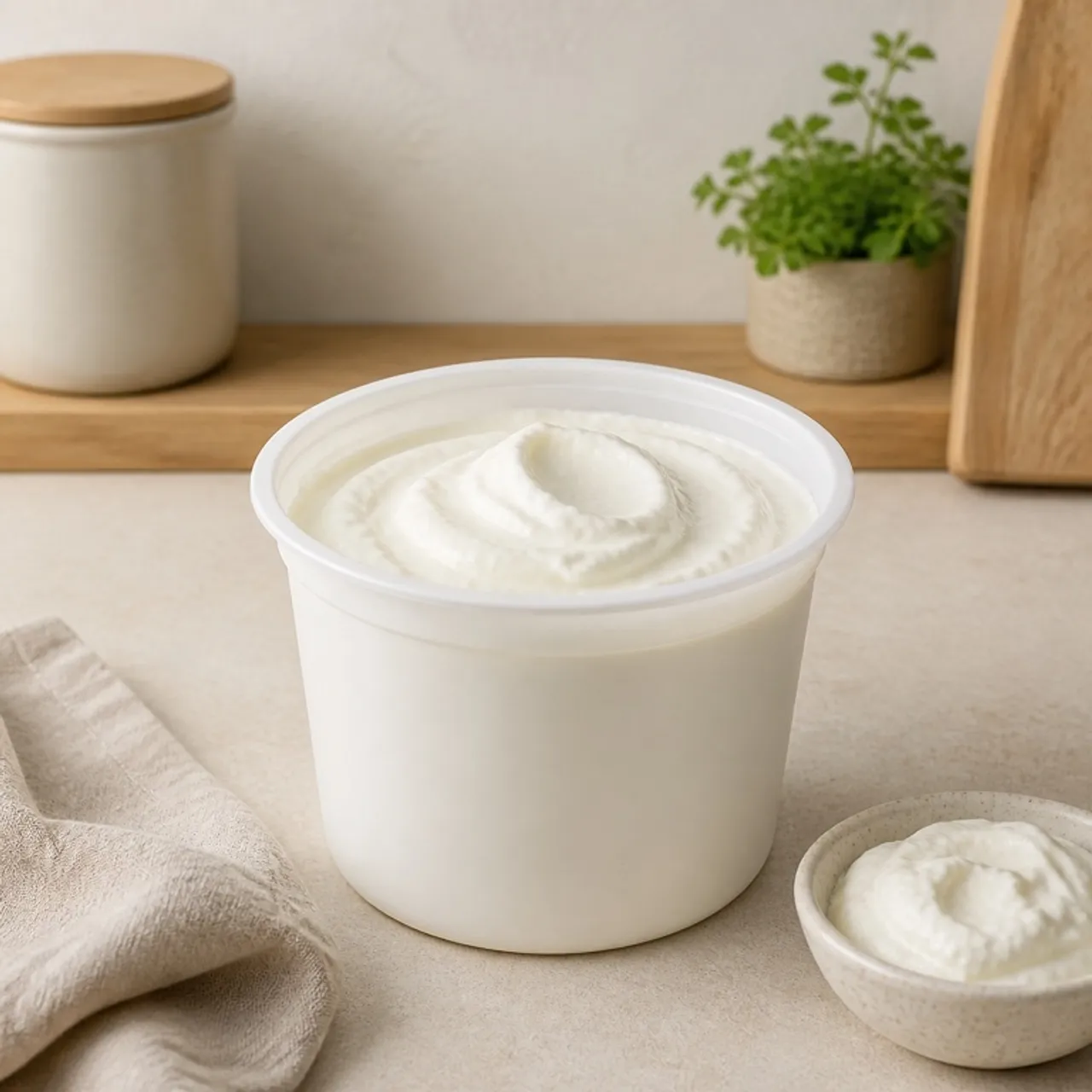
Plain Greek Yogurt
Thick, creamy, and distinctly tangy with a clean sour note — fuller and richer than regular yogurt, with a protein-dense density that makes it more filling.
Lens VerifiedPlain Greek yogurt is regular yogurt that has been strained through cheesecloth or a fine mesh to remove much of the whey, resulting in a product that is notably thicker, creamier, and higher in protein than conventional yogurt. The straining concentrates its tangy flavor and dense texture, making it equally at home as a savory condiment, baking ingredient, or protein-rich breakfast base.
Where it comes from
Born from the ancient practice of draining whey from fermented milk, Greek yogurt is strained tradition — centuries of dairy craft concentrated into a spoonful.
Varieties — Available in whole-milk (richest, creamiest), 2%, and non-fat varieties. Full-fat Greek yogurt is significantly more satisfying for cooking applications; non-fat versions can become watery when heated.
Throughout the Eastern Mediterranean and Central Asia, strained yogurt (often homemade) has been a daily staple for millennia, appearing at nearly every meal as a condiment, side, or base for savory preparations.
In a modern kitchen — Whipped with a fork and seasoned with salt and olive oil, plain Greek yogurt makes an instant, elegant sauce base for grilled meats and roasted vegetables.
Buying it
Choose whole-milk Greek yogurt for the best flavor and cooking performance. Check that the only ingredients are milk and live cultures — avoid products with added thickeners like cornstarch or gelatin, which indicate the yogurt hasn't been properly strained.
Storing it
Keep refrigerated at all times and reseal tightly after each use. A thin layer of liquid on top is normal whey — stir it back in — but any mold or sour off-smell means it's time to toss it.
Keeps about 14 days in the fridge.
Out of plain greek yogurt? Good swaps
- sour cream — Similar tang and richness; higher fat, lower protein; works in most applications
- labneh — Even more strained, closer to cream cheese in texture; excellent spread, too thick for dressings
General cooking guidance — always check the labels on the products you use. Listahan’s allergen checks run automatically when you plan a recipe in the app. Not medical advice.
Recipes that use plain greek yogurt
Common questions about plain greek yogurt
What can I use instead of plain greek yogurt?
Good swaps include sour cream, labneh. Each behaves a little differently — see the swaps above for notes, and always check labels for allergens.
How do I store plain greek yogurt?
Keep refrigerated at all times and reseal tightly after each use. A thin layer of liquid on top is normal whey — stir it back in — but any mold or sour off-smell means it's time to toss it. It keeps about 14 days in the fridge.
More recipe ingredients
See all


Make plain greek yogurt about your kitchen — with Listahan Pro
Everything above is free, forever. Pro adds the Household Lens — the same food, seen for your family:
-
Checked for each member
Flags plain greek yogurt per person against your household's allergies and school rules — not just a generic "contains" tag.
-
Pantry-aware
Knows whether you already have it, what is running low, and the best swap from what is in your kitchen tonight.
-
What it costs near you
A real price from the Presyo community index, so you can plan the budget — not guess.
-
Your household memory
Who likes it, plus your own private notes — brand, where you keep it, who skips it.
Allergen safety is always free — Pro adds the automation, never the safety.
Cook with plain greek yogurt — safely
Plan a recipe in Listahan and the household allergen check runs automatically — every plan, every swap, every lunchbox. Safety is never paywalled.