 Greek Images are for illustrative purposes only, may be inaccurate, and do not guarantee the presence or absence of specific ingredients.
  Serving Images are for illustrative purposes only, may be inaccurate, and do not guarantee the presence or absence of specific ingredients.
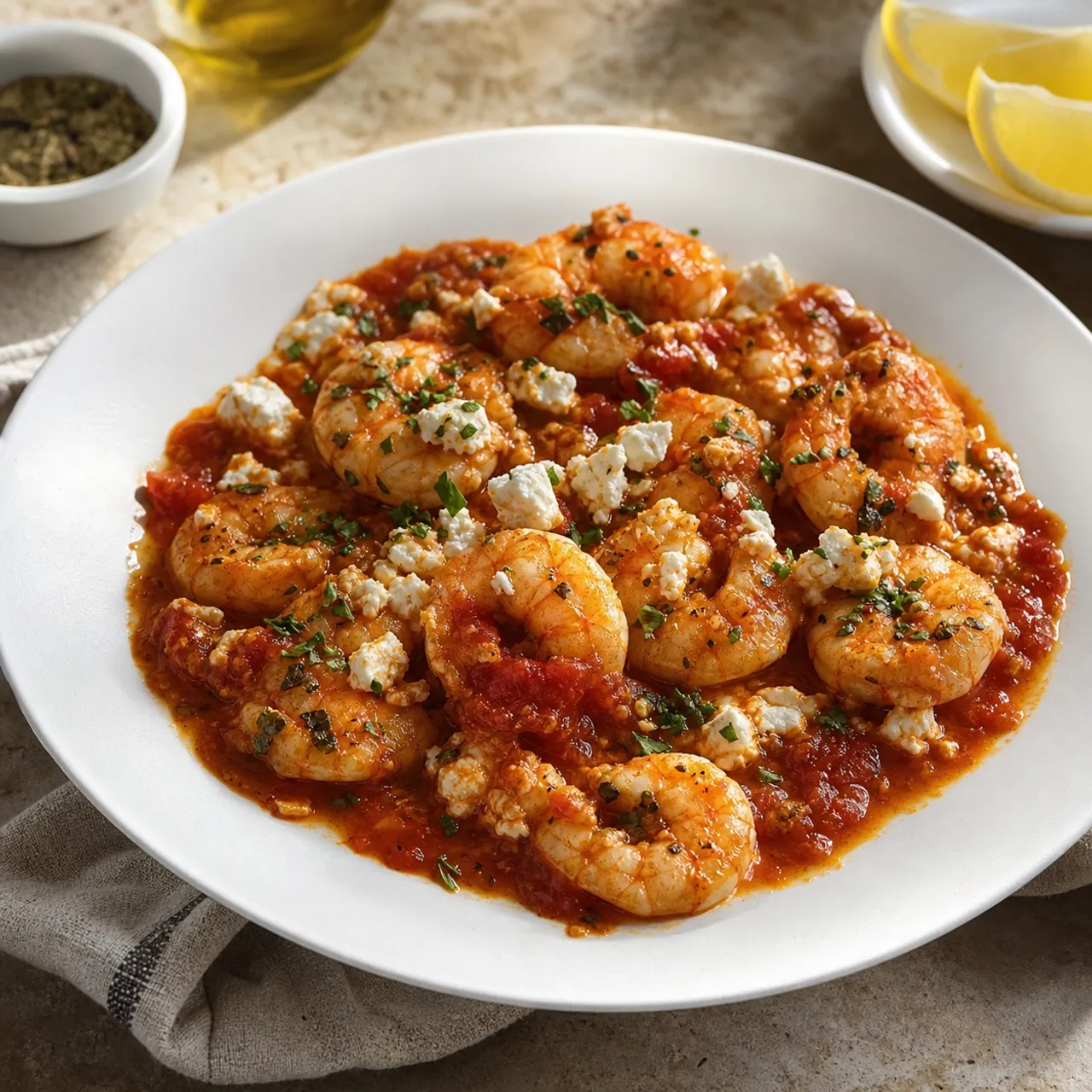
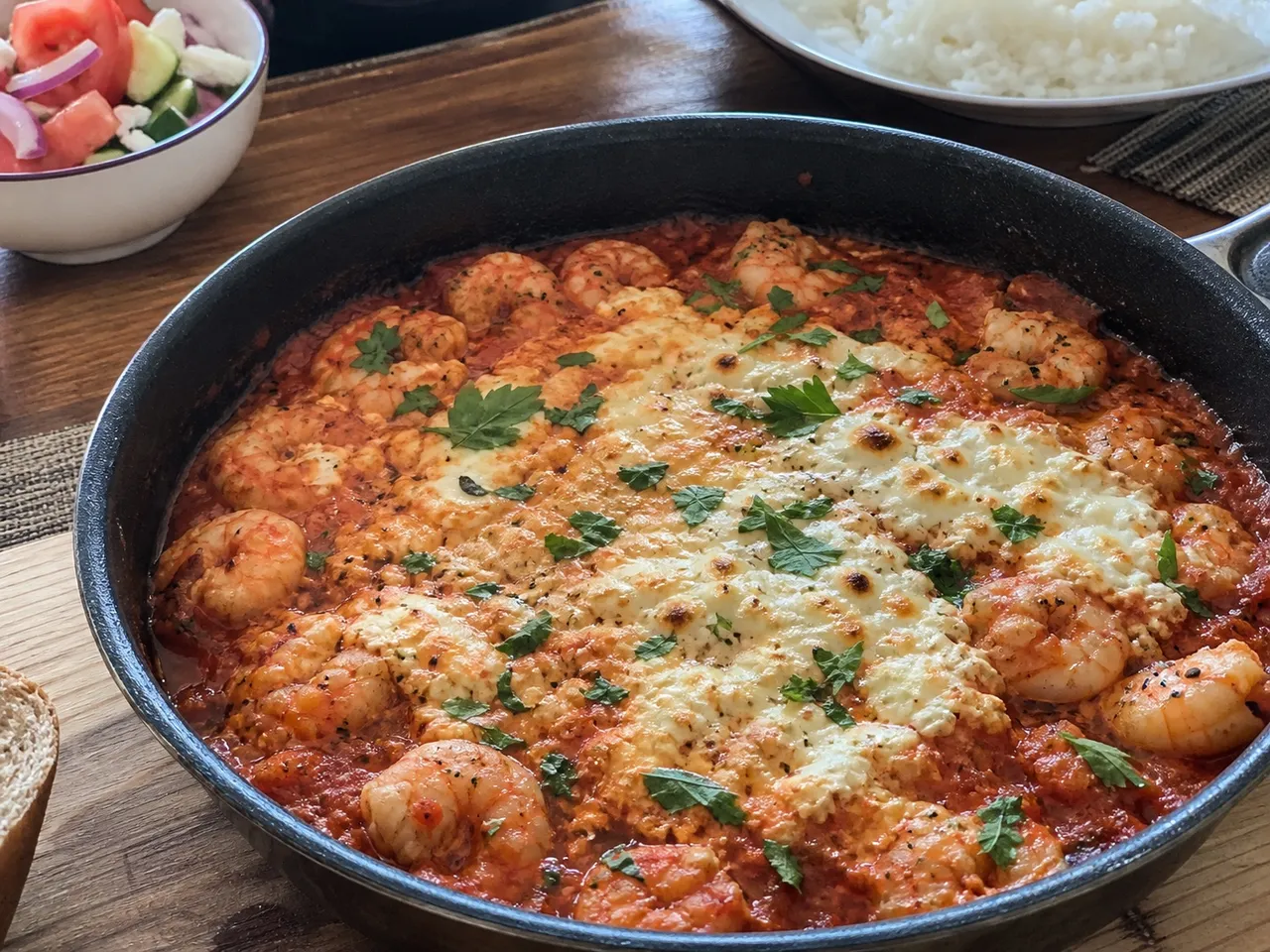
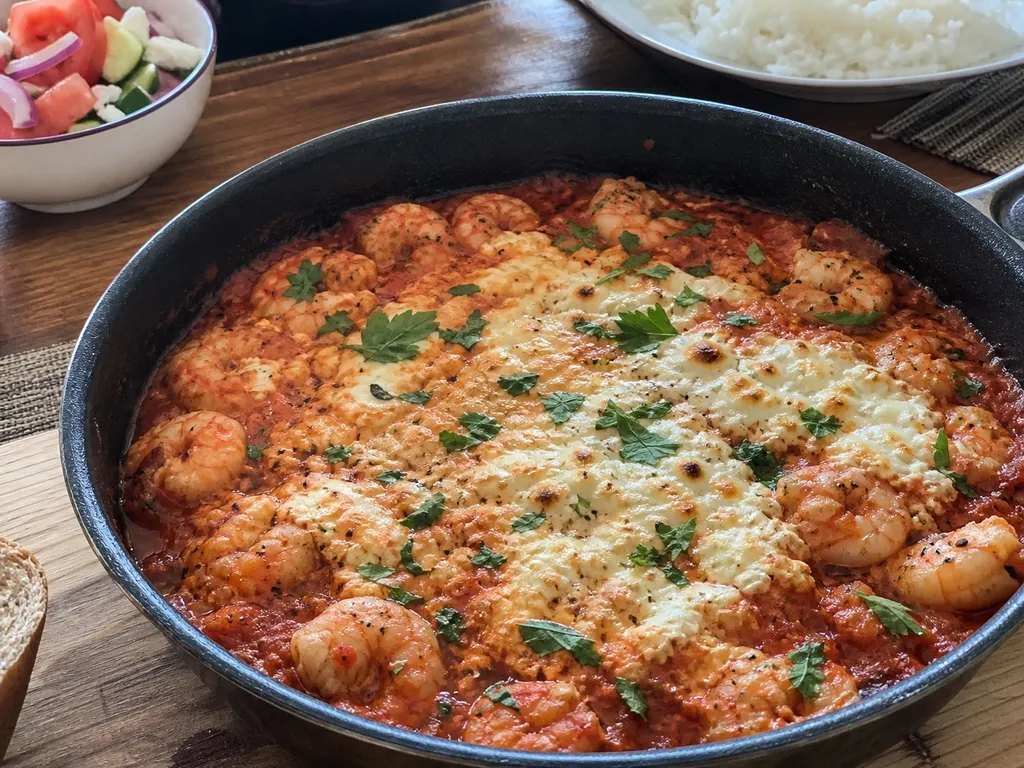
 Garides Saganaki (Shrimp Baked in Tomato Sauce with Feta)
Plump shrimp simmered in a garlicky tomato sauce and baked with a generous layer of crumbled feta until bubbling.
Contains common allergens
In the app, Listahan checks these against your household automatically.
Instructions
6 steps- 1
Heat olive oil in an oven-safe skillet and saute the onion until soft, about 5 minutes.
- 2
Add the garlic and cook for 1 minute, then stir in the crushed tomatoes, white wine, red pepper flakes, and oregano.
- 3
Simmer the sauce for 12-15 minutes, until slightly thickened, then season with salt and pepper.
- 4
Nestle the shrimp into the sauce and cook for 2-3 minutes, until just starting to turn pink.
- 5
Sprinkle the crumbled feta evenly over the top and transfer to a 400°F oven for 8-10 minutes, until the shrimp are cooked through and the feta is soft and golden.
- 6
Garnish with fresh parsley and serve immediately with crusty bread.
 Images are for illustrative purposes only, may be inaccurate, and do not guarantee the presence or absence of specific ingredients.
 Listahan Family Score™
62/100
Works for many families
Score reflects how well this recipe fits a typical busy household. In the app, your Family Score is personalized to your household's allergens, kids, and pantry.
Nutrition
per serving465
Calories
52 g
Protein
6 g
Carbs
25 g
Fat
Estimated per serving. Actual values depend on the brands and portions you use.
Listahan cooking guide
Chef notes & practical guide
Technique notes, ingredient swaps, serve-alongside ideas, storage guidance, and equipment for this recipe.
Cultural context
Saganaki refers to the small two-handled frying pan Greek dishes are traditionally cooked and served in, and this shrimp version pairs pan-frying with a quick tomato sauce and a Greek favorite: melting a slab or crumble of feta right into the seafood. It is a fixture of taverna menus near the coast, where it is often served bubbling straight from the oven.
Listahan note
This version builds the tomato sauce first and only nestles the shrimp in at the very end, so the shrimp finish in the residual heat of the sauce and the broiler rather than overcooking on the stovetop.
Technique cues
- Building the tomato sauce fully before the shrimp go in, including a proper 12-15 minute simmer, keeps the acidity from the tomatoes from toughening the shrimp, which only needs a couple of minutes.
- Adding the shrimp raw and only partially cooking them on the stovetop before finishing under the oven's heat with the feta prevents the classic rubbery, overdone shrimp texture.
- Feta softens rather than fully melts under heat because of its higher acidity and lower moisture compared to cow's milk cheeses, so it turns creamy at the edges while keeping some structure, which is the texture you want here.
Kitchen flow
- Parallel prep
- While the sauce simmers for 12-15 minutes, peel and devein the shrimp if not already done and crumble the feta.
- Make-ahead
- The tomato sauce can be made up to 2 days ahead and refrigerated; reheat it in the skillet before adding the raw shrimp and feta.
- Leftover move
- Spoon leftover sauce and shrimp over rice or orzo the next day rather than reheating alone, since the sauce thickens further in the fridge.
- Cleanup rhythm
- Use the same oven-safe skillet from stovetop to oven to broiler stage, which cuts the dishes down to one pan plus a cutting board.
Ingredient brief
Role, handling, and swap guidance for each key ingredient.
large shrimp, peeled and deveined
main protein
Purpose: large shrimp hold up better to the two-stage stovetop-then-oven cooking without turning tough
Handling: pat dry before adding to the sauce so it sears rather than steams
Adaptation: cubed firm white fish works in a pinch but will need slightly longer in the oven
feta cheese
finishing cheese
Purpose: its salty, tangy sharpness cuts through the sweetness of the tomato sauce
Handling: crumble it in large pieces rather than fine crumbles so it holds some shape as it softens in the oven
Adaptation: a mild, salty ricotta salata is a reasonable substitute if feta is unavailable, though the tang will be milder
crushed tomatoes
sauce base
Purpose: gives the dish its signature saganaki color and body
Handling: simmer uncovered so the sauce reduces and thickens rather than staying thin and watery
Adaptation: fresh, peeled and crushed ripe tomatoes work well in summer, using slightly more since they carry more water
white wine
sauce depth
Purpose: adds acidity and complexity that balances the sweetness of the tomatoes
Handling: add it early with the tomatoes so the alcohol cooks off during the simmer
Adaptation: a splash of lemon juice added at the end can stand in for a non-alcoholic version
red pepper flakes
background heat
Purpose: gives the sauce a gentle warmth that plays well against the cool feta
Handling: bloom briefly in the oil with the garlic before adding the tomatoes
Adaptation: omit entirely for a mild version, or use a pinch of cayenne if flakes are unavailable
Technique notes
- Watch for the shrimp turning from translucent to just barely pink on the stovetop before moving the skillet to the oven; they will finish cooking in the last 8-10 minutes under the feta.
- Use an oven-safe skillet, cast iron or a stainless saute pan, since the dish moves directly from stovetop to oven with no need to transfer to a separate baking dish.
- Serve the dish immediately from the pan while the sauce is still bubbling at the edges; saganaki dishes are meant to arrive at the table hot, not rested.
Ingredient swaps
- Dairy-free option
- Swap the feta for a dairy-free feta-style crumble; the texture will be softer but the salty tang still works.
- Gluten-free direction
- Skip the crusty bread on the side and serve over rice instead to keep the meal gluten-free.
- Lower-sodium direction
- Use a lower-sodium feta if available and rinse briefly, since feta and canned tomatoes both add meaningful salt.
Serve alongside
- Crusty bread for scooping up the sauce
- Rice pilaf
- Horiatiki salata
- Sauteed greens with lemon
- A dry Greek rose
- Ouzo diluted with cold water
Serving suggestions only — check pairings for your household's allergens.
Storage & reheating
- Refrigerate up to 2 days in an airtight container
- Reheat gently on the stovetop over low heat, covered, to avoid overcooking the shrimp further
- Not recommended for freezing, since the shrimp texture suffers on thawing
Equipment
- Oven-safe skillet
- Broiler-safe pan
- Wooden spoon
- Tongs for the shrimp
Make this household-aware
Listahan Pro checks this recipe against your household's allergens, finds pantry-aware swaps, builds the shopping list, and helps you plan the week around it.
Plan it in Listahan
Add Garides Saganaki (Shrimp Baked in Tomato Sauce with Feta) to your week, check it against your household's allergens, and build the shopping list automatically.
More Greek recipes
 Greek Lens Verified Images are for illustrative purposes only, may be inaccurate, and do not guarantee the presence or absence of specific ingredients.
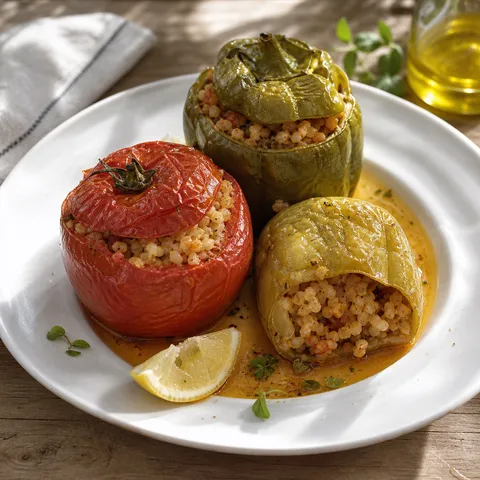
 Gemista (Stuffed Tomatoes and Peppers with Rice)
Ripe tomatoes and bell peppers hollowed out and stuffed with a savory herbed rice filling, then baked until tender and caramelized.
 Greek Lens Verified Images are for illustrative purposes only, may be inaccurate, and do not guarantee the presence or absence of specific ingredients.
 Kourabiedes (Greek Almond Butter Cookies)
Buttery, crumbly shortbread cookies studded with toasted almonds and generously dusted with powdered sugar.
 Greek Lens Verified Images are for illustrative purposes only, may be inaccurate, and do not guarantee the presence or absence of specific ingredients.
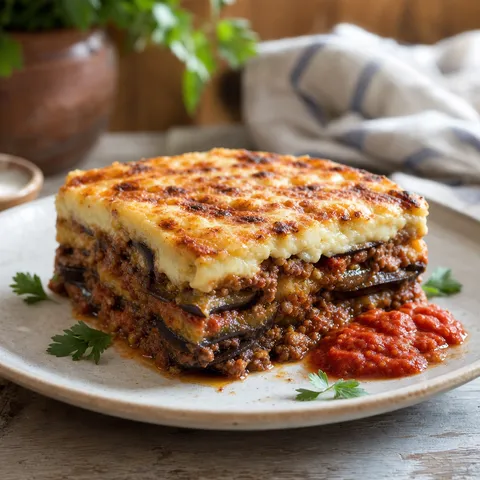
 Classic Moussaka
A rich, layered Greek casserole featuring roasted eggplant, a hearty spiced meat sauce, and a thick, creamy béchamel topping.