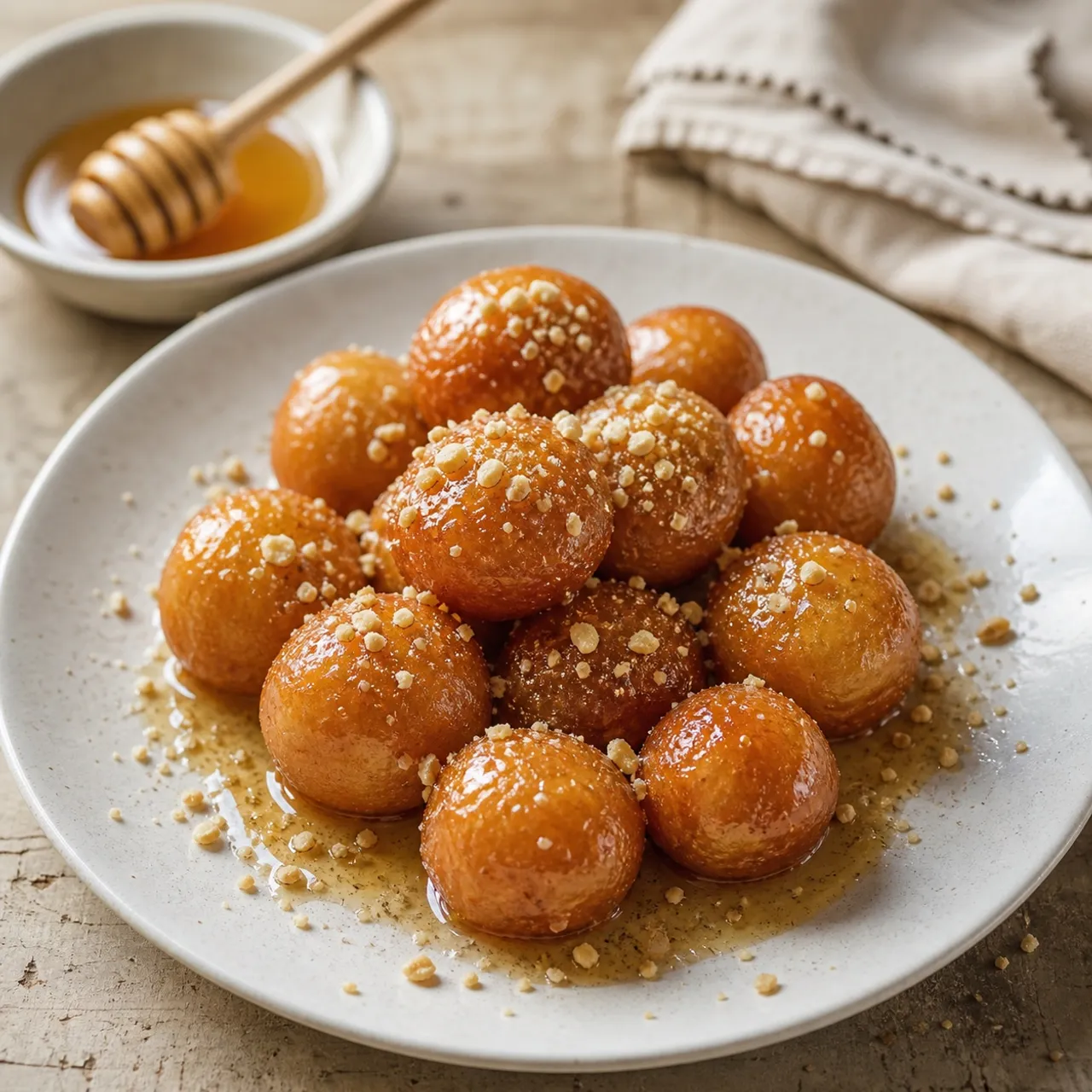
 Greek Images are for illustrative purposes only, may be inaccurate, and do not guarantee the presence or absence of specific ingredients.
 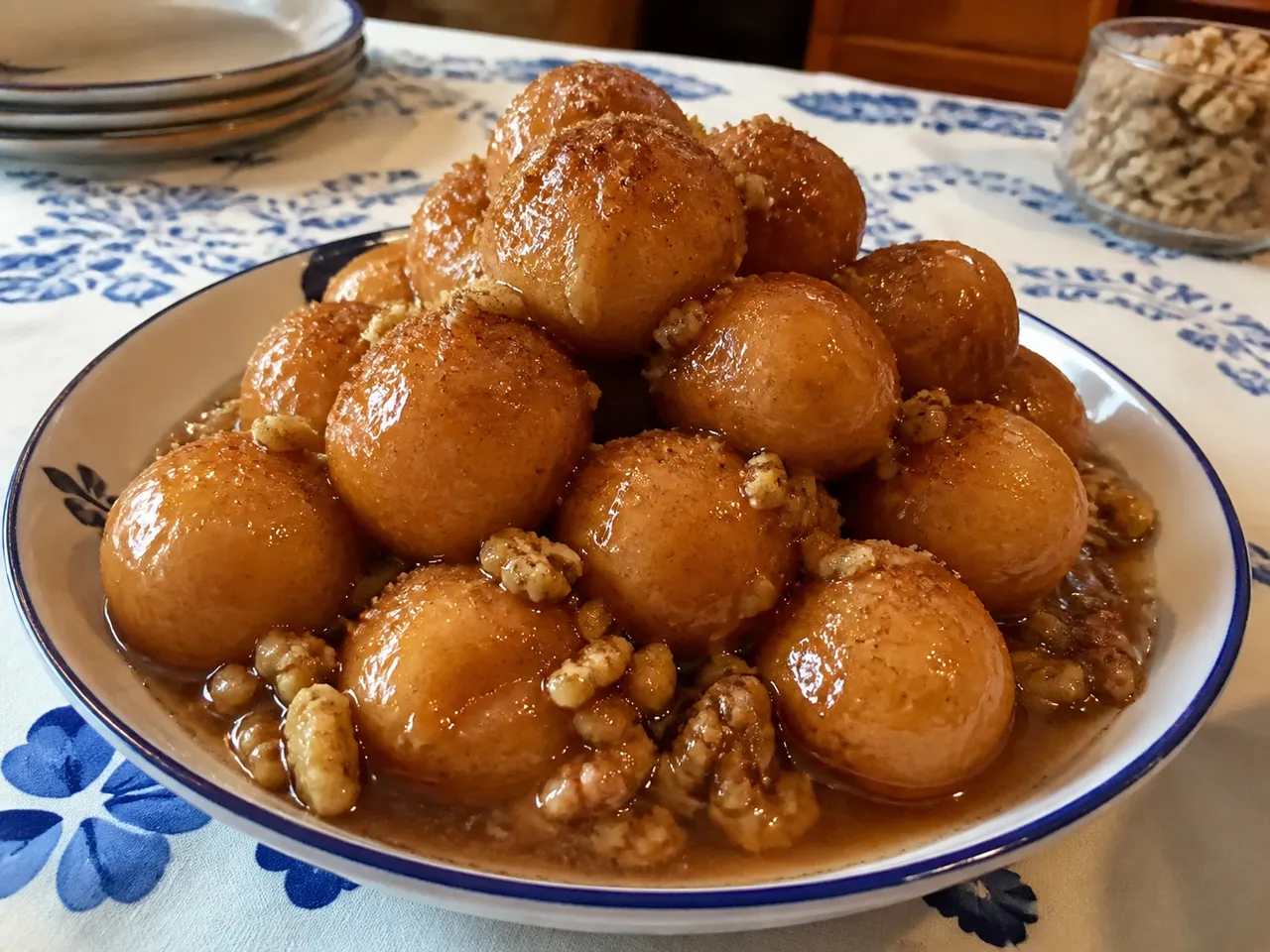 Serving Images are for illustrative purposes only, may be inaccurate, and do not guarantee the presence or absence of specific ingredients.
 Loukoumades (Greek Honey Doughnuts)
Light, airy fried dough balls soaked in warm honey syrup and dusted with cinnamon and crushed walnuts.
Contains common allergens
In the app, Listahan checks these against your household automatically.
Good to know
- Crispy
Matched from this dish's own ingredients and timing. Browse more: crispy recipes
Instructions
7 steps- 1
Dissolve the yeast and sugar in warm water and let stand for 10 minutes, until foamy.
- 2
Whisk in the flour and salt to form a thick, sticky batter, then cover and let rise in a warm place for 1 hour, until bubbly and doubled.
- 3
Heat vegetable oil in a deep pot to 350°F.
- 4
Using a wet spoon or your hands, drop small portions of the batter into the hot oil, frying in batches for 2-3 minutes, until puffed and golden brown, then drain on paper towels.
- 5
Meanwhile, simmer the honey and water together for 5 minutes to make a thin syrup.
- 6
Toss the warm fried dough balls in the honey syrup, then arrange on a plate.
- 7
Sprinkle with ground cinnamon and chopped walnuts before serving warm.
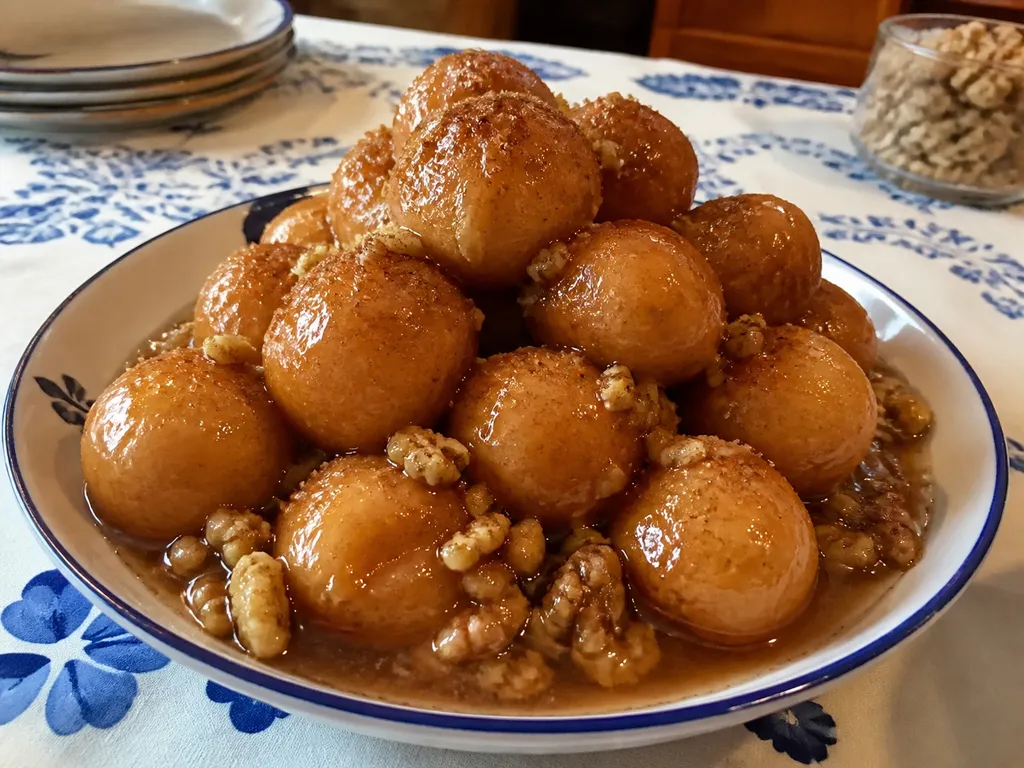 Images are for illustrative purposes only, may be inaccurate, and do not guarantee the presence or absence of specific ingredients.
 Listahan Family Score™
75/100
Good fit for most families
Score reflects how well this recipe fits a typical busy household. In the app, your Family Score is personalized to your household's allergens, kids, and pantry.
Nutrition
per serving445
Calories
7 g
Protein
97 g
Carbs
4 g
Fat
Estimated per serving. Actual values depend on the brands and portions you use.
Listahan cooking guide
Chef notes & practical guide
Technique notes, ingredient swaps, serve-alongside ideas, storage guidance, and equipment for this recipe.
Cultural context
Loukoumades are often called the ancestor of the doughnut, with roots tracing back to ancient Greece where honey-soaked fried dough was reportedly given to winners at early athletic games. Today they are a fixture of festivals, fairs, and dedicated loukoumadopoleia (loukoumades shops) across Greece, always served warm and dripping with syrup rather than sugar-glazed like a Western doughnut.
Listahan note
This version keeps the batter loose and yeasted rather than a firm dough, which is what gives loukoumades their characteristic craggy, airy inside instead of a dense cake-doughnut texture.
Technique cues
- The batter here is deliberately thick and sticky rather than a kneadable dough, since a wet, yeast-risen batter is what produces the light, irregular, almost tempura-like crumb that sets loukoumades apart from a cake doughnut.
- Frying at a steady 350F is important because a batter this wet will absorb excess oil at lower temperatures and burn on the outside before cooking through at higher ones.
- Tossing the still-warm fried dough in syrup, rather than pouring syrup over cooled pieces, lets the warm dough actually absorb some syrup rather than just being coated on the surface.
Kitchen flow
- Parallel prep
- While the batter rises for an hour, prepare the honey syrup and set up the frying station with a thermometer and paper towels nearby.
- Make-ahead
- The batter is best fried fresh right after it rises; loukoumades do not hold up well if the batter sits much longer since it can overproof and deflate.
- Leftover move
- Leftover loukoumades are best eaten the same day; if any remain, warm them briefly in a low oven before serving rather than the microwave.
- Cleanup rhythm
- Keep a spider strainer and a paper-towel-lined tray next to the frying pot so each batch can drain immediately without oil pooling.
Ingredient brief
Role, handling, and swap guidance for each key ingredient.
active dry yeast
leavener
Purpose: it is what gives the batter its rise and the characteristic light, airy interior once fried
Handling: proof it in warm water with a little sugar first and confirm it turns foamy before proceeding, which confirms the yeast is alive
Adaptation: instant yeast can be used directly in the flour without proofing first, using the same amount
all-purpose flour
batter structure
Purpose: provides just enough structure to hold the batter together while frying without making it dense
Handling: whisk in gradually to avoid lumps, since the batter should remain thick but pourable, not stiff
Adaptation: bread flour can be used for a slightly chewier result
honey
syrup base
Purpose: honey syrup is the traditional coating, distinct from the sugar syrups used in many other fried dough desserts
Handling: simmer briefly with water just to thin it enough to coat the fried dough evenly
Adaptation: a blend of honey and a bit of maple syrup adds a different but pleasant depth if the honey flavor feels too strong
walnuts
topping
Purpose: their slight bitterness and crunch cut through the honey's sweetness
Handling: chop finely and sprinkle only after the dough has been tossed in syrup, so they stick to the surface
Adaptation: pistachios are a common and traditional alternative topping
ground cinnamon
finishing spice
Purpose: adds warmth that pairs naturally with the honey and walnuts
Handling: dust it on right at the end, after the syrup and nuts, so it stays visible and fragrant rather than dissolving
Adaptation: a pinch of ground clove alongside the cinnamon adds more complexity for those who like a spicier finish
Technique notes
- Use two spoons, or wet hands, to portion the sticky batter into the oil, dipping them in water or oil between scoops to keep the batter from sticking.
- Fry in small batches so the oil temperature does not drop too much at once, which would make the loukoumades greasy instead of crisp.
- Drain briefly on paper towels before tossing in syrup, not the other way around, so excess frying oil does not mix into the honey syrup.
Ingredient swaps
- Tree-nut-free direction
- Omit the walnuts entirely or swap in toasted sesame seeds for crunch without any tree nuts.
- Dairy-free direction
- The dough is yeast, flour, water, sugar and salt, fried in vegetable oil, with a honey syrup — no milk or butter is called for. Note the walnut topping.
- Weeknight shortcut
- Use a stand mixer with a dough hook to bring the batter together faster, though the rise time cannot be shortened.
Serve alongside
- Greek yogurt on the side for a tangy contrast
- Fresh figs or seasonal fruit
- Greek coffee
- A glass of cold milk for kids
Serving suggestions only — check pairings for your household's allergens.
Storage & reheating
- Best eaten fresh and warm the day they are made
- Reheat briefly in a 300F oven for a few minutes to re-crisp; avoid the microwave which makes them soggy
- Not recommended for freezing since the fried texture does not hold up well
Equipment
- Deep, heavy pot for frying
- Kitchen thermometer
- Spider strainer or slotted spoon
- Paper towel-lined tray
Make this household-aware
Listahan Pro checks this recipe against your household's allergens, finds pantry-aware swaps, builds the shopping list, and helps you plan the week around it.
Plan it in Listahan
Add Loukoumades (Greek Honey Doughnuts) to your week, check it against your household's allergens, and build the shopping list automatically.
More Greek recipes
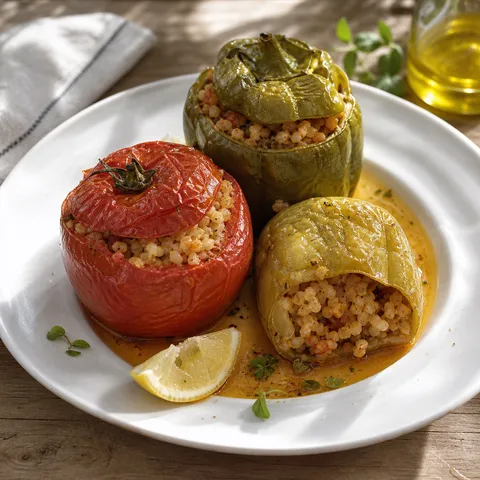 Greek Lens Verified Images are for illustrative purposes only, may be inaccurate, and do not guarantee the presence or absence of specific ingredients.
 Gemista (Stuffed Tomatoes and Peppers with Rice)
Ripe tomatoes and bell peppers hollowed out and stuffed with a savory herbed rice filling, then baked until tender and caramelized.
 Greek Lens Verified Images are for illustrative purposes only, may be inaccurate, and do not guarantee the presence or absence of specific ingredients.
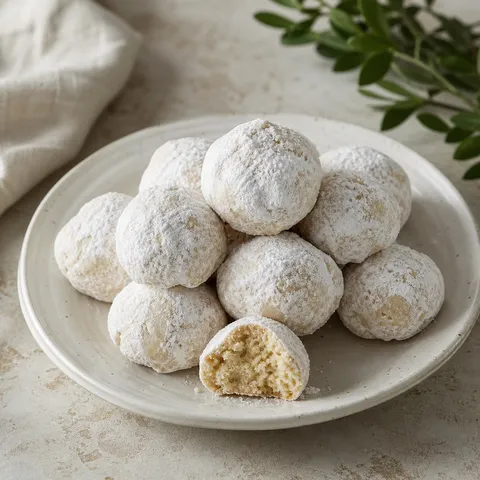
 Kourabiedes (Greek Almond Butter Cookies)
Buttery, crumbly shortbread cookies studded with toasted almonds and generously dusted with powdered sugar.
 Greek Lens Verified Images are for illustrative purposes only, may be inaccurate, and do not guarantee the presence or absence of specific ingredients.
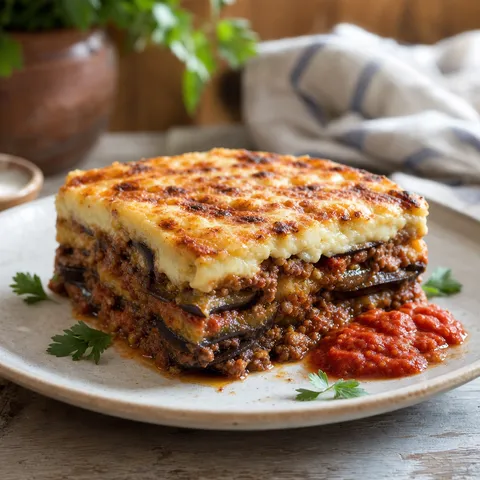
 Classic Moussaka
A rich, layered Greek casserole featuring roasted eggplant, a hearty spiced meat sauce, and a thick, creamy béchamel topping.