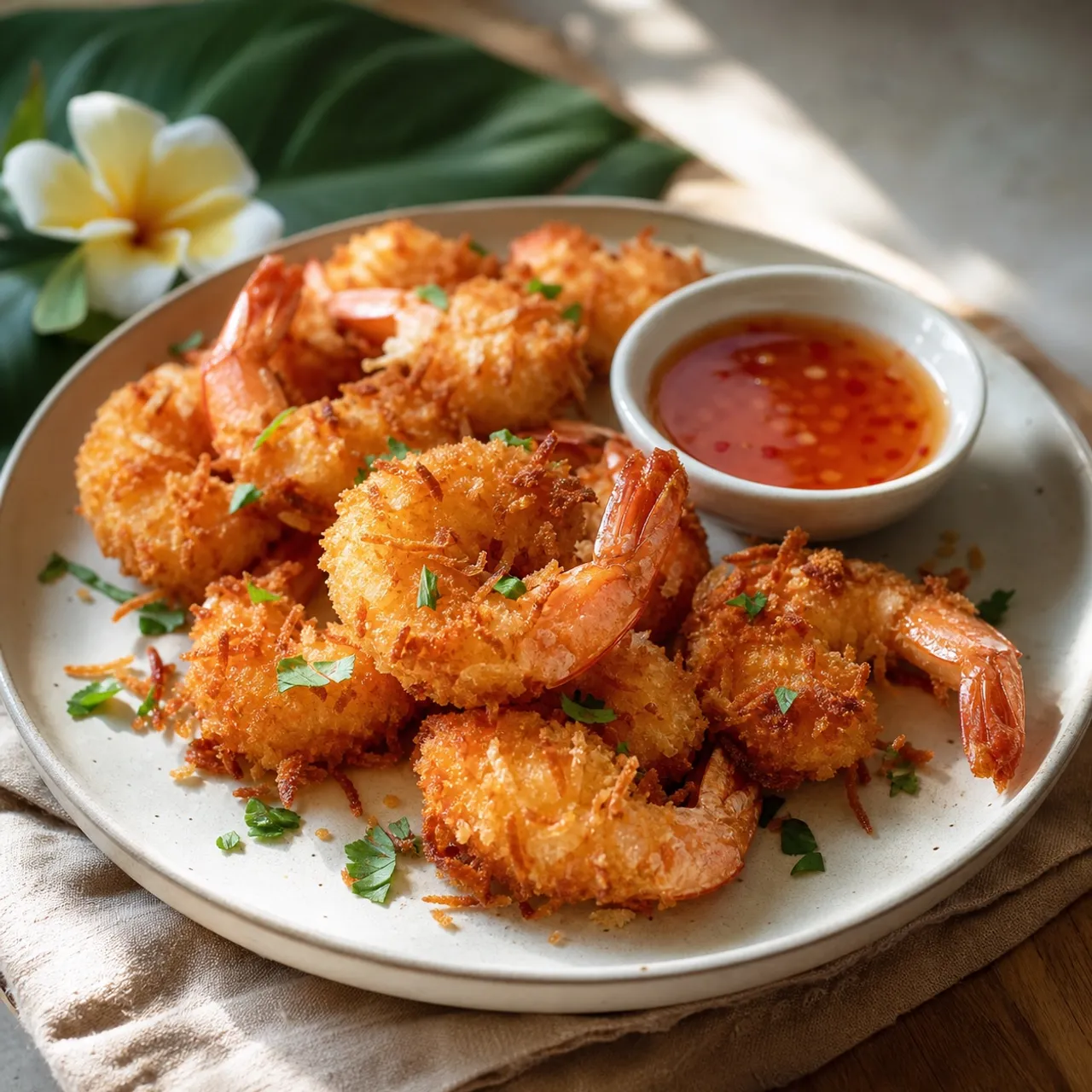
 Hawaiian Images are for illustrative purposes only, may be inaccurate, and do not guarantee the presence or absence of specific ingredients.
 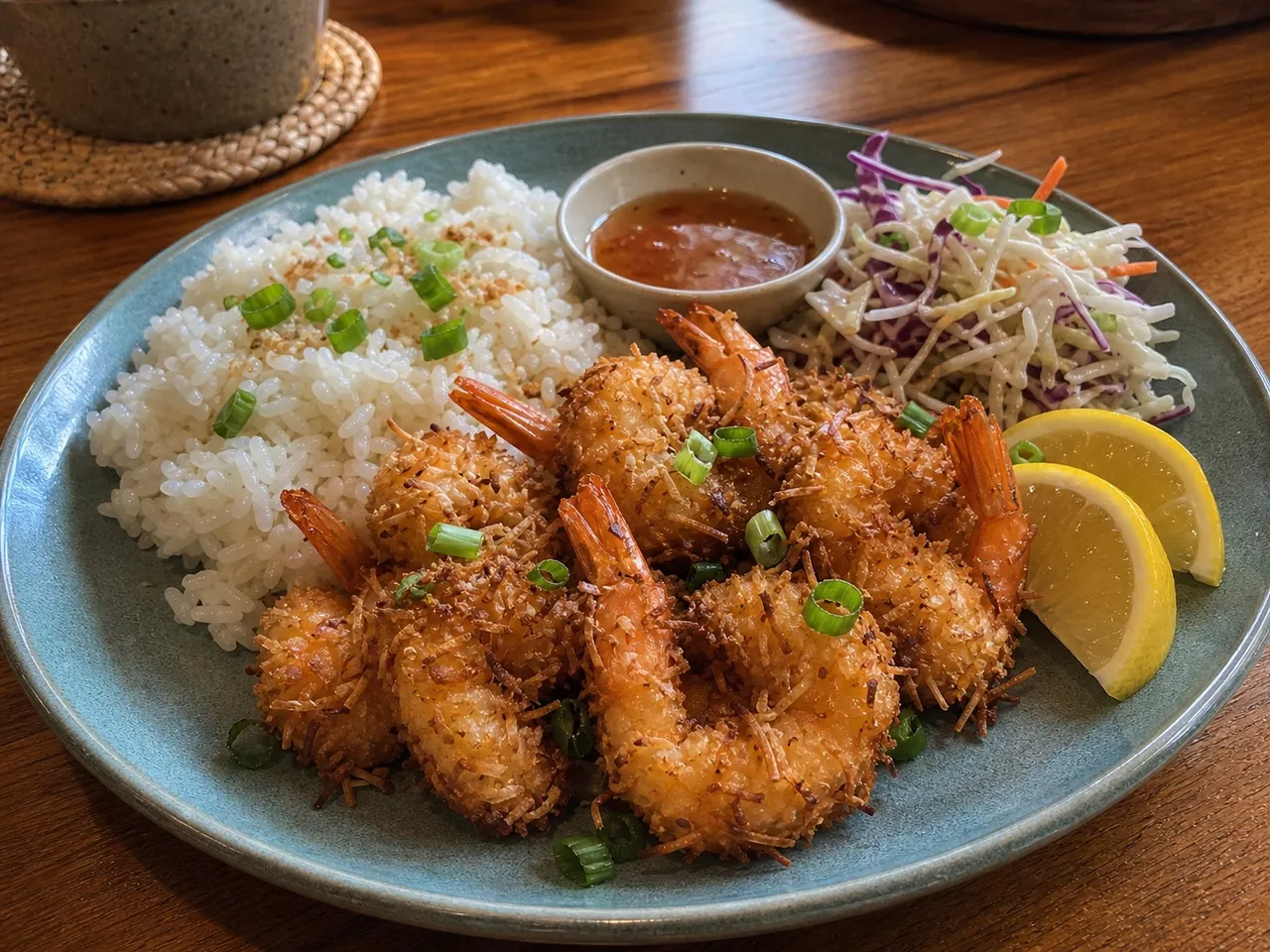 Serving Images are for illustrative purposes only, may be inaccurate, and do not guarantee the presence or absence of specific ingredients.
 Coconut Shrimp
Plump shrimp coated in a crisp shredded coconut crust and fried golden — sweet, crunchy, and tropical, best dipped in a tangy pineapple dipping sauce.
Contains common allergens
In the app, Listahan checks these against your household automatically.
Good to know
- Ready in under 30 minutes
Matched from this dish's own ingredients and timing. Browse more: 30-minute meals
Instructions
7 steps- 1
Pat the shrimp completely dry and season lightly with salt.
- 2
Set up a breading station with flour in one bowl, beaten eggs in a second, and the shredded coconut mixed with panko in a third.
- 3
Holding each shrimp by the tail, dredge in flour, dip in egg, then press firmly into the coconut mixture so it clings all the way around.
- 4
Heat about 2 inches of vegetable oil in a heavy pot to 350 degrees.
- 5
Fry the shrimp in small batches for 2 to 3 minutes, turning once, until the coconut is deep golden brown and the shrimp is opaque and just cooked through.
- 6
Drain on a wire rack rather than paper towels to keep the coconut crust crisp.
- 7
Whisk the pineapple preserves, rice vinegar, and red pepper flakes together for the dipping sauce and serve warm alongside the shrimp.
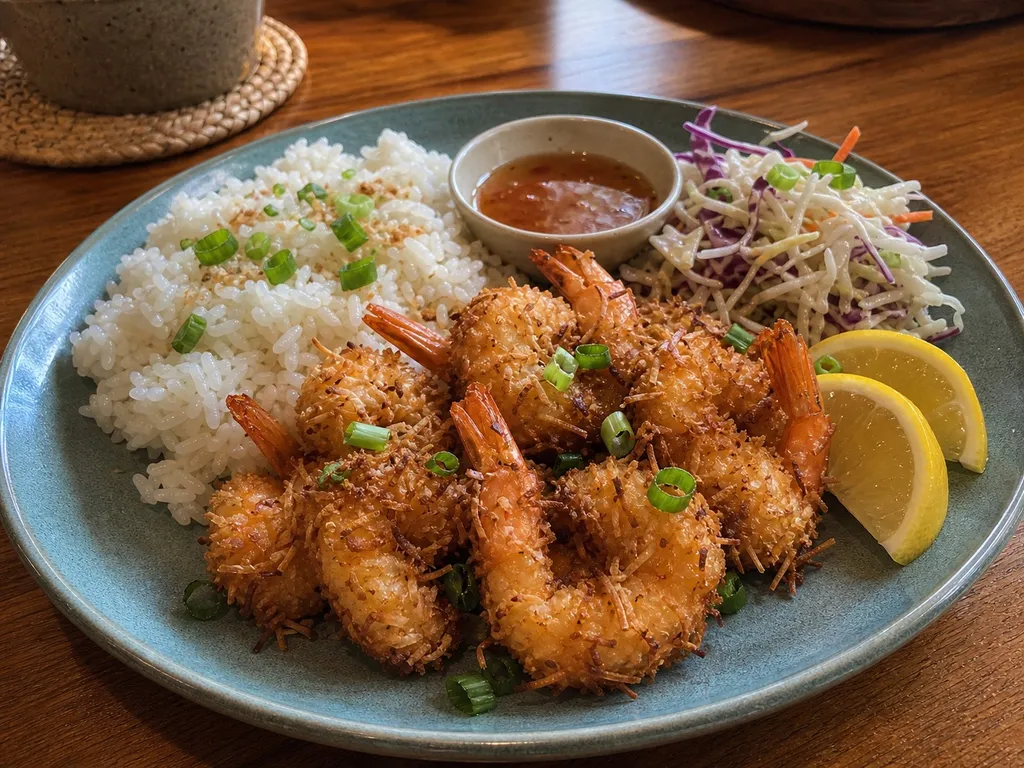 Images are for illustrative purposes only, may be inaccurate, and do not guarantee the presence or absence of specific ingredients.
 Listahan Family Score™
60/100
Works for many families
Score reflects how well this recipe fits a typical busy household. In the app, your Family Score is personalized to your household's allergens, kids, and pantry.
Nutrition
per serving185
Calories
28 g
Protein
3 g
Carbs
7 g
Fat
Estimated per serving. Actual values depend on the brands and portions you use.
Listahan cooking guide
Chef notes & practical guide
Technique notes, ingredient swaps, serve-alongside ideas, storage guidance, and equipment for this recipe.
Cultural context
Coconut Shrimp became closely associated with Hawaiian cuisine through the explosion of resort and beachside dining in the 1970s and 1980s, where chefs sought crowd-pleasing dishes that telegraphed 'tropical' to mainland visitors. The combination of briny shrimp wrapped in toasted coconut draws on the Pacific Rim's long relationship with coconut as a cooking staple, and the dish became a fixture that traveled from Hawaii to chain restaurants across the US while remaining deeply identified with island cuisine.
Listahan note
This version uses a beer batter base beneath the coconut coating for extra crispness, and fries at the right temperature so the coconut toasts to golden rather than burning before the shrimp cook through.
Technique cues
- Use sweetened shredded coconut for the outer coating — unsweetened coconut toasts too fast at frying temperatures and burns before the shrimp cooks through.
- Set up a proper breading station (flour, then egg or batter, then coconut) and work in batches so each shrimp is fully coated before frying begins.
- Fry at 350F and watch the color closely — coconut shrimp go from golden to burnt in under 30 seconds, so attention during frying is more important than with most fried foods.
Kitchen flow
- Parallel prep
- Set up the full breading station and heat the oil before starting to bread shrimp — once you start, assembly moves fast and the oil should be ready.
- Make-ahead
- Bread the shrimp up to 1 hour ahead and refrigerate on a wire rack; this helps the coating set and adhere better during frying.
- Leftover move
- Reheat leftover coconut shrimp in a 375F oven or air fryer for 5-7 minutes to restore crunch; microwaving makes the coconut soggy.
- Cleanup rhythm
- The breading station is the messiest part; set it up over newspaper or paper towels for easy cleanup, and cool and strain the used oil before disposal.
Ingredient brief
Role, handling, and swap guidance for each key ingredient.
large shrimp (16-20 count)
main protein
Purpose: Larger shrimp provide enough size and substance to balance the thick coconut coating; smaller shrimp disappear inside the crust.
Handling: Peel and devein, leaving the tail on for a handle; butterfly slightly by scoring the back deeper so shrimp curve attractively.
Adaptation: Jumbo shrimp (13-15 count) require slightly longer fry time but produce an even more substantial result.
sweetened shredded coconut
outer crust
Purpose: The sugar in sweetened coconut promotes even toasting at frying temperatures and provides the sweet contrast to the briny shrimp that defines the dish.
Handling: Spread on a plate and let any large clumps fall apart before pressing onto the shrimp.
Adaptation: Toasted unsweetened coconut with 1 teaspoon of sugar mixed in approximates the effect.
panko breadcrumbs
crust texture
Purpose: Mixed with the coconut, panko lightens the coating and adds structural crunch that holds up during and after frying.
Handling: Combine with coconut at a 1:2 panko-to-coconut ratio for the best balance of crunch and coconut flavor.
Adaptation: Crushed rice crackers for a gluten-free version with similar crunch.
flour
first dredge
Purpose: A thin flour coating on the shrimp gives the egg or batter something to grip, which ensures the coconut crust adheres during frying.
Handling: Season lightly with salt and pepper so even the inner layer contributes flavor.
Adaptation: Cornstarch for a lighter, crispier initial dredge.
dipping sauce (sweet chili or marmalade-based)
accompaniment
Purpose: A sweet-tangy dipping sauce is essential to the dish's balance — the coconut crust needs acidity alongside it.
Handling: Mix orange marmalade with a pinch of cayenne and a squeeze of lime for a quick house-made version.
Adaptation: Store-bought Thai sweet chili sauce is the standard easy option.
Technique notes
- Chilling the breaded shrimp on a rack for 30 minutes before frying helps the coating set and reduces the chance of it separating in the oil.
- An air fryer at 400F for 8-10 minutes, spraying with cooking spray, produces a surprisingly good result with much less oil.
- The dipping sauce matters more than most people realize — a sauce that is too sweet makes the dish cloying; it should have a noticeable tangy or spicy edge.
Ingredient swaps
- Gluten-free direction
- Replace all-purpose flour with cornstarch and panko with crushed gluten-free rice crackers; the coconut itself is naturally gluten-free.
- Baked version
- Bake on a greased wire rack over a sheet pan at 425F for 12-14 minutes, flipping once, for a lighter preparation with adequate crunch.
- Allergen-aware direction
- This dish contains shellfish, wheat, and coconut — label clearly for guests, and offer plain baked shrimp as an alternative for coconut-allergic guests.
Serve alongside
- pineapple fried rice
- coconut rice
- mango-avocado salsa
- steamed jasmine rice
- pina colada mocktail
- cold Blue Moon beer
- pineapple juice with soda water
Serving suggestions only — check pairings for your household's allergens.
Storage & reheating
- Best eaten immediately after frying. Refrigerate leftovers for up to 2 days; the coconut softens but reheat in a 375F oven or air fryer to restore texture. Do not freeze already-fried coconut shrimp.
Equipment
- deep pot or large skillet for frying
- three shallow dishes for breading station
- thermometer for oil temperature
- spider strainer and wire cooling rack
Make this household-aware
Listahan Pro checks this recipe against your household's allergens, finds pantry-aware swaps, builds the shopping list, and helps you plan the week around it.
Plan it in Listahan
Add Coconut Shrimp to your week, check it against your household's allergens, and build the shopping list automatically.
More Hawaiian recipes
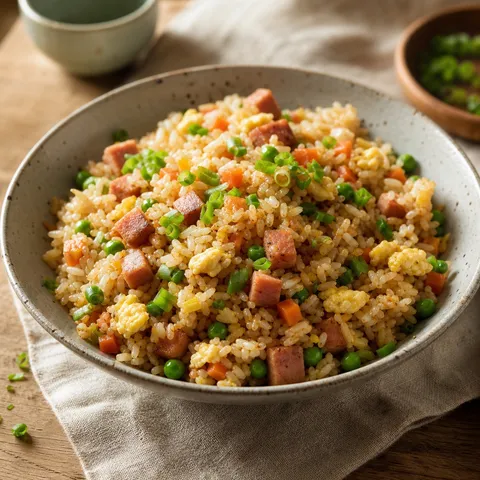 Hawaiian Lens Verified Images are for illustrative purposes only, may be inaccurate, and do not guarantee the presence or absence of specific ingredients.
 Spam Fried Rice
Day-old rice stir-fried with caramelized Spam, egg, soy sauce, and green onion — a quick, satisfying island classic that turns pantry staples into something craveable.
 Hawaiian Lens Verified Images are for illustrative purposes only, may be inaccurate, and do not guarantee the presence or absence of specific ingredients.
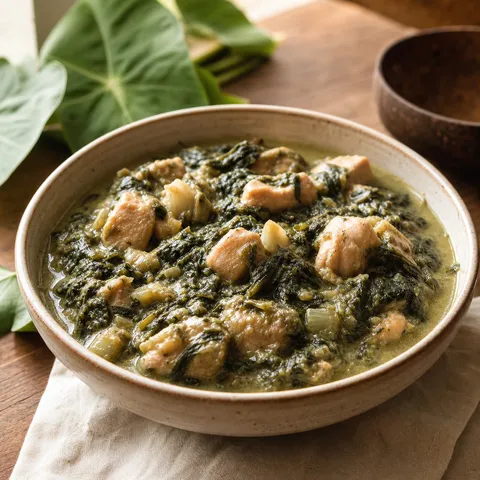
 Chicken Luau
Tender chicken simmered with young taro leaves in coconut milk until velvety and earthy — a quietly comforting Hawaiian stew full of old-fashioned luau warmth.
 Hawaiian Lens Verified Images are for illustrative purposes only, may be inaccurate, and do not guarantee the presence or absence of specific ingredients.
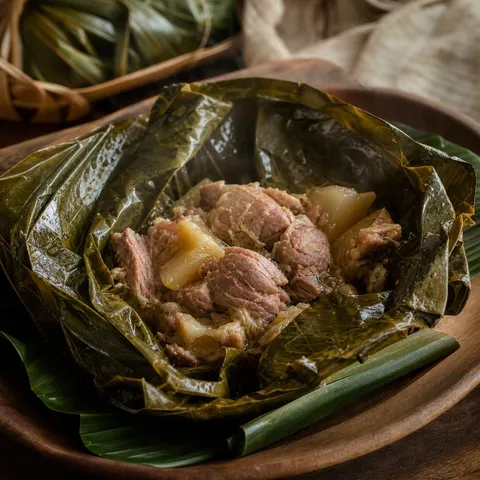
 Lau Lau
Pork shoulder and butterfish bundled in layers of taro leaf and steamed until meltingly tender — earthy, rich, and deeply rooted in Native Hawaiian tradition.