 Hawaiian Images are for illustrative purposes only, may be inaccurate, and do not guarantee the presence or absence of specific ingredients.
 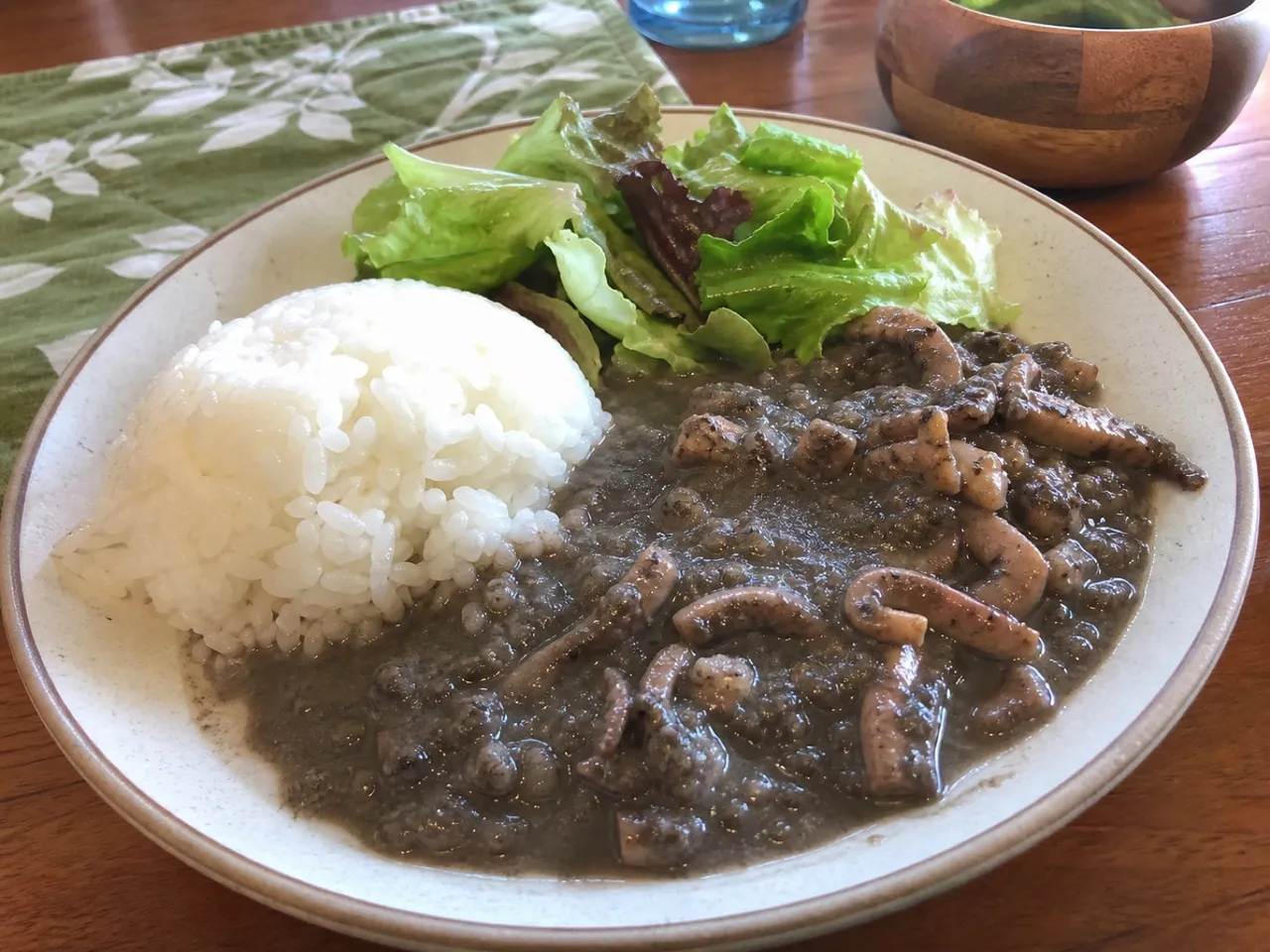 Serving Images are for illustrative purposes only, may be inaccurate, and do not guarantee the presence or absence of specific ingredients.
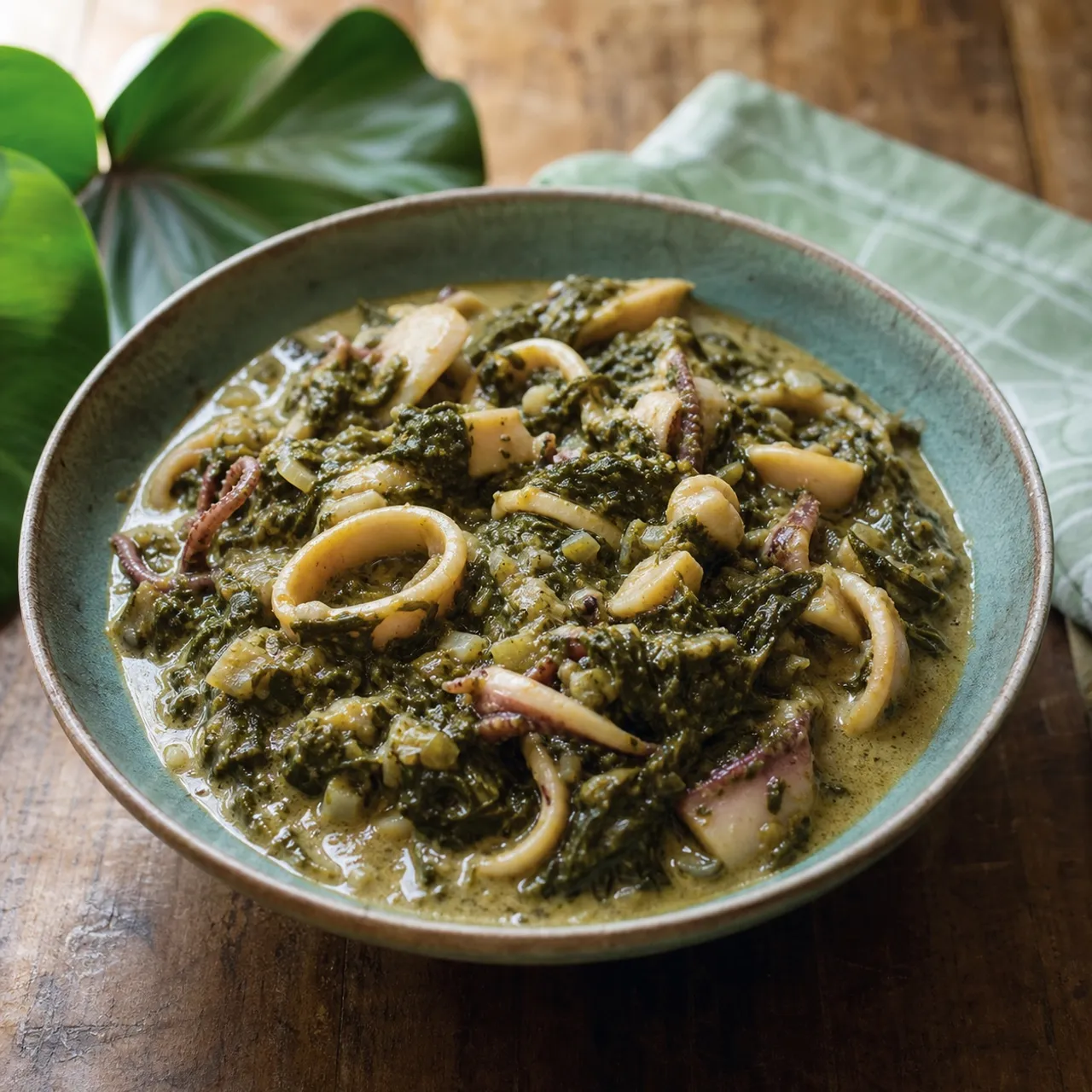
 Squid Luau
Tender squid simmered low and slow with young taro leaves in rich coconut milk — a deeply savory, velvety Hawaiian stew with old-school luau soul.
Contains common allergens
In the app, Listahan checks these against your household automatically.
Good to know
- Ready in under 30 minutes
Matched from this dish's own ingredients and timing. Browse more: 30-minute meals
Instructions
8 steps- 1
Rinse the taro leaves well and simmer them in a large pot of salted water for 45 minutes to 1 hour, until fully tender and no longer itchy on the tongue, since taro leaves must be thoroughly cooked or they irritate the throat.
- 2
Drain the cooked leaves and roughly chop them, setting aside.
- 3
Heat the oil in a heavy pot over medium heat and saute the onion and garlic until softened and fragrant, about 4 minutes.
- 4
Add the squid and cook for 2 to 3 minutes, just until it turns opaque, then remove and set aside to prevent it from turning rubbery.
- 5
Add the cooked taro leaves, coconut milk, and broth to the pot, stir well, and bring to a gentle simmer.
- 6
Cook uncovered over low heat for 30 to 40 minutes, stirring occasionally, until the leaves break down into a soft, spinach-like puree and the liquid thickens slightly.
- 7
Return the squid to the pot and simmer for another 5 minutes to warm through and absorb the coconut broth without overcooking.
- 8
Season with Hawaiian salt to taste and serve hot in bowls alongside steamed rice.
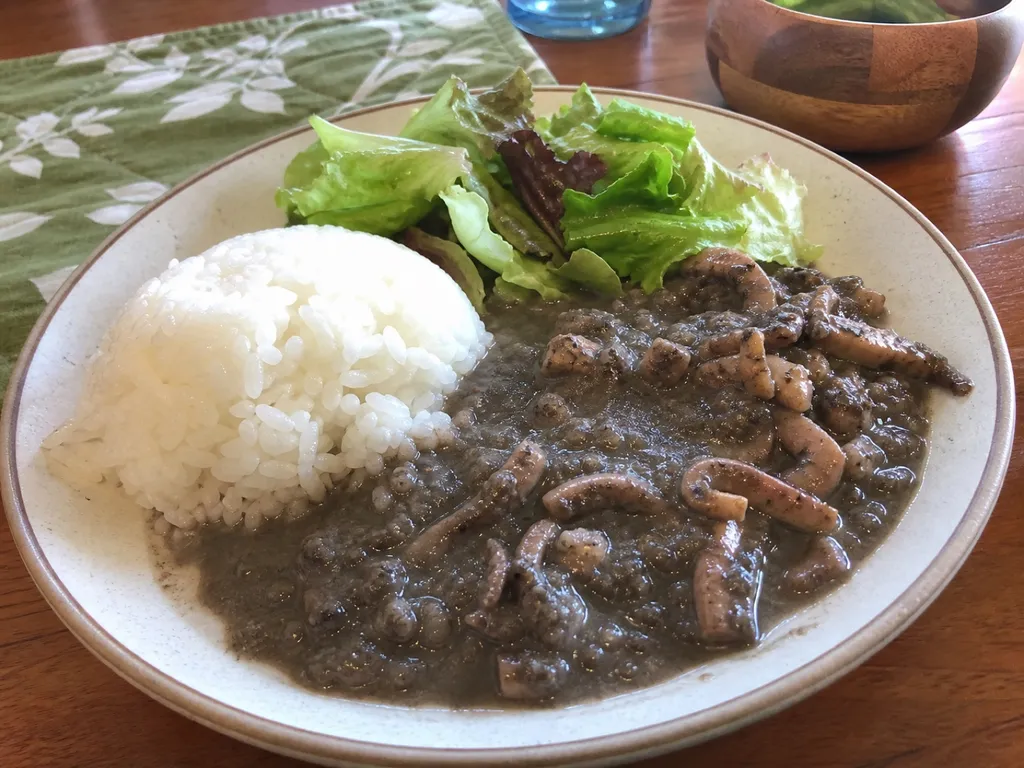 Images are for illustrative purposes only, may be inaccurate, and do not guarantee the presence or absence of specific ingredients.
 Listahan Family Score™
71/100
Good fit for most families
Score reflects how well this recipe fits a typical busy household. In the app, your Family Score is personalized to your household's allergens, kids, and pantry.
Nutrition
per serving125
Calories
19 g
Protein
8 g
Carbs
2 g
Fat
Estimated per serving. Actual values depend on the brands and portions you use.
Listahan cooking guide
Chef notes & practical guide
Technique notes, ingredient swaps, serve-alongside ideas, storage guidance, and equipment for this recipe.
Cultural context
Squid luau is one of the most distinctively Hawaiian dishes in the luau tradition, combining two culturally significant ingredients: squid (he'e), which was abundant in Hawaiian coastal waters and prized both as food and as an offering to certain Hawaiian deities, and lu'au leaves (young taro leaves), the same greens used in lau lau. The squid is cooked slowly in coconut milk until the taro leaves break down to a silky, almost spinach-like consistency and the entire dish becomes a rich, creamy stew. It is one of the few Hawaiian dishes that demonstrates the Pacific Island coconut cream cooking tradition alongside the indigenous use of taro.
Listahan note
This version uses cleaned fresh or frozen squid and coconut milk from a can, cooking low and slow so the squid stays tender and the taro leaves fully cook out to a creamy base.
Technique cues
- Raw taro leaves require a minimum of 45 minutes of simmering to completely break down the oxalic acid crystals that cause throat irritation — taste the broth and if it has any prickling sensation, continue cooking.
- Add the squid in the last 20 minutes of cooking only — squid cooked more than 30 minutes either becomes very tender (the long-braise effect) or rubbery depending on the size; smaller squid need less time and should go in toward the end.
- Use full-fat coconut milk, not coconut cream or lite versions — the fat is what emulsifies with the taro leaf cooking liquid to form the characteristically thick, creamy base.
Kitchen flow
- Parallel prep
- Strip and chop taro leaves while the onions soften; have the squid cleaned and portioned before starting so the entire dish cooks in one pot.
- Make-ahead
- The taro leaf and coconut milk base can be made a day ahead and refrigerated; add freshly cooked squid when reheating to keep it from overcooking on the second heat.
- Leftover move
- Leftover squid luau is excellent tossed with cooked pasta or rice noodles — the coconut milk sauce doubles as a pasta sauce with almost no modification.
- Cleanup rhythm
- One pot for the entire dish; deglaze and rinse promptly after serving since coconut milk thickens significantly when it cools and clings to the sides of the pan.
Ingredient brief
Role, handling, and swap guidance for each key ingredient.
cleaned squid (tubes and tentacles)
main protein
Purpose: Squid absorbs the coconut and taro flavors during the braise while contributing a mild, oceanic sweetness of its own.
Handling: Cut tubes into 1/2-inch rings; keep tentacles whole or halved if large. Pat dry before adding to the pot so they do not water down the sauce.
Adaptation: Octopus (tako) is a traditional alternative that requires longer cooking (1.5 to 2 hours); baby clams also work well.
lu'au leaves (taro leaves) or frozen taro leaves
primary vegetable and body of the stew
Purpose: Taro leaves break down into the coconut milk over long simmering, creating the thick, creamy stew base that cannot be replicated with any other green.
Handling: Strip leaves from the tough stems, chop roughly, and add in batches — they will wilt significantly within the first 10 minutes of simmering.
Adaptation: Collard greens or spinach can approximate the texture but lack the earthy, mineral quality of taro leaf; the dish tastes noticeably different.
full-fat coconut milk
braising liquid and richness
Purpose: Coconut milk provides the creamy, slightly sweet base that balances the mineral earthiness of the taro leaves and the briny squid.
Handling: Shake the can thoroughly before opening; if the cream has separated, stir to recombine before adding to the pot.
Adaptation: Coconut cream produces a richer, more intense result; lite coconut milk makes a thinner, less satisfying stew.
onion
aromatic base
Purpose: Sweet onion cooked until translucent forms the flavor foundation that carries the coconut and taro leaf into a cohesive stew rather than disparate elements.
Handling: Dice finely and soften in a small amount of oil before adding any liquid so the onion sweetens fully rather than just cooking through.
Adaptation: Shallots produce a slightly more delicate, less pungent result.
Technique notes
- The color of the finished dish should be a deep, muted olive-green from the taro leaves — if it looks bright green, the leaves are undercooked; continue simmering until the color deepens and the texture is silky.
- Season with salt only at the very end — as the stew reduces and concentrates, the salt level rises quickly and early salting produces an overseasoned result.
- A splash of fish sauce in place of half the salt adds depth without an obvious fishiness, which pairs naturally with the squid.
Ingredient swaps
- Shellfish-free direction
- Substitute skin-on chicken thighs cut into chunks — braise with the taro leaves from the beginning for the full cook time, producing a chicken luau stew (a common variation served at luau tables).
- Coconut-free direction
- Use a rich chicken or vegetable broth thickened with a tablespoon of arrowroot; the dish loses its Pacific Island character but the taro-braised flavor still works.
Serve alongside
- Steamed white rice
- Poi
- Lomi lomi salmon
- Coconut water
- Chilled sparkling water with lime
Serving suggestions only — check pairings for your household's allergens.
Storage & reheating
- Refrigerate in an airtight container for up to 3 days; the stew thickens considerably when cold — add a splash of water or coconut milk when reheating to restore the original consistency.
- Freeze without the squid for up to 2 months; cook fresh squid and add it when reheating the thawed base.
Equipment
- Heavy-bottomed Dutch oven or large saucepan
- Wooden spoon for stirring without damaging the squid
- Ladle for serving the saucy stew
Make this household-aware
Listahan Pro checks this recipe against your household's allergens, finds pantry-aware swaps, builds the shopping list, and helps you plan the week around it.
Plan it in Listahan
Add Squid Luau to your week, check it against your household's allergens, and build the shopping list automatically.
More Hawaiian recipes
 Hawaiian Lens Verified Images are for illustrative purposes only, may be inaccurate, and do not guarantee the presence or absence of specific ingredients.
 Spam Fried Rice
Day-old rice stir-fried with caramelized Spam, egg, soy sauce, and green onion — a quick, satisfying island classic that turns pantry staples into something craveable.
 Hawaiian Lens Verified Images are for illustrative purposes only, may be inaccurate, and do not guarantee the presence or absence of specific ingredients.
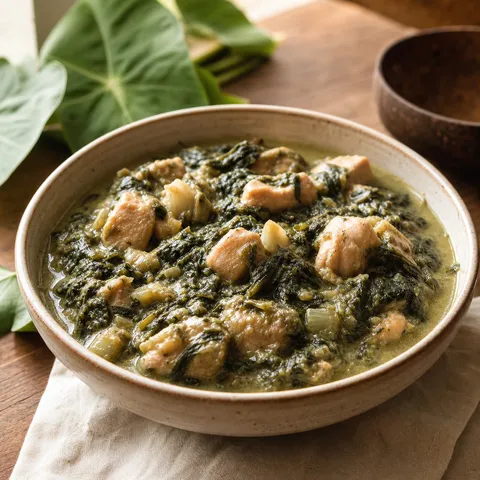
 Chicken Luau
Tender chicken simmered with young taro leaves in coconut milk until velvety and earthy — a quietly comforting Hawaiian stew full of old-fashioned luau warmth.
 Hawaiian Lens Verified Images are for illustrative purposes only, may be inaccurate, and do not guarantee the presence or absence of specific ingredients.
 Lau Lau
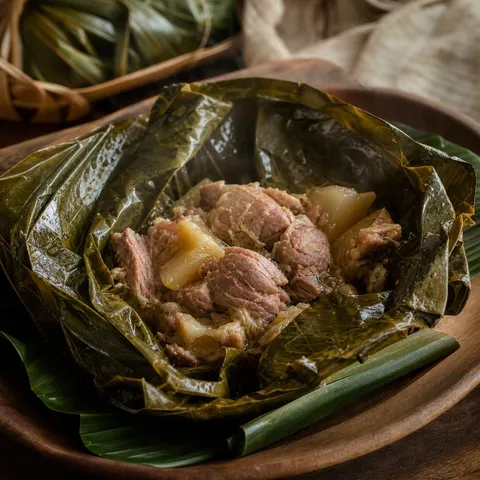
Pork shoulder and butterfish bundled in layers of taro leaf and steamed until meltingly tender — earthy, rich, and deeply rooted in Native Hawaiian tradition.