 Indonesian & Malaysian Images are for illustrative purposes only, may be inaccurate, and do not guarantee the presence or absence of specific ingredients.
  Serving Images are for illustrative purposes only, may be inaccurate, and do not guarantee the presence or absence of specific ingredients.
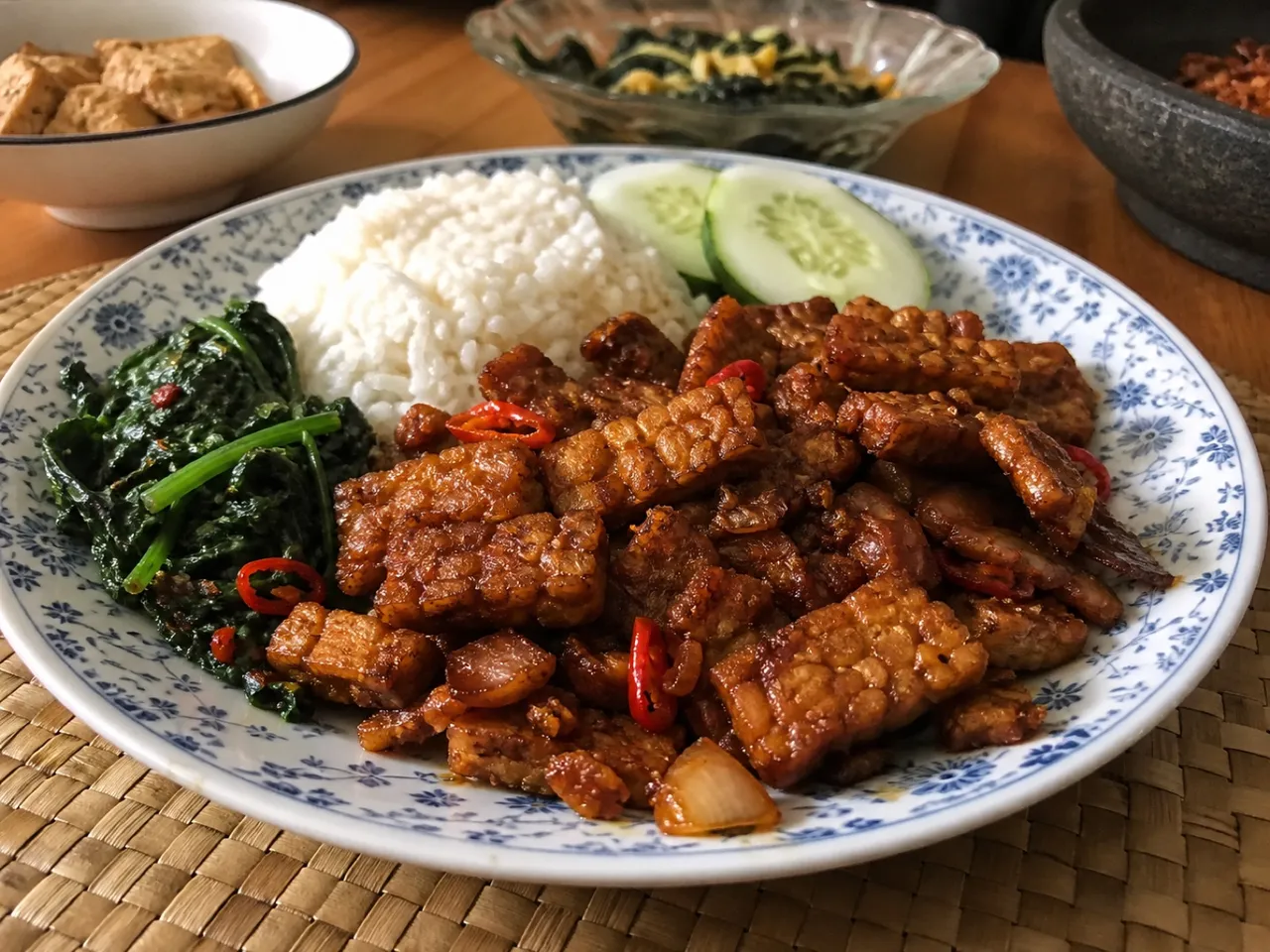
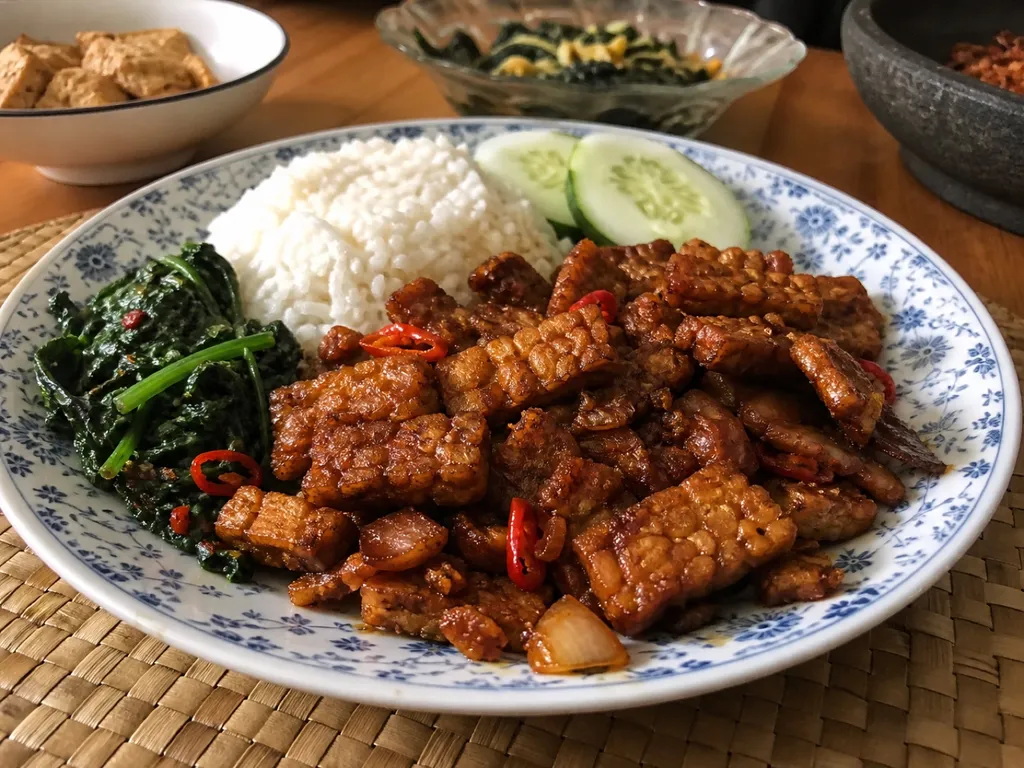
 Tempeh Goreng
Sliced fermented soybean cake fried until golden and nutty-crisp — a humble, protein-rich Indonesian staple with satisfying crunch and umami depth.
Contains common allergens
In the app, Listahan checks these against your household automatically.
Good to know
- Crispy
- Ready in under 30 minutes
Matched from this dish's own ingredients and timing. Browse more: crispy recipes30-minute meals
Instructions
6 steps- 1
Cut the tempeh block into even slices, about 1/2 inch thick, and score the surfaces lightly.
- 2
In a shallow dish, mix the crushed garlic, coriander, turmeric, salt, and water to make a quick marinade.
- 3
Soak the tempeh slices in the marinade for at least 10 minutes, flipping them once.
- 4
Heat a generous amount of oil in a frying pan over medium-high heat.
- 5
Fry the tempeh slices for 3-4 minutes per side until they are deeply golden brown and very crispy on the outside.
- 6
Drain on paper towels and serve immediately as a snack or a side dish with sambal.
 Images are for illustrative purposes only, may be inaccurate, and do not guarantee the presence or absence of specific ingredients.
 Listahan Family Score™
68/100
Works for many families
Score reflects how well this recipe fits a typical busy household. In the app, your Family Score is personalized to your household's allergens, kids, and pantry.
Nutrition
per serving5
Calories
0 g
Protein
1 g
Carbs
0 g
Fat
Estimated per serving. Actual values depend on the brands and portions you use.
Listahan cooking guide
Chef notes & practical guide
Technique notes, ingredient swaps, serve-alongside ideas, storage guidance, and equipment for this recipe.
Cultural context
Tempeh is a Javanese invention — soybeans fermented with Rhizopus mold until they form a firm, nutty cake — and tempeh goreng (fried tempeh) is its simplest and most widespread preparation. It appears at virtually every Indonesian meal as a cheap, protein-rich side dish, and its role on the table mirrors that of bacon in Western cooking: a crispy, salty, umami-forward element that makes rice and vegetables more satisfying. Unlike most fermented foods, tempeh has been consumed for centuries in Java without requiring any acquired taste — its nuttiness is approachable and becomes even more appealing after frying.
Listahan note
This version uses a coriander and garlic marinade before frying so the tempeh is seasoned through, not just on the surface, and fries to a crunchier crust.
Technique cues
- Steam or briefly boil the tempeh slices for 5 minutes before marinating to open its porous structure and allow the marinade to penetrate more deeply than surface coating alone.
- Fry at 350 F and do not move the tempeh for the first 3 minutes — let a crust form completely on one side before flipping; impatient flipping produces pale, soft tempeh.
- Let fried tempeh rest on a wire rack rather than paper towels so air circulates underneath and the bottom does not steam itself soggy.
Kitchen flow
- Parallel prep
- Steam the tempeh and make the marinade at the same time; while the tempeh soaks for 20 minutes, prep the rest of the meal components.
- Make-ahead
- Marinated tempeh can sit in the refrigerator for up to 24 hours; the longer marinade makes the final flavor deeper and the crust slightly darker.
- Leftover move
- Crumble cold fried tempeh over nasi goreng, grain bowls, or salads as a protein-rich, crunchy topping.
- Cleanup rhythm
- Strain the frying oil through a fine mesh strainer after cooling — tempeh fries cleanly and the oil can be reused 2-3 more times.
Ingredient brief
Role, handling, and swap guidance for each key ingredient.
tempeh
main protein
Purpose: Tempeh's dense, firm structure holds up to frying without crumbling and develops a satisfyingly crunchy exterior while remaining chewy inside.
Handling: Slice into 1/4-inch planks or 1-inch cubes and steam for 5 minutes before marinating.
Adaptation: Extra-firm tofu pressed of moisture can substitute but will fry differently — lighter crust, silkier interior.
garlic
savory marinade base
Purpose: Garlic is the primary savory note in the marinade and infuses the tempeh during the 20-minute soak.
Handling: Crush and blend or finely grate into the marinade liquid so it contacts the maximum surface area.
Adaptation: Garlic powder at 1/2 teaspoon per clove distributes evenly throughout a wet marinade without the risk of burning.
coriander seeds
earthy spice
Purpose: Ground coriander is the classic spice used in Javanese tempeh goreng and gives the crust a subtly citrusy, earthy depth.
Handling: Toast whole seeds briefly in a dry pan and grind for best flavor; pre-ground is a usable shortcut.
Adaptation: Cumin at half the quantity replaces coriander with a slightly different but complementary flavor.
kecap manis
glaze and sweetness
Purpose: A small amount of kecap manis in the marinade caramelizes during frying and gives the tempeh a dark, slightly sticky surface that is characteristic of Indonesian-style fried tempeh.
Handling: Dilute with water if the marinade is thick so it coats the tempeh evenly rather than pooling.
Adaptation: Regular soy sauce plus a teaspoon of brown sugar achieves the same effect.
Technique notes
- The marinade should taste aggressively salty and garlicky before frying — tempeh is dense and absorbs flavors slowly, so what seems too bold in the bowl becomes perfectly seasoned after frying.
- For maximum crunch, dust marinated tempeh lightly in rice flour before frying; the thin coating creates an extra-crispy shell that stays crunchier longer than unmarinated fried tempeh.
- Fresh tempeh fries best at lower temperatures; over-fermented tempeh (splotchy gray-black) can taste bitter when fried — buy fresh and use within 3 days of purchase.
Ingredient swaps
- Gluten-free direction
- Use tamari instead of soy sauce and verify your kecap manis is tamari-based; tempeh is naturally gluten-free.
- Lower-sodium direction
- Reduce soy sauce by half and add a teaspoon of nutritional yeast to the marinade to maintain savory depth.
- Air-fryer shortcut
- Air fry at 375 F for 12-15 minutes, flipping once, for a lighter result with significantly less oil.
Serve alongside
- Steamed jasmine rice
- Sambal oelek
- Stir-fried kangkung (water spinach)
- Iced tea
- Young coconut water
Serving suggestions only — check pairings for your household's allergens.
Storage & reheating
- Store fried tempeh in an airtight container at room temperature for up to 4 hours to preserve crunch; refrigerate for up to 3 days.
- Re-crisp in an air fryer at 375 F for 4 minutes or in a 400 F oven for 8 minutes; do not microwave as it will make the tempeh rubbery.
Equipment
- Wide skillet or wok for even frying
- Wire rack over a sheet pan for draining and resting
- Spice grinder or mortar and pestle for coriander
Make this household-aware
Listahan Pro checks this recipe against your household's allergens, finds pantry-aware swaps, builds the shopping list, and helps you plan the week around it.
Plan it in Listahan
Add Tempeh Goreng to your week, check it against your household's allergens, and build the shopping list automatically.
More Indonesian & Malaysian recipes
 Indonesian & Malaysian Lens Verified Images are for illustrative purposes only, may be inaccurate, and do not guarantee the presence or absence of specific ingredients.
 Soto Ayam
A golden, turmeric-spiced Indonesian chicken soup with glass noodles, crispy shallots, and lime — light, herbal, and deeply comforting.
 Indonesian & Malaysian Lens Verified Images are for illustrative purposes only, may be inaccurate, and do not guarantee the presence or absence of specific ingredients.
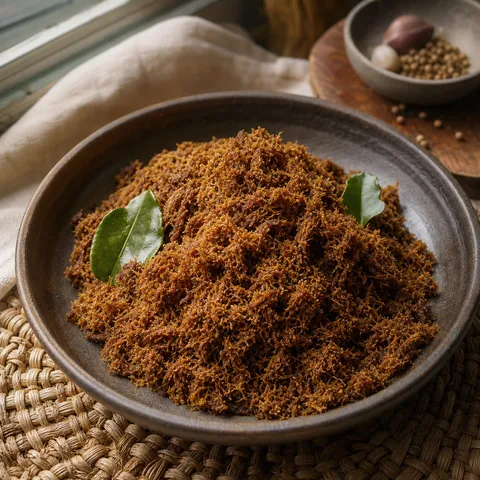
 Beef Serunding
Dry-fried spiced beef floss toasted with coconut and lemongrass until golden and fragrant — a rich, crumbly condiment that transforms plain rice.
 Indonesian & Malaysian Lens Verified Images are for illustrative purposes only, may be inaccurate, and do not guarantee the presence or absence of specific ingredients.
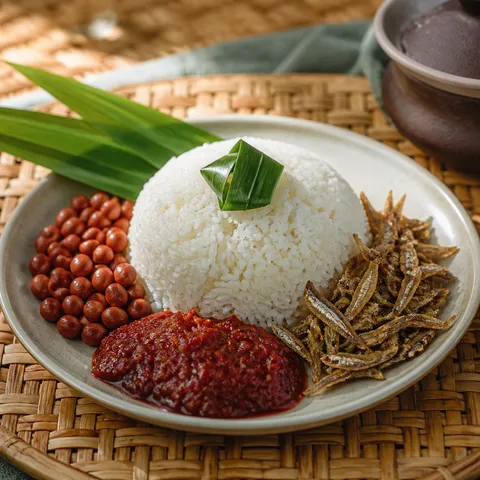
 Nasi Lemak
Malaysia's national comfort dish — fragrant coconut rice paired with sambal, crispy anchovies, roasted peanuts, and a soft-boiled egg.