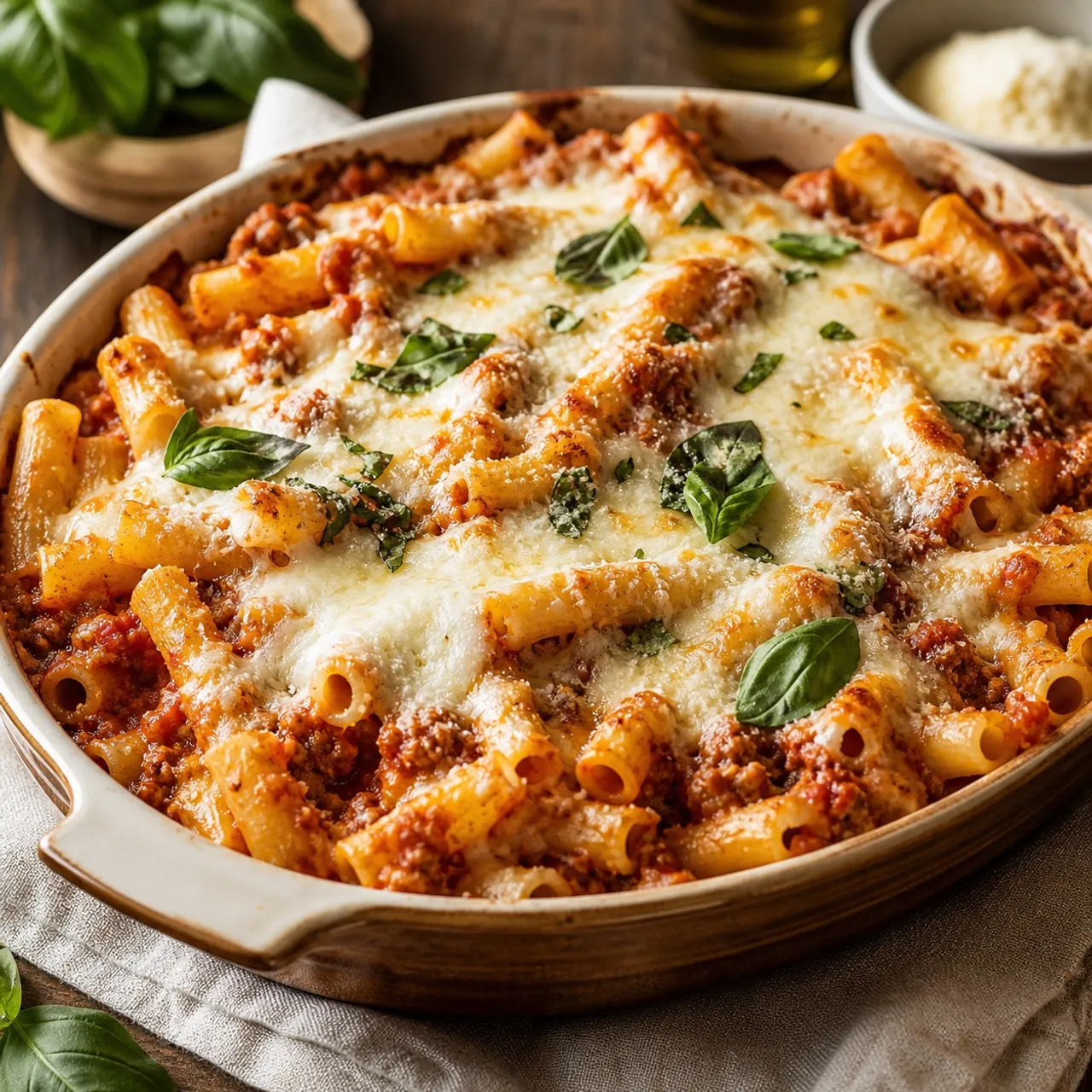
 Italian Images are for illustrative purposes only, may be inaccurate, and do not guarantee the presence or absence of specific ingredients.
 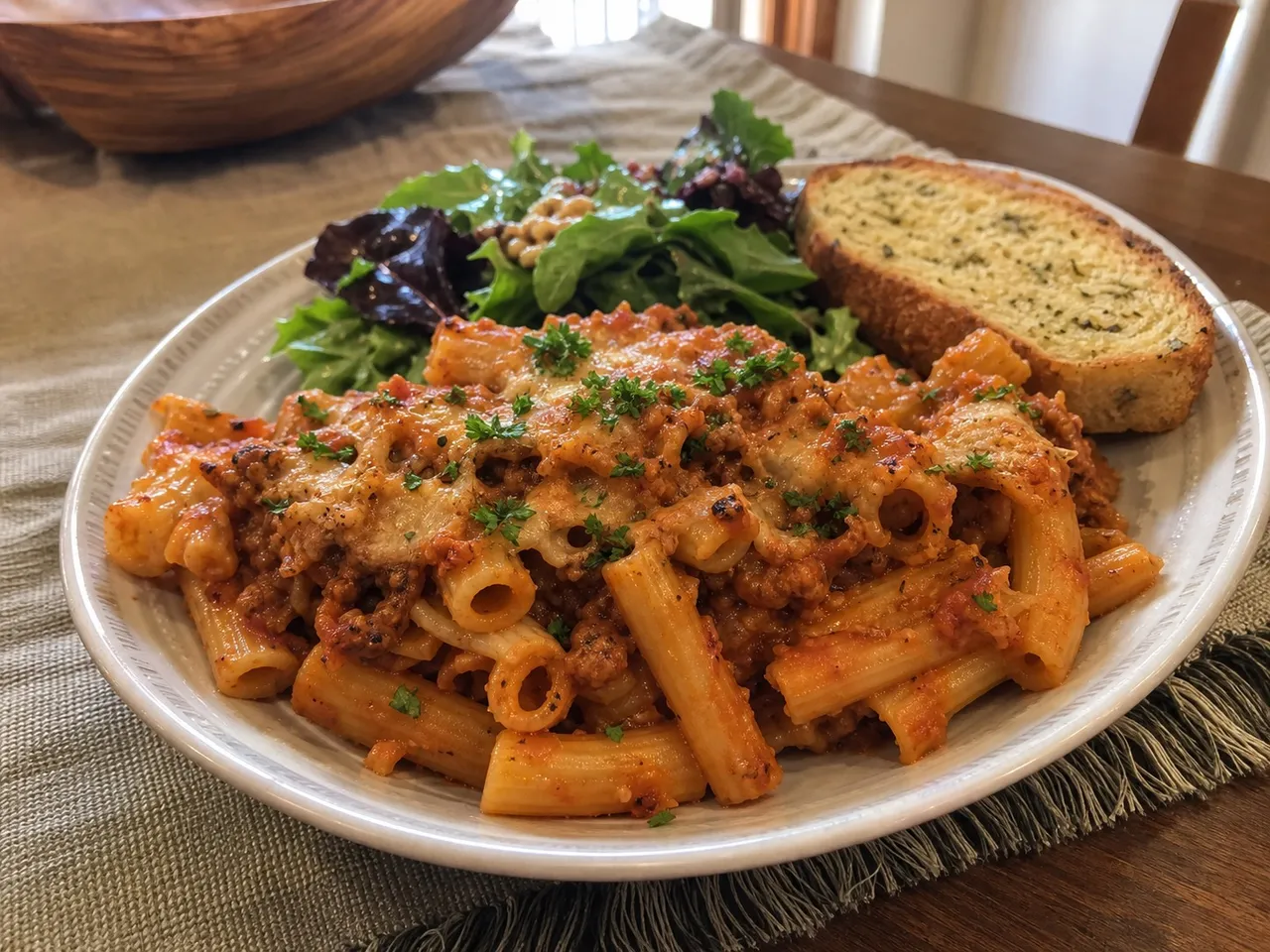 Serving Images are for illustrative purposes only, may be inaccurate, and do not guarantee the presence or absence of specific ingredients.
 Baked Ziti
A baked pasta casserole of ziti in tomato sauce with ricotta and gooey mozzarella.
Contains common allergens
In the app, Listahan checks these against your household automatically.
Instructions
6 steps- 1
Boil the Pasta: Cook the ziti until just shy of al dente (it will finish in the oven) and drain.
- 2
Brown the Meat: If using, brown the sausage or beef, then stir it into the tomato sauce.
- 3
Make the Ricotta Mix: Beat the ricotta cheese with the egg, the Parmesan cheese, and a little basil.
- 4
Combine: Toss the pasta with most of the tomato sauce, then fold in the ricotta mixture and half the mozzarella.
- 5
Layer: Tip into a baking dish, top with the remaining sauce and mozzarella cheese.
- 6
Bake: Bake at 190°C (375°F) for 25-30 minutes until bubbling and golden. Rest 5 minutes and serve.
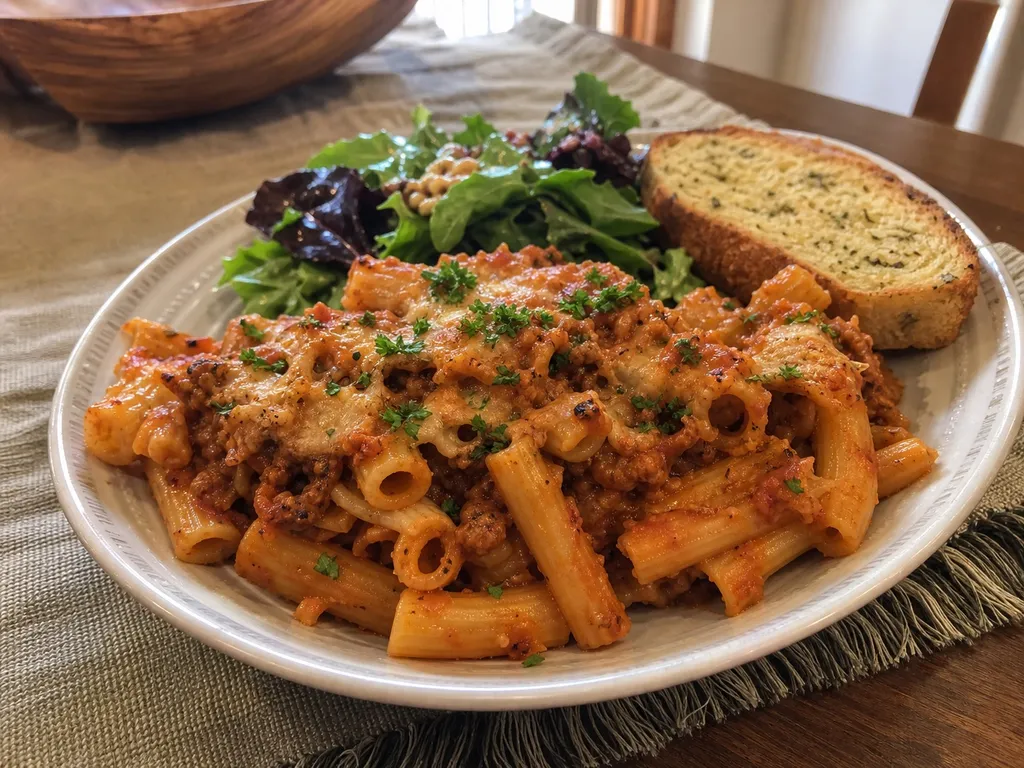 Images are for illustrative purposes only, may be inaccurate, and do not guarantee the presence or absence of specific ingredients.
 Listahan Family Score™
69/100
Works for many families
Score reflects how well this recipe fits a typical busy household. In the app, your Family Score is personalized to your household's allergens, kids, and pantry.
Nutrition
per serving990
Calories
54 g
Protein
95 g
Carbs
43 g
Fat
Estimated per serving. Actual values depend on the brands and portions you use.
Listahan cooking guide
Chef notes & practical guide
Technique notes, ingredient swaps, serve-alongside ideas, storage guidance, and equipment for this recipe.
Cultural context
Baked ziti is an Italian-American dish that grew out of the baked pasta (pasta al forno) tradition of southern Italy, where pasta was combined with ricotta, tomato sauce, and cheese and baked until golden. Italian immigrants brought the tradition to the United States in the late 19th and early 20th centuries, and ziti — a smooth tube pasta popular in Naples and Campania — became the standard vessel. The dish became a defining food of Italian-American gatherings: potlucks, wakes, Sunday dinners, and church buffets.
Listahan note
This version layers sauce and cheese in distinct bands rather than mixing everything together — this creates pockets of melted ricotta and concentrated tomato that make each serving unpredictably good.
Technique cues
- Undercook the pasta by 3 to 4 minutes before baking; it will continue cooking in the sauce in the oven, and fully cooked pasta baked further becomes mushy.
- Use two different cheeses with different textures: ricotta for creaminess inside and low-moisture mozzarella on top for the pull-apart, bronzed surface that defines the dish visually.
- Let the finished baked ziti rest for 10 to 15 minutes before scooping; this allows the layers to firm up slightly so the first spoonful holds its structure instead of collapsing into a cheesy puddle.
Kitchen flow
- Parallel prep
- Brown the sausage and build the sauce while the pasta water heats. The sauce can simmer while the pasta cooks and both will be ready to assemble at the same time.
- Make-ahead
- Assemble the dish up to 24 hours ahead, cover tightly with foil, and refrigerate. Bake directly from refrigerator, adding 10 to 15 minutes covered baking time.
- Leftover move
- Leftover baked ziti reheats beautifully in the oven at 350 F covered with foil; add a splash of water or sauce over the top before covering to restore moisture.
- Cleanup rhythm
- Line the bottom of the baking dish with a thin layer of sauce before the first pasta layer to prevent sticking; soak the dish in warm water immediately after serving for easy cleaning.
Ingredient brief
Role, handling, and swap guidance for each key ingredient.
ziti or penne
primary pasta
Purpose: The hollow tubes capture sauce and cheese inside, giving flavor in every bite regardless of how the layers land.
Handling: Cook in heavily salted water for 3 to 4 minutes less than the package al dente time; drain and toss immediately with a splash of olive oil to prevent sticking.
Adaptation: Rigatoni is an excellent substitute with more texture; penne rigate works if ziti is unavailable.
whole-milk ricotta
creamy interior layer
Purpose: Ricotta provides rich creaminess that is absorbed into the pasta during baking, creating the distinct layer that separates baked ziti from plain pasta with sauce.
Handling: Mix with an egg, salt, and a handful of Parmigiano before layering; the egg helps it set rather than weep liquid.
Adaptation: Cottage cheese pressed and drained well is the most common substitute.
Italian sausage
savory protein
Purpose: The sausage seasons the tomato sauce with fennel, garlic, and spice that would otherwise require a longer simmer to develop.
Handling: Remove from casings, brown in a pan, and drain excess fat before adding to the sauce.
Adaptation: Ground beef, ground turkey, or omit entirely for a vegetarian version with mushrooms.
marinara sauce
moisture and flavor foundation
Purpose: A well-seasoned sauce is the mortar that holds all the layers together and keeps the pasta from drying out.
Handling: Use a good-quality jarred sauce or homemade; simmer with the browned meat until combined.
Adaptation: A simple crushed-tomato sauce seasoned with basil and garlic works equally well.
low-moisture mozzarella
bubbling, browning top layer
Purpose: Low-moisture mozzarella browns and bubbles without releasing water that would make the top layer soggy.
Handling: Shred from a block and scatter generously over the top layer; cover loosely with foil for the first 20 minutes, then uncover to brown.
Adaptation: A mix of mozzarella and provolone gives a slightly sharper top layer.
Technique notes
- The critical technique is layering versus mixing: pasta and sauce mixed together uniformly is boring; alternating layers of pasta, sauce, ricotta, and mozzarella creates a cross-section of textures in every serving.
- The foil-on / foil-off technique is essential — covering for the first 20 minutes traps steam and prevents the cheese from drying before the interior is fully hot; uncovering for the last 15 to 20 minutes allows browning.
- Add a thin layer of sauce on the very top before the mozzarella layer; this keeps the pasta directly below the cheese from drying out and pulling away from the cheese as it bakes.
Ingredient swaps
- Gluten-free direction
- Substitute gluten-free ziti or penne and reduce the total baking time by about 5 minutes as GF pasta can overcook faster in a wet bake environment.
- Dairy-free direction
- Use plant-based ricotta (cashew-based works well) mixed with an egg replacer, and a vegan mozzarella shred; add 5 minutes to uncovered baking time as vegan cheese browns more slowly.
- Weeknight shortcut
- Use a good jarred marinara and store-bought pre-shredded cheese; the full dish can be assembled and in the oven in under 30 minutes.
Serve alongside
- Garlic bread with fresh parsley
- Caesar salad or simple green salad
- Braised broccoli rabe with garlic and olive oil
- Chianti Classico or Barbera d'Asti
- Sparkling water with orange
- Iced tea with lemon
Serving suggestions only — check pairings for your household's allergens.
Storage & reheating
- Store refrigerated in the baking dish covered tightly for up to 4 days; flavor improves on the second day.
- Freeze in individual portions for up to 3 months; thaw overnight in the refrigerator and reheat covered in a 350 F oven until hot through, about 25 minutes.
Equipment
- 9x13-inch ceramic or glass baking dish for even heat distribution
- Large wide pot for both boiling pasta and building the sauce
- Aluminum foil for the covered baking phase
Make this household-aware
Listahan Pro checks this recipe against your household's allergens, finds pantry-aware swaps, builds the shopping list, and helps you plan the week around it.
Plan it in Listahan
Add Baked Ziti to your week, check it against your household's allergens, and build the shopping list automatically.
More Italian recipes
 Italian Lens Verified Images are for illustrative purposes only, may be inaccurate, and do not guarantee the presence or absence of specific ingredients.
 Sfogliatella
Naples' iconic shell-shaped pastry with crisp, flaky layers wrapped around a sweet ricotta-semolina filling.
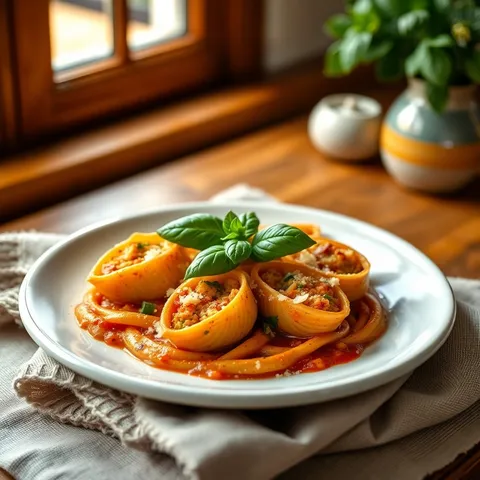 Italian Lens Verified Images are for illustrative purposes only, may be inaccurate, and do not guarantee the presence or absence of specific ingredients.
 Stuffed Shells (Conchiglioni Ripieni)
Jumbo pasta shells filled with a creamy ricotta-spinach mixture and baked in tomato sauce.
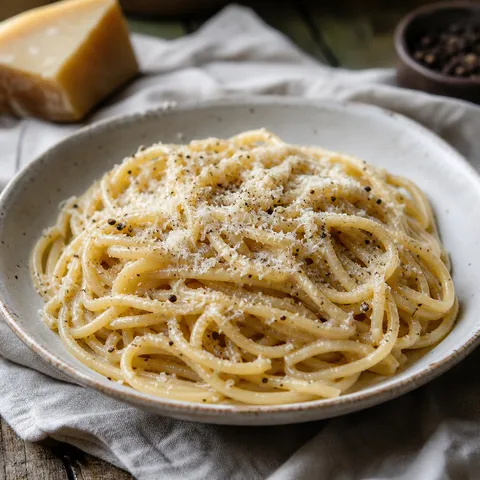 Italian Lens Verified Images are for illustrative purposes only, may be inaccurate, and do not guarantee the presence or absence of specific ingredients.
 Cacio e Pepe
A minimalist Roman pasta dish literally meaning "cheese and pepper."