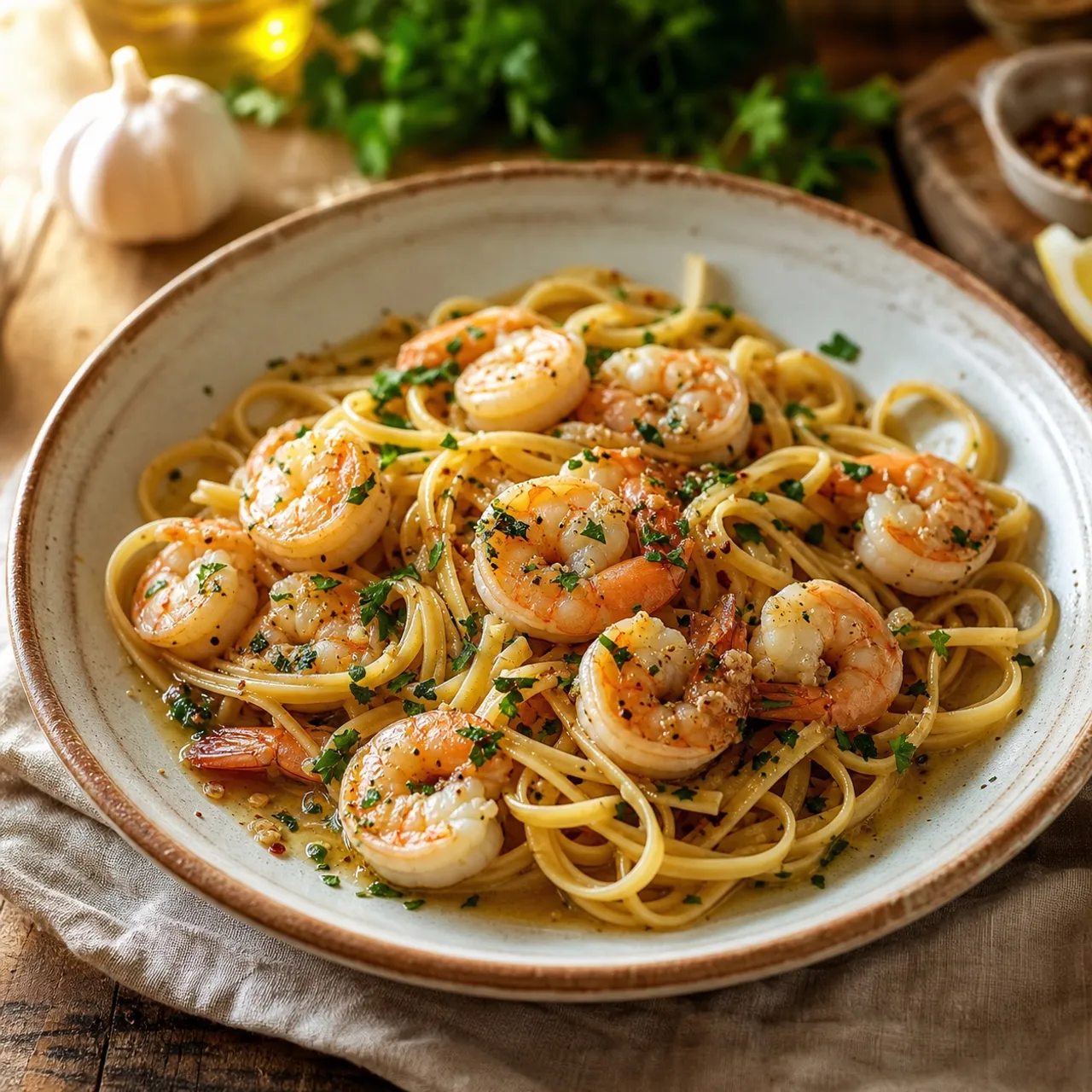
 Italian Images are for illustrative purposes only, may be inaccurate, and do not guarantee the presence or absence of specific ingredients.
 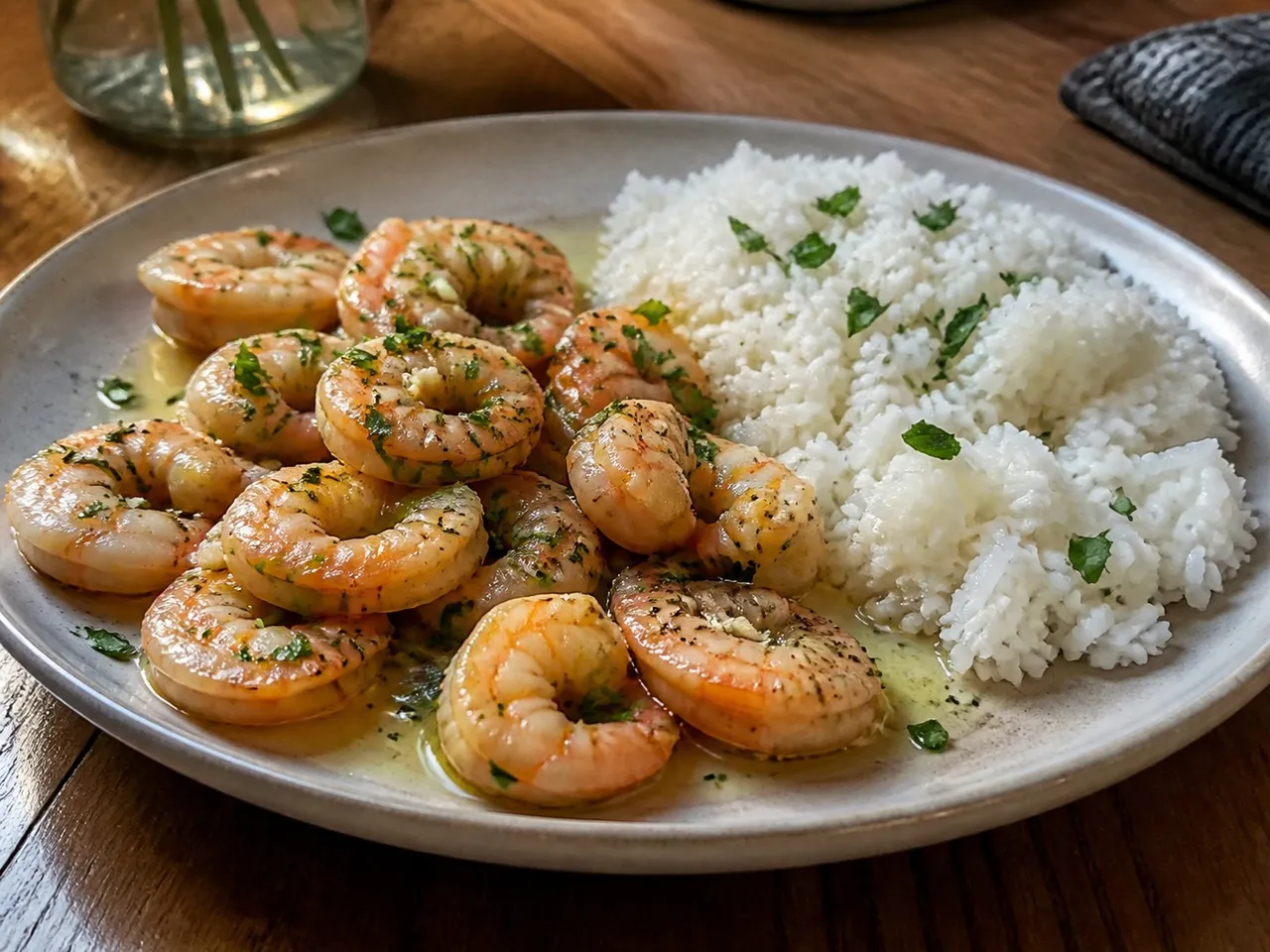 Serving Images are for illustrative purposes only, may be inaccurate, and do not guarantee the presence or absence of specific ingredients.
 Shrimp Scampi (Gamberi all'Aglio)
Garlicky, buttery shrimp in white wine and lemon, tossed with linguine.
Contains common allergens
In the app, Listahan checks these against your household automatically.
Good to know
- Ready in under 30 minutes
Matched from this dish's own ingredients and timing. Browse more: 30-minute meals
Instructions
6 steps- 1
Boil the Pasta: Cook the linguine in salted water until al dente, reserving some pasta water.
- 2
Sauté the Garlic: Melt 2 tbsp butter with the olive oil and cook the garlic and a pinch of chilli flakes until fragrant.
- 3
Cook the Shrimp: Add the shrimp and cook 1-2 minutes per side until just pink. Remove to avoid overcooking.
- 4
Make the Sauce: Pour in the white wine and lemon juice and simmer for 2 minutes, then swirl in the remaining butter.
- 5
Combine: Return the shrimp, add the drained linguine and a splash of pasta water, and toss to coat.
- 6
Serve: Finish with parsley and serve at once.
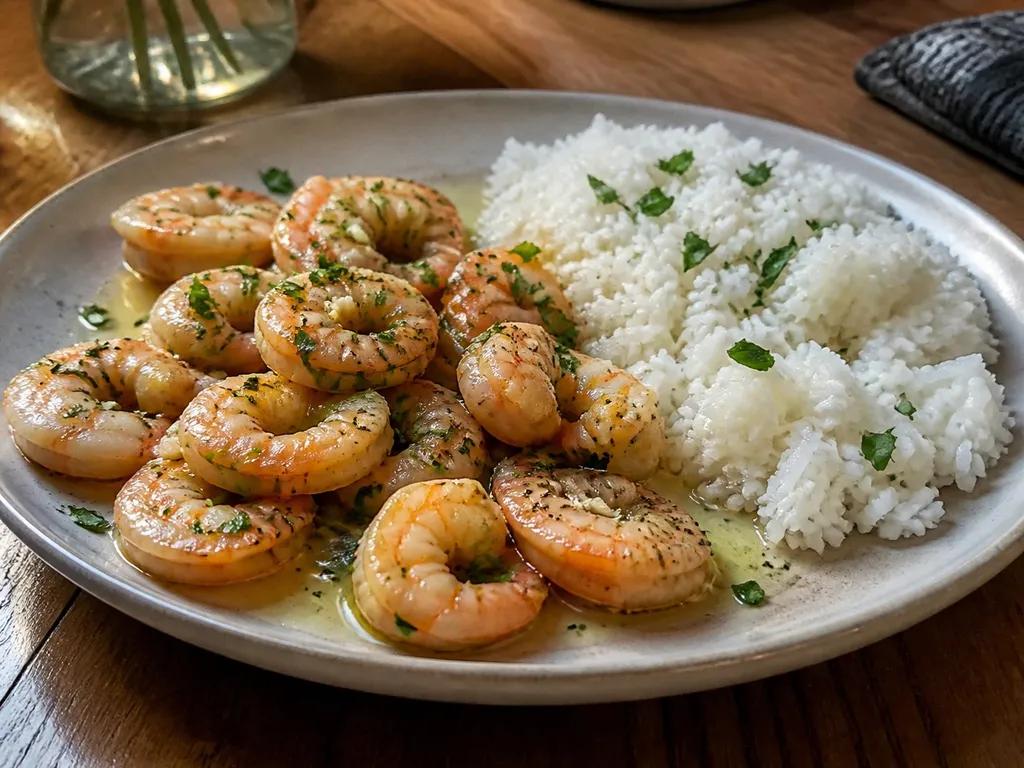 Images are for illustrative purposes only, may be inaccurate, and do not guarantee the presence or absence of specific ingredients.
 Listahan Family Score™
57/100
Works for many families
Score reflects how well this recipe fits a typical busy household. In the app, your Family Score is personalized to your household's allergens, kids, and pantry.
Nutrition
per serving645
Calories
43 g
Protein
77 g
Carbs
15 g
Fat
Estimated per serving. Actual values depend on the brands and portions you use.
Listahan cooking guide
Chef notes & practical guide
Technique notes, ingredient swaps, serve-alongside ideas, storage guidance, and equipment for this recipe.
Cultural context
Scampi is actually the Italian name for Norway lobster (Nephrops norvegicus), small crustaceans common along the Adriatic coast. Italian immigrants arriving in the United States substituted readily available shrimp for the unavailable scampi, cooking them in the same garlic-butter-white-wine style, and the dish took hold as a category of its own. The name today refers almost universally to the preparation rather than the ingredient.
Listahan note
This version balances the butter and white wine so neither dominates — the sauce should taste bright and garlicky with just enough richness from the butter to feel luxurious.
Technique cues
- Pat the shrimp completely dry before they go into the pan; surface moisture causes steaming instead of searing, and you will lose the slight caramelization on the edges that adds flavor.
- Add the garlic to a cold pan with the olive oil and bring to heat together — this extracts more flavor into the oil and prevents the garlic from scorching before the shrimp go in.
- Swirl cold butter into the finished sauce off the heat to emulsify it into a smooth, glossy coating; adding butter over high heat breaks the emulsion and leaves the sauce greasy.
Kitchen flow
- Parallel prep
- Start the pasta water or slice the bread while the shrimp dries on paper towels. The cooking itself takes under 10 minutes once the shrimp is ready.
- Make-ahead
- The garlic-wine-butter sauce can be made up to 2 hours ahead and kept warm; add the shrimp only when you are ready to serve since they overcook quickly.
- Leftover move
- Reheat gently in a pan over low heat with a splash of water or broth; microwaving shrimp turns them rubbery. Leftover scampi is excellent over scrambled eggs or tucked into a toasted hoagie roll.
- Cleanup rhythm
- This is a single-skillet dish plus whatever pasta pot you use. Deglaze with a little hot water immediately after plating and the pan nearly cleans itself.
Ingredient brief
Role, handling, and swap guidance for each key ingredient.
large shrimp, peeled and deveined
primary protein
Purpose: Large or extra-large shrimp hold up to the heat without overcooking instantly and provide more surface area for the sauce to cling to.
Handling: Pat dry with paper towels and season with salt just before cooking; salting too early draws moisture.
Adaptation: Sea scallops can be cooked the same way; adjust timing as they take slightly longer.
dry white wine
acidic deglazing liquid
Purpose: Wine lifts the fond from the pan and adds brightness that balances the richness of butter and garlic.
Handling: Use a wine you would drink — cheap cooking wine can make the sauce taste sharp.
Adaptation: Dry vermouth gives a more herbal note; low-sodium chicken broth with a squeeze of lemon works if avoiding alcohol.
garlic
aromatic base
Purpose: Multiple cloves thinly sliced create the defining flavor of the dish without becoming bitter.
Handling: Slice thin rather than mince; sliced garlic softens and sweetens more gently in the oil.
Adaptation: No substitute — garlic is essential.
unsalted butter
emulsifying richness
Purpose: Butter adds body and a silky mouth-feel that olive oil alone cannot provide.
Handling: Cut into cold tablespoon-sized pieces and swirl in one at a time off the heat for a smooth sauce.
Adaptation: Vegan butter works reasonably well for dairy-free versions and emulsifies similarly.
lemon juice and zest
brightness and acid balance
Purpose: Lemon added at the finish sharpens all the other flavors and prevents the butter from feeling heavy.
Handling: Zest before juicing; add zest with the butter and juice just before serving.
Adaptation: White wine vinegar can substitute for juice in a pinch, used in half the quantity.
fresh parsley
color and herbal finish
Purpose: Parsley adds visual brightness and a grassy note that lightens the dish.
Handling: Finely chop just before serving and scatter at the very end.
Adaptation: Fresh chives provide a milder onion-like note as an alternative.
Technique notes
- Cook the shrimp in a single layer; if your pan cannot hold them without crowding, work in two batches. Crowded shrimp steam instead of sear and produce a watery sauce.
- The shrimp are done as soon as they curl into a C shape and turn pink — pull them from the heat the moment they lose their translucency, as carryover cooking will finish them in the sauce.
- A pinch of red chile flakes in the oil at the start adds gentle background heat that makes the garlic and lemon flavors pop without making the dish spicy.
Ingredient swaps
- Dairy-free direction
- Replace butter with a good vegan butter or finish with an extra drizzle of high-quality extra-virgin olive oil and the lemon zest.
- Shellfish-free direction
- Chicken tenderloins pounded thin and cut into strips cook in the same time and carry the garlic-butter-wine sauce beautifully.
- Lower-sodium direction
- Use unsalted butter, taste before adding any salt, and avoid salting the pasta water as heavily; the sauce carries the seasoning.
- Gluten-free direction
- Serve over gluten-free linguine or zucchini noodles. The sauce is butter, garlic, white wine and lemon — check your wine and any stock.
Serve alongside
- Linguine or angel hair pasta tossed in the sauce
- Crusty sourdough for sauce dipping
- Simple green salad with shaved fennel and lemon vinaigrette
- Pinot Grigio or Verdicchio (crisp whites that match the lemon and garlic)
- Sparkling water with cucumber slices
Serving suggestions only — check pairings for your household's allergens.
Storage & reheating
- Cooked shrimp scampi keeps refrigerated for up to 2 days; the texture of the shrimp will soften but the flavor remains good.
- Do not freeze — shrimp become watery after thawing and the emulsified butter sauce breaks.
Equipment
- 12-inch stainless or cast-iron skillet for proper searing and fond development
- Fish spatula or tongs for flipping individual shrimp
- Microplane or fine grater for lemon zest
Make this household-aware
Listahan Pro checks this recipe against your household's allergens, finds pantry-aware swaps, builds the shopping list, and helps you plan the week around it.
Plan it in Listahan
Add Shrimp Scampi (Gamberi all'Aglio) to your week, check it against your household's allergens, and build the shopping list automatically.
More Italian recipes
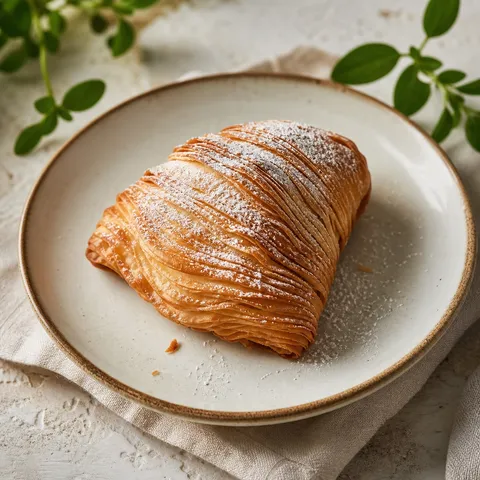 Italian Lens Verified Images are for illustrative purposes only, may be inaccurate, and do not guarantee the presence or absence of specific ingredients.
 Sfogliatella
Naples' iconic shell-shaped pastry with crisp, flaky layers wrapped around a sweet ricotta-semolina filling.
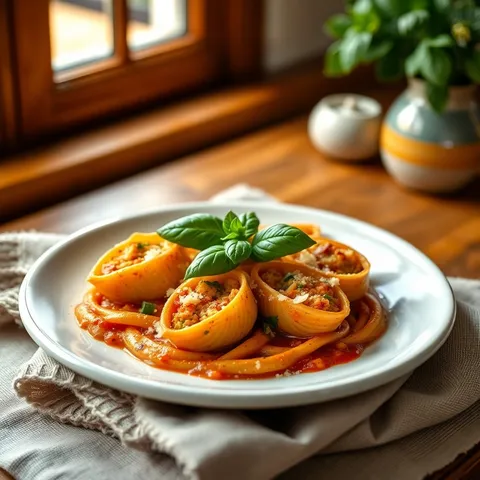 Italian Lens Verified Images are for illustrative purposes only, may be inaccurate, and do not guarantee the presence or absence of specific ingredients.
 Stuffed Shells (Conchiglioni Ripieni)
Jumbo pasta shells filled with a creamy ricotta-spinach mixture and baked in tomato sauce.
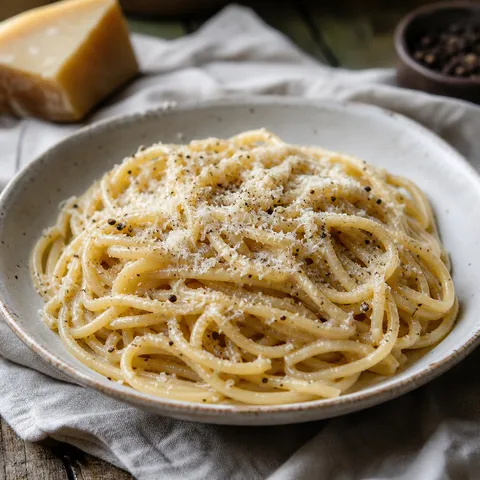 Italian Lens Verified Images are for illustrative purposes only, may be inaccurate, and do not guarantee the presence or absence of specific ingredients.
 Cacio e Pepe
A minimalist Roman pasta dish literally meaning "cheese and pepper."