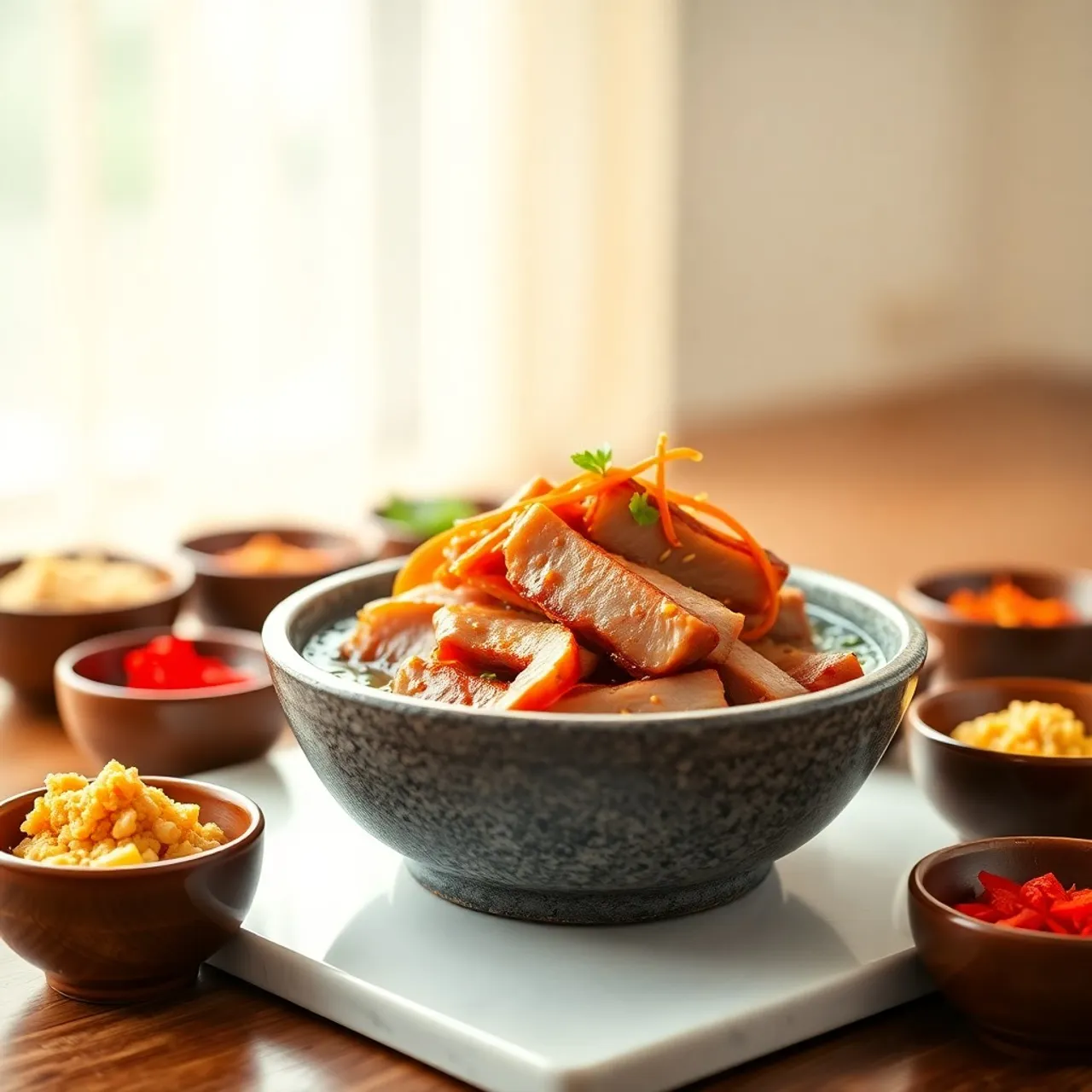
 Korean Images are for illustrative purposes only, may be inaccurate, and do not guarantee the presence or absence of specific ingredients.
 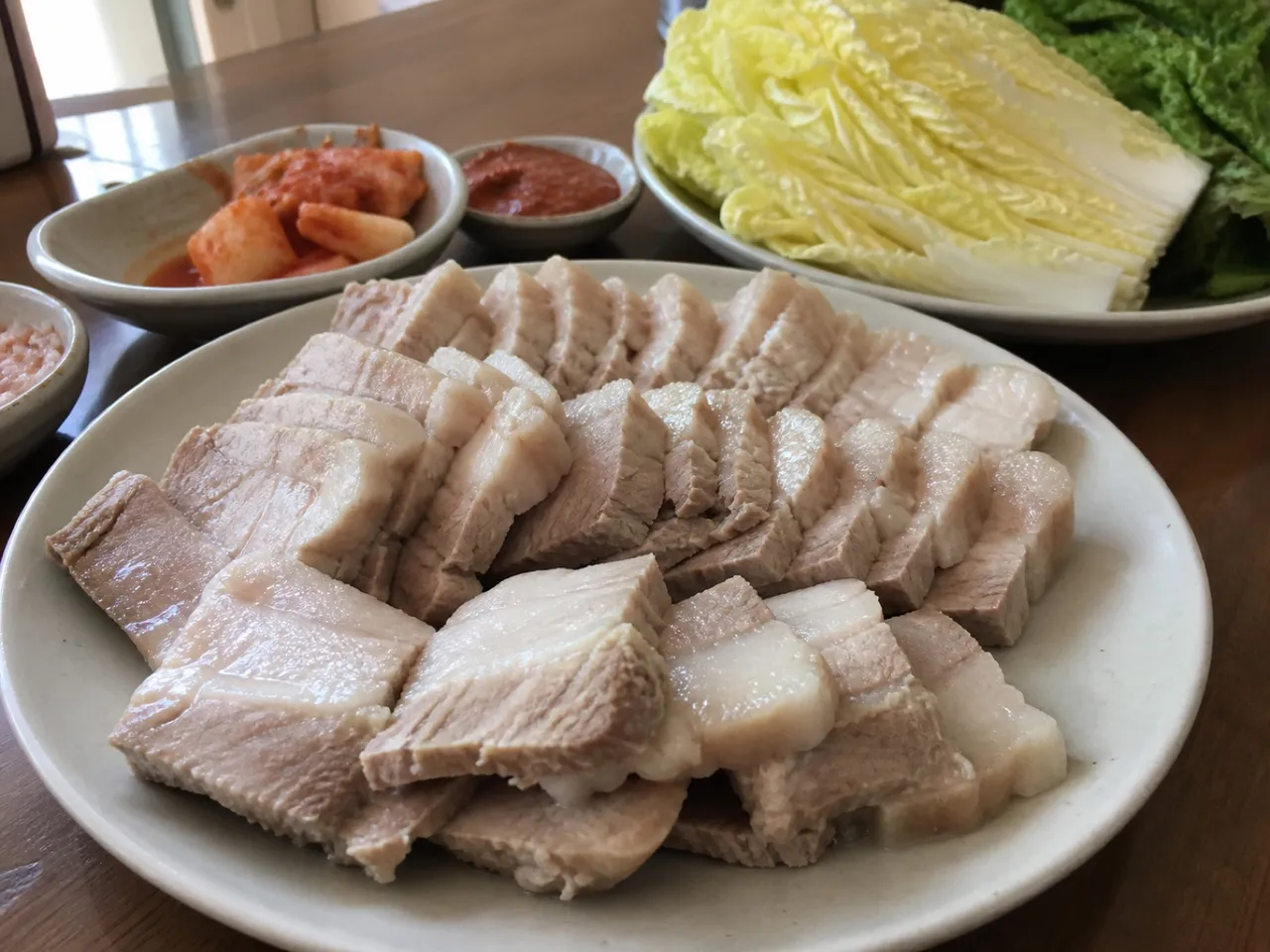 Serving Images are for illustrative purposes only, may be inaccurate, and do not guarantee the presence or absence of specific ingredients.
 Suyuk (Boiled Pork Slices)
Simple, tender slices of boiled pork, often served alongside fresh kimchi during kimchi-making season (gimjang).
Contains common allergens
In the app, Listahan checks these against your household automatically.
Good to know
- One-pot
Matched from this dish's own ingredients and timing. Browse more: one-pot dinners
Instructions
6 steps- 1
In a large Dutch oven or heavy pot, add 8 cups of water. Stir in the doenjang, instant coffee powder, onion halves, scallion, garlic, ginger slices, and black peppercorns. Bring to a rolling boil.
- 2
Carefully submerge the whole block of pork into the boiling aromatic broth.
- 3
Reduce the heat to medium-low, cover the pot, and simmer steadily for 50-60 minutes.
- 4
Poke the thickest part of the pork with a chopstick; if it goes in easily and no pink juices run out, it is done.
- 5
Remove the pork from the broth and let it rest on a cutting board for 5-10 minutes so the juices redistribute.
- 6
Slice the pork cleanly into 1/4-inch thick slices. Serve warm, accompanied by saeujeot (salted shrimp), ssamjang, raw garlic slices, and freshly made kimchi (geotjeori).
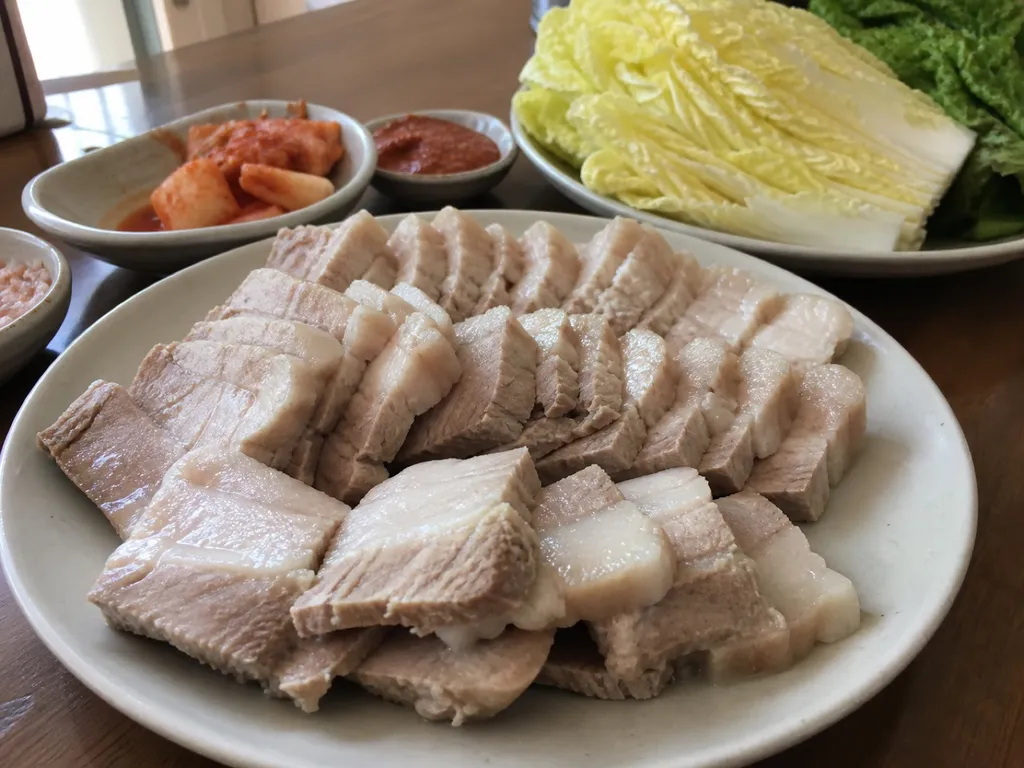 Images are for illustrative purposes only, may be inaccurate, and do not guarantee the presence or absence of specific ingredients.
 Listahan Family Score™
69/100
Works for many families
Score reflects how well this recipe fits a typical busy household. In the app, your Family Score is personalized to your household's allergens, kids, and pantry.
Nutrition
per serving520
Calories
55 g
Protein
7 g
Carbs
29 g
Fat
Estimated per serving. Actual values depend on the brands and portions you use.
Listahan cooking guide
Chef notes & practical guide
Technique notes, ingredient swaps, serve-alongside ideas, storage guidance, and equipment for this recipe.
Cultural context
Suyuk is simply boiled pork or beef, sliced thin and served with dipping sauces and wraps, a clean and lean way to enjoy meat. The simmering aromatics, often doenjang and a touch of coffee, deodorize and season the pork. It is the meat at the center of bossam and a frequent offering at ancestral rites.
Listahan note
This version simmers the pork with doenjang and aromatics for a clean flavor, then rests and slices it thin to serve with salted shrimp or ssamjang.
Technique cues
- Simmer the pork gently so it stays moist and tender.
- Add doenjang and aromatics to the water to keep the flavor clean.
- Rest the pork before slicing so the juices settle.
Kitchen flow
- Parallel prep
- Prep the wraps and dipping sauces while the pork simmers.
- Make-ahead
- Simmer ahead and slice warm; reheat gently if needed.
- Leftover move
- Use leftover suyuk in fried rice or a quick stir-fry.
- Cleanup rhythm
- One pot; skim and discard the simmering liquid.
Ingredient brief
Role, handling, and swap guidance for each key ingredient.
Pork belly or shoulder
Main
Purpose: Boiling renders the fat and leaves tender, clean-tasting meat.
Handling: Simmer whole, rest, then slice thin.
Adaptation: Beef brisket can be prepared the same way.
Doenjang
Simmer aromatic
Purpose: Deodorizes the pork and seasons it from the broth.
Handling: Add to the simmering water with onion and garlic.
Adaptation: A few tablespoons of miso work similarly.
Ginger and garlic
Aromatics
Purpose: Round out the broth and tame any porky smell.
Handling: Add sliced to the simmer.
Adaptation: Add a scallion or bay leaf for more aroma.
Coffee powder
Deodorizer
Purpose: A traditional trick to neutralize strong pork smell.
Handling: Stir a spoon into the simmering water.
Adaptation: Skip it; the doenjang still does the job.
Technique notes
- Keep the simmer gentle for tender, not tough, meat.
- Rest before slicing to keep the juices in.
- Slice against the grain and thin for the best texture.
Ingredient swaps
- Beef direction
- Use beef brisket for soegogi suyuk.
- Gluten-free direction
- Confirm the doenjang and any dipping paste are wheat-free.
- Lower-sodium direction
- Go light on the salted shrimp and ssamjang dips.
Serve alongside
- Salted shrimp (saeujeot)
- Ssamjang
- Kimchi
- Napa cabbage wraps
- Soju
- Makgeolli
- Barley tea
Serving suggestions only — check pairings for your household's allergens.
Storage & reheating
- Refrigerate cooked pork up to 3 days.
- Reheat gently or steam to keep the slices moist.
- Freeze the boiled pork up to 2 months; thaw and steam to reheat.
Equipment
- Large pot
- Cutting board
- Sharp knife
- Serving platter
Make this household-aware
Listahan Pro checks this recipe against your household's allergens, finds pantry-aware swaps, builds the shopping list, and helps you plan the week around it.
Plan it in Listahan
Add Suyuk (Boiled Pork Slices) to your week, check it against your household's allergens, and build the shopping list automatically.
More Korean recipes
 Korean Lens Verified Images are for illustrative purposes only, may be inaccurate, and do not guarantee the presence or absence of specific ingredients.
 Dakgalbi (Spicy Stir-fried Chicken)
Diced chicken marinated in a gochujang-based sauce, stir-fried with sweet potatoes, cabbage, perilla leaves, and tteok.
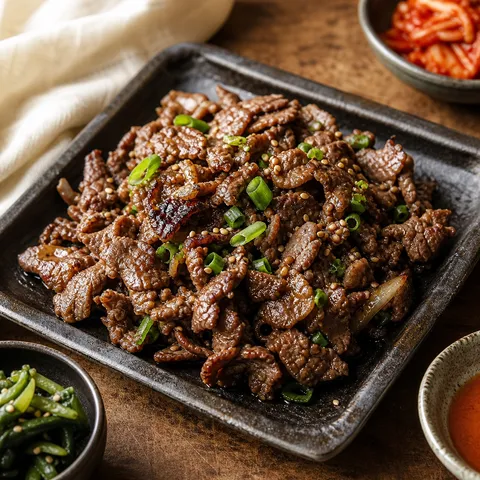 Korean Lens Verified Images are for illustrative purposes only, may be inaccurate, and do not guarantee the presence or absence of specific ingredients.
 Bulgogi (Marinated Beef BBQ)
Thinly sliced, marinated beef ribeye or sirloin grilled or stir-fried. Sweet, savory, and tender.
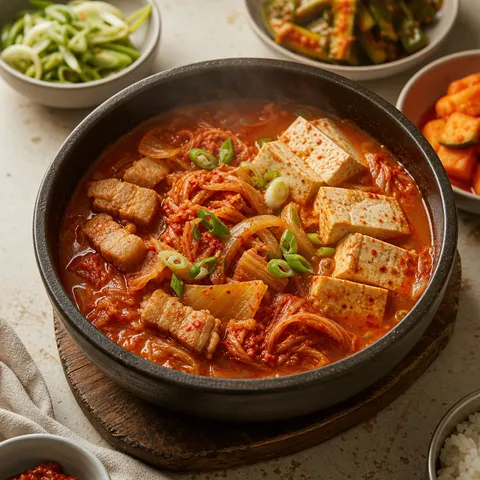 Korean Lens Verified Images are for illustrative purposes only, may be inaccurate, and do not guarantee the presence or absence of specific ingredients.
 Kimchi Jjigae (Kimchi Stew)
A classic, comforting stew made with aged kimchi, pork or seafood, scallions, onions, and diced tofu.