 North African Images are for illustrative purposes only, may be inaccurate, and do not guarantee the presence or absence of specific ingredients.
  Serving Images are for illustrative purposes only, may be inaccurate, and do not guarantee the presence or absence of specific ingredients.
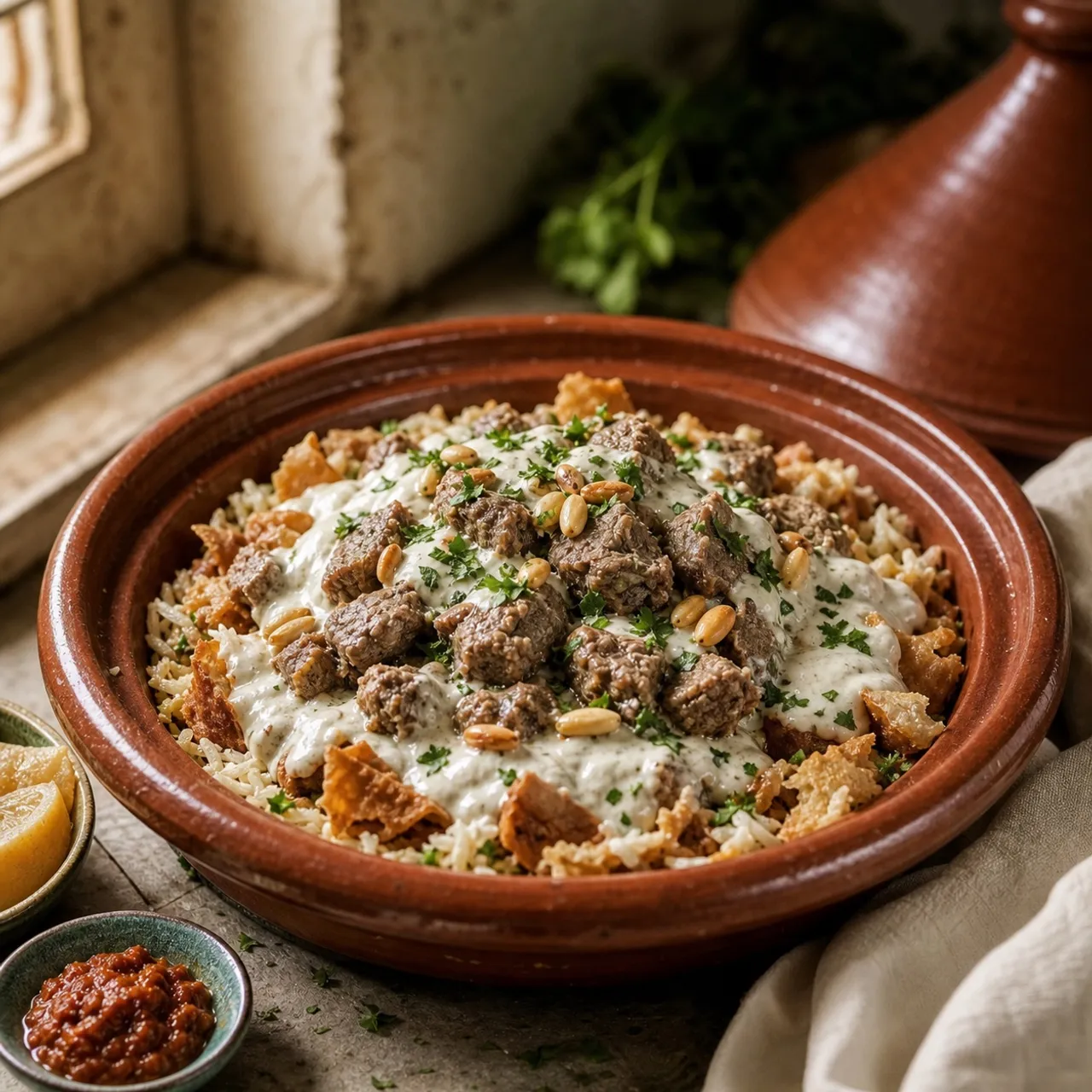
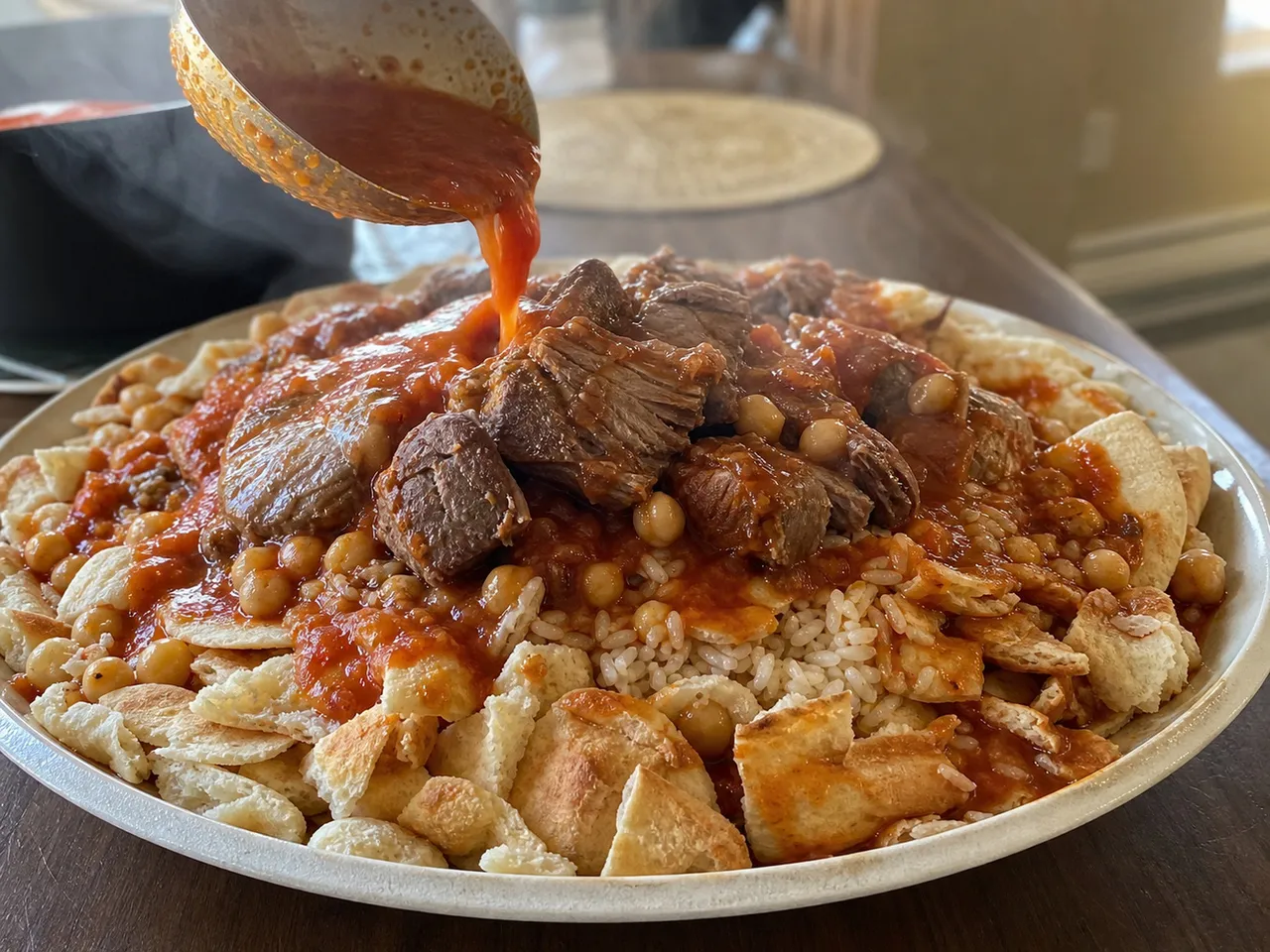
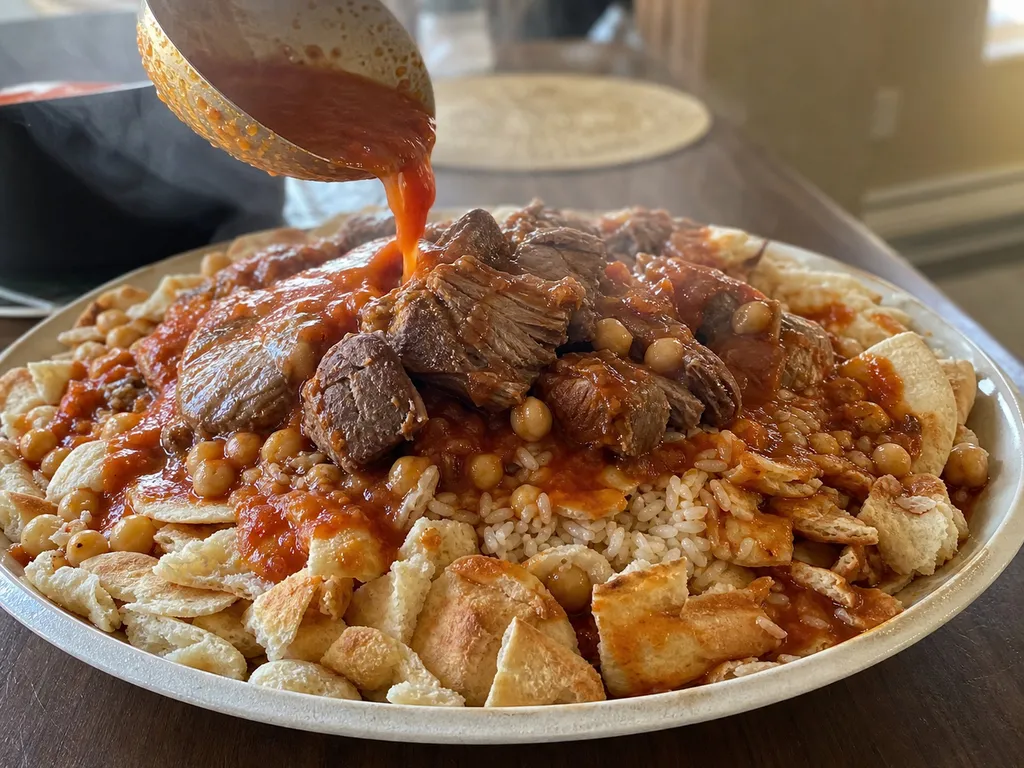
 Fattah
Layers of toasted bread and rice bathed in a garlicky vinegar-laced broth and topped with tender lamb — Egypt's celebratory dish served at feasts and holidays.
Contains common allergens
In the app, Listahan checks these against your household automatically.
Instructions
8 steps- 1
Simmer the lamb in a large pot of salted water with an onion and a bay leaf, if using, until very tender, about 60 to 75 minutes, then remove the meat and strain and reserve the broth.
- 2
Cook the rinsed rice in some of the reserved lamb broth until tender and fluffy, seasoning with salt.
- 3
While the rice cooks, heat the ghee in a small pan, add the minced garlic, and cook gently until fragrant but not browned.
- 4
Off the heat, stir the vinegar into the garlic ghee and season with salt and pepper, this garlicky tashreeba sauce is the soul of the dish.
- 5
Break or tear the toasted flatbread into pieces and layer them in the bottom of a large serving dish.
- 6
Ladle hot lamb broth over the bread to moisten it thoroughly, then spread the cooked rice in an even layer on top.
- 7
Arrange the tender lamb pieces over the rice and drizzle the garlic vinegar sauce generously over everything just before serving.
- 8
Scatter with chopped parsley and serve immediately while the bread layer is still warm and absorbent.
 Images are for illustrative purposes only, may be inaccurate, and do not guarantee the presence or absence of specific ingredients.
 Listahan Family Score™
68/100
Works for many families
Score reflects how well this recipe fits a typical busy household. In the app, your Family Score is personalized to your household's allergens, kids, and pantry.
Nutrition
per serving535
Calories
34 g
Protein
56 g
Carbs
19 g
Fat
Estimated per serving. Actual values depend on the brands and portions you use.
Listahan cooking guide
Chef notes & practical guide
Technique notes, ingredient swaps, serve-alongside ideas, storage guidance, and equipment for this recipe.
Cultural context
Fattah is one of Egypt's most important ceremonial dishes, traditionally prepared for Eid al-Adha (the feast of sacrifice), the celebration following childbirth, and large family gatherings. The dish is a composed plate of toasted or fried flatbread pieces layered under rice, then topped with braised meat and a sharp tomato-vinegar sauce poured over the whole assembly just before serving. The name likely derives from the Arabic verb meaning 'to crumble' or 'to break,' describing the tearing and layering of bread that defines the dish's construction. Different Egyptian regions and family traditions produce slightly different versions, but the combination of crisp bread soaked in savory broth and sauce is consistent.
Listahan note
This version builds the tomato-vinegar sauce with enough acidity to cut through the richness of the lamb or beef and the starch of the rice, so the bread layer underneath is tangy and savory rather than simply wet.
Technique cues
- The layering order of fattah is not arbitrary — the bread goes in first so it can absorb broth from the rice layer above it and sauce from above, while retaining some crispness at the edges; if the bread is too thick or the liquid too little, the center stays hard, and if the bread is too thin or the liquid too much, the layers merge into porridge.
- The vinegar-tomato sauce (made by simmering crushed tomatoes with a generous splash of white or red wine vinegar and garlic) must be assertive enough to cut through the combination of bread, rice, and fatty meat — taste it at full concentration before pouring over the assembled dish because once it hits the bread and rice it dilutes significantly.
- The meat for fattah is best cooked low and slow in enough water or broth to produce a full cup or more of cooking liquid, which gets poured over the rice layer to soak through to the bread; this braising liquid is the hidden flavor element that elevates the dish beyond its individual components.
Kitchen flow
- Parallel prep
- While the meat braises, toast the bread pieces in the oven and prepare the tomato-vinegar sauce; all three components can be ready simultaneously for a quick final assembly.
- Make-ahead
- Braise the meat and make the tomato sauce up to 2 days ahead and refrigerate; reheat both and cook the rice fresh on the day of serving since the final assembly and soaking should happen right before eating.
- Leftover move
- Leftover fattah where the bread has fully absorbed the broth and sauce can be stirred together with a beaten egg and pan-fried in butter the next morning as a crispy rice-bread patty.
- Cleanup rhythm
- Use a large shallow serving platter or tray for assembly — this makes it easier to layer and allows the sauce to spread evenly; rinse the platter before the tomato sauce sets for easier cleaning.
Ingredient brief
Role, handling, and swap guidance for each key ingredient.
Rice
middle layer and braising liquid carrier
Purpose: Cooked rice forms the central layer of fattah and acts as the medium through which the meat's braising liquid travels down to soak the bread beneath.
Handling: Cook the rice separately in a portion of the meat's strained braising liquid rather than plain water — this infuses the rice with the savory, spiced meat flavor before it even joins the assembly.
Adaptation: Short-grain rice or Egyptian-style medium-grain rice is traditional; long-grain basmati works but the grains stay more separate, which changes the texture of the finished layer.
meat
protein topping and broth source
Purpose: Bone-in lamb shanks or beef cubes braised until fall-tender provide both the protein that crowns the dish and the deeply flavored braising liquid that is the invisible backbone of the whole assembly.
Handling: Braise in water with whole spices (cinnamon stick, cardamom pods, bay leaves, onion) for 1.5 to 2 hours; the meat should be tender enough to pull from the bone with light pressure, and the strained liquid should taste like a rich, spiced consomme.
Adaptation: Whole chicken pieces braised the same way produce a lighter, more accessible version; lamb is the most traditional and flavorful choice for Eid celebrations.
flatbread
absorbent base layer
Purpose: Day-old baladi bread (Egyptian whole wheat flatbread) or pita torn and toasted until very crisp forms the bottom layer that absorbs the broth and sauce without dissolving completely.
Handling: Tear into 3 to 4 inch irregular pieces and toast in a 350F oven on a dry baking sheet until completely crisp and lightly golden — they should snap, not bend, before going into the serving dish.
Adaptation: Any sturdy flatbread works; the key is that it must be completely dried out and crisp before layering, whether that means toasting fresh bread or using truly stale bread.
white vinegar
acidity in the tomato sauce
Purpose: The vinegar in the tomato sauce is what lifts the entire assembled dish — without sufficient acidity, the combination of bread, rice, and fatty meat reads as heavy and monotonous.
Handling: Add vinegar to taste after the tomato sauce has simmered and reduced — start with 2 tablespoons and increase until the sauce has a clear but not sharp tang when tasted warm.
Adaptation: Apple cider vinegar adds a slightly fruitier note and is a seamless substitute; lemon juice can replace vinegar for a brighter, less pungent acidity.
Technique notes
- Pour the warm braising liquid over the rice layer slowly from the center outward, giving it 2 to 3 minutes to soak down to the bread before adding the meat and the tomato-vinegar sauce — pouring everything at once causes the liquid to pool at the edges rather than saturating the base.
- The tomato-vinegar sauce should be added at the table just before eating, not during assembly — this preserves some crispness in the bread pieces at the edges of the platter and allows each diner to take portions with varying ratios of sauce to bread to rice.
- Fry the toasted bread pieces briefly in a thin film of clarified butter or ghee for 1 to 2 minutes per side before toasting in the oven — this extra step adds a rich, browned-butter flavor to the bread layer that carries through to the finished dish.
Ingredient swaps
- Gluten-free direction
- Use certified gluten-free flatbread or large rice crackers for the bread layer; they absorb liquid similarly and maintain more structural integrity than some GF bread options.
- Lighter protein option
- Whole roasted chicken pieces braised in spiced broth replace lamb for a milder, more budget-friendly version that works well for households less accustomed to lamb's flavor.
- Vegan direction
- Replace the meat with roasted cauliflower and chickpeas braised in a spiced vegetable broth; use the same broth to cook the rice and make the tomato sauce — the dish loses some richness but the layered architecture remains fully intact.
Serve alongside
- simple green salad with lemon and olive oil
- Egyptian pickled vegetables (torshi)
- yogurt with garlic and cucumber
- cold tamarind juice
- hot mint tea served after the meal
- cold sparkling water with lemon
Serving suggestions only — check pairings for your household's allergens.
Storage & reheating
- Fattah does not store well assembled — the bread layers become fully saturated overnight; store components separately (braised meat, cooked rice, tomato sauce) in the fridge for up to 3 days.
- Reheat the meat in its braising liquid over low heat; reheat rice with a splash of water in a covered pot or in the microwave with a damp paper towel over the bowl.
- The tomato-vinegar sauce keeps refrigerated for up to 5 days and can also be used as a dipping sauce for pita or a base for shakshuka.
Equipment
- large heavy pot or Dutch oven for braising the meat
- rimmed baking sheet for toasting the bread
- medium saucepan for the tomato-vinegar sauce
- large shallow serving platter for assembly
Make this household-aware
Listahan Pro checks this recipe against your household's allergens, finds pantry-aware swaps, builds the shopping list, and helps you plan the week around it.
Plan it in Listahan
Add Fattah to your week, check it against your household's allergens, and build the shopping list automatically.
More North African recipes
 North African Lens Verified Images are for illustrative purposes only, may be inaccurate, and do not guarantee the presence or absence of specific ingredients.
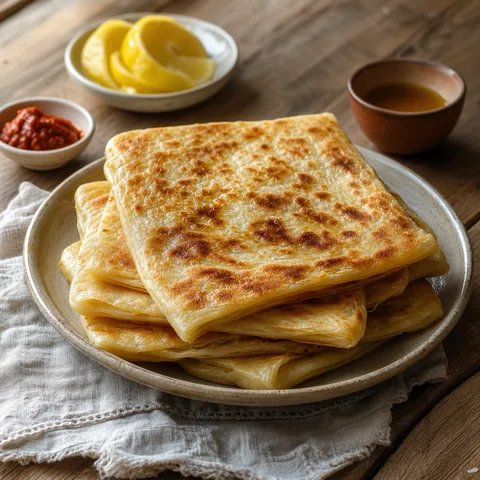
 Msemmen
Layered and folded semolina flatbread cooked on a griddle until the outside crisps and the inside stays wonderfully chewy — perfect with honey or harissa.
 North African Lens Verified Images are for illustrative purposes only, may be inaccurate, and do not guarantee the presence or absence of specific ingredients.
 Brik
Crispy paper-thin pastry folded around a whole egg, tuna, and parsley then flash-fried until golden — Tunisia's beloved street snack, eaten fast before the yolk escapes.
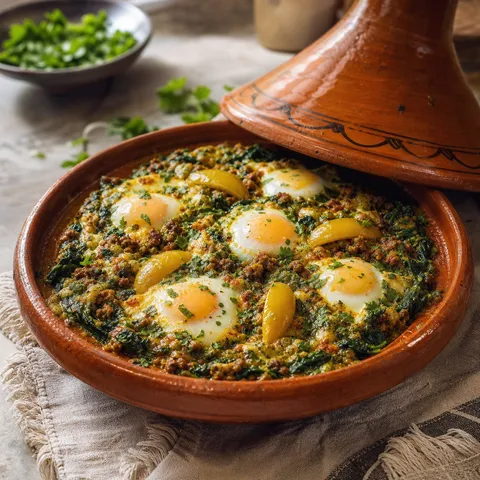 North African Lens Verified Images are for illustrative purposes only, may be inaccurate, and do not guarantee the presence or absence of specific ingredients.
 Tajine El Bey
Tunisia's grand layered bake of spiced lamb, eggs, and cheese baked in a deep crust — a celebration dish with silky, complex layers in every slice.