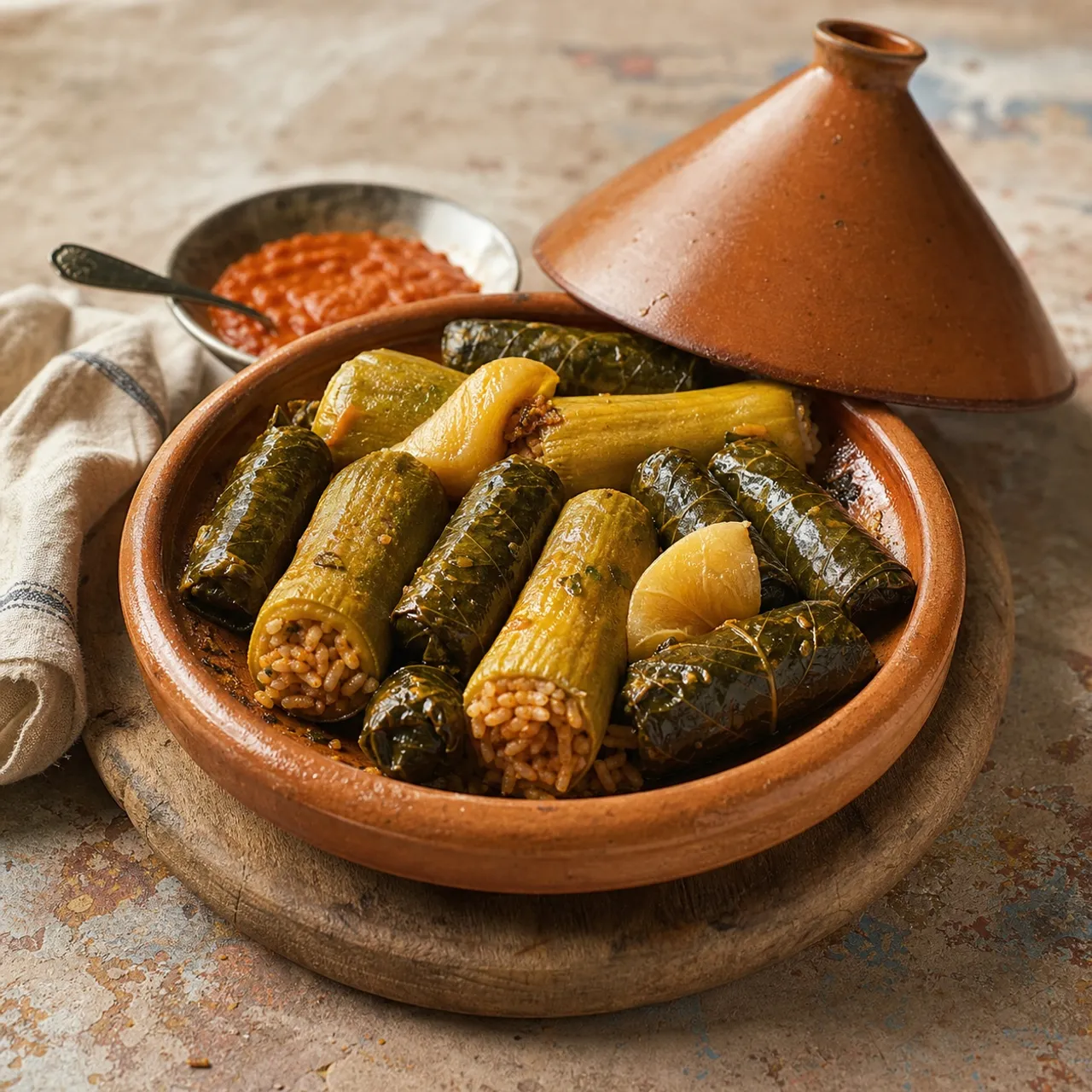
 North African Images are for illustrative purposes only, may be inaccurate, and do not guarantee the presence or absence of specific ingredients.
 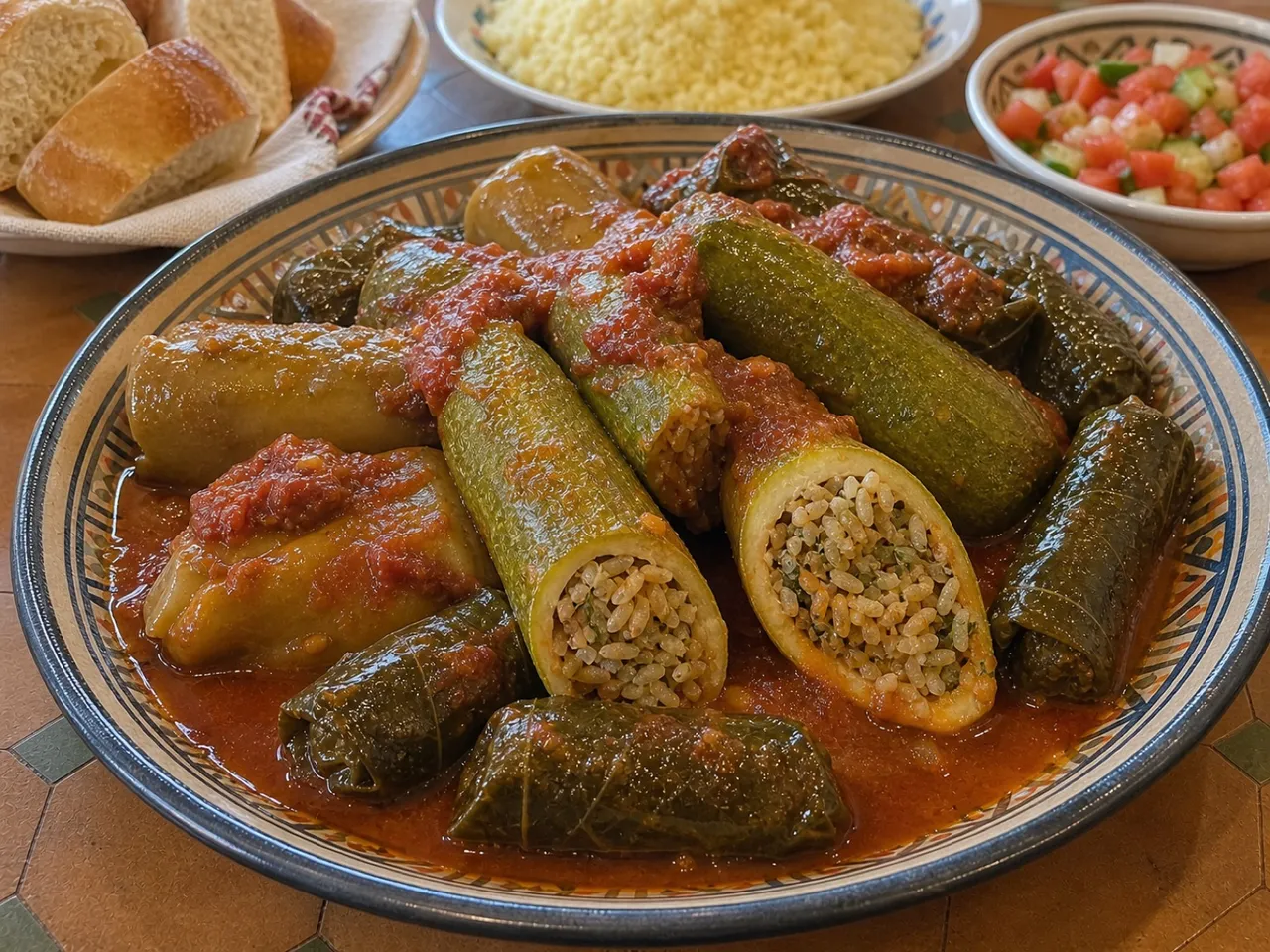 Serving Images are for illustrative purposes only, may be inaccurate, and do not guarantee the presence or absence of specific ingredients.
 Mahshi
Bell peppers, zucchini, and grape leaves stuffed tight with herbed rice and slow-cooked until swollen with flavor — Egypt's labor of love that always gets requested again.
No common allergens detected
Based on this recipe's ingredient list. Always verify with your own brands and labels.
Good to know
- One-pot
Matched from this dish's own ingredients and timing. Browse more: one-pot dinners
Instructions
7 steps- 1
Mix the rinsed rice with the diced tomato, chopped herbs, tomato paste, olive oil, cumin, salt, and pepper to make the stuffing, leaving it slightly loose since the rice will expand.
- 2
Fill each hollowed pepper and zucchini about three-quarters full with the rice mixture to leave room for expansion, and replace the pepper tops.
- 3
Lay a grape leaf flat, spoon a small line of stuffing near the stem end, fold in the sides, and roll up tightly into a small cylinder, repeat with the remaining leaves.
- 4
Line the bottom of a large pot with any spare leaves or vegetable trimmings to prevent scorching.
- 5
Arrange the stuffed peppers and zucchini upright in the pot and tuck the grape leaf rolls into the gaps, packing everything snugly.
- 6
Pour the tomato juice or broth over everything until nearly covered, place a small plate on top to weigh it all down, cover, and simmer gently over low heat until the rice is tender and the vegetables are soft, about 45 to 60 minutes.
- 7
Let rest 10 minutes off the heat before serving warm.
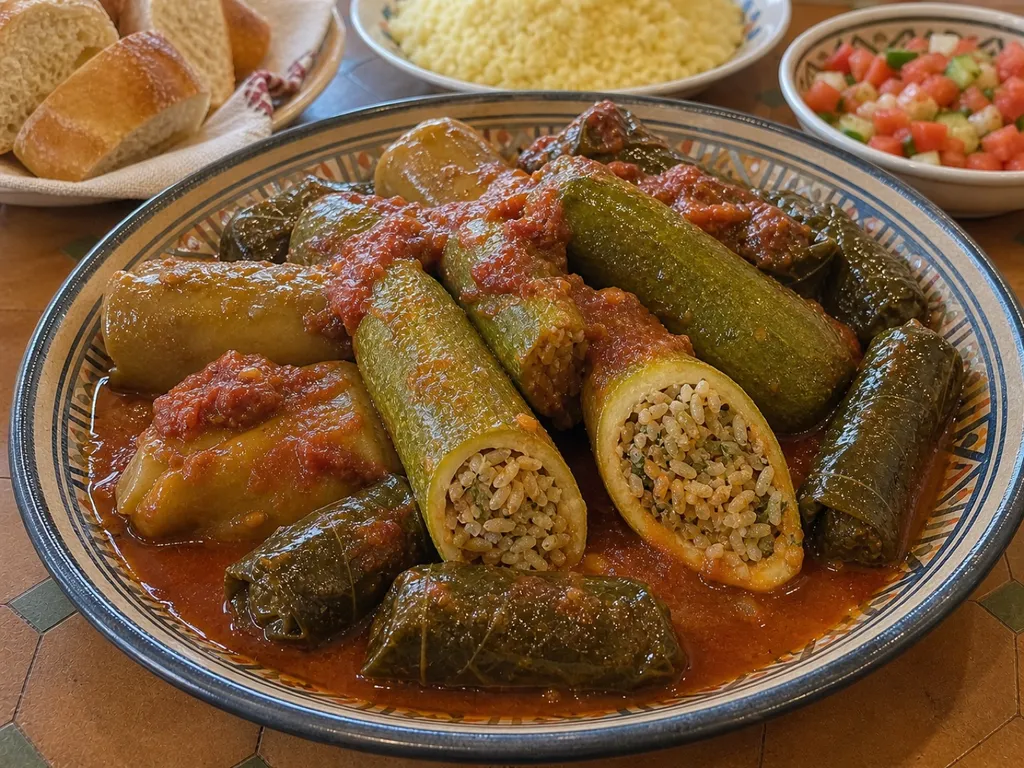 Images are for illustrative purposes only, may be inaccurate, and do not guarantee the presence or absence of specific ingredients.
 Listahan Family Score™
72/100
Good fit for most families
Score reflects how well this recipe fits a typical busy household. In the app, your Family Score is personalized to your household's allergens, kids, and pantry.
Nutrition
per serving200
Calories
6 g
Protein
43 g
Carbs
1 g
Fat
Estimated per serving. Actual values depend on the brands and portions you use.
Listahan cooking guide
Chef notes & practical guide
Technique notes, ingredient swaps, serve-alongside ideas, storage guidance, and equipment for this recipe.
Cultural context
Mahshi (from the Arabic verb 'to stuff') is Egypt's broad term for vegetables stuffed with a spiced rice mixture, a tradition shared across the entire Arab world from Morocco to Iraq. In Egypt the most common vehicles are zucchini (kousa), grape leaves, bell peppers, eggplant, and tomatoes, all stuffed with the same core mixture of short-grain rice, tomatoes, herbs, and warm spices, then simmered in a tomato-based broth. The dish is one of the most labor-intensive in Egyptian home cooking and is often made in large batches for family gatherings, with multiple vegetables stuffed and cooked together in one pot so each absorbs a slightly different flavor from its neighbor.
Listahan note
This version focuses on zucchini mahshi — the most common Egyptian variety — cored and stuffed with an herbed rice mixture seasoned with dill and parsley, then simmered upright in a tomato broth until the rice is fully cooked inside the vegetable.
Technique cues
- The rice filling goes in raw and only partially fills the vegetable — leave at least one-quarter of the interior empty, as the raw rice expands significantly during cooking and a fully stuffed zucchini will burst and split as the rice swells, ruining both the presentation and the texture of the filling.
- The tomato broth the stuffed vegetables simmer in serves a dual purpose: it cooks the rice from the outside in through the vegetable wall while providing the acid environment that keeps the zucchini firm enough to stay intact; a broth that is too thin will make the zucchini water-log and collapse, while too little liquid means the rice will not cook through.
- The scooped-out zucchini flesh is never discarded in Egyptian cooking — it is mixed with tomatoes, onion, and herbs to make a quick accompanying dish called 'hasa' that is served alongside the mahshi, so the whole vegetable is used and no cooking labor is wasted.
Kitchen flow
- Parallel prep
- Hollow out all the zucchini first before mixing the filling; once the cores are scooped, the filling takes only 5 minutes to mix, and stuffing can begin immediately without waiting.
- Make-ahead
- Stuff the zucchini up to 8 hours ahead and refrigerate them upright in a deep container; start the simmer directly from the fridge, adding 5 minutes to the total cooking time.
- Leftover move
- Leftover mahshi reheats well covered in a small baking dish in a 325F oven for 15 minutes; slice the leftover zucchini into rounds with the rice intact inside and pan-fry briefly in olive oil for a crispy rice-stuffed disk.
- Cleanup rhythm
- The coring tool and mixing bowl are the main cleanup items — rinse both immediately after use as the rice starch and tomato can set quickly; the simmering pot cleans easily after soaking in warm water.
Ingredient brief
Role, handling, and swap guidance for each key ingredient.
Zucchini
edible vessel and co-ingredient
Purpose: Medium zucchini (6 to 7 inches long) are the right size for coring without breaking the walls and cook at the same rate as the rice filling — too small and the walls break during coring, too large and the vegetable overcooks before the rice is done.
Handling: Use a long thin vegetable corer (an apple corer works) or a small sharp spoon to hollow out the zucchini from one end, leaving a wall at least half a centimeter thick all around; work slowly to avoid puncturing the bottom.
Adaptation: Long Asian eggplants, bell peppers, and large tomatoes (with tops removed) can all receive the same filling; each requires slightly different cooking times — bell peppers and tomatoes cook faster than zucchini.
rice
filling base
Purpose: Short-grain rice (Egyptian, Italian Arborio, or similar) is preferred for mahshi because it becomes slightly sticky and cohesive as it cooks, filling the interior of the vegetable in one unified mass rather than loose separate grains.
Handling: Rinse the rice and mix raw with the chopped tomatoes, herbs, oil, and spices; do not soak or par-cook as the timing of the dish depends on the rice cooking from raw inside the vegetable during the simmer.
Adaptation: Medium-grain rice works; long-grain basmati is not recommended as it stays separate and some grains may be underdone while others overcook.
fresh dill
primary herb in the filling
Purpose: Fresh dill is the signature herb in Egyptian mahshi filling, giving the rice a bright, slightly anise-like freshness that is instantly recognizable and distinct from the same dish made without it.
Handling: Use only the fronds, not the thick stems; chop finely and mix into the raw rice with the other herbs just before stuffing.
Adaptation: Fresh parsley alone can be used for a more neutral herb note; the combination of dill and parsley is classic and both should be used when available.
tomatoes
flavoring in the filling and broth
Purpose: Finely chopped fresh or canned tomatoes mixed into the raw rice filling provide moisture that helps the rice cook inside the sealed vegetable, and the tomato broth the mahshi simmers in is its primary cooking medium.
Handling: For the filling, dice very finely so the pieces mix evenly into the rice; for the broth, crushed canned tomatoes blended with water and a teaspoon of tomato paste give the deepest color.
Adaptation: Sun-dried tomatoes rehydrated in warm water can replace fresh in the filling when fresh tomatoes are out of season, providing concentrated flavor in a smaller volume.
Technique notes
- Stand the stuffed zucchini upright in the pot in tight concentric circles so they support each other and do not tip during cooking; placing a heavy heat-proof plate directly on top of the zucchini holds them in place and ensures even cooking.
- Check for doneness by inserting a thin skewer through the side of the zucchini into the rice — it should slide in with no resistance and the skewer should come out with no hard, raw rice grains clinging to it.
- The cooking broth at the end of simmering is a flavorful, spiced tomato consomme — pour it into bowls and serve it as a soup course alongside the mahshi, or ladle it over the plated mahshi as a sauce.
Ingredient swaps
- Gluten-free direction
- Mahshi is naturally gluten-free as written — rice, vegetables, herbs, and spices contain no gluten; confirm that any packaged tomato products used are gluten-free certified.
- Vegan direction
- Omit meat from the filling (traditional mahshi in many Egyptian homes is already meat-free for weekday meals) and ensure the broth uses olive oil rather than butter or animal fat.
- Meat-stuffed variation
- Mix 100g of raw ground lamb or beef into the rice filling for a heartier version; reduce the rice quantity by about one-third to account for the volume of the meat, and extend the simmer time by 10 minutes.
Serve alongside
- plain yogurt as a cooling dip
- the scooped zucchini flesh cooked as a quick side saute with garlic and tomato
- warm pita or baladi bread
- simple cucumber salad with lemon and olive oil
- cold tamarind juice
- fresh lemonade with mint
- hot mint tea
Serving suggestions only — check pairings for your household's allergens.
Storage & reheating
- Refrigerate cooked mahshi in its broth in an airtight container for up to 3 days; the zucchini continues to soften in storage but the flavor deepens.
- Reheat covered in a pot over medium-low heat with a splash of water or broth, or in a 325F oven covered with foil for 15 minutes.
- Mahshi can be frozen for up to 1 month though the zucchini texture softens considerably; freeze in the broth and thaw overnight in the fridge before reheating.
Equipment
- apple corer or vegetable corer for hollowing the zucchini
- large wide pot with a tight-fitting lid
- heat-proof plate or small pot lid to weight down the stuffed vegetables during cooking
- thin skewer or cake tester for checking rice doneness
Make this household-aware
Listahan Pro checks this recipe against your household's allergens, finds pantry-aware swaps, builds the shopping list, and helps you plan the week around it.
Plan it in Listahan
Add Mahshi to your week, check it against your household's allergens, and build the shopping list automatically.
More North African recipes
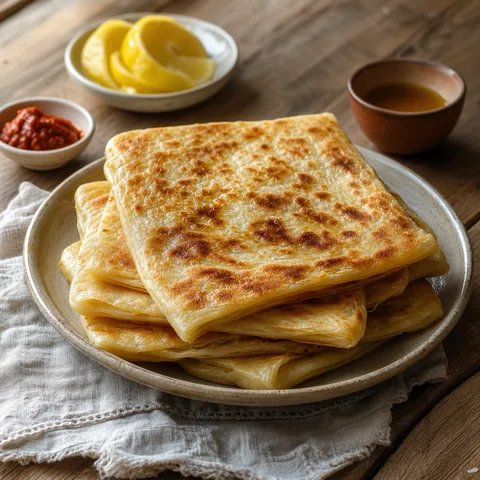 North African Lens Verified Images are for illustrative purposes only, may be inaccurate, and do not guarantee the presence or absence of specific ingredients.
 Msemmen
Layered and folded semolina flatbread cooked on a griddle until the outside crisps and the inside stays wonderfully chewy — perfect with honey or harissa.
 North African Lens Verified Images are for illustrative purposes only, may be inaccurate, and do not guarantee the presence or absence of specific ingredients.
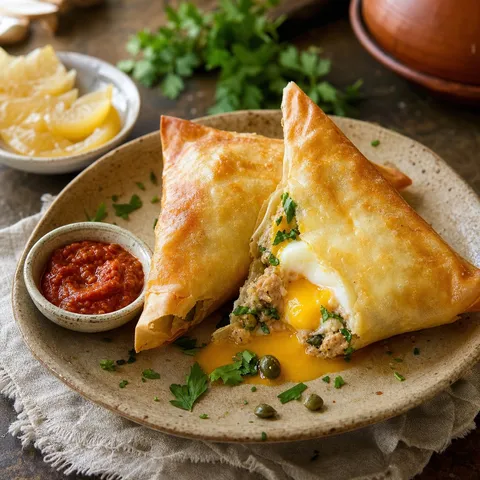
 Brik
Crispy paper-thin pastry folded around a whole egg, tuna, and parsley then flash-fried until golden — Tunisia's beloved street snack, eaten fast before the yolk escapes.
 North African Lens Verified Images are for illustrative purposes only, may be inaccurate, and do not guarantee the presence or absence of specific ingredients.
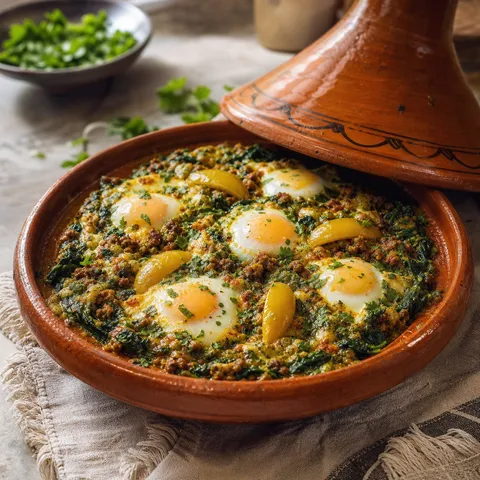
 Tajine El Bey
Tunisia's grand layered bake of spiced lamb, eggs, and cheese baked in a deep crust — a celebration dish with silky, complex layers in every slice.