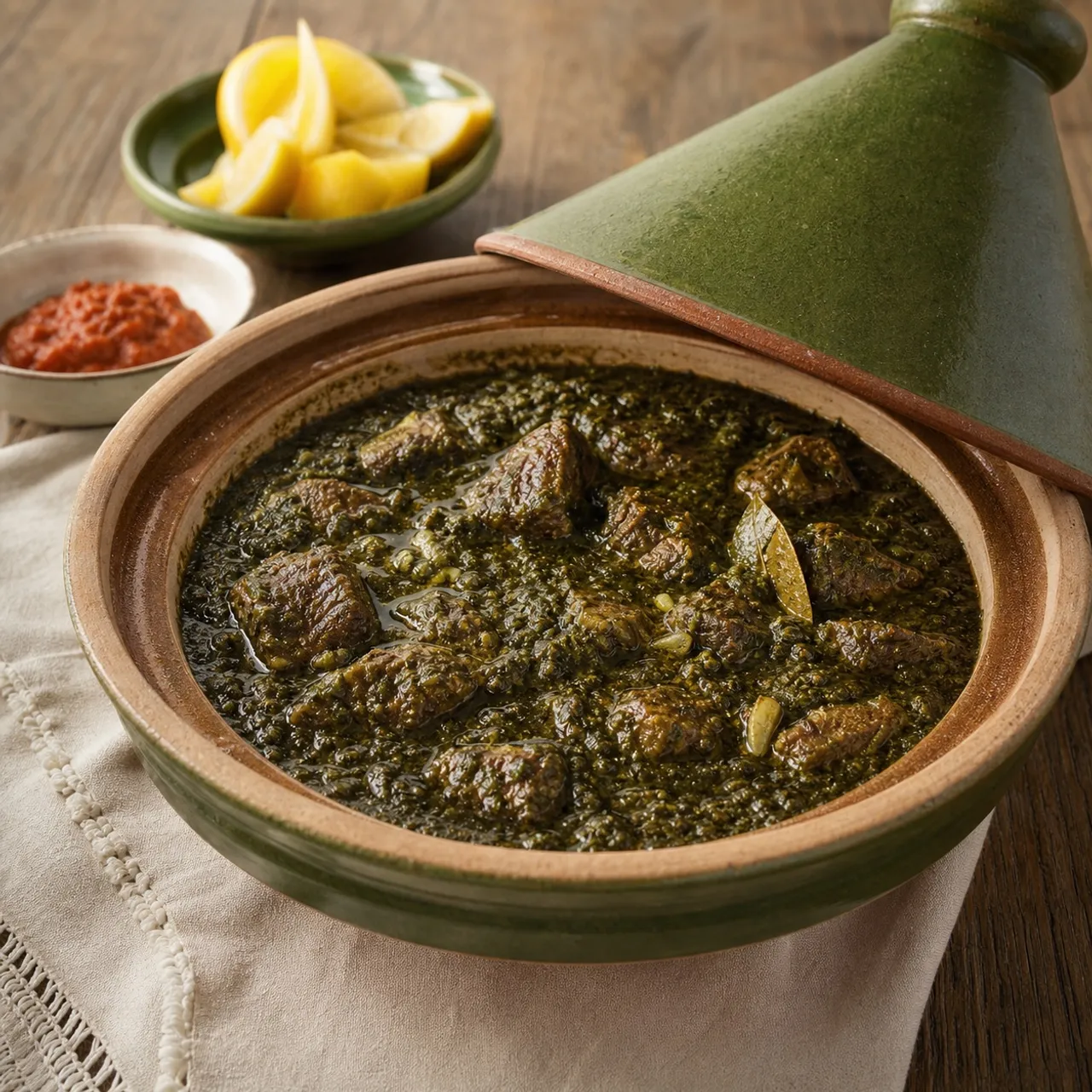
 North African Images are for illustrative purposes only, may be inaccurate, and do not guarantee the presence or absence of specific ingredients.
 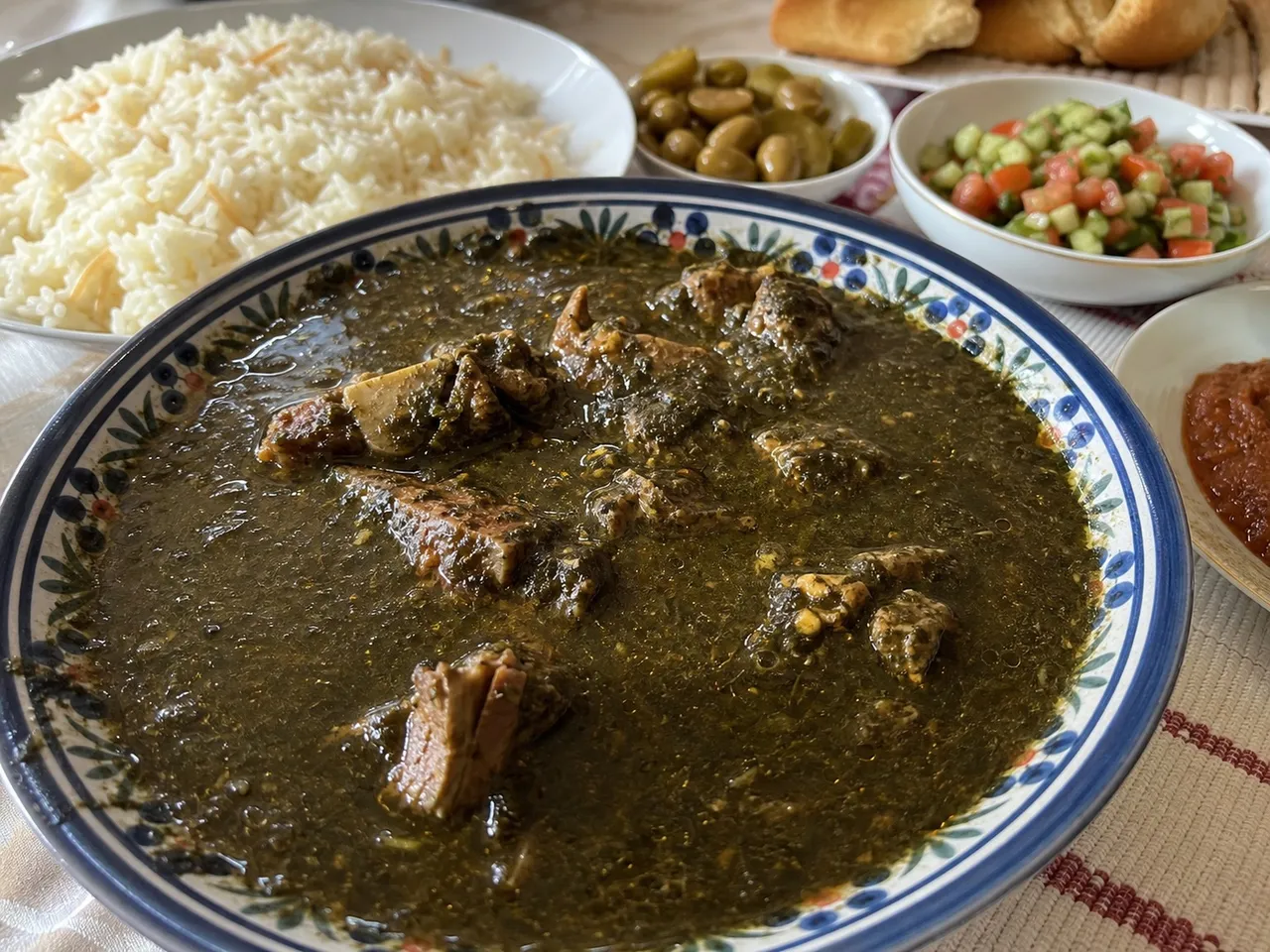 Serving Images are for illustrative purposes only, may be inaccurate, and do not guarantee the presence or absence of specific ingredients.
 Mloukhiya
Tunisia's intensely earthy jute-leaf stew simmered low with lamb or rabbit until it deepens to a glossy, almost black sauce — an acquired love with fierce devotees.
No common allergens detected
Based on this recipe's ingredient list. Always verify with your own brands and labels.
Instructions
7 steps- 1
Brown the lamb or rabbit pieces in a couple tablespoons of the olive oil in a heavy pot, then add water to cover, season with salt, and simmer until nearly tender, about 45 minutes, reserving the cooking broth.
- 2
In a separate wide pot, heat the remaining olive oil and add the powdered mloukhiya all at once, stirring constantly over low heat, this dry-frying step is essential to develop its deep flavor and dark color.
- 3
Continue stirring for several minutes as the powder toasts in the oil and darkens, being careful not to let it scorch.
- 4
Gradually ladle in the reserved meat broth, whisking as you go to keep the mixture smooth, then add the grated onion, garlic, tomato paste, coriander, caraway, and chili.
- 5
Bring to a bare simmer and cook low and slow, stirring occasionally, until the sauce turns a deep, glossy near-black and thickens noticeably, at least 45 minutes to an hour, the longer the better for flavor.
- 6
Add the cooked meat to the pot and simmer together another 15 to 20 minutes so the flavors marry.
- 7
Serve hot over crusty bread or plain rice, traditionally with a small dish of raw onion in vinegar on the side.
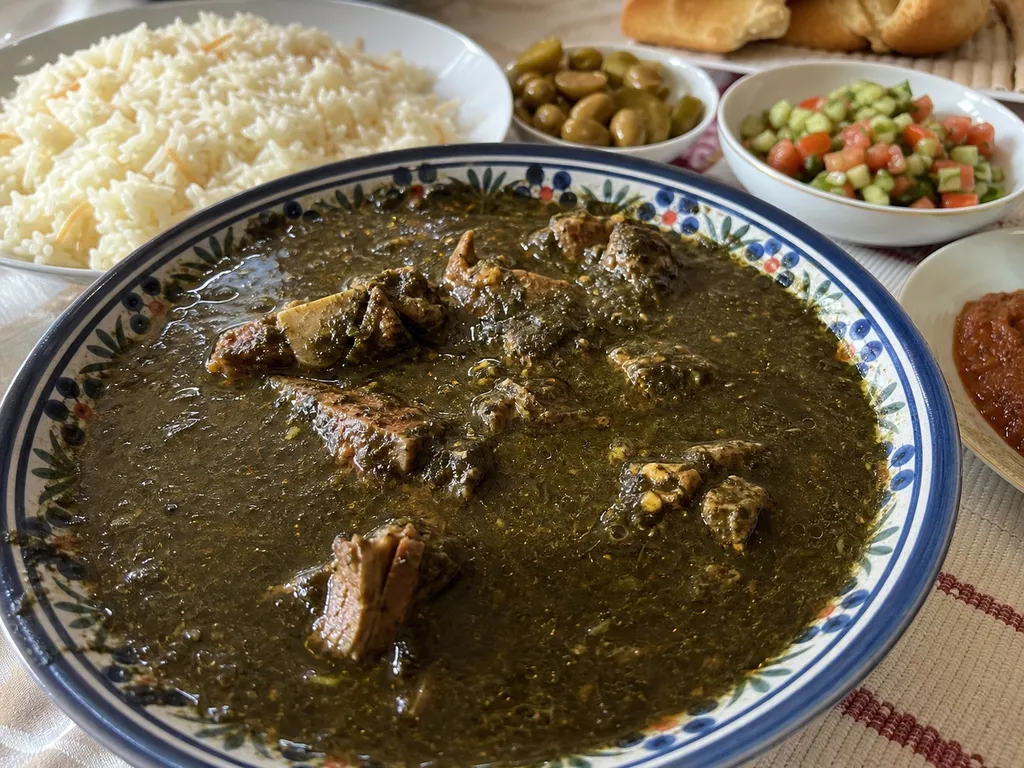 Images are for illustrative purposes only, may be inaccurate, and do not guarantee the presence or absence of specific ingredients.
 Listahan Family Score™
62/100
Works for many families
Score reflects how well this recipe fits a typical busy household. In the app, your Family Score is personalized to your household's allergens, kids, and pantry.
Nutrition
per serving425
Calories
44 g
Protein
0 g
Carbs
27 g
Fat
Estimated per serving. Actual values depend on the brands and portions you use.
Listahan cooking guide
Chef notes & practical guide
Technique notes, ingredient swaps, serve-alongside ideas, storage guidance, and equipment for this recipe.
Cultural context
Mloukhiya is one of the oldest dishes in the Arab culinary canon, with written recipes appearing in medieval Egyptian and Levantine manuscripts as a soup made from Corchorus leaves — the jute plant. In Tunisia, the dish took a distinctive turn: the leaves are dried and ground to powder, then cooked with lamb or beef into a thick, intensely herbal stew that is jet-black in color and unlike anything else in North African cooking. Tunisian families typically reserve this labor-intensive dish for Eid celebrations and important gatherings, treating it as a marker of both cultural identity and culinary heritage.
Listahan note
This version uses ground dried jute leaf powder, which is the Tunisian standard and the form most likely to be found at Middle Eastern grocery stores in North America — the flavor is earthy and deep, not bitter, when cooked low and slow with the spices.
Technique cues
- The mloukhiya powder must be cooked in oil with the garlic before liquid is added — this step removes any raw, grassy edge and develops the dish's characteristic dark, almost inky color and earthy depth.
- Caraway is not a garnish here but a structural spice that bridges the mineral flavor of the jute with the richness of the braised meat; add it with the coriander at the beginning so it has time to meld.
- Low, slow cooking is non-negotiable — the collagen in the lamb or beef gradually enriches the sauce, and rushing the heat produces a stringy protein and a thin stew rather than the unctuous, coating consistency Tunisian mloukhiya is known for.
Kitchen flow
- Parallel prep
- Brown the meat first, then set it aside while you build the sauce in the same pot — the fond from the meat enriches the mloukhiya base without extra effort.
- Make-ahead
- Mloukhiya improves significantly the next day as the spices and jute powder fully integrate — make it up to 2 days ahead and reheat gently over low heat.
- Leftover move
- Leftover mloukhiya thickens considerably in the refrigerator; thin it with a splash of water when reheating and taste for salt before serving.
- Cleanup rhythm
- The jute powder stains everything it touches a deep green-black — use a dedicated pot or fill immediately with cold water and soak before washing.
Ingredient brief
Role, handling, and swap guidance for each key ingredient.
1 lb lamb or beef (cubed)
protein and broth base
Purpose: Bone-in cuts are ideal because the collagen releases into the stew during the long braise, building the silky, thick body that makes mloukhiya so distinctive.
Handling: Cut into 1.5-inch cubes and brown in batches in a hot pot before building the stew — this develops a savory crust that adds depth to the final sauce.
Adaptation: Chicken thighs work for a faster-cooking version; the stew will be lighter in body but still flavorful.
1 cup ground dried jute leaf (mloukhiya powder)
defining flavor and body
Purpose: Dried and ground jute leaf is the dish's entire identity — it provides the deep herbal flavor, the dark color, and the thick, slightly glutinous texture that makes mloukhiya unlike any other stew.
Handling: Fry the powder in olive oil with the garlic for 3-4 minutes before adding any liquid — this is the most critical step in the recipe.
Adaptation: There is no real substitute; frozen whole mloukhiya leaves (common in Egyptian-style cooking) produce a completely different dish and texture.
6 cloves garlic (crushed)
aromatic spine
Purpose: Garlic crushed rather than minced releases more allicin and integrates more fully into the sauce over the long cooking time, becoming mellow and sweet rather than sharp.
Handling: Crush with the flat of a knife and add to the hot oil before the mloukhiya powder so it begins to color and mellow first.
Adaptation: Garlic paste from a tube (1 tsp per clove) works in a pinch; roasted garlic gives a sweeter, less pungent result.
1/2 tsp caraway
signature spice accent
Purpose: Ground caraway is a distinctly Tunisian spice signature — it adds a slightly anise-adjacent warmth that cuts through the richness of the jute and the braised meat.
Handling: Use ground caraway or lightly toast whole seeds and grind them just before using for more intensity.
Adaptation: A small pinch of fennel seed (half the quantity) provides a similar anise note; cumin alone shifts the flavor profile toward Moroccan rather than Tunisian.
1 tbsp tomato paste
umami and color anchor
Purpose: Tomato paste adds a concentrated savory note and a warm red undertone that balances the near-black of the jute without dominating the dish.
Handling: Fry the tomato paste with the garlic and spices for 1-2 minutes before adding water so it caramelizes and loses its raw, metallic edge.
Adaptation: A single grated fresh tomato cooked down to a paste is a good substitute; skip entirely if tomatoes are not available, adding a splash of red wine vinegar instead.
Technique notes
- Do not skip frying the mloukhiya powder in oil — this is not an optional step; raw powder added directly to liquid produces a grassy, flat-tasting stew with none of the dish's characteristic depth.
- The consistency should coat a spoon heavily — if it seems thin after an hour, remove the lid and let it reduce uncovered for 15 minutes; if it seems too thick, add water 1/4 cup at a time.
- Serve immediately over white rice or with khobz bread — mloukhiya continues to thicken as it sits on the table and the texture is best in the first 20 minutes after serving.
Ingredient swaps
- Lighter protein
- Boneless chicken thighs cut the cook time to about 40 minutes and still produce a rich, satisfying stew.
- Vegan direction
- Omit the meat and use vegetable broth in place of water; add a cup of cooked chickpeas for protein and body.
- Spice intensity
- Double the caraway and add a pinch of cayenne for a more assertive Tunisian spice profile that stands up to the earthy jute.
Serve alongside
- plain steamed white rice to absorb the sauce
- crusty semolina bread for scooping
- simple tomato and cucumber salad to cut richness
- harissa on the side for heat
- strong mint tea
- still water with lemon
- light red wine such as Tunisian Magon
Serving suggestions only — check pairings for your household's allergens.
Storage & reheating
- Refrigerate in a sealed container up to 3 days; the flavor improves after 24 hours as spices meld.
- Reheat over low heat with a splash of water, stirring frequently to prevent the thick sauce from scorching on the bottom.
- Freeze individual portions up to 2 months; thaw overnight in the refrigerator and reheat gently — the texture holds well.
Equipment
- heavy-bottomed Dutch oven or deep braising pot
- wooden spoon for constant stirring during the powder-frying step
- fine mesh strainer if skimming fat after browning
- ladle for serving
Make this household-aware
Listahan Pro checks this recipe against your household's allergens, finds pantry-aware swaps, builds the shopping list, and helps you plan the week around it.
Plan it in Listahan
Add Mloukhiya to your week, check it against your household's allergens, and build the shopping list automatically.
More North African recipes
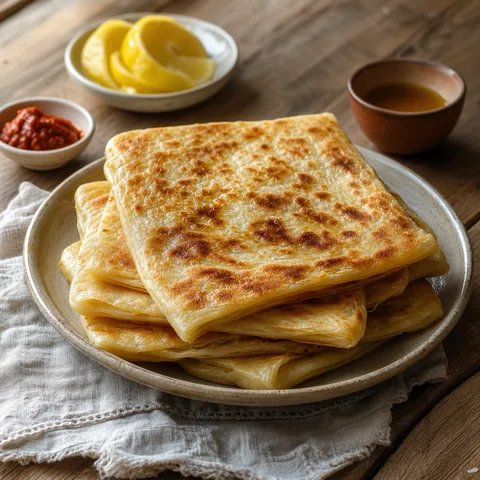 North African Lens Verified Images are for illustrative purposes only, may be inaccurate, and do not guarantee the presence or absence of specific ingredients.
 Msemmen
Layered and folded semolina flatbread cooked on a griddle until the outside crisps and the inside stays wonderfully chewy — perfect with honey or harissa.
 North African Lens Verified Images are for illustrative purposes only, may be inaccurate, and do not guarantee the presence or absence of specific ingredients.
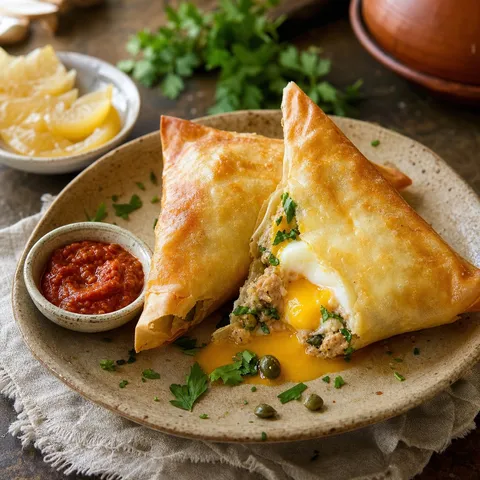
 Brik
Crispy paper-thin pastry folded around a whole egg, tuna, and parsley then flash-fried until golden — Tunisia's beloved street snack, eaten fast before the yolk escapes.
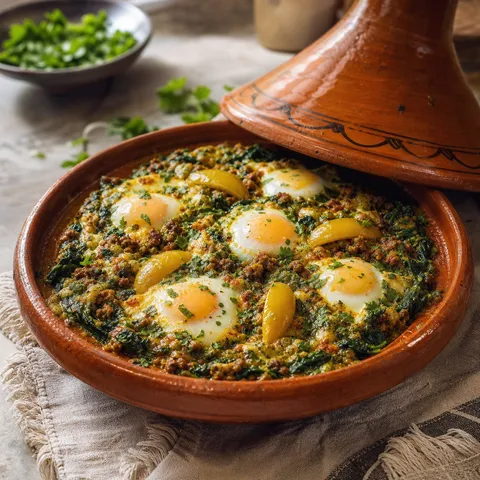 North African Lens Verified Images are for illustrative purposes only, may be inaccurate, and do not guarantee the presence or absence of specific ingredients.
 Tajine El Bey
Tunisia's grand layered bake of spiced lamb, eggs, and cheese baked in a deep crust — a celebration dish with silky, complex layers in every slice.