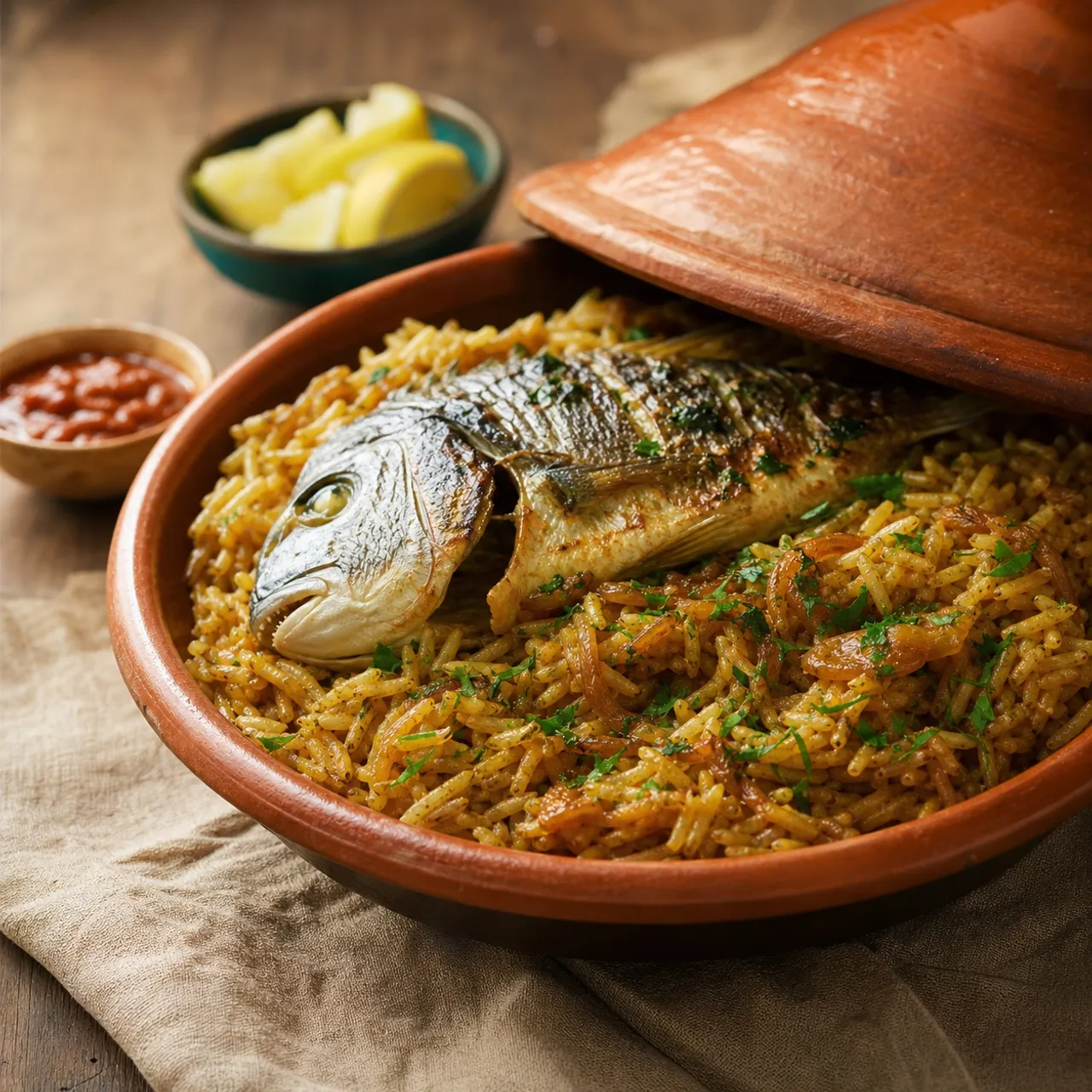
 North African Images are for illustrative purposes only, may be inaccurate, and do not guarantee the presence or absence of specific ingredients.
 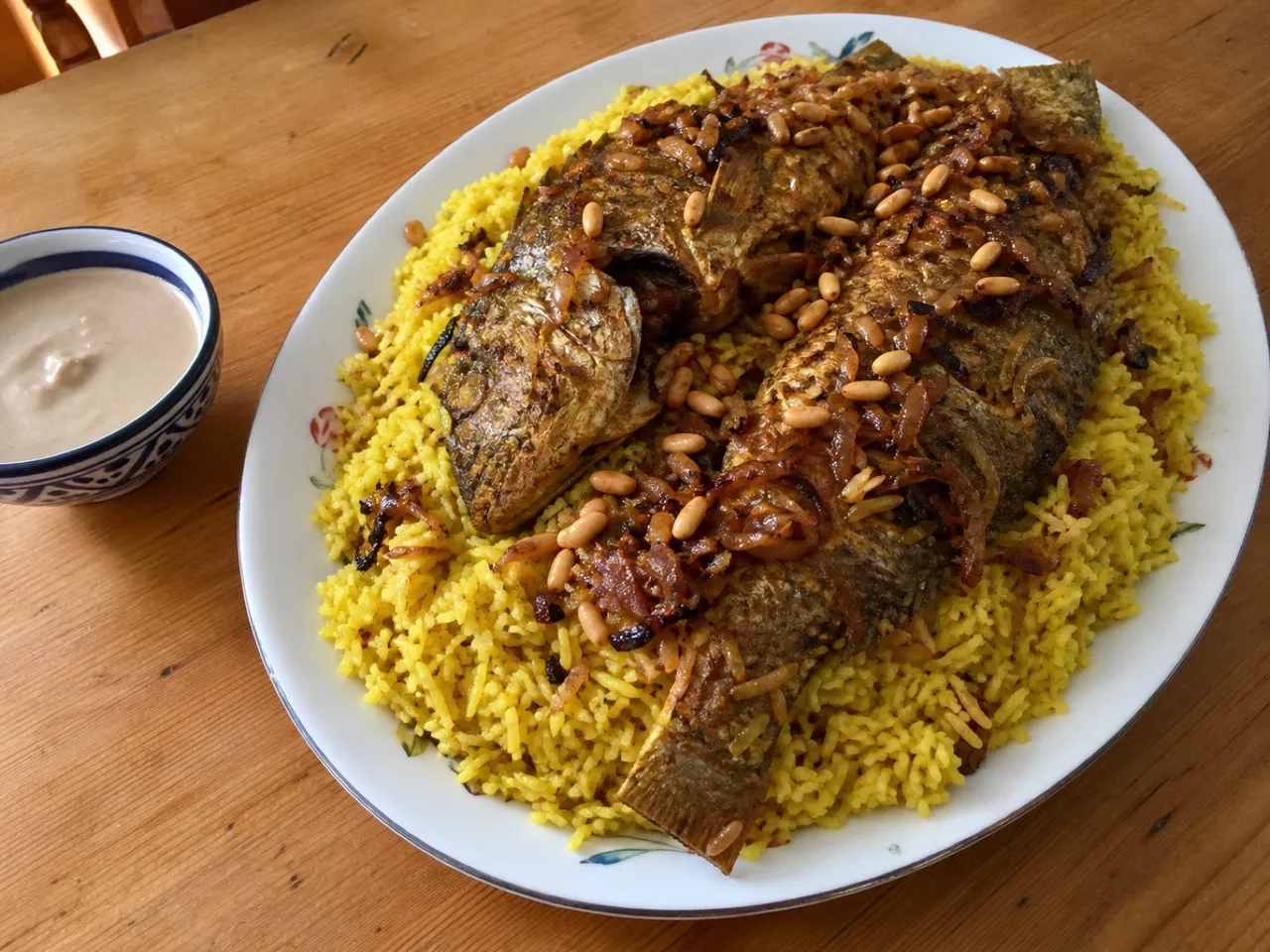 Serving Images are for illustrative purposes only, may be inaccurate, and do not guarantee the presence or absence of specific ingredients.
 Sayadiya
Egyptian fisherman's rice cooked in a caramelized onion broth with warm spices, crowned with a whole flaky fish and crispy onion rings.
Contains common allergens
In the app, Listahan checks these against your household automatically.
Instructions
7 steps- 1
Season the fish with salt and pepper and pan-fry or grill until just cooked through, then set aside and reserve any drippings.
- 2
Heat the oil in a wide pot and cook the sliced onions over medium-low heat, stirring often, until deeply caramelized and dark brown, about 30 minutes, this is the base of the dish's flavor and color.
- 3
Set aside about a third of the fried onions for garnish, then puree or finely mash the rest with a little stock to form a dark onion paste.
- 4
Return the onion paste to the pot, stir in the cumin, cardamom, and cinnamon, and cook one minute until fragrant.
- 5
Add the rice and stir to coat every grain in the onion mixture, then pour in the fish stock and season with salt.
- 6
Bring to a boil, cover, reduce heat to low, and cook until the rice is tender and the liquid is absorbed, about 18 minutes.
- 7
Fluff the rice and mound it on a platter, then top with the whole cooked fish and scatter with the reserved crispy onions and toasted pine nuts.
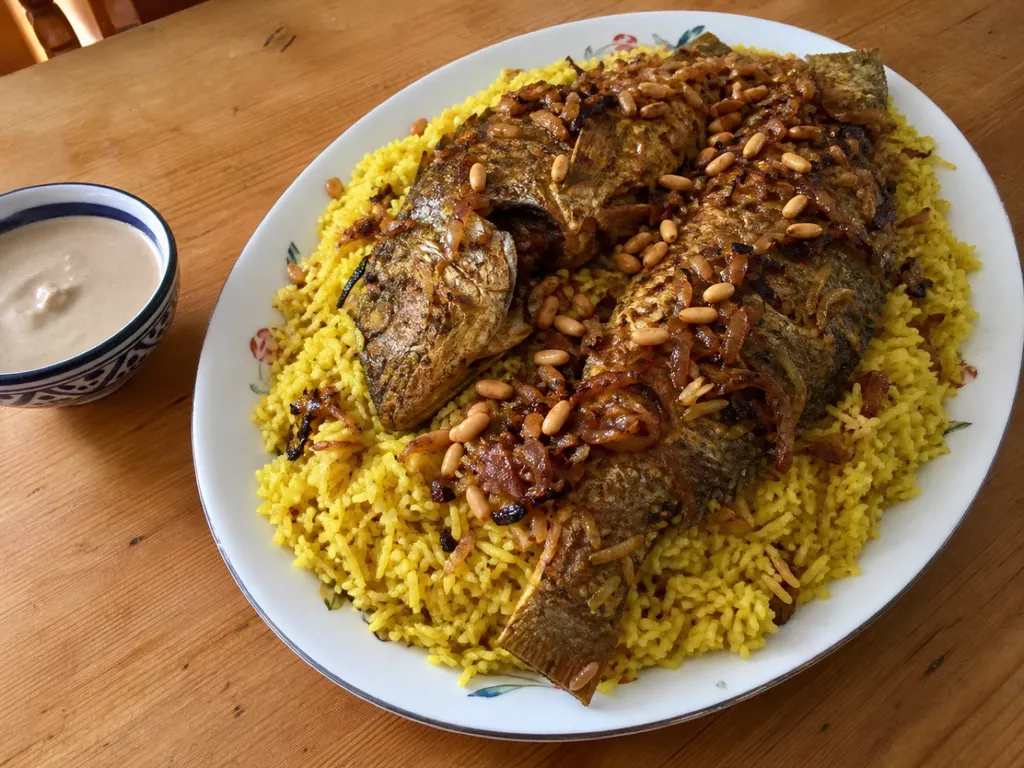 Images are for illustrative purposes only, may be inaccurate, and do not guarantee the presence or absence of specific ingredients.
 Listahan Family Score™
62/100
Works for many families
Score reflects how well this recipe fits a typical busy household. In the app, your Family Score is personalized to your household's allergens, kids, and pantry.
Nutrition
per serving540
Calories
42 g
Protein
74 g
Carbs
7 g
Fat
Estimated per serving. Actual values depend on the brands and portions you use.
Listahan cooking guide
Chef notes & practical guide
Technique notes, ingredient swaps, serve-alongside ideas, storage guidance, and equipment for this recipe.
Cultural context
Sayadiya (which translates roughly as 'the fisherman's dish') is a spiced fish and rice preparation that is native to the Levantine and Egyptian coastal cooking tradition, most closely associated with Alexandria and the eastern Mediterranean fishing communities. The dish centers on two techniques that distinguish it from plain rice and fried fish: deeply caramelized onions are cooked down until almost black-sweet and then used to color and flavor both the rice and the sauce served alongside, and the fish is fried briefly before being laid on top of the rice to finish cooking. The result is a golden, aromatic dish that is simultaneously simple in its ingredients and complex in its execution.
Listahan note
This version builds the onion base until the onions are truly dark and jammy (not just softened), which is the key to the dish's characteristic rich color and depth that separates sayadiya from plain fish and rice.
Technique cues
- The caramelized onions are the flavor engine of sayadiya and cannot be rushed — they need to cook over medium-low heat for 30 to 40 minutes until they are a deep mahogany brown and have reduced to roughly one-quarter of their original volume; this concentrated sweetness and color is what gives the rice its distinctive golden-brown hue and the sauce its body.
- Warm spices — cumin, coriander, cinnamon, and sometimes allspice — are added to the onions after caramelization so they bloom in the onion fat; adding the spices too early causes them to burn during the long onion-caramelization phase, producing a bitter rather than warm foundation.
- The fish for sayadiya should be fried in hot oil until just barely cooked through (the center should still be slightly translucent when it goes onto the rice) because it will continue cooking in the steam of the rice for the final 10 to 15 minutes; fish that is fully cooked before going on the rice will be overcooked and dry by serving time.
Kitchen flow
- Parallel prep
- Start the onions first as they take the most time; while they caramelize, soak the rice, score and season the fish, and measure out the spices.
- Make-ahead
- Caramelize the onions up to 3 days ahead and refrigerate; they reheat quickly in a pan before adding the spices and broth, saving the most time-consuming step on the day of cooking.
- Leftover move
- Leftover sayadiya rice reheats beautifully in a skillet with a thin film of oil to re-crisp the bottom layer; serve with the leftover fish flaked over the top and a squeeze of lemon.
- Cleanup rhythm
- Deglaze the onion pan with a cup of water or broth to release the caramelized fond immediately after removing the onions; this liquid becomes part of the rice cooking liquid and makes cleanup nearly effortless.
Ingredient brief
Role, handling, and swap guidance for each key ingredient.
Fish
primary protein and flavor
Purpose: A firm white fish (red snapper, sea bass, grouper, or tilapia) holds its shape through the frying and steaming process without falling apart; the fried exterior contributes a textural contrast to the soft rice.
Handling: Score the fish with diagonal cuts on each side to allow the spice coating and frying oil to penetrate; season with salt, cumin, and coriander at least 20 minutes before frying.
Adaptation: Any firm white-fleshed fish works; avoid soft fish like cod or sole that will break up during frying and lose their visual integrity on the finished rice.
rice
base and sauce absorber
Purpose: Long-grain rice cooked in the spiced onion broth absorbs the caramelized onion flavor and golden color, becoming the aromatic foundation that carries the dish beyond simple fish and rice.
Handling: Rinse the rice until the water runs clear and soak for 20 minutes before cooking; drain well before adding to the pot so the water ratio remains accurate.
Adaptation: Basmati rice is a seamless substitute and actually preferred by many for its aromatic quality; short-grain rice is not appropriate as it becomes sticky and clumps.
onions
flavor base, colorant, and sauce
Purpose: Deeply caramelized onions provide both the dark color and the sweet-savory depth that is sayadiya's defining characteristic — a generous quantity is needed because they reduce so dramatically.
Handling: Slice thinly and evenly so they caramelize at the same rate; start in a wide, heavy pan over medium heat and stir every few minutes, increasing attention as they darken.
Adaptation: Yellow onions are traditional; red onions can be used for a slightly sweeter, more colorful result but will turn the rice a slightly purple-brown rather than golden-brown.
cumin
primary warm spice
Purpose: Ground cumin is the dominant warm spice in sayadiya, providing an earthy, slightly smoky note that pairs with the sweet caramelized onions and the mild white fish.
Handling: Use freshly ground cumin toasted from whole seeds for the best aromatic result; add it to the onions after they have fully caramelized.
Adaptation: A baharat spice blend can replace individual spices for a more complex, pre-measured shortcut.
Technique notes
- Reserve a handful of the caramelized onions before cooking the rice and use them as a topping garnish alongside toasted pine nuts and a squeeze of lemon — the contrast of the rice-level flavor and the concentrated jammy onion garnish on top adds another dimension to the finished plate.
- A tahini-lemon sauce served alongside (thin tahini, lemon juice, water, and garlic blended smooth) is the traditional accompaniment in Alexandria and adds a rich, nutty counterpoint to the savory rice and simply seasoned fish.
- The bottom of the pot will develop a golden crust (hkaka) as the rice finishes cooking — this crispy layer is prized; release it by removing the pot from heat, placing a damp kitchen towel under the lid, and letting the steam lift the crust for 5 minutes before serving.
Ingredient swaps
- Gluten-free direction
- Sayadiya is naturally gluten-free as written; verify that any tahini sauce served alongside does not contain additives with gluten.
- Lower-allergen option
- For a nut-free version, omit the pine nut garnish and replace with toasted sesame seeds or sunflower seeds, which provide similar crunch and a nutty note.
- Budget fish option
- Tilapia fillets are an accessible, affordable substitute for snapper or sea bass; fry bone-in pieces when possible for better flavor during the steaming phase.
Serve alongside
- tahini-lemon sauce for drizzling
- simple cucumber and tomato salad with sumac
- warm pita or baladi bread for scooping
- pickled hot peppers and turnips
- cold fresh lemon juice with mint
- Egyptian black tea with sugar
- cold sparkling water
Serving suggestions only — check pairings for your household's allergens.
Storage & reheating
- Refrigerate leftover sayadiya with the fish and rice in separate containers for up to 2 days; the rice and fish stored together can make the fish flavor overpower the rice overnight.
- Reheat the rice in a skillet with a small amount of oil to re-develop the bottom crust; warm the fish separately in a 300F oven for 8 minutes to avoid drying it out.
- Sayadiya does not freeze well — the rice texture changes significantly and the fish becomes dry after thawing; make only what will be eaten within 2 days.
Equipment
- wide heavy-bottomed pot or deep skillet for caramelizing the onions and cooking the rice
- separate skillet for frying the fish
- instant-read thermometer for checking fish doneness (145F/63C)
- tight-fitting lid for the rice-steaming phase
Make this household-aware
Listahan Pro checks this recipe against your household's allergens, finds pantry-aware swaps, builds the shopping list, and helps you plan the week around it.
Plan it in Listahan
Add Sayadiya to your week, check it against your household's allergens, and build the shopping list automatically.
More North African recipes
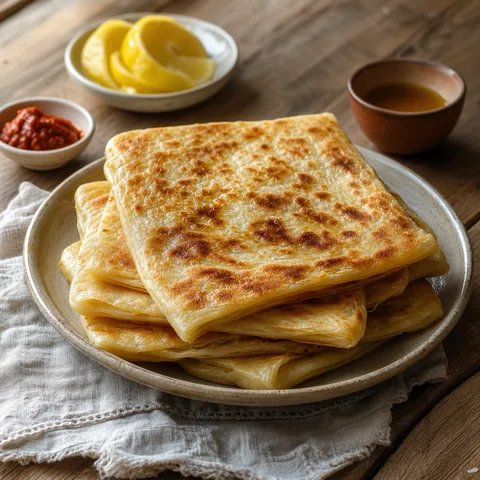 North African Lens Verified Images are for illustrative purposes only, may be inaccurate, and do not guarantee the presence or absence of specific ingredients.
 Msemmen
Layered and folded semolina flatbread cooked on a griddle until the outside crisps and the inside stays wonderfully chewy — perfect with honey or harissa.
 North African Lens Verified Images are for illustrative purposes only, may be inaccurate, and do not guarantee the presence or absence of specific ingredients.
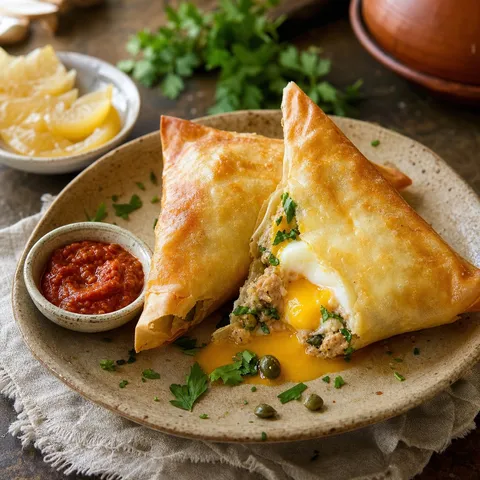
 Brik
Crispy paper-thin pastry folded around a whole egg, tuna, and parsley then flash-fried until golden — Tunisia's beloved street snack, eaten fast before the yolk escapes.
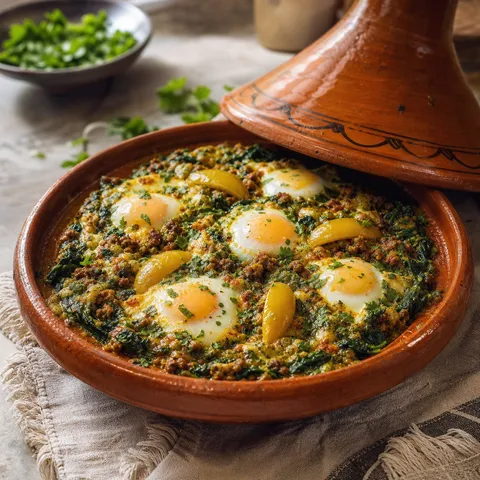 North African Lens Verified Images are for illustrative purposes only, may be inaccurate, and do not guarantee the presence or absence of specific ingredients.
 Tajine El Bey
Tunisia's grand layered bake of spiced lamb, eggs, and cheese baked in a deep crust — a celebration dish with silky, complex layers in every slice.