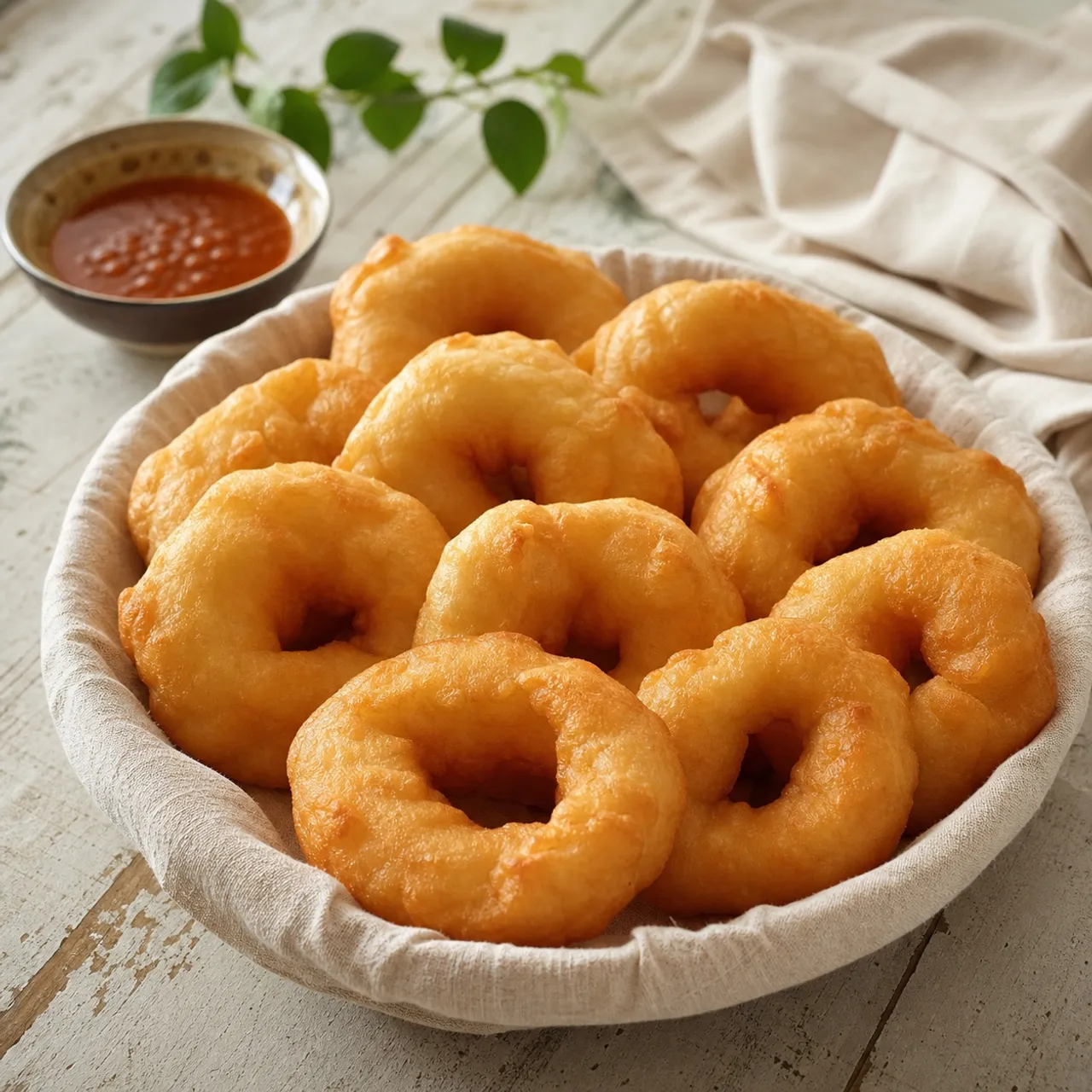
 North African Images are for illustrative purposes only, may be inaccurate, and do not guarantee the presence or absence of specific ingredients.
 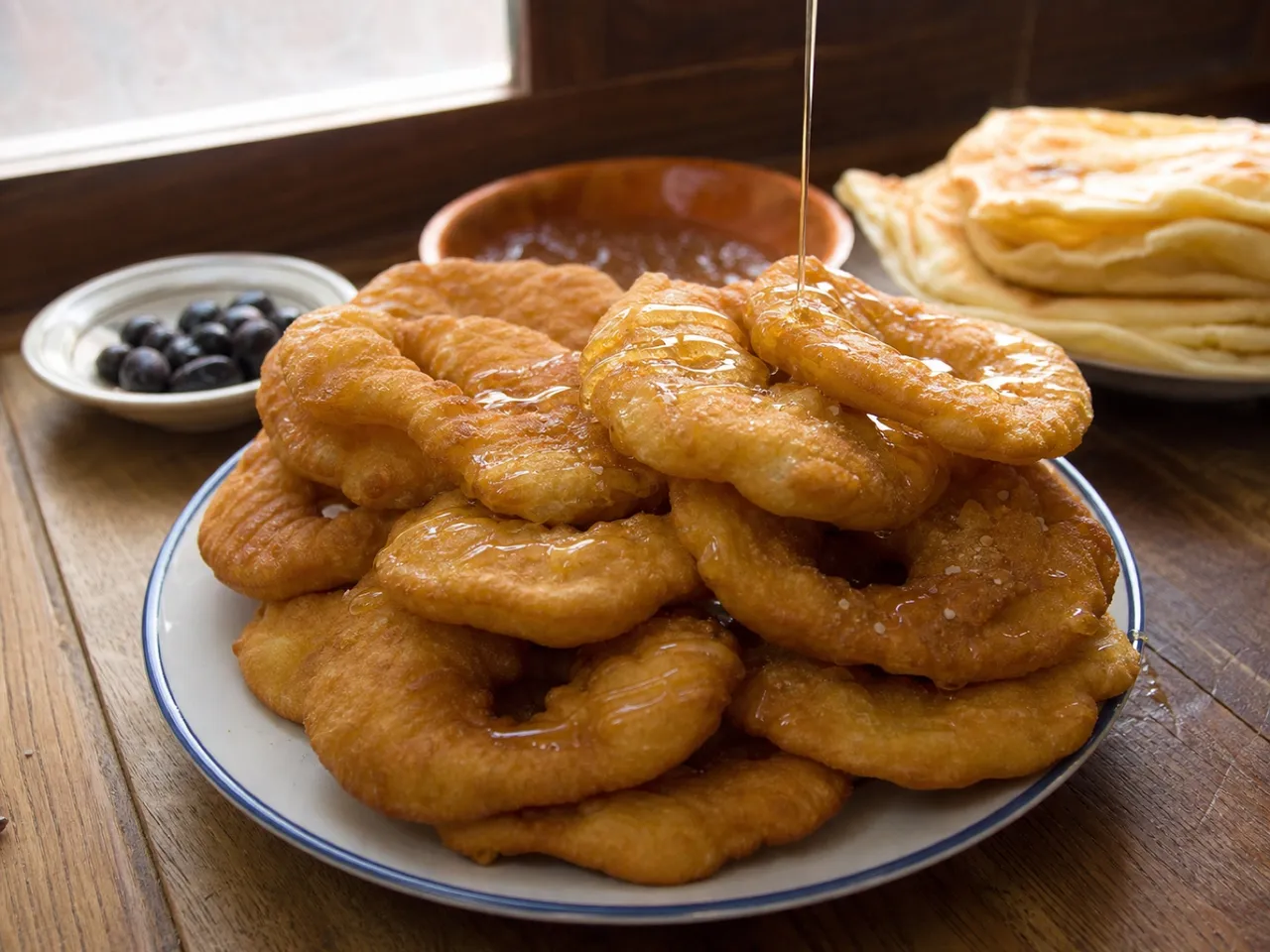 Serving Images are for illustrative purposes only, may be inaccurate, and do not guarantee the presence or absence of specific ingredients.
 Sfenj
North Africa's golden, airy street doughnuts — chewy, slightly crisp, and best eaten warm straight from the oil, dusted with sugar or dunked in honey.
Contains common allergens
In the app, Listahan checks these against your household automatically.
Good to know
- Crispy
Matched from this dish's own ingredients and timing. Browse more: crispy recipes
Instructions
7 steps- 1
Dissolve the yeast in the warm water and let sit until foamy, about 10 minutes.
- 2
In a large bowl, mix the flour and salt, then pour in the yeast water and mix by hand, slapping and folding the very wet, sticky dough against the bowl for about 10 minutes until it becomes elastic and glossy, it should remain much wetter than a normal bread dough.
- 3
Oil your hands, cover the bowl, and let the dough rise in a warm place until doubled, about 45 minutes to an hour.
- 4
Heat about 3 inches of oil in a deep pot to 375F.
- 5
Wet your hands, take a fist-sized piece of dough, and stretch it into a ring by poking a hole through the center and widening it as you lower it into the oil.
- 6
Fry until deep golden and puffed, turning once, about 2 to 3 minutes per side.
- 7
Drain on paper towels or a rack and serve warm, dusted with sugar or dipped in honey.
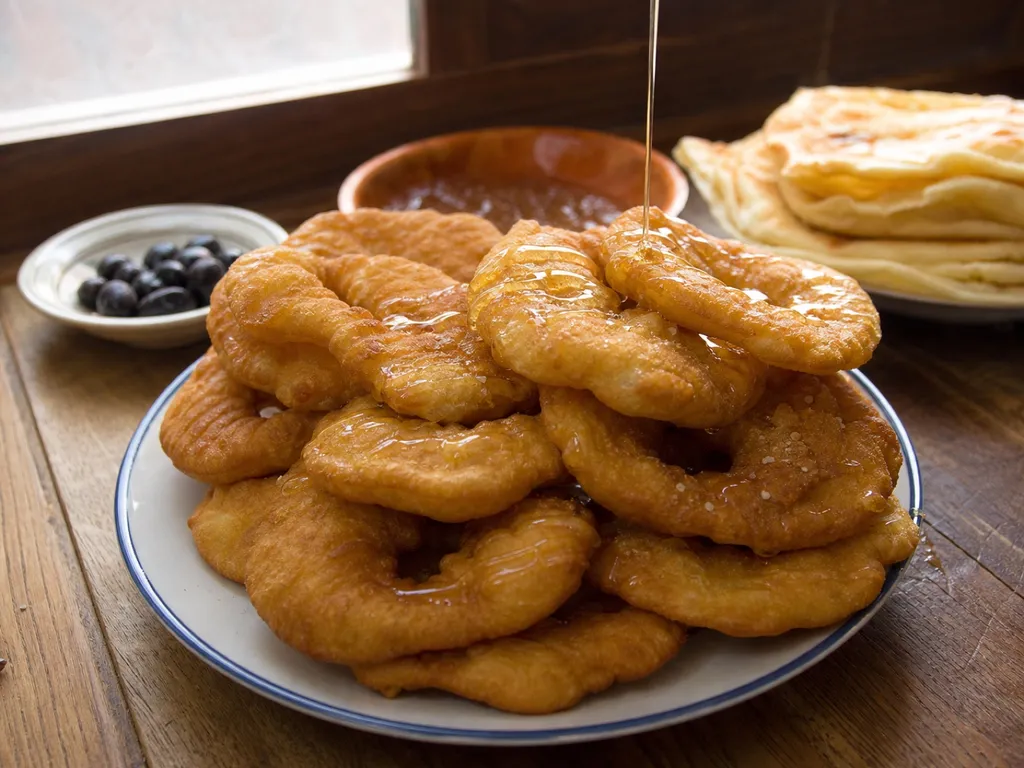 Images are for illustrative purposes only, may be inaccurate, and do not guarantee the presence or absence of specific ingredients.
 Listahan Family Score™
80/100
Good fit for most families
Score reflects how well this recipe fits a typical busy household. In the app, your Family Score is personalized to your household's allergens, kids, and pantry.
Nutrition
per serving230
Calories
7 g
Protein
48 g
Carbs
1 g
Fat
Estimated per serving. Actual values depend on the brands and portions you use.
Listahan cooking guide
Chef notes & practical guide
Technique notes, ingredient swaps, serve-alongside ideas, storage guidance, and equipment for this recipe.
Cultural context
Sfenj are Moroccan yeasted doughnuts sold by street vendors called sfenjis, who fry them to order on large griddles and thread them onto palm fronds or straw loops for customers to carry. The dough is simple — flour, yeast, water, and salt — and the technique of stretching the dough into a rough ring by hand before dropping it into hot oil is learned through practice rather than instruction. Sfenj appear across the Maghreb with small regional variations: Algerian versions tend to be more oval, Moroccan ones irregular and open in the middle, Libyan sfenj sometimes sweeter. The morning sfenj run, like the French boulangerie croissant run, is a ritual embedded in daily urban life.
Listahan note
This version relies on a relaxed, wet yeast dough that develops flavor over a slow rise — the sticky, almost unworkable consistency is correct and should not be tempted into a stiffer dough by adding more flour.
Technique cues
- Sfenj dough is intentionally high-hydration and sticky — the wet, loose consistency is what creates the open, airy crumb and irregular bubbles that distinguish sfenj from dense beignets; resist the temptation to add flour to make it easier to handle.
- Oil temperature is more critical for sfenj than for most fried doughs because the open ring shape means uneven thickness — start at 360F and adjust between batches; too cool and the dough absorbs oil before the outside sets, too hot and the outside browns before the interior cooks through.
- The classic finish is simply granulated sugar or a drizzle of honey — Moroccan sfenj vendors do not glaze or fill them, and the restraint is part of the appeal; the yeast flavor and the fried crust are the entire point.
Kitchen flow
- Parallel prep
- Start the dough early and let it rise while you do other morning tasks — sfenj is a 2-hour project from mixing to table, with most of that hands-off rise time.
- Make-ahead
- The dough can rise overnight in the refrigerator — cover tightly and let it come to room temperature for 30 minutes before frying.
- Leftover move
- Sfenj are at their best fresh and hot; day-old sfenj can be split and toasted in a skillet with butter and eaten with honey as a quick breakfast.
- Cleanup rhythm
- Strain the frying oil immediately after it cools and store it for reuse; wipe the pot while still warm so the oil does not congeal on the surface.
Ingredient brief
Role, handling, and swap guidance for each key ingredient.
Flour
dough structure and chew
Purpose: Bread flour (higher protein) produces more gluten strands that give sfenj their characteristic chewy pull under the crispy exterior; all-purpose flour produces a slightly more tender result.
Handling: Measure by spooning into the cup and leveling; the dough should be sticky and wet after mixing, not smooth and workable.
Adaptation: All-purpose flour works and is more commonly used in home kitchens; the crumb will be slightly less chewy but still excellent.
Yeast
leavening and flavor development
Purpose: Yeast provides both the lift that creates sfenj's open, bubbly crumb and the fermented, slightly tangy flavor that distinguishes them from chemical-leavened doughnuts.
Handling: Dissolve active dry yeast in warm (not hot) water first and wait for it to foam before adding to flour — this confirms the yeast is alive before you commit the batch.
Adaptation: Instant yeast (3/4 the quantity) can be added directly to the flour without proofing and typically produces a faster rise.
Neutral frying oil
Cooking medium
Purpose: Oil heated to 350-375F is where sfenj develop their crispy exterior and hollow interior; too cool and they absorb grease, too hot and the outside burns before the inside cooks.
Handling: Use at least 3 inches of oil in a deep pot; the depth allows the doughnuts to float freely and brown on all sides without touching the bottom.
Adaptation: Sunflower, grapeseed, or refined coconut oil all work well; avoid olive oil as it has too low a smoke point and a flavor that competes with the yeast.
Technique notes
- Wet your hands generously with oil (not water) before handling the sticky dough — oil prevents sticking without adding water that would interfere with the yeast activity, and it also helps shape each sfenj quickly.
- Make each sfenj in one continuous motion: pick up a lump of dough, stretch it into a ring by pulling a hole in the center with oiled fingers, and drop it directly into the hot oil before the dough springs back and closes the hole.
- Flip each sfenj only once during frying — it should fry undisturbed for about 2 minutes on the first side until deep golden before you turn it; multiple flips cause the dough to deflate and produce a denser result.
Ingredient swaps
- Gluten-free direction
- A 1:1 gluten-free bread flour blend can substitute, but the dough will be less elastic and harder to stretch into rings; dropping spoonfuls of dough for fitter rounds is more practical.
- Sweet version
- Add 2 tablespoons of sugar and a teaspoon of orange blossom water to the dough for a sweeter, more fragrant sfenj closer to the Algerian style.
- Honey-finished version
- Drizzle warm liquid honey over sfenj as they come out of the oil — the heat from the dough warms the honey and it soaks slightly into the surface for a stickier, richer finish.
Serve alongside
- granulated sugar for dusting at the table
- warm honey for dipping
- soft Moroccan cream cheese (jben) as a savory accompaniment
- Moroccan mint tea, the classic pairing
- black coffee with cardamom
- warm milk with honey for a children's version
Serving suggestions only — check pairings for your household's allergens.
Storage & reheating
- Sfenj are best eaten within 30 minutes of frying — they begin to lose their crispness as they cool.
- Store cooled leftovers in a paper bag (not airtight) at room temperature up to 1 day; refresh in a 375F oven for 5 minutes.
- Do not freeze or refrigerate — the texture deteriorates irreversibly.
Equipment
- large deep heavy-bottomed pot for frying
- instant-read thermometer to hold oil at 360F
- slotted spoon or spider for retrieving doughnuts
- wire rack over a sheet pan for draining
Make this household-aware
Listahan Pro checks this recipe against your household's allergens, finds pantry-aware swaps, builds the shopping list, and helps you plan the week around it.
Plan it in Listahan
Add Sfenj to your week, check it against your household's allergens, and build the shopping list automatically.
More North African recipes
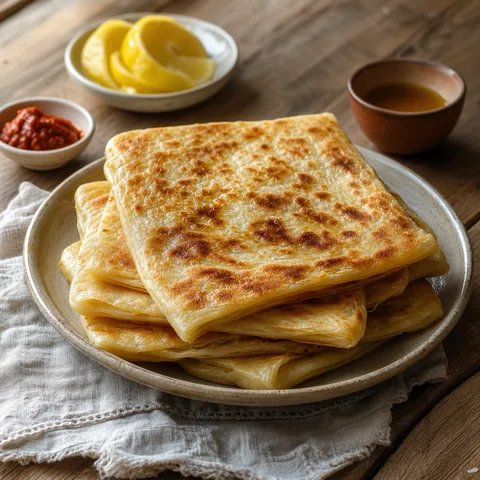 North African Lens Verified Images are for illustrative purposes only, may be inaccurate, and do not guarantee the presence or absence of specific ingredients.
 Msemmen
Layered and folded semolina flatbread cooked on a griddle until the outside crisps and the inside stays wonderfully chewy — perfect with honey or harissa.
 North African Lens Verified Images are for illustrative purposes only, may be inaccurate, and do not guarantee the presence or absence of specific ingredients.
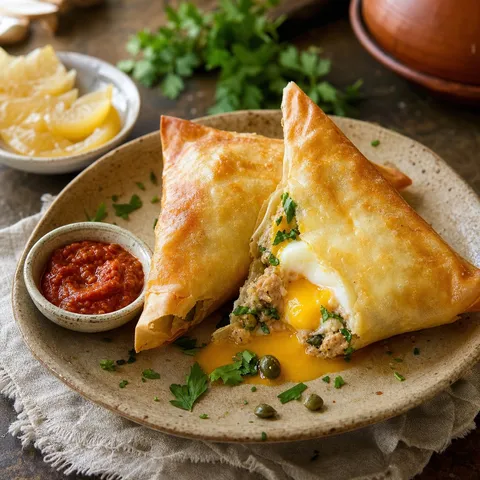
 Brik
Crispy paper-thin pastry folded around a whole egg, tuna, and parsley then flash-fried until golden — Tunisia's beloved street snack, eaten fast before the yolk escapes.
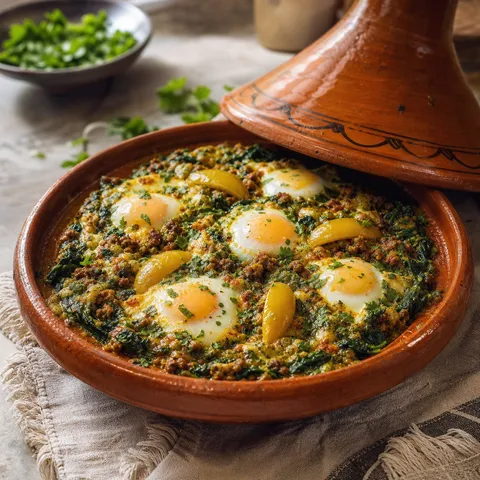 North African Lens Verified Images are for illustrative purposes only, may be inaccurate, and do not guarantee the presence or absence of specific ingredients.
 Tajine El Bey
Tunisia's grand layered bake of spiced lamb, eggs, and cheese baked in a deep crust — a celebration dish with silky, complex layers in every slice.