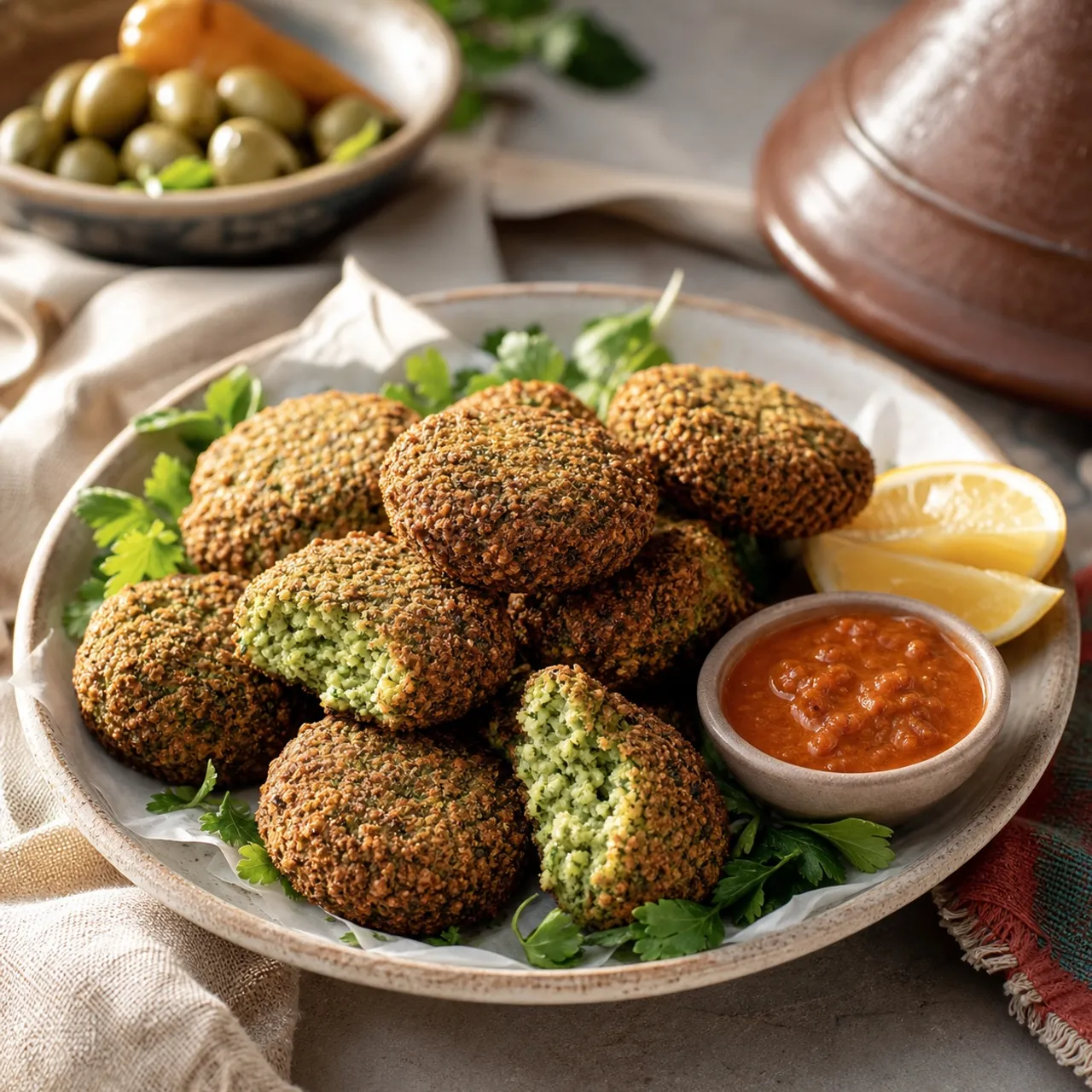
 North African Images are for illustrative purposes only, may be inaccurate, and do not guarantee the presence or absence of specific ingredients.
 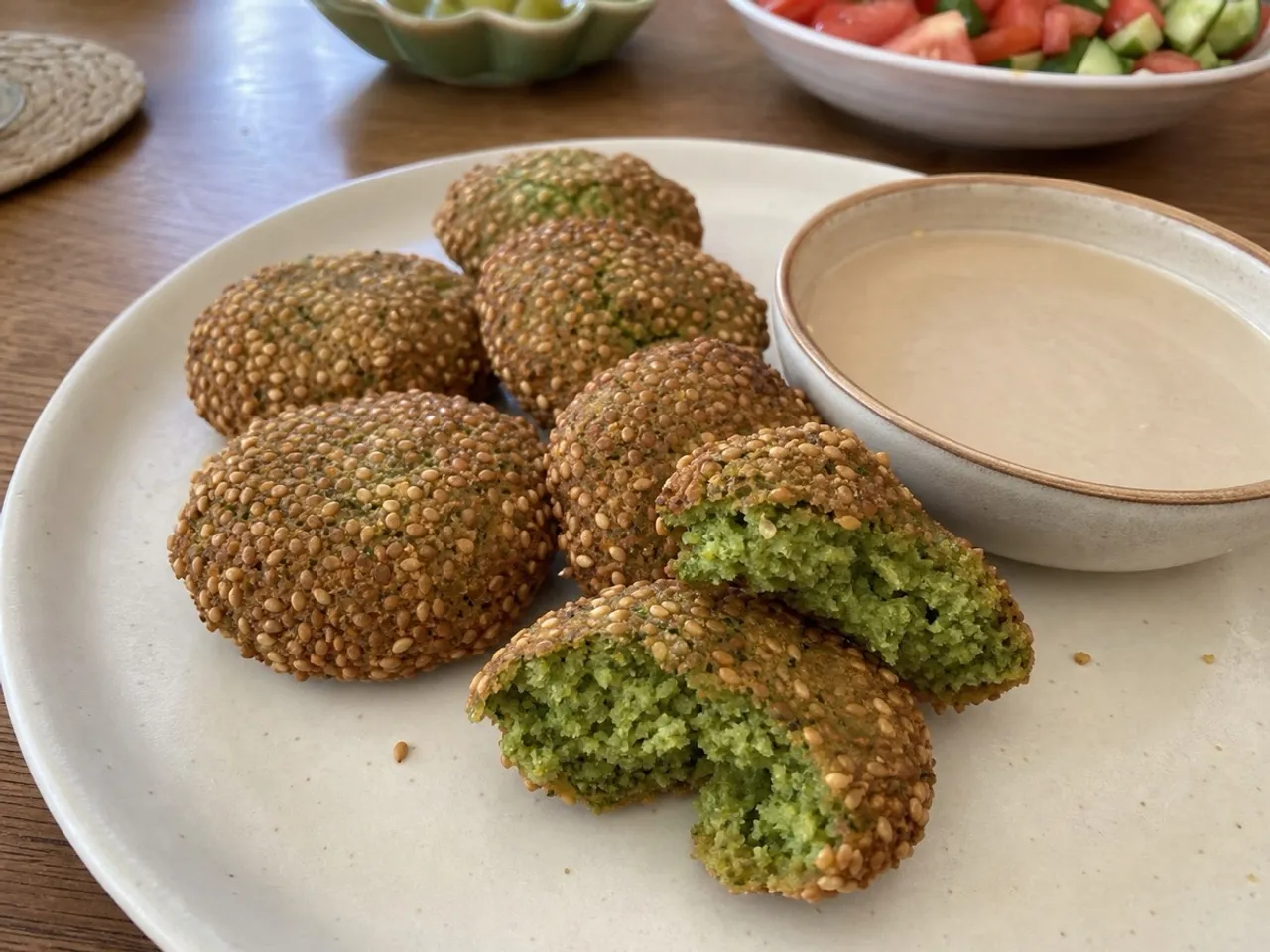 Serving Images are for illustrative purposes only, may be inaccurate, and do not guarantee the presence or absence of specific ingredients.
 Ta'meya
Egypt's falafel made entirely from fava beans — greener, lighter, and more herbaceous than the chickpea kind, crispy outside and vividly green within.
Contains common allergens
In the app, Listahan checks these against your household automatically.
Good to know
- Crispy
Matched from this dish's own ingredients and timing. Browse more: crispy recipes
Instructions
8 steps- 1
Drain the soaked fava beans well and pat dry, they should be soft enough to mash but not cooked.
- 2
Pulse the fava beans, onion, garlic, parsley, and cilantro in a food processor until finely ground into a coarse, vividly green paste, scraping down the sides as needed, avoid over-processing into a smooth puree.
- 3
Transfer to a bowl and season with coriander, cumin, and salt, then cover and refrigerate the mixture for at least 30 minutes to firm up.
- 4
Just before frying, sprinkle the baking powder over the mixture and mix it in, this gives the falafel their characteristic light, airy interior.
- 5
Shape the mixture into small patties or balls and press one side into sesame seeds.
- 6
Heat about 2 inches of oil in a deep pot to 350F.
- 7
Fry the patties in batches, sesame side down first, until deep golden brown and crisp on the outside, about 3 minutes per side.
- 8
Drain on paper towels and serve hot, tucked into pita with tahini sauce, pickles, and salad.
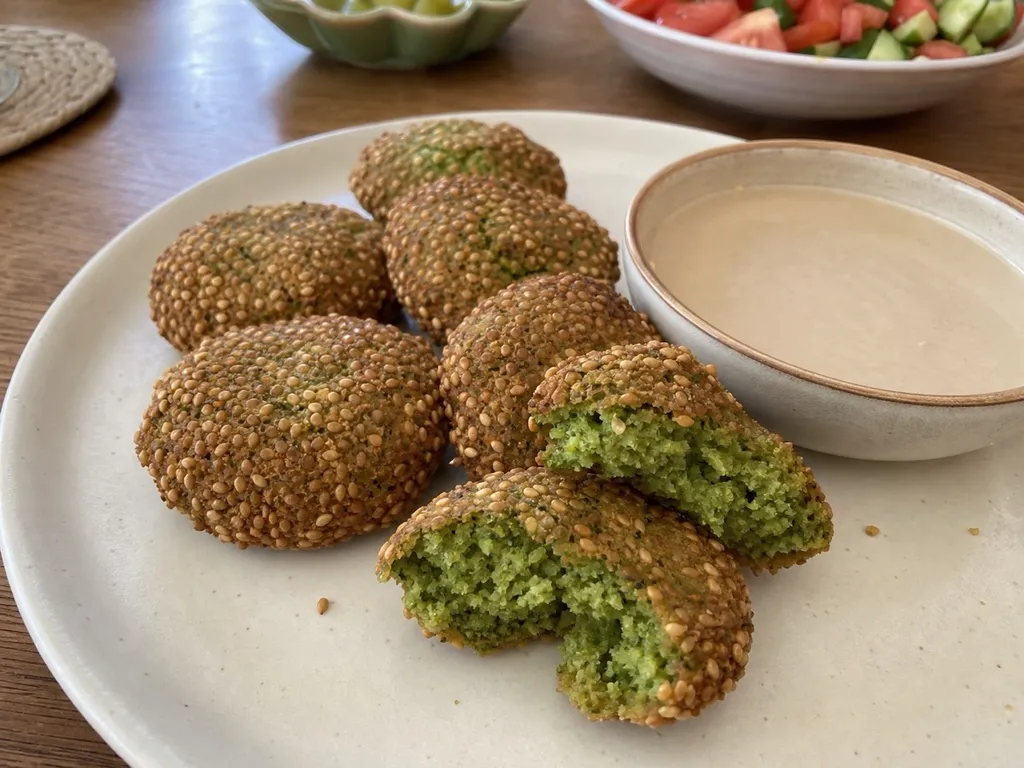 Images are for illustrative purposes only, may be inaccurate, and do not guarantee the presence or absence of specific ingredients.
 Listahan Family Score™
69/100
Works for many families
Score reflects how well this recipe fits a typical busy household. In the app, your Family Score is personalized to your household's allergens, kids, and pantry.
Listahan cooking guide
Chef notes & practical guide
Technique notes, ingredient swaps, serve-alongside ideas, storage guidance, and equipment for this recipe.
Cultural context
Ta'meya is the Egyptian version of falafel, and Egyptians are quick to insist it is the original: while Levantine falafel uses chickpeas, ta'meya is made from dried fava beans, and food historians generally agree that the dish originated in Egypt — possibly in the Coptic Christian community as a protein-rich food for religious fasting periods when meat was forbidden. It has been eaten in Egypt for centuries, sold by street vendors from Cairo's old quarters since at least the medieval period. The mixture of fava beans with a large volume of fresh herbs gives ta'meya its characteristic bright green interior and herbal intensity that sets it apart from its chickpea cousin.
Listahan note
This version uses dried split fava beans soaked overnight (never canned) and a generous amount of fresh herbs blended into the mixture, producing the vivid green interior and crisp fried crust that define authentic ta'meya.
Technique cues
- Dried fava beans must be soaked a full 12 to 18 hours (not canned fava beans, which are too wet and cooked) — the raw soaked beans are ground with the herbs into a raw paste that fries to a fully cooked interior; starting with canned beans produces a soft, wet mixture that falls apart in the oil and lacks the correct fry.
- The herb volume in ta'meya is dramatically higher than most Western herb-in-fritter recipes — fresh parsley, fresh cilantro, and green onions should make up roughly 30 to 40 percent of the mixture by volume, which is what turns the interior green during frying and gives the characteristic fresh, earthy flavor.
- Frying temperature is critical: oil at 350F (175C) allows the exterior to set and crust before the inside overcooks, while oil that is too hot produces a dark exterior with a raw center and oil that is too cool produces greasy, pale ta'meya that absorbs oil and collapses — a thermometer is the most reliable guide.
Kitchen flow
- Parallel prep
- While the oil heats to frying temperature, shape the ta'meya patties; press sesame seeds onto each patty just before frying so they adhere to the still-moist surface.
- Make-ahead
- The fava bean mixture can be made and refrigerated up to 24 hours ahead; shaped patties can be refrigerated on a parchment-lined tray for up to 4 hours before frying.
- Leftover move
- Leftover ta'meya makes an excellent lunch stuffed into pita with tahini sauce, sliced tomatoes, and pickled vegetables; reheat briefly in a dry skillet to re-crisp the exterior.
- Cleanup rhythm
- Let the frying oil cool completely before straining through a fine mesh strainer into a jar for reuse — fava bean oil keeps well and can be used for one more round of frying.
Ingredient brief
Role, handling, and swap guidance for each key ingredient.
Fava beans
primary base
Purpose: Dried split fava beans, soaked and ground raw, are the irreplaceable foundation of ta'meya — their starchy raw protein content is what allows the patties to hold together and cook through properly in the hot oil.
Handling: Use dried split fava beans (not whole dried or canned); soak in cold water to cover by 3 inches for 12 to 18 hours, drain well, and process in a food processor until the mixture resembles coarse wet sand with no large chunks remaining.
Adaptation: Dried chickpeas (soaked raw) can produce a falafel hybrid, but the result will taste distinctly different; there is no swap that produces authentic ta'meya.
herbs
flavor, color, and texture
Purpose: A combination of fresh parsley, cilantro, and green onions is blended into the fava bean mixture, turning it green and providing the dish's signature fresh, grassy aroma that no dried herb can replicate.
Handling: Wash and dry the herbs thoroughly before adding to the food processor — excess moisture in the herbs makes the mixture too wet; include the softer stems of parsley and cilantro as they carry significant flavor.
Adaptation: If cilantro is not available or disliked, increase the parsley quantity proportionally; the flavor will be more neutral but the dish will still work.
garlic
aromatic base
Purpose: Raw garlic ground into the mixture provides a sharp, pungent note that softens slightly during frying but remains a defining flavor in the finished ta'meya.
Handling: Add peeled cloves directly to the food processor with the fava beans; no need to mince first.
Adaptation: Garlic powder is not a substitute for raw garlic here — the moisture and sharpness of fresh garlic is necessary for both flavor and binding.
cumin
warm spice layer
Purpose: Ground cumin is the primary warm spice in ta'meya, adding an earthy depth that balances the brightness of the herbs and the blandness of the fava bean base.
Handling: Use freshly ground cumin if possible — toasting whole seeds and grinding them produces a noticeably more aromatic result than pre-ground.
Adaptation: A small amount of coriander alongside cumin is common in some Egyptian family recipes; the two spices are complementary and using both adds complexity.
Technique notes
- Refrigerate the formed ta'meya patties for at least 30 minutes before frying — the cold firms the mixture and dramatically reduces the chance of the patties cracking or falling apart when they hit the hot oil.
- Press a coating of sesame seeds onto both flat faces of each patty before frying; the seeds toast in the oil and create a crackly, nutty crust that is one of ta'meya's distinguishing textures.
- Fry in small batches — adding too many patties at once drops the oil temperature, which leads to greasy, soft ta'meya instead of crisp ones; four to five at a time in a wide pan is the maximum for consistent results.
Ingredient swaps
- Gluten-free direction
- Ta'meya is naturally gluten-free as long as no flour is added to the mixture; verify that the sesame seeds used are certified gluten-free if serving someone with celiac disease.
- Vegan direction
- Ta'meya is fully vegan as written — fava beans, herbs, and spices with no eggs or dairy required for binding.
- Baked option
- Brush shaped patties generously with olive oil and bake at 400F (200C) for 20 to 25 minutes, flipping once; the exterior will not be as deeply crisp as fried but the herb flavor and interior texture remain excellent.
Serve alongside
- warm pita bread with tahini sauce
- Egyptian pickled vegetables (torshi) including turnips and cucumbers
- simple tomato and cucumber salad with lemon dressing
- hummus with a drizzle of olive oil and paprika
- hot mint tea
- fresh tamarind juice
- cold ayran (yogurt drink)
Serving suggestions only — check pairings for your household's allergens.
Storage & reheating
- Cooked ta'meya can be refrigerated in an airtight container for up to 3 days; the exterior loses its crispness but the flavor remains excellent.
- Re-crisp refrigerated ta'meya in a dry skillet over medium heat for 2 to 3 minutes per side, or in an air fryer at 375F for 5 minutes.
- Uncooked shaped patties can be frozen on a parchment-lined tray, then transferred to a freezer bag for up to 2 months; fry directly from frozen, adding 1 to 2 extra minutes of frying time.
Equipment
- food processor for grinding the fava beans and herbs
- deep heavy skillet or saucepan for frying
- instant-read thermometer for oil temperature control
- slotted spoon or spider strainer for removing fried patties
Make this household-aware
Listahan Pro checks this recipe against your household's allergens, finds pantry-aware swaps, builds the shopping list, and helps you plan the week around it.
Plan it in Listahan
Add Ta'meya to your week, check it against your household's allergens, and build the shopping list automatically.
More North African recipes
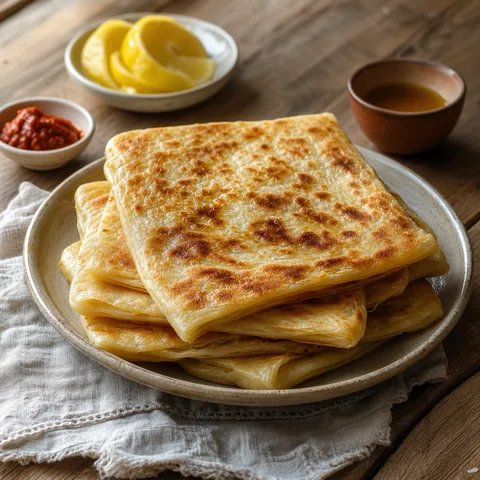 North African Lens Verified Images are for illustrative purposes only, may be inaccurate, and do not guarantee the presence or absence of specific ingredients.
 Msemmen
Layered and folded semolina flatbread cooked on a griddle until the outside crisps and the inside stays wonderfully chewy — perfect with honey or harissa.
 North African Lens Verified Images are for illustrative purposes only, may be inaccurate, and do not guarantee the presence or absence of specific ingredients.
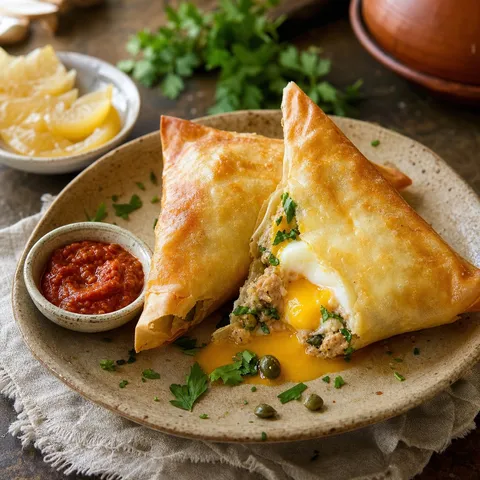
 Brik
Crispy paper-thin pastry folded around a whole egg, tuna, and parsley then flash-fried until golden — Tunisia's beloved street snack, eaten fast before the yolk escapes.
 North African Lens Verified Images are for illustrative purposes only, may be inaccurate, and do not guarantee the presence or absence of specific ingredients.
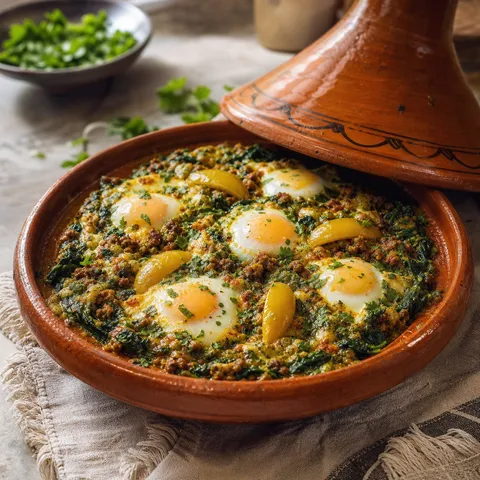
 Tajine El Bey
Tunisia's grand layered bake of spiced lamb, eggs, and cheese baked in a deep crust — a celebration dish with silky, complex layers in every slice.