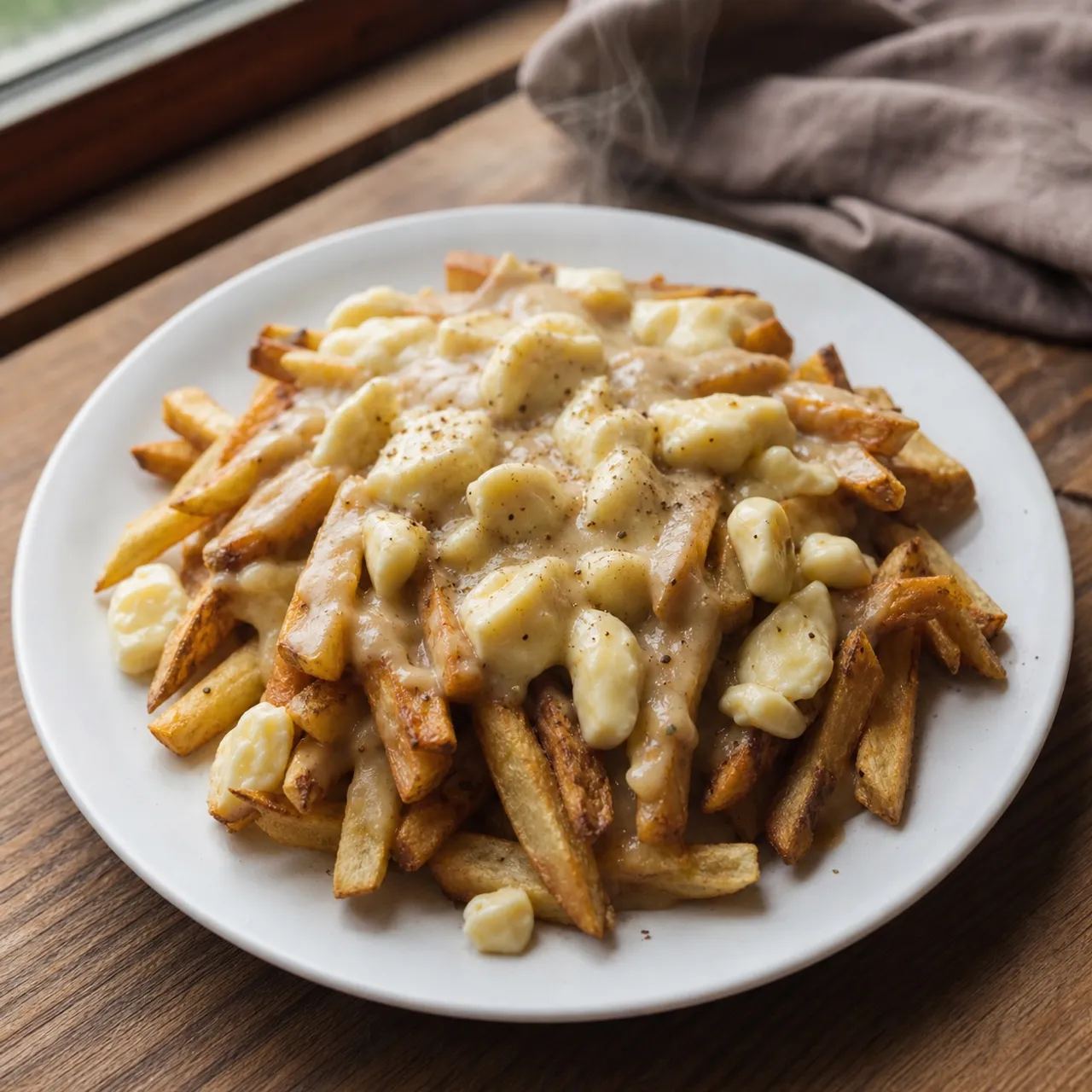
 North American Images are for illustrative purposes only, may be inaccurate, and do not guarantee the presence or absence of specific ingredients.
 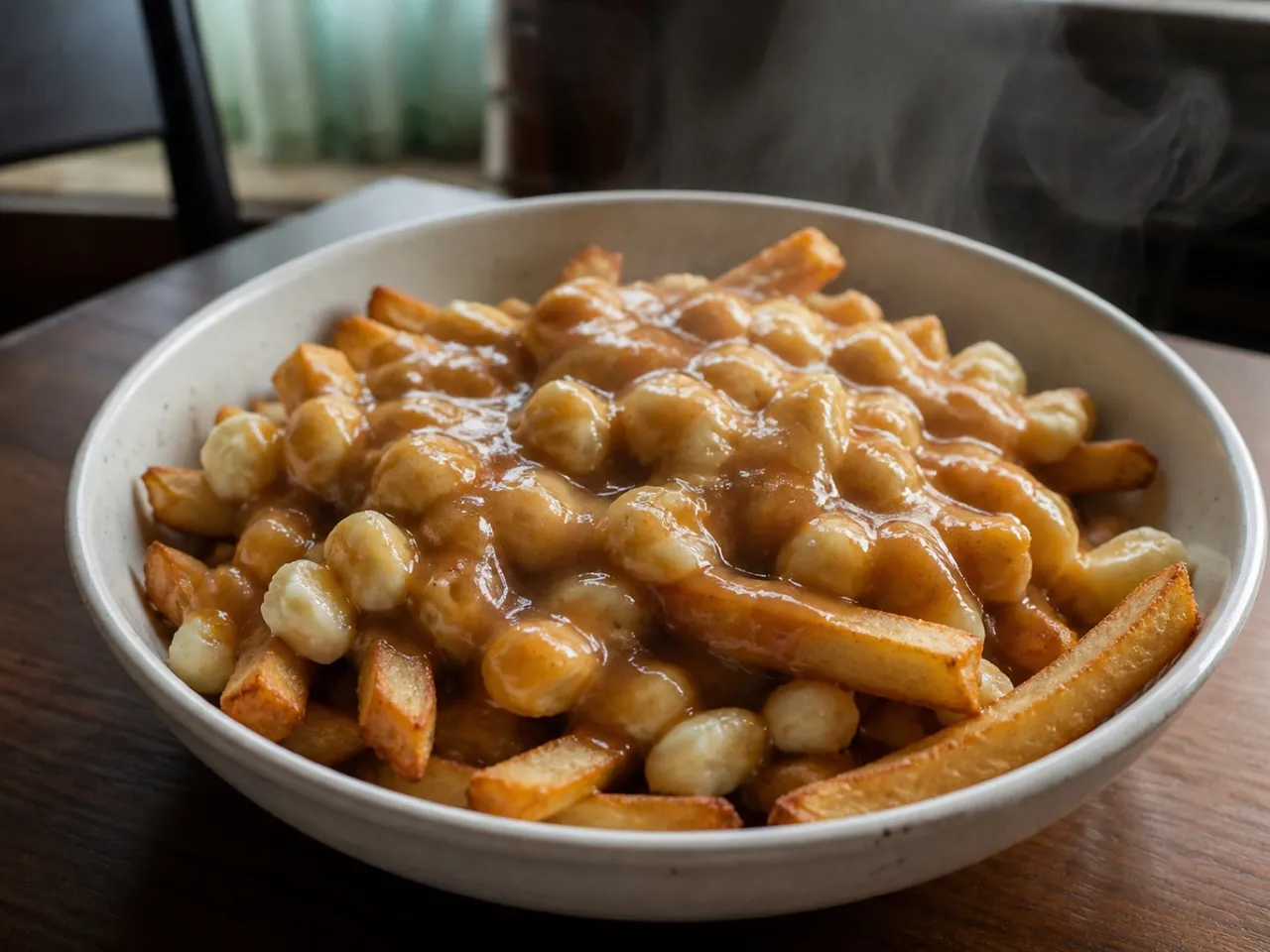 Serving Images are for illustrative purposes only, may be inaccurate, and do not guarantee the presence or absence of specific ingredients.
 Poutine
Canada's comfort classic — crispy fries smothered in gravy and squeaky cheese curds.
Contains common allergens
In the app, Listahan checks these against your household automatically.
Good to know
- Crispy
Matched from this dish's own ingredients and timing. Browse more: crispy recipes
Instructions
6 steps- 1
Fry the Potatoes: Fry the cut potatoes until crisp and golden, then drain and salt.
- 2
Start the Gravy: Melt the butter, whisk in the flour, and cook 1-2 minutes to a roux.
- 3
Build the Gravy: Gradually whisk in the beef stock and seasoning; simmer until thickened. Season to taste.
- 4
Plate the Fries: Pile the hot fries into a bowl.
- 5
Add Curds: Scatter the cheese curds over the fries.
- 6
Smother: Pour the hot gravy over the top so the curds soften but stay squeaky. Serve immediately.
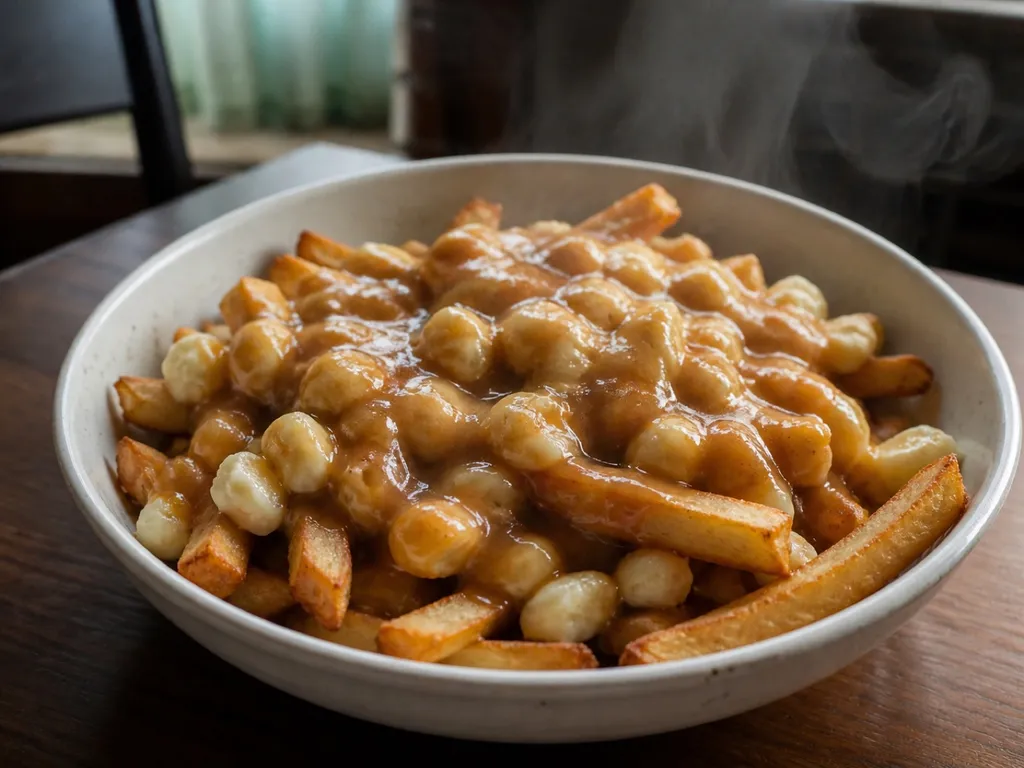 Images are for illustrative purposes only, may be inaccurate, and do not guarantee the presence or absence of specific ingredients.
 Listahan Family Score™
71/100
Good fit for most families
Score reflects how well this recipe fits a typical busy household. In the app, your Family Score is personalized to your household's allergens, kids, and pantry.
Nutrition
per serving365
Calories
18 g
Protein
34 g
Carbs
17 g
Fat
Estimated per serving. Actual values depend on the brands and portions you use.
Listahan cooking guide
Chef notes & practical guide
Technique notes, ingredient swaps, serve-alongside ideas, storage guidance, and equipment for this recipe.
Cultural context
Poutine emerged in rural Quebec in the late 1950s, most likely in the Centre-du-Quebec region, where cheese curds were abundant dairy-farm byproducts and truck-stop cooks began ladling hot gravy over fries to keep them warm. The combination was treated as low-brow fast food for decades before Montreal restaurants elevated it in the 1990s and it became a recognized emblem of Canadian cuisine.
Listahan note
This version keeps the build classic: double-fried potatoes for crunch, a roux-based beef gravy that stays glossy, and fresh curds added at the last moment so they soften without melting flat.
Technique cues
- The curds should squeak when bitten; if they melt completely into the gravy, they were added too early or the gravy was too thin.
- Fry the potatoes twice: a lower-temperature first fry cooks the interior, and a hotter second fry at 190C builds the crust that holds up under the gravy.
- Whisk the beef stock into the roux gradually and keep the heat moderate to avoid lumps; the gravy should coat the back of a spoon before it goes over the fries.
Kitchen flow
- Parallel prep
- Start the gravy while the first fry is draining; it should be done and kept warm by the time the second fry finishes.
- Make-ahead
- The gravy keeps refrigerated for 3 days; reheat with a splash of stock to loosen. Fry the potatoes fresh.
- Leftover move
- Chop leftover fries and reheat in a skillet, then top with a fried egg and the reheated gravy for a quick hash.
- Cleanup rhythm
- Let the fry oil cool completely before dealing with it; soak the gravy pot immediately after pouring so the starch does not set.
Ingredient brief
Role, handling, and swap guidance for each key ingredient.
4 large russet potatoes
Main body
Purpose: Russets have the starch content and low moisture that produce a crisp exterior and fluffy interior when double-fried.
Handling: Cut uniform sticks, soak in cold water for at least 30 minutes to draw out surface starch, then dry completely before frying.
Adaptation: Yukon Gold fries are creamier inside but brown unevenly; frozen fries work in a pinch but the crust is less substantial.
200g cheese curds
Signature topping
Purpose: Fresh curds have a mild milky tang and a rubbery texture that softens but does not disappear under hot gravy the way shredded cheese does.
Handling: Use curds at room temperature, not cold from the fridge, so the gravy warms them evenly rather than having to melt them.
Adaptation: Torn fresh mozzarella is the best substitute; it lacks the squeak but gives similar milky pockets under the gravy.
500ml beef stock
Gravy base
Purpose: A full-flavored beef stock gives the gravy its depth; weak stock produces a pale sauce that tastes thin even when thickened.
Handling: If using commercial stock, reduce it by about a quarter before making the roux to concentrate the flavor.
Adaptation: Chicken stock makes a lighter gravy that still works; vegetable stock produces a noticeably milder result.
2 tbsp butter and 2 tbsp all-purpose flour
Roux thickener
Purpose: A cooked roux thickens the gravy smoothly and gives it a slightly nutty base note that raw-starch methods lack.
Handling: Cook the butter-flour paste for a full 2 minutes over medium heat before adding liquid, stirring constantly, to eliminate the raw flour taste.
Adaptation: Equal parts cornstarch slurry can replace the roux for a gluten-free version; the gravy will be glossier but less rich-tasting.
Technique notes
- Dry the potato sticks aggressively before frying; surface moisture steams the fries instead of crisping them and makes the oil spatter.
- Season the fries with salt the moment they come out of the oil, while the surface is still wet with fat and the salt will actually stick.
- Scatter the curds over the fries first, then pour the hot gravy over the top so the heat reaches the curds from above rather than pooling them at the bottom.
Ingredient swaps
- Gluten-free direction
- Replace the flour-butter roux with a cornstarch slurry (1 tbsp cornstarch per 1 cup cold stock) and verify the Worcestershire sauce is gluten-free.
- Vegetarian direction
- Use a dark mushroom or roasted vegetable stock in place of beef stock; add a small splash of soy sauce to deepen the color and umami.
Serve alongside
- Simple coleslaw with apple cider vinegar dressing
- Dill pickle spears
- Steamed broccoli with lemon
- Ice-cold lager or Canadian pale ale
- Cream soda over ice
- Black coffee for a diner-style pairing
Serving suggestions only — check pairings for your household's allergens.
Storage & reheating
- Store leftover gravy separately in a sealed container in the fridge for up to 3 days; fries do not store well once assembled.
- Reheat gravy on the stovetop over low heat with a splash of stock, whisking to restore the smooth consistency.
- Do not freeze assembled poutine; the curds become grainy and the fries turn soggy on thawing.
Equipment
- Heavy-bottomed pot or Dutch oven for frying with a deep-fry or candy thermometer
- Small saucepan and whisk for the roux-based gravy
- Wire rack set over a baking sheet for draining fries without steaming
Make this household-aware
Listahan Pro checks this recipe against your household's allergens, finds pantry-aware swaps, builds the shopping list, and helps you plan the week around it.
Plan it in Listahan
Add Poutine to your week, check it against your household's allergens, and build the shopping list automatically.
More North American recipes
 North American Lens Verified Images are for illustrative purposes only, may be inaccurate, and do not guarantee the presence or absence of specific ingredients.
 Soft Pretzels
Chewy golden mall-style pretzels with a salty crust, brushed in butter.
 North American Lens Verified Images are for illustrative purposes only, may be inaccurate, and do not guarantee the presence or absence of specific ingredients.
 Gumbo
A Louisiana-style gumbo of chicken thighs and Andouille sausage simmered with okra, the Cajun holy trinity, and a dark roux, served over rice.
 North American Lens Verified Images are for illustrative purposes only, may be inaccurate, and do not guarantee the presence or absence of specific ingredients.
 New York Cheesecake
A dense, ultra-creamy baked cheesecake with a buttery graham cracker crust and a faintly tangy, melt-in-your-mouth filling.