 Peruvian Images are for illustrative purposes only, may be inaccurate, and do not guarantee the presence or absence of specific ingredients.
  Serving Images are for illustrative purposes only, may be inaccurate, and do not guarantee the presence or absence of specific ingredients.
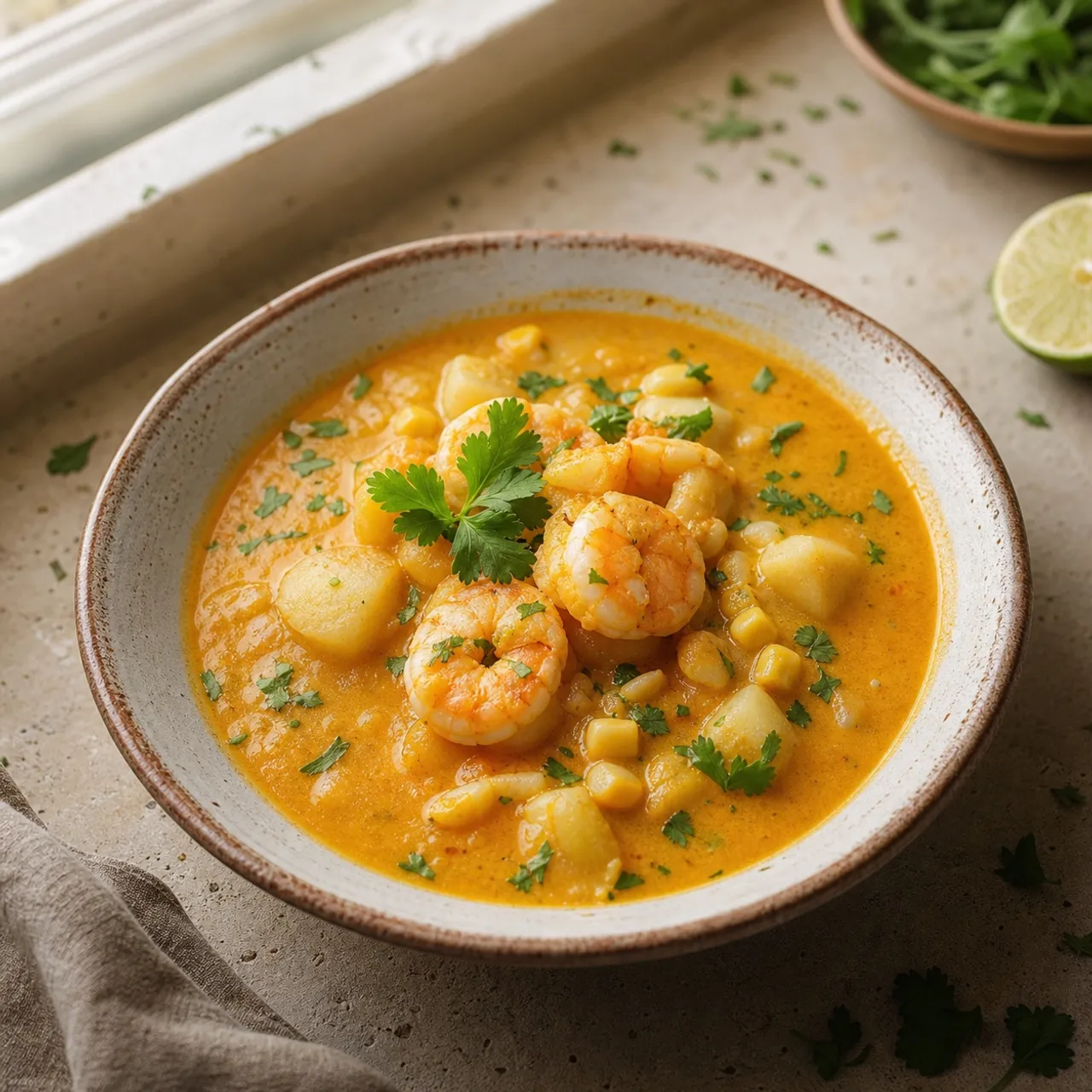
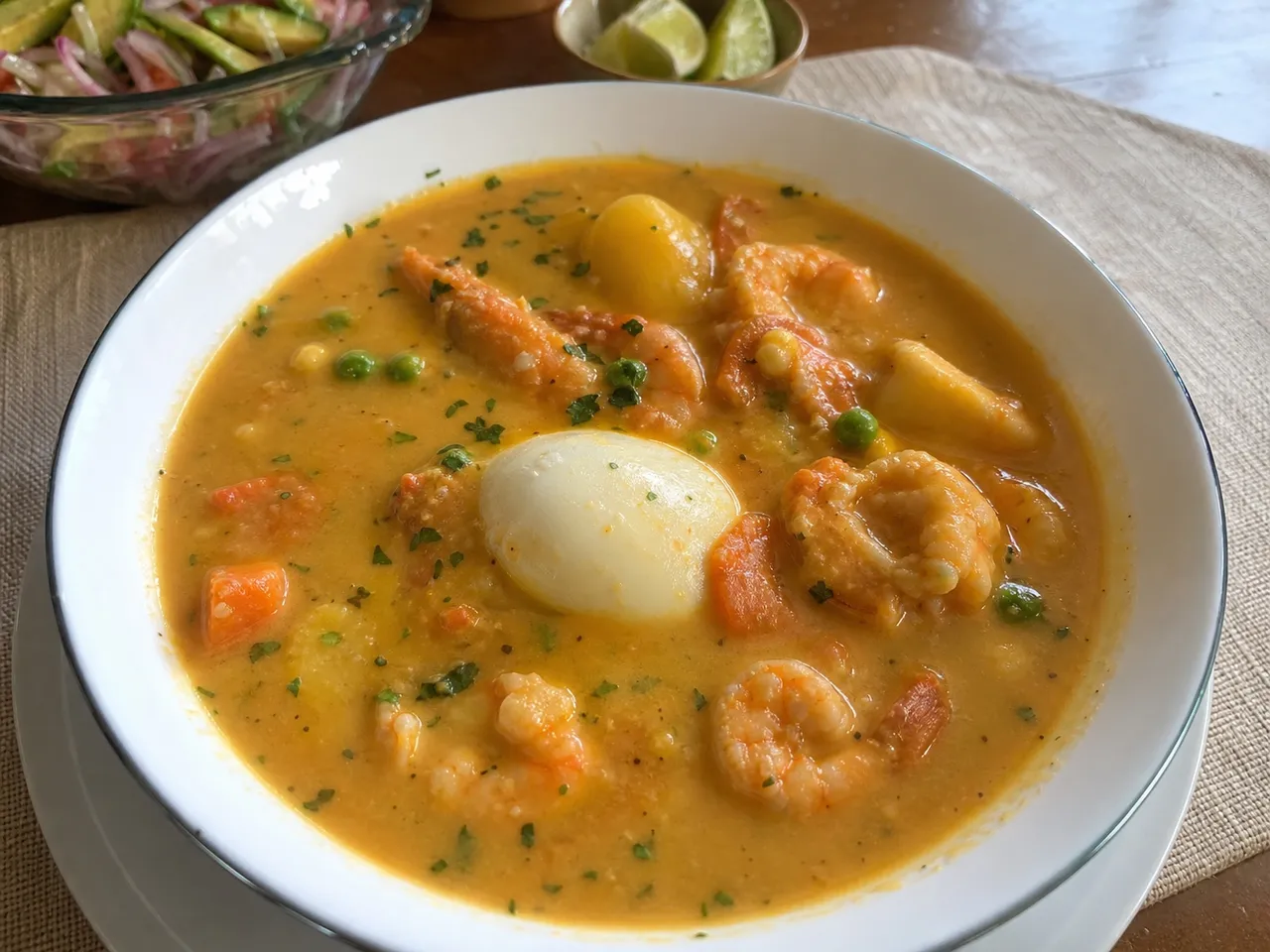
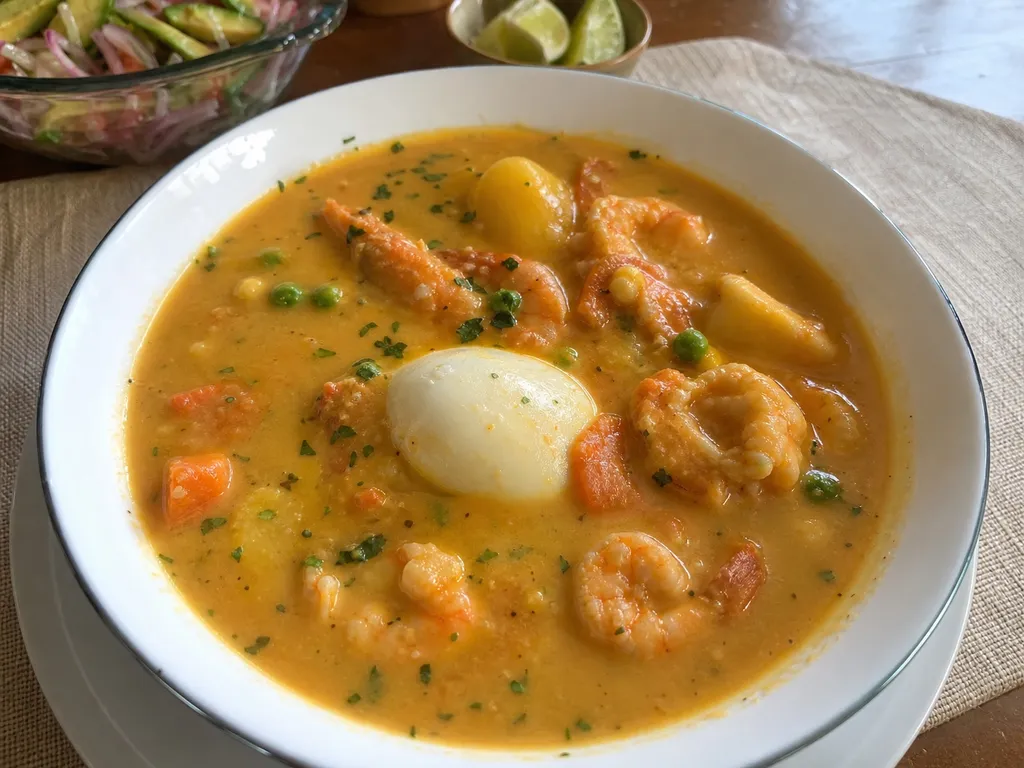
 Chupe de Camarones (Peruvian Shrimp Chowder)
A comforting creamy chowder loaded with shrimp, potatoes, corn, and poached eggs in a rich aji-spiced broth, a coastal Peruvian favorite.
Contains common allergens
In the app, Listahan checks these against your household automatically.
Good to know
- One-pot
Matched from this dish's own ingredients and timing. Browse more: one-pot dinners
Instructions
6 steps- 1
Simmer the shrimp shells in the stock for 15 minutes to build flavor, then strain and discard the shells.
- 2
Heat oil in a pot and sauté the onion and garlic, then stir in the aji panca paste and diced tomato and cook until softened.
- 3
Pour in the shrimp stock and bring to a simmer, then add the potatoes, corn, and rice, and cook for 15 minutes.
- 4
Stir in the evaporated milk and peas, and simmer for 5 more minutes.
- 5
Add the shrimp and queso fresco, and gently crack the eggs into the pot to poach directly in the chowder for 3-4 minutes.
- 6
Season with salt and pepper, sprinkle with parsley, and serve hot in bowls.
 Images are for illustrative purposes only, may be inaccurate, and do not guarantee the presence or absence of specific ingredients.
 Listahan Family Score™
53/100
Works for many families
Score reflects how well this recipe fits a typical busy household. In the app, your Family Score is personalized to your household's allergens, kids, and pantry.
Nutrition
per serving815
Calories
89 g
Protein
55 g
Carbs
27 g
Fat
Estimated per serving. Actual values depend on the brands and portions you use.
Listahan cooking guide
Chef notes & practical guide
Technique notes, ingredient swaps, serve-alongside ideas, storage guidance, and equipment for this recipe.
Cultural context
Chupe refers to a family of hearty Peruvian chowders, and the shrimp version is a festive, special-occasion dish along Peru's central and southern coast, often served for Mother's Day and holidays. It layers Andean staples like potatoes and rice with coastal shrimp and a Spanish-influenced technique of poaching eggs directly in the broth. The result is a dish that shows how colonial, coastal, and highland ingredients came together in Peruvian home cooking.
Listahan note
This version builds a real shrimp stock from the reserved shells first, then poaches the eggs directly in the finished chowder for the traditional soft-set finish.
Technique cues
- Simmering the reserved shrimp shells in the stock before straining extracts a genuine shrimp flavor base that store-bought stock alone cannot deliver.
- Poaching the eggs directly in the simmering chowder lets the whites set gently in the broth while the yolks stay soft; watch closely since they only need a few minutes.
- Adding the shrimp near the very end keeps them from turning rubbery, since they only need a couple of minutes of gentle heat to cook through.
Kitchen flow
- Parallel prep
- Simmer the shrimp shells for stock while chopping the onion, garlic, and potatoes.
- Make-ahead
- The stock base through the aji panca and tomato step can be made a day ahead and refrigerated.
- Leftover move
- Reheat gently over low heat since the poached eggs and milk can break if boiled hard.
- Cleanup rhythm
- Use one pot start to finish, and rinse it right after simmering the shells to avoid a fishy residue setting in.
Ingredient brief
Role, handling, and swap guidance for each key ingredient.
shrimp shells
stock builder
Purpose: simmering them briefly extracts concentrated shrimp flavor that becomes the backbone of the chowder
Handling: reserve the shells when peeling the shrimp, simmer in the stock, then strain them out
Adaptation: shrimp bouillon paste works in a pinch, though the flavor is less nuanced.
aji panca paste
deep, mild heat
Purpose: its smoky, dried-chile sweetness gives the base its characteristic reddish color and gentle warmth rather than sharp heat
Handling: bloom it briefly with the sauteed onion and garlic before adding liquid
Adaptation: a mix of ancho chile paste and a touch of smoked paprika approximates the smokiness.
evaporated milk
creamy finish
Purpose: it gives the chowder its signature richness without the heaviness of cream
Handling: stir in near the end and avoid a hard boil, or it can separate
Adaptation: whole milk works but the chowder will be thinner and less rich.
queso fresco
melting tang
Purpose: it adds pockets of mild, salty cheese throughout the chowder, a hallmark of the dish
Handling: cube it so it softens without fully melting into the broth
Adaptation: a mild mozzarella or farmer's cheese both work.
potatoes and rice
body
Purpose: together they thicken the broth into a true chowder consistency, tying the dish to Andean staples
Handling: cut the potatoes evenly so they cook at the same rate as the rice
Adaptation: quinoa in place of rice gives a gluten-free-friendly Andean spin; adjust the cook time accordingly.
Technique notes
- Don't skip straining the shell-simmered stock; loose shell fragments are unpleasant in the finished chowder.
- Crack the eggs into a small bowl first, then slide them into the chowder one at a time so the yolks stay intact.
- If the chowder thickens too much as it sits, thin it with warm stock or milk rather than water, to keep the flavor from diluting.
Ingredient swaps
- Shellfish-free direction
- This dish is built around shrimp and does not substitute well without losing its identity; consider a chicken chupe (chupe de pollo) instead for a shellfish-allergic household.
- Dairy-free option
- Replace the evaporated milk with unsweetened coconut milk and omit the queso fresco; the flavor shifts but stays rich.
- Lower-sodium direction
- Use a homemade or low-sodium stock and season with pepper and fresh herbs at the end rather than salting throughout cooking.
Serve alongside
- Peruvian bread rolls
- white rice on the side
- salsa criolla
- avocado slices
- a crisp Peruvian Sauvignon Blanc
- chicha morada
- limeade
Serving suggestions only — check pairings for your household's allergens.
Storage & reheating
- Refrigerate up to 2 days in an airtight container.
- Reheat gently over low heat, stirring often, to keep the milk from separating.
- Freezing is not recommended because of the egg and dairy content.
Equipment
- large stockpot
- fine-mesh strainer
- ladle
- chef's knife
Make this household-aware
Listahan Pro checks this recipe against your household's allergens, finds pantry-aware swaps, builds the shopping list, and helps you plan the week around it.
Plan it in Listahan
Add Chupe de Camarones (Peruvian Shrimp Chowder) to your week, check it against your household's allergens, and build the shopping list automatically.
More Peruvian recipes
 Peruvian Lens Verified Images are for illustrative purposes only, may be inaccurate, and do not guarantee the presence or absence of specific ingredients.
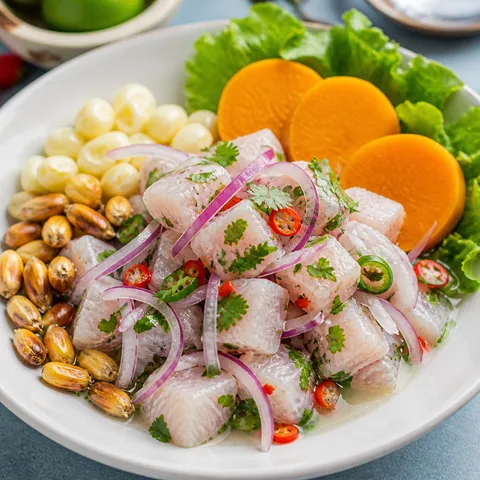
 Ceviche de Pescado
The iconic dish of Peru—exquisitely fresh, raw white fish "cooked" purely by the acidity of freshly squeezed lime juice, infused with chili heat and red onion bite.
 Peruvian Lens Verified Images are for illustrative purposes only, may be inaccurate, and do not guarantee the presence or absence of specific ingredients.
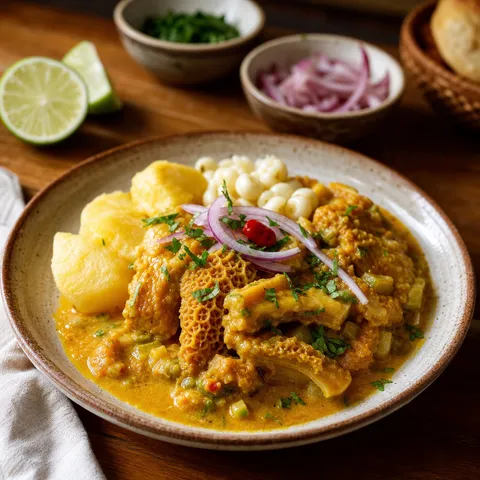
 Cau Cau (Peruvian Tripe Stew)
A hearty yellow stew of tender beef tripe and potatoes simmered in aji amarillo and mint, spooned over rice for a classic home-style meal.
 Peruvian Lens Verified Images are for illustrative purposes only, may be inaccurate, and do not guarantee the presence or absence of specific ingredients.
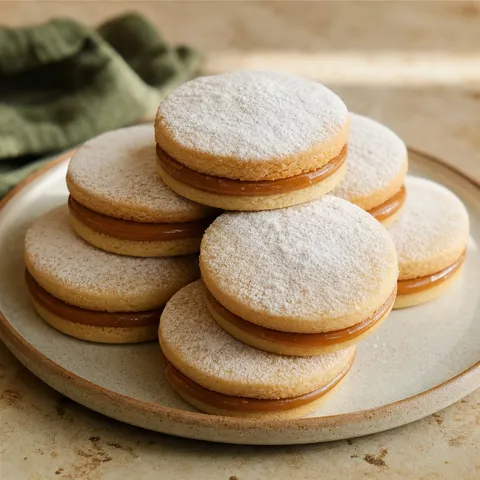
 Alfajores (Peruvian Dulce de Leche Sandwich Cookies)
Delicate, crumbly shortbread cookies sandwiched with rich dulce de leche and dusted with powdered sugar, a favorite Peruvian teatime treat.