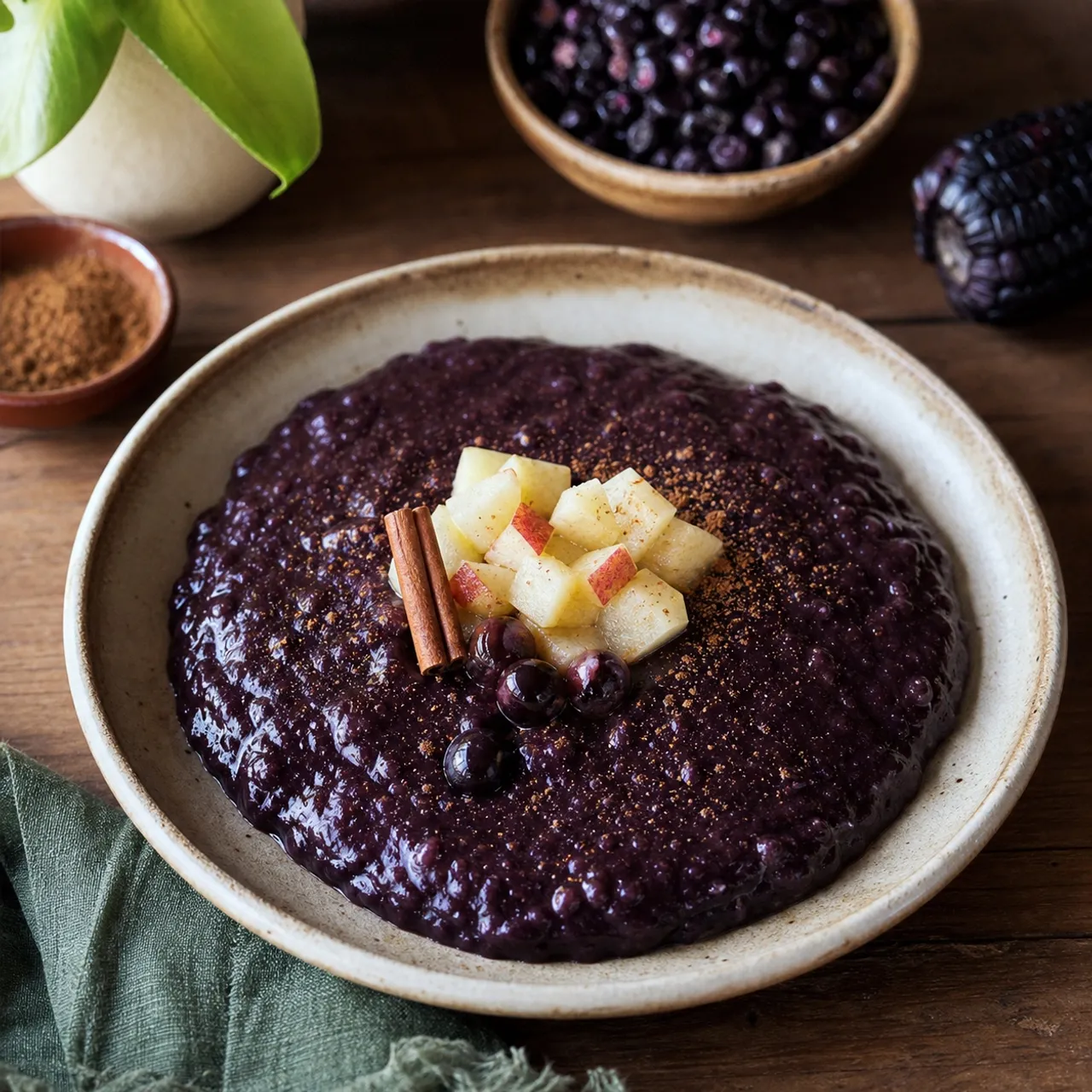
 Peruvian Images are for illustrative purposes only, may be inaccurate, and do not guarantee the presence or absence of specific ingredients.
 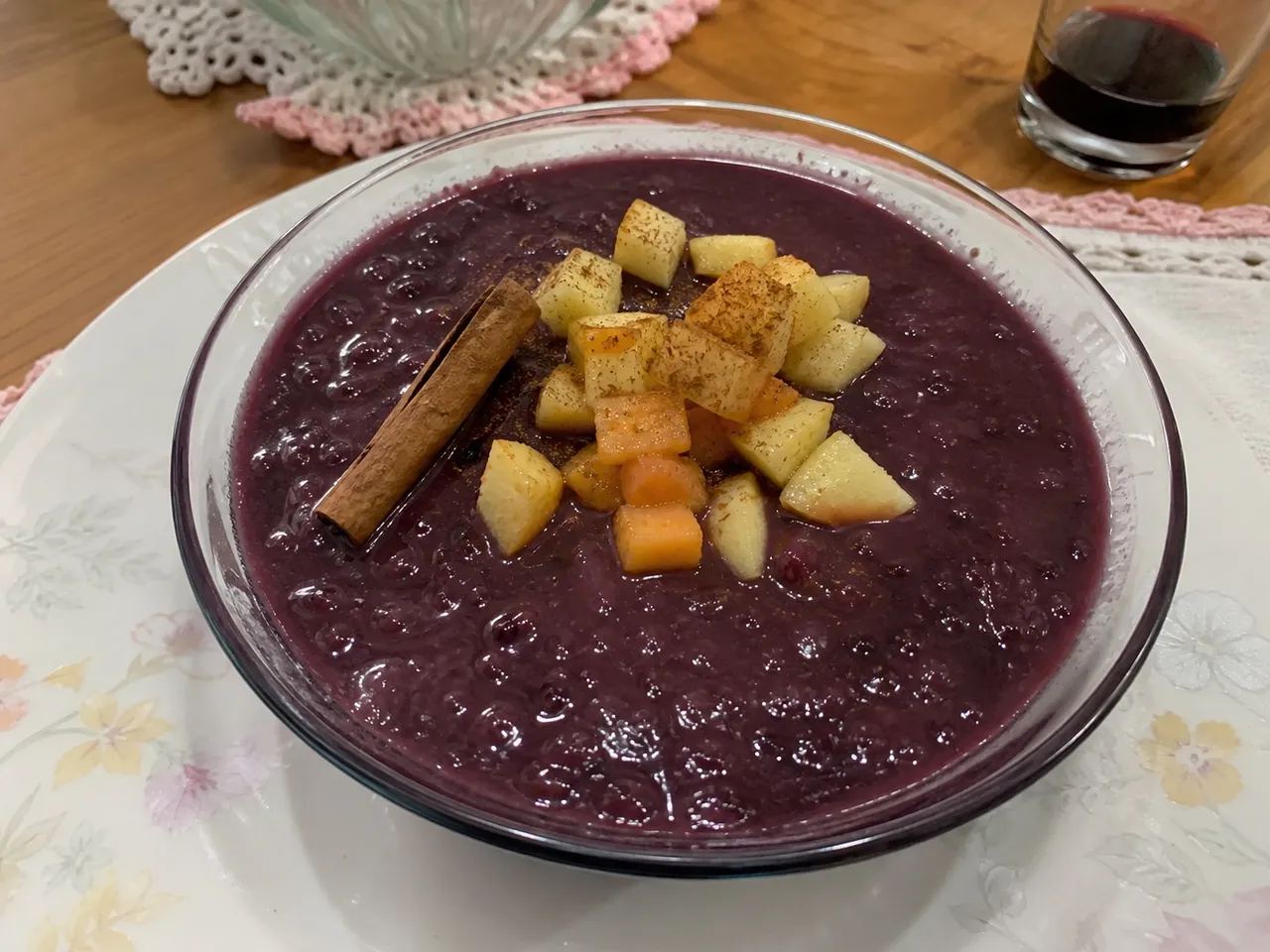 Serving Images are for illustrative purposes only, may be inaccurate, and do not guarantee the presence or absence of specific ingredients.
 Mazamorra Morada (Peruvian Purple Corn Pudding)
A sweet, fragrant purple corn pudding thickened with cornstarch and studded with dried fruit, spiced with cinnamon and cloves.
Contains common allergens
In the app, Listahan checks these against your household automatically.
Good to know
- One-pot
Matched from this dish's own ingredients and timing. Browse more: one-pot dinners
Instructions
6 steps- 1
Simmer the purple corn, cinnamon stick, cloves, and pineapple peel in the water for 45 minutes to extract the deep purple color.
- 2
Strain the liquid through a fine sieve, discarding the solids, and return the purple liquid to the pot.
- 3
Add the dried apricots, dried apple, and chopped pineapple, and simmer for 10 minutes until the fruit softens.
- 4
Stir in the sugar and ground cloves and bring back to a simmer.
- 5
Slowly whisk in the dissolved cornstarch and cook, stirring constantly, until the pudding thickens, about 5 minutes.
- 6
Stir in the lime juice, then pour into cups and chill before serving.
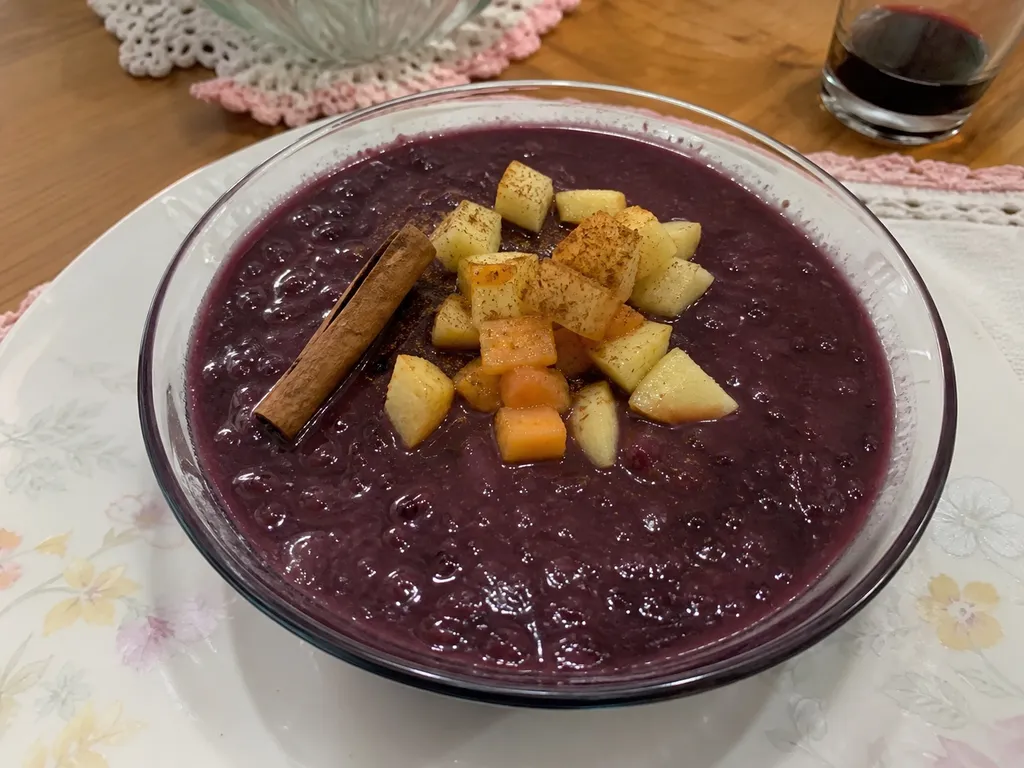 Images are for illustrative purposes only, may be inaccurate, and do not guarantee the presence or absence of specific ingredients.
 Listahan Family Score™
75/100
Good fit for most families
Score reflects how well this recipe fits a typical busy household. In the app, your Family Score is personalized to your household's allergens, kids, and pantry.
Nutrition
per serving280
Calories
2 g
Protein
69 g
Carbs
1 g
Fat
Estimated per serving. Actual values depend on the brands and portions you use.
Listahan cooking guide
Chef notes & practical guide
Technique notes, ingredient swaps, serve-alongside ideas, storage guidance, and equipment for this recipe.
Cultural context
Mazamorra morada is one of Peru's oldest desserts, rooted in the pre-Columbian use of purple corn, later enriched with dried and fresh fruit during the colonial period. It is often paired with arroz con leche, a rice pudding, as what Peruvians call the country's national dessert duo. The deep purple color, drawn entirely from the corn itself, is considered a point of pride and a distinctly Peruvian visual signature.
Listahan note
This version extracts the purple corn's color through a long simmer with the pineapple peel and spices before building the fruit and thickener into it, so the color comes from the corn itself rather than any added dye.
Technique cues
- Simmering the purple corn with the pineapple peel and whole spices for the full time is what pulls out its deep purple anthocyanin color; cutting the simmer short results in a paler, less vivid pudding.
- Straining out the solids after the color extraction keeps the pudding smooth, since the corn kernels themselves become spent and starchy rather than tender.
- Whisking the dissolved cornstarch in slowly while stirring constantly prevents lumps and ensures the pudding thickens evenly to a glossy, spoonable consistency.
Kitchen flow
- Parallel prep
- Chop the dried and fresh fruit while the purple corn liquid simmers.
- Make-ahead
- Mazamorra morada is often better a day ahead, once chilled, as the flavors continue to meld.
- Leftover move
- Store chilled and stir well before serving since it thickens further in the fridge.
- Cleanup rhythm
- Use one pot throughout, straining directly into a bowl before returning the liquid to the same pot for the fruit and thickening steps.
Ingredient brief
Role, handling, and swap guidance for each key ingredient.
dried purple corn (maiz morado)
the defining ingredient
Purpose: its anthocyanin pigments give the pudding its signature deep purple color and give the dish its identity
Handling: simmer whole kernels or cobs until the water turns deep purple, then strain
Adaptation: there is no real substitute for the color; if unavailable this dish cannot be made as intended, though a butterfly pea flower tea could approximate the color without the corn's flavor.
dried apricots and dried apple
fruit sweetness and texture
Purpose: they rehydrate in the simmering liquid, adding chewy texture and natural sweetness that balance the pudding's tartness from lime
Handling: chop into small, even pieces so they soften at the same rate
Adaptation: dried peaches or dried pears work similarly.
pineapple
fresh fruit brightness
Purpose: its fresh sweetness, and the reserved peel used while the corn simmers, round out the dried fruit's chewiness with a juicier note
Handling: chop the flesh small and add the peel to the simmering liquid, discarding it before serving
Adaptation: fresh apple in a pinch, though pineapple's tang is traditional.
cornstarch
thickener
Purpose: it's what turns the fruit-and-spice liquid into a spoonable pudding rather than a thin drink
Handling: dissolve fully in cold water before adding to avoid lumps
Adaptation: potato starch or arrowroot in a similar amount for a gluten-free-friendly thickener with a similar set.
lime juice
balancing acidity
Purpose: a splash at the end cuts through the pudding's sweetness and brightens the spiced fruit flavors
Handling: add off the heat, close to serving, so its brightness doesn't cook off
Adaptation: a smaller amount of orange juice for a milder tang.
Technique notes
- Don't rush the initial simmer; the corn needs the full time to release its full purple color into the water.
- Whisk the cornstarch slurry into the pot in a thin stream while stirring, rather than dumping it in all at once, to avoid clumps.
- Chill the pudding for at least an hour before serving; it firms up and the flavors settle as it cools.
Ingredient swaps
- Vegan direction
- This pudding is naturally vegan and dairy-free as written when served on its own, though it's traditionally paired with dairy-based arroz con leche.
- Gluten-free direction
- Naturally gluten-free as written; just confirm any purchased dried fruit has no added flour-based dusting.
- Lower-sugar direction
- Reduce the added sugar by a third and let the natural sweetness of the dried fruit carry more of the flavor.
Serve alongside
- arroz con leche, served together as Peru's classic dessert duo
- shortbread cookies
- hot chocolate
- coffee
- a glass of chilled milk
Serving suggestions only — check pairings for your household's allergens.
Storage & reheating
- Refrigerate covered up to 4 days.
- Serve chilled or at room temperature, do not reheat.
- Freezing is not recommended as the texture becomes watery on thawing.
Equipment
- large saucepan
- fine-mesh strainer
- whisk
- serving cups or bowls
Make this household-aware
Listahan Pro checks this recipe against your household's allergens, finds pantry-aware swaps, builds the shopping list, and helps you plan the week around it.
Plan it in Listahan
Add Mazamorra Morada (Peruvian Purple Corn Pudding) to your week, check it against your household's allergens, and build the shopping list automatically.
More Peruvian recipes
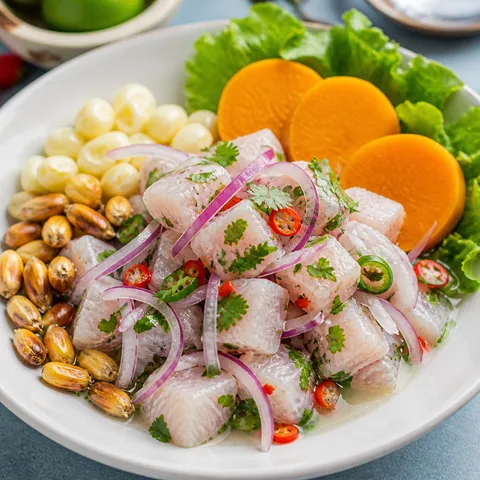 Peruvian Lens Verified Images are for illustrative purposes only, may be inaccurate, and do not guarantee the presence or absence of specific ingredients.
 Ceviche de Pescado
The iconic dish of Peru—exquisitely fresh, raw white fish "cooked" purely by the acidity of freshly squeezed lime juice, infused with chili heat and red onion bite.
 Peruvian Lens Verified Images are for illustrative purposes only, may be inaccurate, and do not guarantee the presence or absence of specific ingredients.
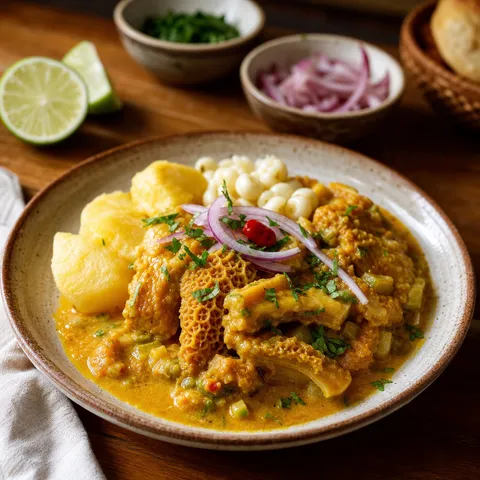
 Cau Cau (Peruvian Tripe Stew)
A hearty yellow stew of tender beef tripe and potatoes simmered in aji amarillo and mint, spooned over rice for a classic home-style meal.
 Peruvian Lens Verified Images are for illustrative purposes only, may be inaccurate, and do not guarantee the presence or absence of specific ingredients.
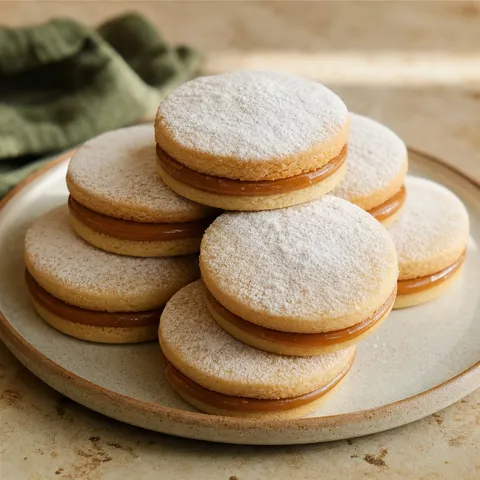
 Alfajores (Peruvian Dulce de Leche Sandwich Cookies)
Delicate, crumbly shortbread cookies sandwiched with rich dulce de leche and dusted with powdered sugar, a favorite Peruvian teatime treat.