 Peruvian Images are for illustrative purposes only, may be inaccurate, and do not guarantee the presence or absence of specific ingredients.
  Serving Images are for illustrative purposes only, may be inaccurate, and do not guarantee the presence or absence of specific ingredients.
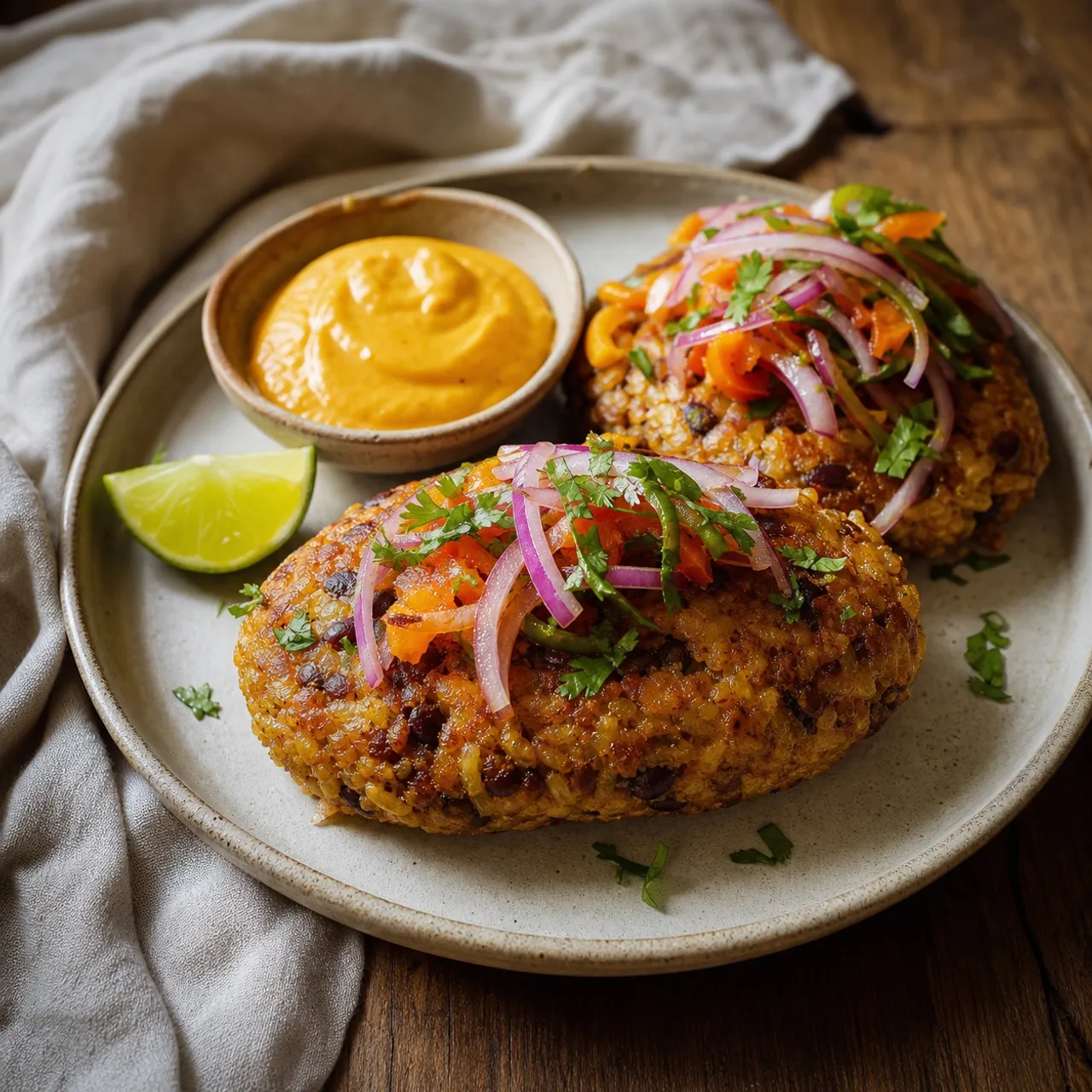
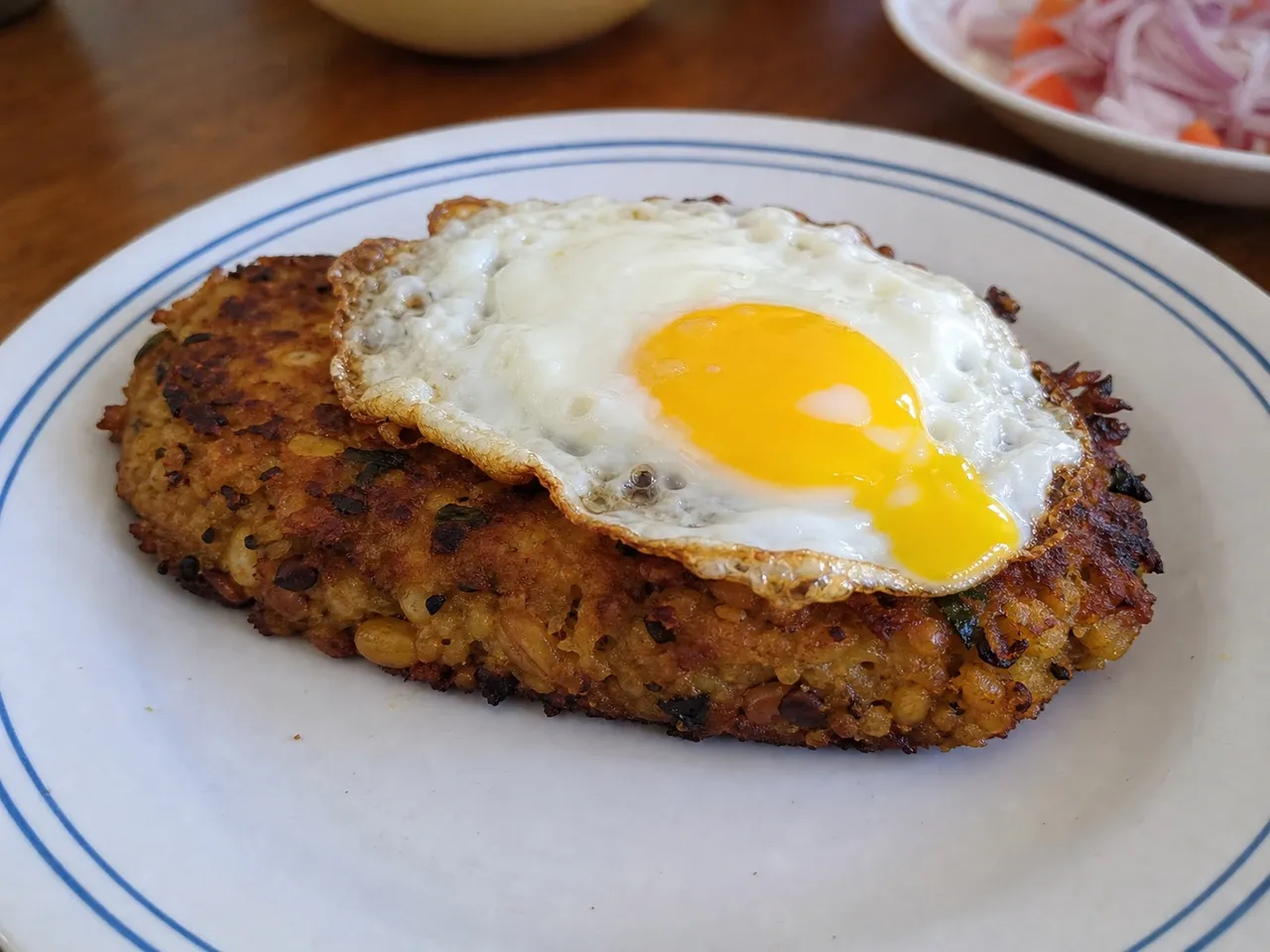
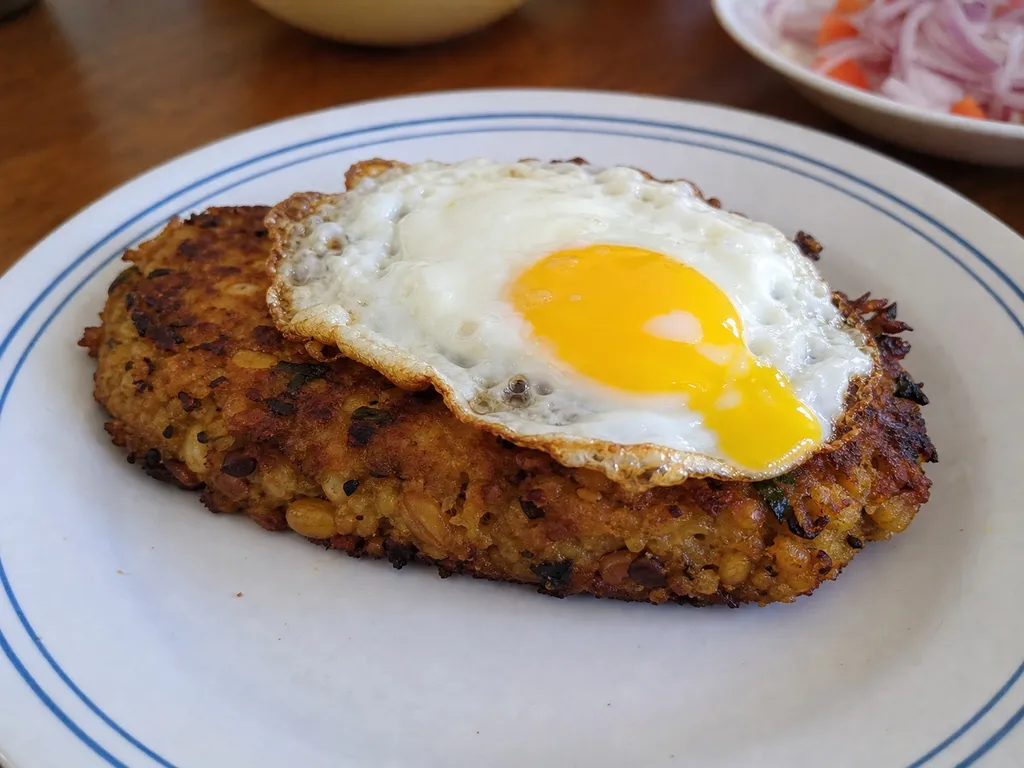
 Tacu Tacu (Peruvian Bean and Rice Cakes)
Leftover rice and beans pan-fried into crispy golden cakes, a beloved Peruvian comfort dish often topped with a fried egg and steak.
Contains common allergens
In the app, Listahan checks these against your household automatically.
Good to know
- Crispy
Matched from this dish's own ingredients and timing. Browse more: crispy recipes
Instructions
6 steps- 1
Heat 1 tablespoon of oil in a skillet and sauté the onion, garlic, and aji amarillo paste until fragrant.
- 2
Mash the beans roughly with the bean liquid, then mix in the rice, sautéed onion mixture, salt, and pepper.
- 3
Divide the mixture into 4 portions and shape each into a thick oval patty.
- 4
Heat the remaining oil in a nonstick skillet over medium heat and pan-fry each patty for 4-5 minutes per side until golden and crisp.
- 5
In a separate pan, fry the eggs sunny-side up.
- 6
Top each tacu tacu with a fried egg and a sprinkle of parsley before serving.
 Images are for illustrative purposes only, may be inaccurate, and do not guarantee the presence or absence of specific ingredients.
 Listahan Family Score™
72/100
Good fit for most families
Score reflects how well this recipe fits a typical busy household. In the app, your Family Score is personalized to your household's allergens, kids, and pantry.
Nutrition
per serving810
Calories
24 g
Protein
137 g
Carbs
17 g
Fat
Estimated per serving. Actual values depend on the brands and portions you use.
Listahan cooking guide
Chef notes & practical guide
Technique notes, ingredient swaps, serve-alongside ideas, storage guidance, and equipment for this recipe.
Cultural context
Tacu tacu began as an Afro-Peruvian way to use up leftover rice and beans from the night before, pan-fried together into a crisp cake. It moved from home kitchens onto restaurant menus in the twentieth century and is now often dressed up with a fried egg or steak on top rather than served plain the way it started as leftovers.
Listahan note
This version keeps it close to its roots as a simple, egg-topped patty rather than adding steak or seafood, so the rice-and-bean cake itself stays the star.
Technique cues
- Using already-cooked rice and beans is essential, not just convenient - day-old rice has dried out slightly, which lets it fry into a cohesive patty instead of turning mushy.
- Mashing the beans only roughly, not into a smooth puree, keeps some texture in the final patty rather than a uniform paste.
- A nonstick or well-seasoned skillet and patience during the pan-fry matter more than high heat here; a crust needs time to set on medium heat or the patty falls apart when flipped.
Kitchen flow
- Parallel prep
- Fry the eggs in a second pan timed to finish just as the patties come off the heat, so nothing goes cold waiting.
- Make-ahead
- Cook the beans and rice a day ahead specifically so they're dried out enough to fry into a proper patty.
- Leftover move
- Leftover unshaped mixture keeps well and can be pan-fried fresh the next day rather than reheating already-fried patties.
- Cleanup rhythm
- Wipe out the skillet between batches if the aji amarillo oil starts to darken, so later patties don't pick up a burnt flavor.
Ingredient brief
Role, handling, and swap guidance for each key ingredient.
cooked white rice
the patty's structure
Purpose: day-old, slightly dried rice binds with the mashed beans into a cake that holds together when fried, unlike fresh, wet rice
Handling: let it cool and firm up before mixing rather than using it warm from the pot
Adaptation: day-old brown rice works texturally but changes the flavor and traditional look.
cooked canary or pinto beans
the other half of the patty and the dish's namesake mix
Purpose: canary beans are the traditional choice in Peru for their creamy texture when mashed, though pinto beans mash almost identically
Handling: mash with a fork or potato masher, leaving some whole beans for texture
Adaptation: black beans work in a pinch but shift the color and flavor toward a more Mexican-leaning dish.
aji amarillo paste
the patty's background heat and color
Purpose: it's stirred into the onion before mixing so its flavor is worked through the whole mixture rather than sitting on top
Handling: saute briefly with the onion and garlic so its flavor blooms in the oil
Adaptation: a milder yellow chile paste or a pinch of turmeric plus a dash of hot sauce gets close in color and mild heat.
eggs
the traditional topping
Purpose: a sunny-side-up egg with a runny yolk is meant to break over the patty at the table, adding richness the rice-and-bean base doesn't have on its own
Handling: fry separately so the yolk stays intact and runny
Adaptation: a fried plantain slice on top makes this egg-free, though it changes the dish's character.
red onion
aromatic base
Purpose: sauteed onion gives the mixture its savory foundation before the beans and rice are folded in
Handling: chop finely so it distributes evenly through the patty rather than clumping
Adaptation: white or yellow onion works fine if red isn't on hand.
Technique notes
- Shape the patties with slightly wet or oiled hands - the sticky rice-bean mixture is much easier to form into a clean oval that way.
- Give each patty a full 4-5 minutes per side undisturbed; moving it too early is the most common reason it breaks apart instead of releasing cleanly.
- Fry the eggs in a separate pan timed to finish just as the patties come off the heat, so everything reaches the table hot at once.
Ingredient swaps
- Egg-free direction
- Top with a fried plantain slice or avocado instead of the egg for a similar richness without the allergen.
- Vegan direction
- Skip the egg topping and use extra sauteed onion and a drizzle of aji sauce instead.
- Weeknight shortcut
- Use canned beans, drained and lightly mashed with a splash of water in place of bean cooking liquid, to skip cooking beans from scratch.
Serve alongside
- Salsa criolla
- Fried sweet plantains
- A simple side salad with avocado
- Extra aji sauce for drizzling
- Chicha morada
- Fresh-squeezed limeade (limonada)
- A light Peruvian beer
Serving suggestions only — check pairings for your household's allergens.
Storage & reheating
- Refrigerate uncooked or cooked patties up to 3 days in an airtight container
- Reheat in a skillet over medium heat to re-crisp rather than microwaving, which turns them soft
- Freeze uncooked shaped patties between parchment layers up to 2 months
Equipment
- Large skillet, ideally nonstick
- A second skillet for the eggs
- Potato masher or fork
- Spatula
Make this household-aware
Listahan Pro checks this recipe against your household's allergens, finds pantry-aware swaps, builds the shopping list, and helps you plan the week around it.
Plan it in Listahan
Add Tacu Tacu (Peruvian Bean and Rice Cakes) to your week, check it against your household's allergens, and build the shopping list automatically.
More Peruvian recipes
 Peruvian Lens Verified Images are for illustrative purposes only, may be inaccurate, and do not guarantee the presence or absence of specific ingredients.
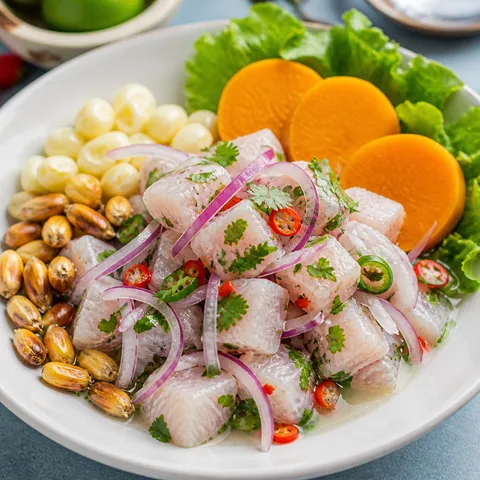
 Ceviche de Pescado
The iconic dish of Peru—exquisitely fresh, raw white fish "cooked" purely by the acidity of freshly squeezed lime juice, infused with chili heat and red onion bite.
 Peruvian Lens Verified Images are for illustrative purposes only, may be inaccurate, and do not guarantee the presence or absence of specific ingredients.
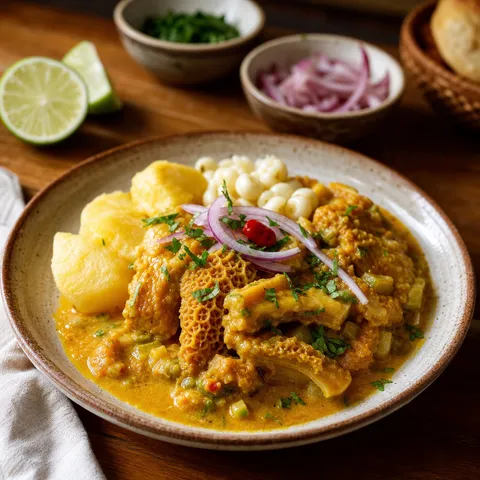
 Cau Cau (Peruvian Tripe Stew)
A hearty yellow stew of tender beef tripe and potatoes simmered in aji amarillo and mint, spooned over rice for a classic home-style meal.
 Peruvian Lens Verified Images are for illustrative purposes only, may be inaccurate, and do not guarantee the presence or absence of specific ingredients.
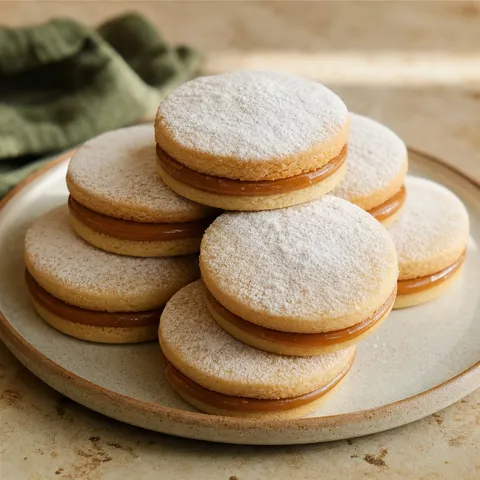
 Alfajores (Peruvian Dulce de Leche Sandwich Cookies)
Delicate, crumbly shortbread cookies sandwiched with rich dulce de leche and dusted with powdered sugar, a favorite Peruvian teatime treat.