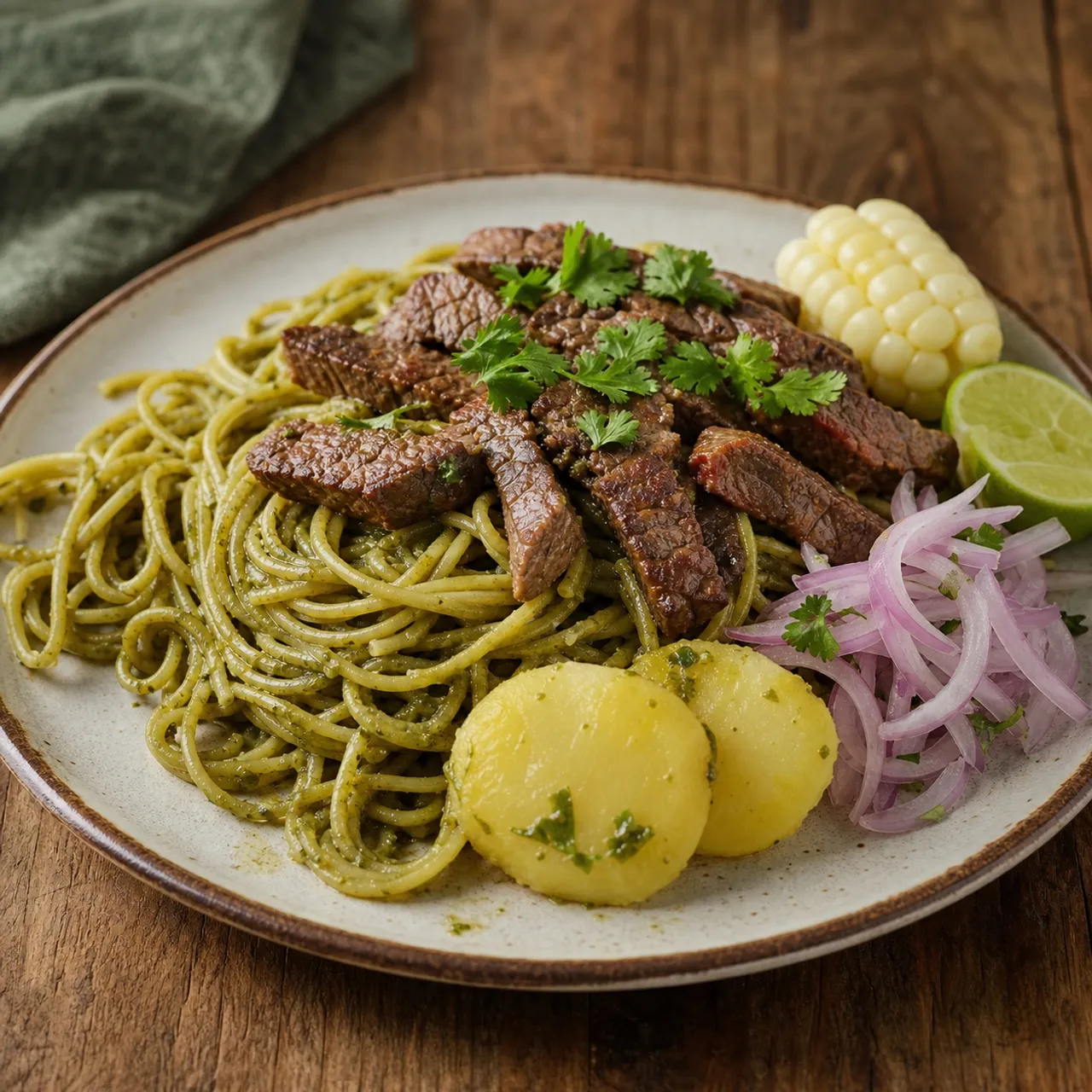
 Peruvian Images are for illustrative purposes only, may be inaccurate, and do not guarantee the presence or absence of specific ingredients.
 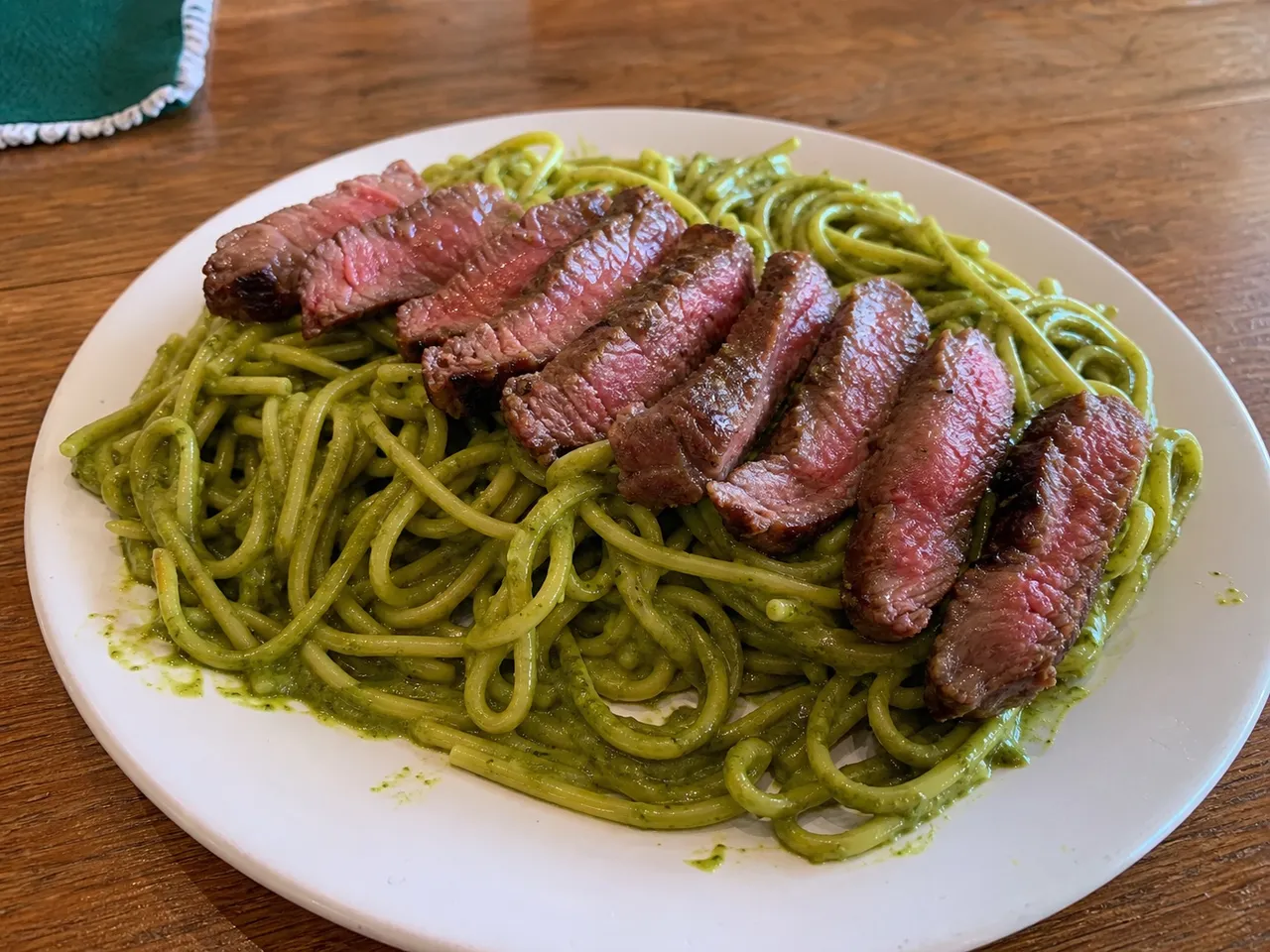 Serving Images are for illustrative purposes only, may be inaccurate, and do not guarantee the presence or absence of specific ingredients.
 Tallarines Verdes (Peruvian Green Spaghetti with Steak)
Spaghetti tossed in a creamy basil and spinach pesto-like sauce, served alongside a juicy pan-seared steak, a Peruvian-Italian family favorite.
Contains common allergens
In the app, Listahan checks these against your household automatically.
Good to know
- Ready in under 30 minutes
Matched from this dish's own ingredients and timing. Browse more: 30-minute meals
Instructions
5 steps- 1
Cook the spaghetti in salted boiling water according to package directions; drain and reserve 1/2 cup pasta water.
- 2
Blend the basil, spinach, evaporated milk, parmesan, walnuts, garlic, and 2 tablespoons oil until smooth, adding pasta water as needed to loosen.
- 3
Season the steaks with salt and pepper and pan-sear in the remaining oil over high heat for 3-4 minutes per side; let rest.
- 4
Toss the cooked spaghetti with the green sauce over low heat until well coated and warmed through.
- 5
Slice the steaks and serve on top of or alongside the green spaghetti.
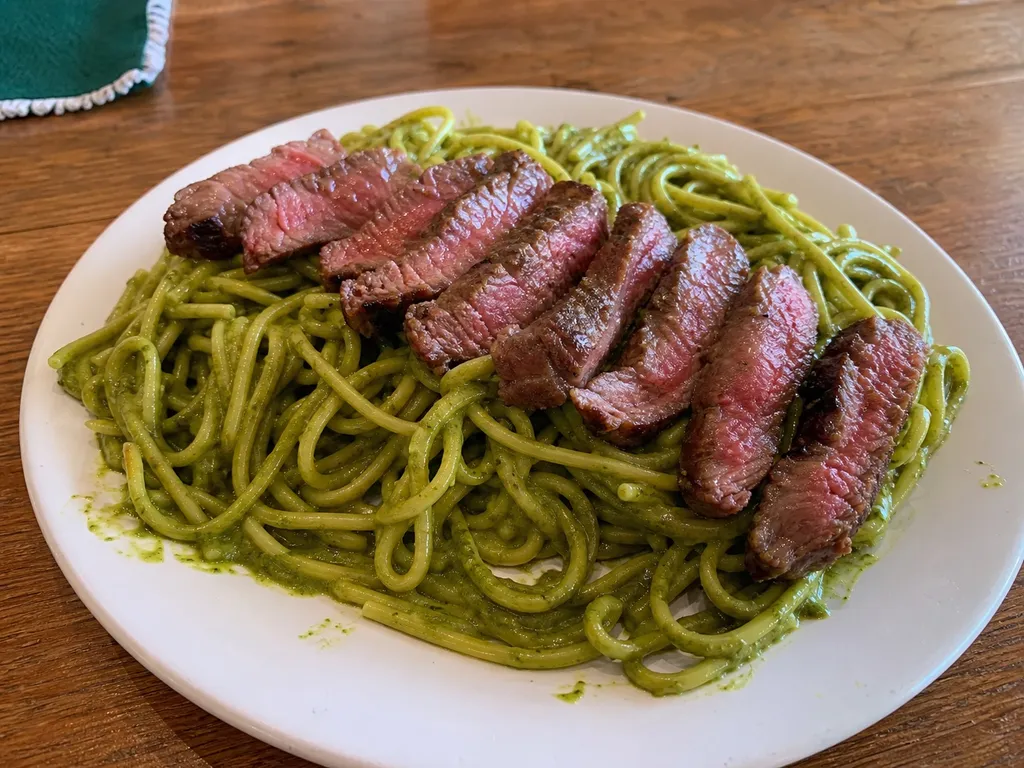 Images are for illustrative purposes only, may be inaccurate, and do not guarantee the presence or absence of specific ingredients.
 Listahan Family Score™
71/100
Good fit for most families
Score reflects how well this recipe fits a typical busy household. In the app, your Family Score is personalized to your household's allergens, kids, and pantry.
Nutrition
per serving690
Calories
23 g
Protein
91 g
Carbs
26 g
Fat
Estimated per serving. Actual values depend on the brands and portions you use.
Listahan cooking guide
Chef notes & practical guide
Technique notes, ingredient swaps, serve-alongside ideas, storage guidance, and equipment for this recipe.
Cultural context
Tallarines verdes emerged in Lima as a home-cook adaptation of Italian pesto by the city's large Italian immigrant community, swapping in local basil, spinach, and evaporated milk instead of pine nuts and cream. It's now a Sunday-lunch staple almost always served with a pan-seared steak on top rather than as a standalone pasta dish.
Listahan note
This version blends walnuts and parmesan into the sauce as the recipe's nod to the dish's Italian roots, then leans on evaporated milk rather than cream to keep the sauce close to how it's typically made in Peruvian homes.
Technique cues
- Evaporated milk, not fresh cream, is what gives tallarines verdes its characteristic slightly denser, more concentrated sauce - it's a pantry staple in Peru and part of what distinguishes this from an Italian pesto.
- Blending spinach in with the basil bulks up the sauce's volume and deepens the green color without diluting the basil's flavor the way using basil alone in a smaller quantity would.
- Searing the steaks in a separate hot pan rather than in the same pot as the sauce keeps a proper crust on the meat instead of the sauce's moisture steaming it.
Kitchen flow
- Parallel prep
- Blend the sauce and sear the steaks while the pasta water comes to a boil, so all three finish around the same time.
- Make-ahead
- The green sauce can be blended up to a day ahead and refrigerated; bring to room temperature before tossing with hot pasta.
- Leftover move
- Reheat leftover pasta gently with a splash of milk to loosen the sauce; slice any remaining steak thin to reheat quickly.
- Cleanup rhythm
- Rinse the blender immediately after making the sauce, since dried pesto residue is much harder to scrub off once it sets.
Ingredient brief
Role, handling, and swap guidance for each key ingredient.
fresh basil leaves
the sauce's dominant flavor
Purpose: basil is the base note that makes this recognizably a pesto-style sauce despite the other Peruvian pantry substitutions
Handling: use fresh, unwilted leaves and blend briefly to keep the color bright rather than over-processing to a dull green
Adaptation: if basil is limited, use half basil and half more spinach, though the flavor turns milder and less aromatic.
evaporated milk
what gives the sauce its body and characteristic Peruvian-home texture
Purpose: evaporated milk is thicker than regular milk without the tang of cream, giving the sauce a smooth, coating consistency
Handling: add to the blender along with the greens rather than stirring in afterward
Adaptation: a light cream works in a pinch, though the sauce will taste richer and less like the home-style original.
walnuts
the sauce's nutty backbone, standing in for pine nuts
Purpose: walnuts are more affordable and available in Peru than pine nuts, which is why they became the standard in this dish
Handling: blend raw, no need to toast, since they'll be balanced by the milk and cheese
Adaptation: cashews or sunflower seeds work for anyone avoiding tree nuts, and give a milder flavor.
grated parmesan cheese
salt and umami depth in the sauce
Purpose: grated parmesan rounds out the sauce's savoriness the same way it would in an Italian pesto
Handling: grate finely so it blends smoothly rather than leaving gritty chunks
Adaptation: pecorino romano is sharper and saltier if that's what's on hand; use slightly less.
beef sirloin steaks
the traditional protein served on top
Purpose: a well-seared steak alongside the rich green sauce is what makes this a full plate rather than just a pasta side
Handling: pat dry and season just before searing so a proper crust forms
Adaptation: chicken breast or a portobello mushroom cap both work as lighter or vegetarian alternatives, adjusting cook time accordingly.
Technique notes
- Reserve pasta water before draining - the starchy water is what loosens the thick evaporated-milk sauce to properly coat the noodles instead of clumping.
- Let the steaks rest for a few minutes after searing before slicing, the same as any seared steak, so the juices stay in the meat rather than on the cutting board.
- Toss the sauce with the pasta over low heat rather than high, since dairy-based sauces can split or scorch if the pan gets too hot.
Ingredient swaps
- Nut-free direction
- Swap walnuts for raw sunflower seeds or pepitas; the sauce loses a little richness but keeps its texture.
- Dairy-free direction
- Use a plain unsweetened oat milk in place of evaporated milk and a dairy-free parmesan alternative, though the sauce will be noticeably thinner.
- Gluten-free direction
- Use a gluten-free spaghetti; the sauce itself has no gluten.
- Weeknight shortcut
- A quick-marinated chicken breast, sliced thin, cooks faster than steak and still pairs well with the green sauce.
Serve alongside
- Fried yuca
- A simple tomato and onion salad
- Garlic bread
- Sliced avocado
- A light red wine like a Peruvian tannat blend
- Chicha morada
- Sparkling water with lemon
Serving suggestions only — check pairings for your household's allergens.
Storage & reheating
- Refrigerate leftover pasta and sauce together up to 3 days; the sauce may darken slightly, which is normal
- Reheat gently on the stovetop with a splash of milk or water to loosen the sauce
- Not recommended for freezing; the dairy-based sauce can separate
Equipment
- Blender
- Large pot for pasta
- Heavy skillet for searing steak
- Tongs
Make this household-aware
Listahan Pro checks this recipe against your household's allergens, finds pantry-aware swaps, builds the shopping list, and helps you plan the week around it.
Plan it in Listahan
Add Tallarines Verdes (Peruvian Green Spaghetti with Steak) to your week, check it against your household's allergens, and build the shopping list automatically.
More Peruvian recipes
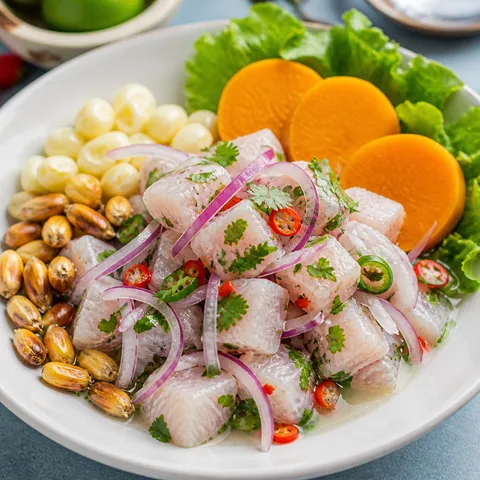 Peruvian Lens Verified Images are for illustrative purposes only, may be inaccurate, and do not guarantee the presence or absence of specific ingredients.
 Ceviche de Pescado
The iconic dish of Peru—exquisitely fresh, raw white fish "cooked" purely by the acidity of freshly squeezed lime juice, infused with chili heat and red onion bite.
 Peruvian Lens Verified Images are for illustrative purposes only, may be inaccurate, and do not guarantee the presence or absence of specific ingredients.
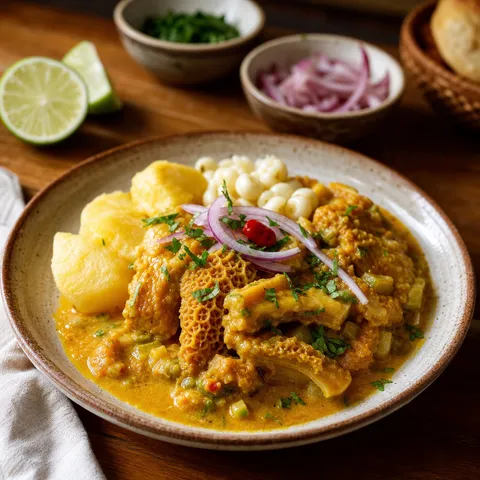
 Cau Cau (Peruvian Tripe Stew)
A hearty yellow stew of tender beef tripe and potatoes simmered in aji amarillo and mint, spooned over rice for a classic home-style meal.
 Peruvian Lens Verified Images are for illustrative purposes only, may be inaccurate, and do not guarantee the presence or absence of specific ingredients.
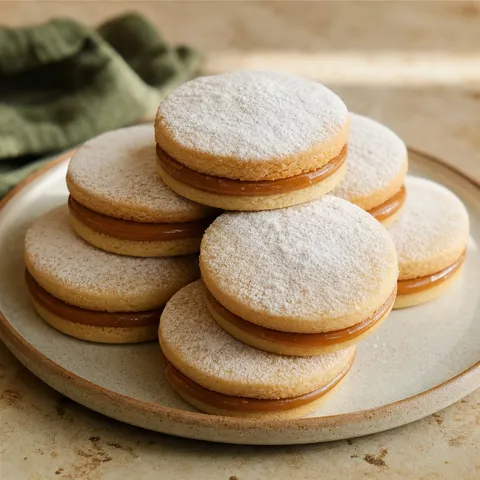
 Alfajores (Peruvian Dulce de Leche Sandwich Cookies)
Delicate, crumbly shortbread cookies sandwiched with rich dulce de leche and dusted with powdered sugar, a favorite Peruvian teatime treat.