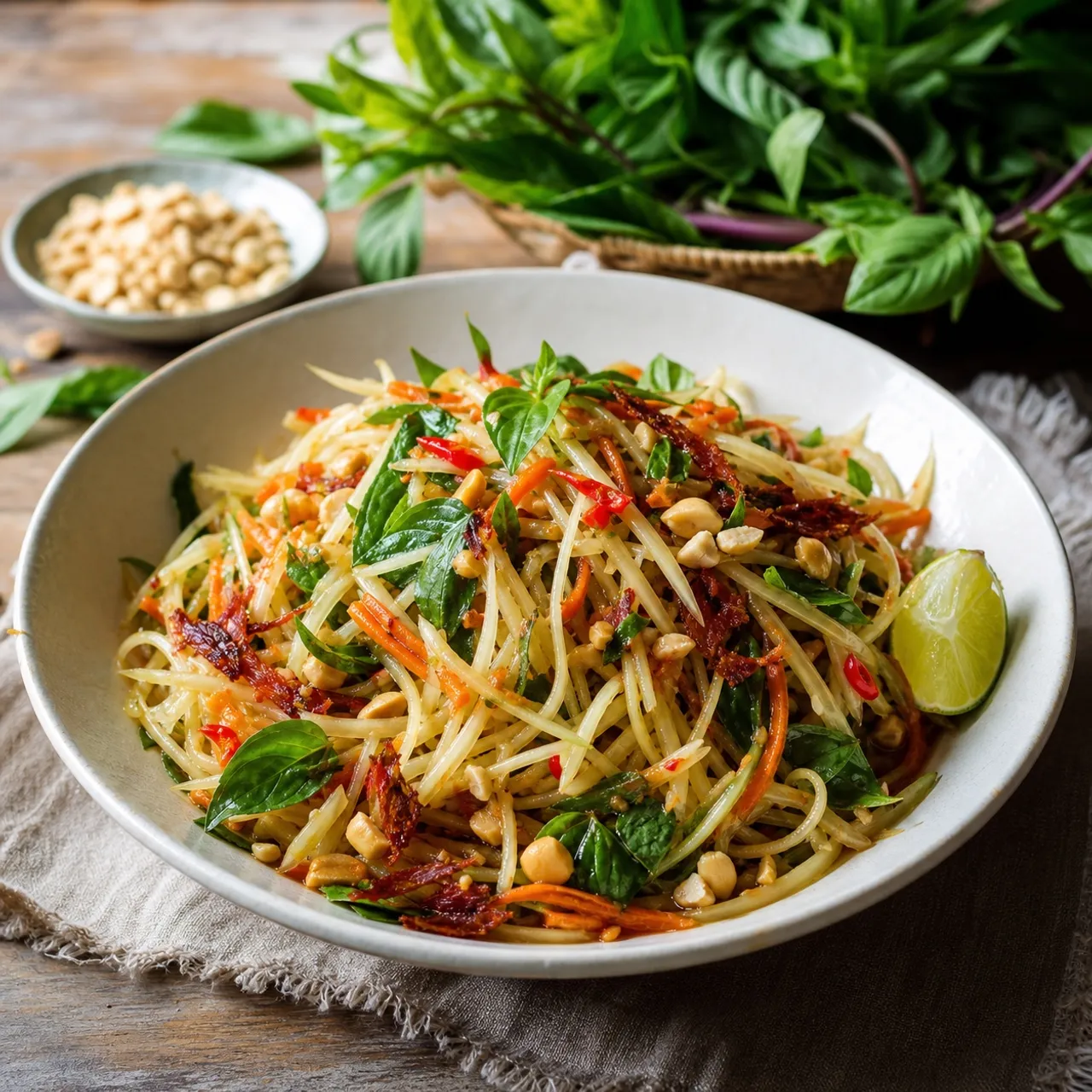
 Vietnamese Images are for illustrative purposes only, may be inaccurate, and do not guarantee the presence or absence of specific ingredients.
 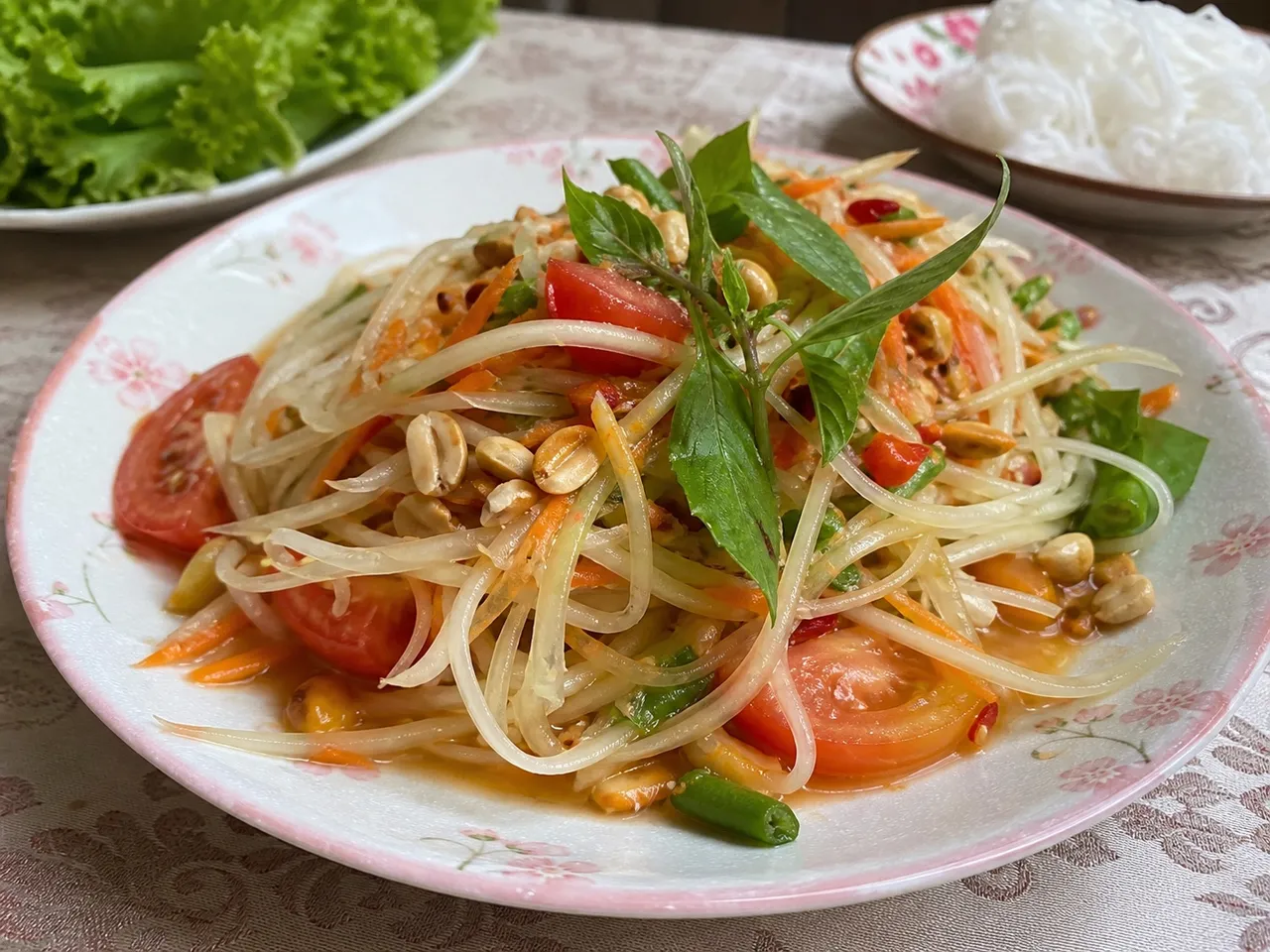 Serving Images are for illustrative purposes only, may be inaccurate, and do not guarantee the presence or absence of specific ingredients.
 Gỏi Đu Đủ (Papaya Salad)
A crunchy, sweet, sour, and spicy salad made from shredded green papaya.
Contains common allergens
In the app, Listahan checks these against your household automatically.
Good to know
- Ready in under 30 minutes
Matched from this dish's own ingredients and timing. Browse more: 30-minute meals
Instructions
6 steps- 1
Shred Papaya: Peel the green papaya. Use a julienne peeler or mandoline to shred the hard flesh into long, thin, crunchy strands. Stop when you reach the spongy core and seeds. Shred the carrot similarly.
- 2
Soak (Optional): Soak the shredded papaya in ice water for 10 minutes to maximize crispness, then drain and spin completely dry in a salad spinner.
- 3
Make Dressing: In a bowl, whisk the fish sauce, lime juice, and sugar until the sugar completely dissolves. Stir in the garlic and chili.
- 4
Combine: In a large mixing bowl, toss the shredded papaya and carrots.
- 5
Dress and Mix: Pour the dressing over the vegetables and toss thoroughly. Add the shredded beef jerky (or shrimp) and most of the herbs. Toss again.
- 6
Serve: Transfer to a serving plate. Top with the crushed peanuts and the remaining fresh herbs. Serve immediately as a refreshing appetizer.
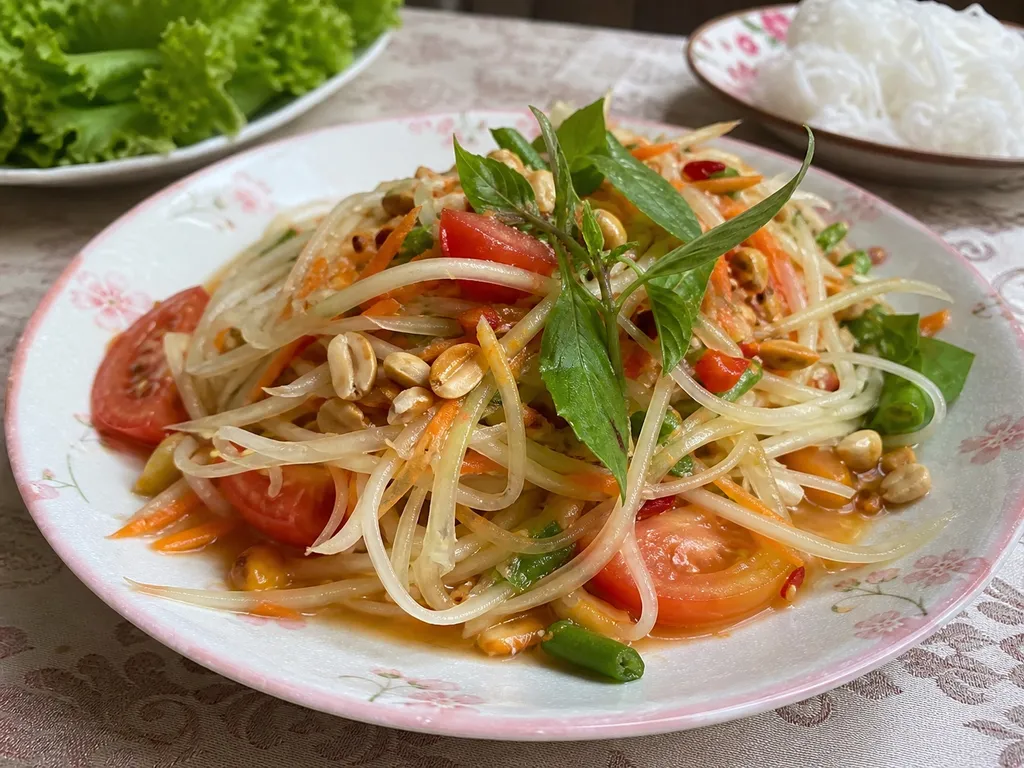 Images are for illustrative purposes only, may be inaccurate, and do not guarantee the presence or absence of specific ingredients.
 Listahan Family Score™
57/100
Works for many families
Score reflects how well this recipe fits a typical busy household. In the app, your Family Score is personalized to your household's allergens, kids, and pantry.
Nutrition
per serving585
Calories
35 g
Protein
18 g
Carbs
45 g
Fat
Estimated per serving. Actual values depend on the brands and portions you use.
Listahan cooking guide
Chef notes & practical guide
Technique notes, ingredient swaps, serve-alongside ideas, storage guidance, and equipment for this recipe.
Cultural context
Vietnamese papaya salad (goi du du) is distinct from its Thai and Lao cousins in that it leans toward fresh herbs, dried shredded beef (kho bo), and a cleaner, less fermented dressing. It is a popular appetizer across southern Vietnam and is especially associated with the street-food culture of Ho Chi Minh City, where vendors sell it with a plastic bag of crushed peanuts and a chili wedge. The salad shows the Vietnamese hallmark of balancing four flavor notes — sweet, sour, salty, umami — in a single dish.
Listahan note
This version adds kho bo (Vietnamese beef jerky) for the savory-chewy component that makes the southern Vietnamese style distinct from regional variations; the dressing is made and dressed just before serving to keep the papaya crisp.
Technique cues
- Shred green papaya on the large holes of a box grater or with a julienne peeler to get long, thin strips — a mandoline set to 1/8-inch julienne is ideal; thicker strips remain too crunchy and do not absorb the dressing.
- After shredding, squeeze the papaya firmly in your hands over the sink to remove excess moisture before dressing — this step prevents the dressing from becoming diluted and keeps the salad from pooling liquid on the plate.
- Dress the salad immediately before serving and toss only once; repeated tossing bruises the herbs and draws more water from the papaya, making the texture soggy within minutes.
Kitchen flow
- Parallel prep
- Mix the dressing first so the sugar dissolves, then shred the papaya and carrot; the salad comes together in the final 5 minutes of assembly.
- Make-ahead
- Shredded papaya can be prepped and squeezed up to 2 hours ahead; refrigerate it dry in a sealed container and keep the dressing, herbs, peanuts, and protein separate until the moment of serving.
- Leftover move
- Dressed leftover salad can be stirred into rice vermicelli the next day for a noodle salad; add extra lime juice and a splash of water to re-loosen the dressing.
- Cleanup rhythm
- All prep is cold-side; only the mixing bowl and a cutting board need washing, making this a nearly no-cleanup dish — rinse the bowl right after plating before the dressing dries.
Ingredient brief
Role, handling, and swap guidance for each key ingredient.
1 medium green, unripe papaya
main body and texture
Purpose: Green papaya is firm and mildly flavored — essentially a neutral, crunchy vehicle for the dressing and herbs that softens slightly as it marries with the lime juice.
Handling: Peel, halve, seed, then julienne; squeeze firmly after shredding to remove excess water.
Adaptation: Kohlrabi or firm green mango shredded the same way gives a similar crunchy, neutral-to-tart base when green papaya is unavailable.
2 oz Vietnamese beef jerky (kho bo), shredded, or boiled shrimp
savory protein and chew
Purpose: Kho bo adds the umami depth and textural contrast that turns this from a side salad into a complete appetizer; its sweetness also complements the sour dressing.
Handling: Pull the jerky into thin shreds along the grain; if substituting boiled shrimp, slice in half lengthwise so they fan out attractively.
Adaptation: Canned tuna (drained) or cooked chicken breast, shredded, works as an easy Western-pantry substitute.
1 cup fresh Thai basil and mint, roughly chopped
fresh aromatic and color
Purpose: The herbs are not a garnish here — they form a full flavor layer, with basil providing anise sweetness and mint adding cool lift that contrasts the peanuts and dressing.
Handling: Rough chop just before mixing so the cut edges are fresh; do not mince finely or they will bruise and darken.
Adaptation: Perilla (tia to) plus mint is the more traditional southern Vietnamese version if you can find it.
1/2 cup roasted peanuts, roughly crushed
richness and crunch
Purpose: Peanuts add fat and crunch that the otherwise lean salad needs, and they absorb a small amount of dressing which makes them taste more integrated than a bare garnish.
Handling: Crush in a zip-lock bag with a rolling pin to pieces roughly half the size of a whole peanut — fine powder disappears and whole peanuts are too hard in a bite.
Adaptation: Roasted cashew pieces work as a peanut allergy substitute; toast briefly in a dry skillet to deepen their flavor.
3 tbsp fish sauce
dressing salt and umami
Purpose: Fish sauce in the dressing provides the fermented depth that soy sauce cannot replicate; it also thins slightly when combined with lime juice, making the dressing easy to toss through the salad.
Handling: Combine with the other dressing ingredients in advance and taste before dressing — the balance of sour, sweet, and salty should be noticeable when tasted on its own.
Adaptation: Soy sauce plus a small splash of tamarind concentrate approximates the depth for those avoiding fish sauce.
Technique notes
- Add the peanuts and herbs last, just before serving, so neither gets soggy — they should be tossed in with the dressing and plated immediately rather than sitting in the bowl.
- Taste the green papaya raw before dressing; if it is very bitter (some can be), a brief 10-minute soak in salted water after shredding will mellow it without softening the texture.
- The dressing ratio (equal parts fish sauce and lime juice, with slightly less sugar) is the foundation — once you have memorized it you can scale and adjust instinctively for any Vietnamese goi (salad).
Ingredient swaps
- Peanut-free direction
- Replace crushed peanuts with toasted sunflower seeds or pumpkin seeds for crunch without tree nuts or legumes.
- Vegan direction
- Replace kho bo with pan-fried firm tofu pieces and sub soy sauce for fish sauce in the dressing; use an extra tablespoon of lime juice to restore brightness.
- Gluten-free direction
- This salad is naturally gluten-free as written; confirm the fish sauce brand contains no wheat additives.
Serve alongside
- ca kho to (caramelized pork or fish in clay pot) as the protein main
- steamed jasmine rice
- crispy Vietnamese egg rolls (cha gio) for a mixed-texture spread
- banh mi rolls for wrapping and scooping
- Vietnamese iced coffee (ca phe sua da) — the bitterness balances the sweet-sour dressing
- fresh sugarcane juice (nuoc mia) with kumquat
- cold light beer
Serving suggestions only — check pairings for your household's allergens.
Storage & reheating
- Undressed components keep separately in the refrigerator for up to 2 days; once dressed the salad should be eaten within 30 minutes.
- Do not try to store dressed salad — it becomes waterlogged and the herbs discolor.
- Dressing keeps refrigerated in a sealed jar for up to 5 days and can be used for any Vietnamese goi.
Equipment
- box grater or julienne peeler (mandoline is ideal)
- large mixing bowl
- small jar or bowl for the dressing
- colander for squeezing excess water from shredded papaya
Make this household-aware
Listahan Pro checks this recipe against your household's allergens, finds pantry-aware swaps, builds the shopping list, and helps you plan the week around it.
Plan it in Listahan
Add Gỏi Đu Đủ (Papaya Salad) to your week, check it against your household's allergens, and build the shopping list automatically.
More Vietnamese recipes
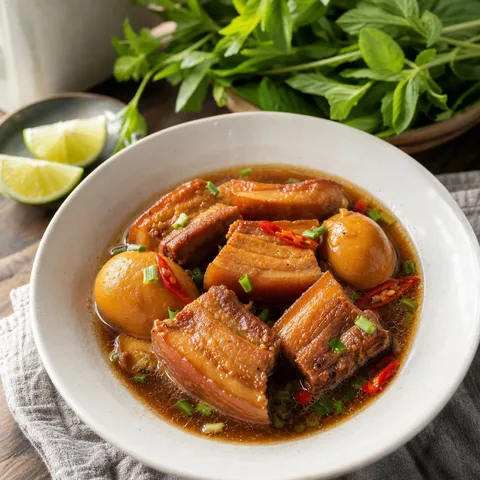 Vietnamese Lens Verified Images are for illustrative purposes only, may be inaccurate, and do not guarantee the presence or absence of specific ingredients.
 Thịt Kho Tàu (Caramelized Pork and Eggs)
Meltingly tender pork belly and hard-boiled eggs braised in a rich, sweet, and savory coconut juice caramel, perfect over steamed rice.
 Vietnamese Lens Verified Images are for illustrative purposes only, may be inaccurate, and do not guarantee the presence or absence of specific ingredients.
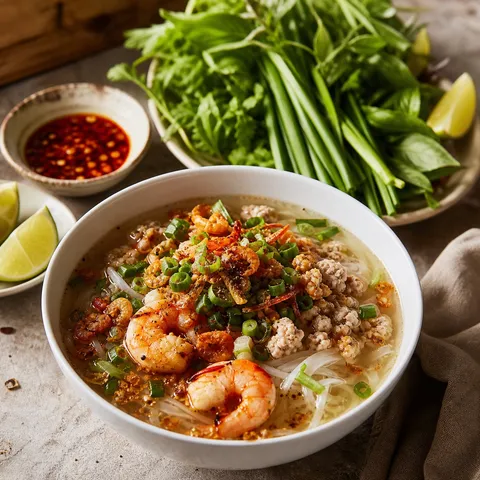
 Hủ Tiếu (Pork and Seafood Noodle Soup)
A Vietnamese pork-bone broth noodle soup loaded with ground pork, shrimp, and dried shrimp over chewy tapioca noodles, finished with garlic chives and fried garlic.
 Vietnamese Lens Verified Images are for illustrative purposes only, may be inaccurate, and do not guarantee the presence or absence of specific ingredients.
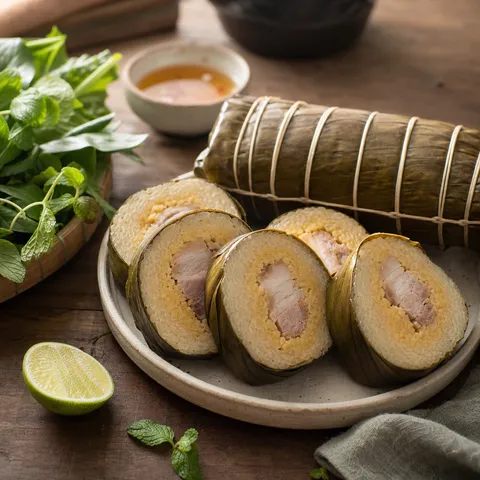
 Bánh Tét (Cylindrical Sticky Rice Cake)
The Southern equivalent of Bánh Chưng, rolled into a cylinder.