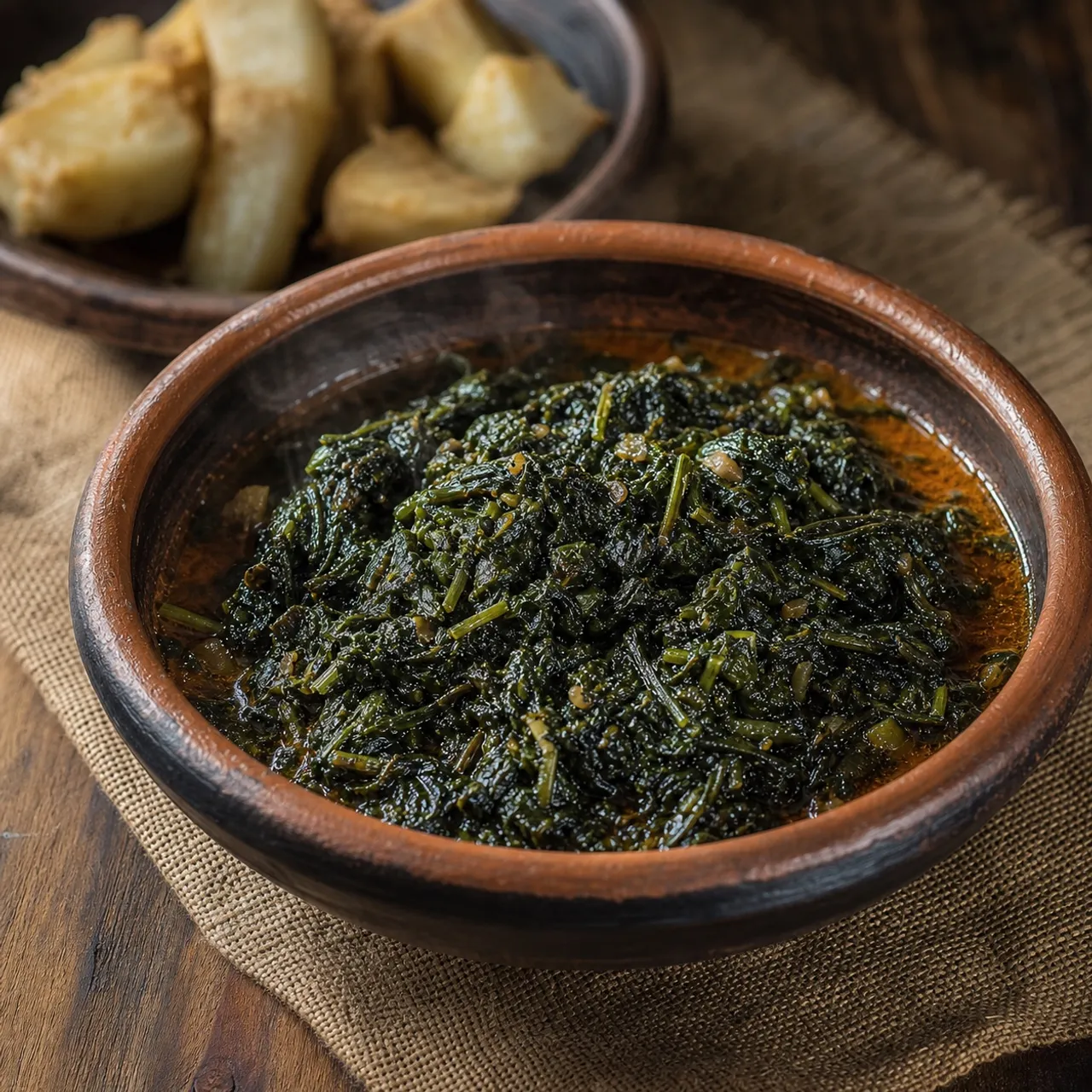
 West African Images are for illustrative purposes only, may be inaccurate, and do not guarantee the presence or absence of specific ingredients.
 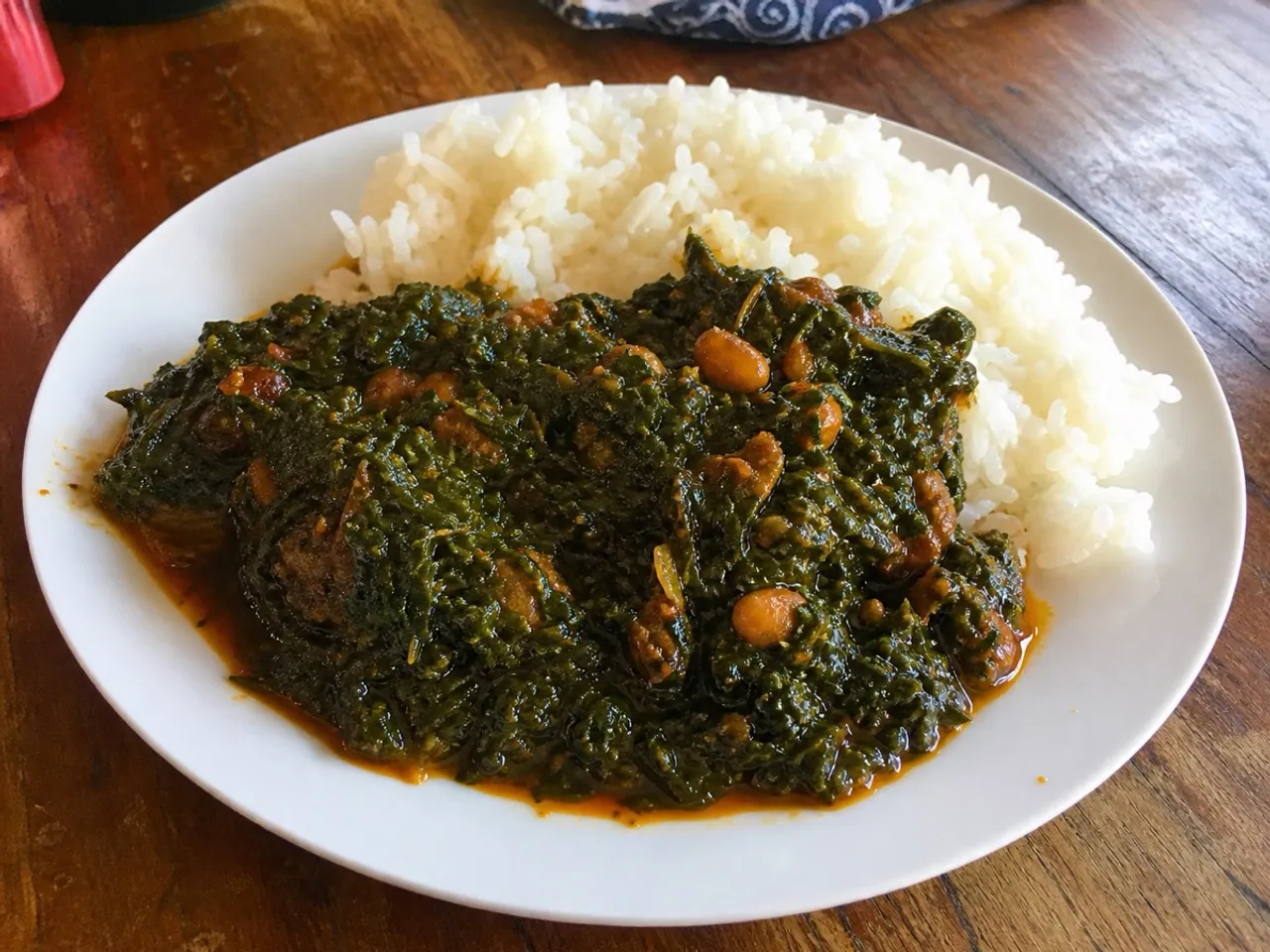 Serving Images are for illustrative purposes only, may be inaccurate, and do not guarantee the presence or absence of specific ingredients.
 Plasas
Sierra Leone's beloved stew of dark, leafy greens slow-cooked with palm oil, smoked fish, and peanuts until the flavors meld into something rich and deeply satisfying.
Contains common allergens
In the app, Listahan checks these against your household automatically.
Instructions
8 steps- 1
If using meat, season it with half the onion and one seasoning cube, cover with water, and simmer for 30 minutes until tender; reserve the broth.
- 2
Place the chopped greens in a pot with just enough water to cover and simmer for 15 to 20 minutes, until very tender, then drain, reserving a little of the cooking liquid.
- 3
Heat the palm oil in a large pot over medium heat until it loosens and turns translucent.
- 4
Add the remaining onion and scotch bonnet and saute for 3 to 4 minutes until fragrant.
- 5
Stir in the smoked fish, dried shrimp, cooked meat if using, and remaining seasoning cube, and cook for 5 minutes.
- 6
Whisk the peanut butter with a little of the reserved broth or greens liquid until smooth, then stir it into the pot along with the cooked greens.
- 7
Simmer over low heat, stirring often to prevent scorching, for 15 to 20 minutes, until the stew is thick, deeply red-orange, and the flavors have melded.
- 8
Season with salt to taste and serve hot over rice.
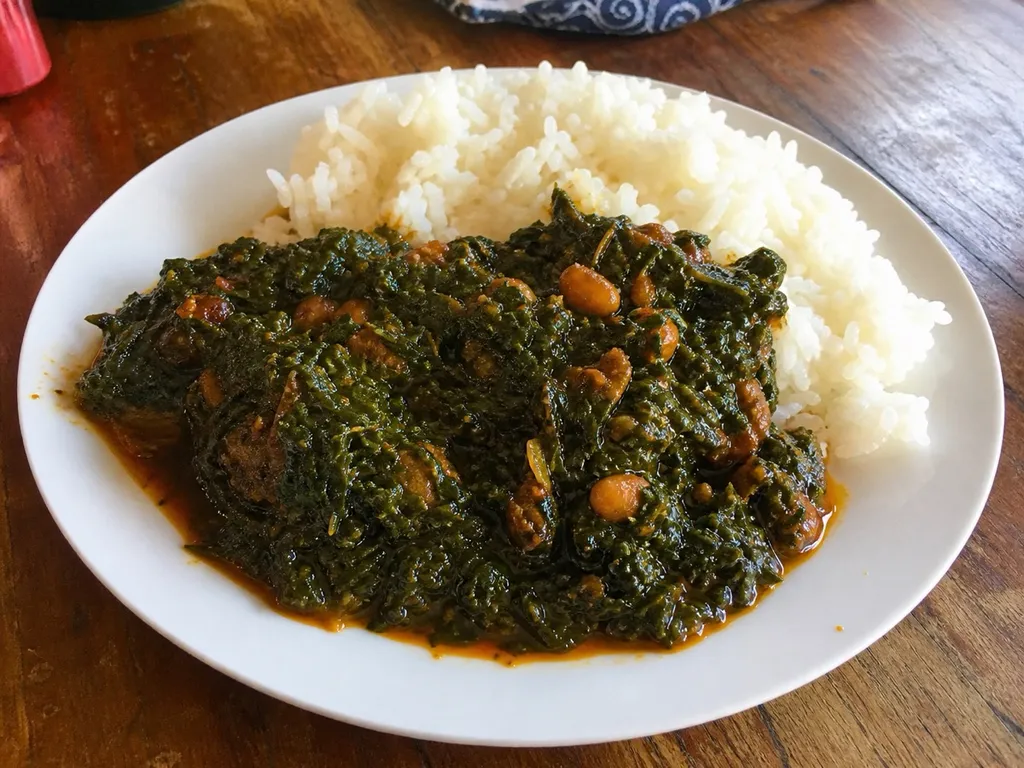 Images are for illustrative purposes only, may be inaccurate, and do not guarantee the presence or absence of specific ingredients.
 Listahan Family Score™
52/100
Works for many families
Score reflects how well this recipe fits a typical busy household. In the app, your Family Score is personalized to your household's allergens, kids, and pantry.
Nutrition
per serving290
Calories
1 g
Protein
11 g
Carbs
27 g
Fat
Estimated per serving. Actual values depend on the brands and portions you use.
Listahan cooking guide
Chef notes & practical guide
Technique notes, ingredient swaps, serve-alongside ideas, storage guidance, and equipment for this recipe.
Cultural context
Plasas, sometimes spelled palaver sauce, is a leafy green stew from Sierra Leone and across the broader Krio and West African coast, built from finely chopped greens like cassava leaf or potato leaf cooked down with palm oil, smoked fish, and meat. The name is widely said to come from the colonial-era word palaver, evoking a dish substantial enough to settle disputes or gather a crowd. Its character comes from long, slow cooking that softens fibrous greens into a deep, savory sauce.
Listahan note
This version uses accessible greens cooked down patiently with palm oil and smoky fish so the stew tastes layered rather than one-note. It is meant to blanket a plate of rice.
Technique cues
- Cook the greens low and slow, because cassava and potato leaves are fibrous and only turn silky and sweet after a long simmer.
- Bloom the aromatics and pepper in the palm oil first so the whole pot is seasoned from the base up rather than just on top.
- Add the smoked fish early so its flavor melts into the sauce, then any fresh fish or shrimp late so it does not overcook.
Kitchen flow
- Parallel prep
- Simmer the meat to tenderness while you wash and finely chop the greens so both are ready to meet in the pot.
- Make-ahead
- Plasas improves overnight; cook it fully a day ahead and reheat, as the flavors marry and the greens settle.
- Leftover move
- Pile leftover plasas onto fresh rice, or fold it into an omelet or wrap for a quick next-day lunch.
- Cleanup rhythm
- Rinse the pot while warm so the palm oil does not set, and wash the cutting board promptly to clear the chopped greens.
Ingredient brief
Role, handling, and swap guidance for each key ingredient.
leafy greens
the heart of the stew
Purpose: Finely chopped greens are the body and identity of plasas, cooking down into a thick savory mass.
Handling: Wash thoroughly and chop very finely so they break down evenly.
Adaptation: Cassava or potato leaf is traditional; collard greens, spinach, or kale stand in with shorter cooking times.
palm oil
richness and color
Purpose: It gives the deep red color and earthy backbone that mark authentic West African leaf stews.
Handling: Heat gently to melt and bloom the aromatics, never to the smoking point.
Adaptation: Neutral oil plus a little paprika gives color but not the same depth.
smoked fish
savory smoke
Purpose: It infuses the greens with a smoky, briny depth that defines the dish.
Handling: Soak, debone, and flake it before adding so no sharp bones remain.
Adaptation: Smoked mackerel or smoked turkey both lend comparable smoky savor.
Scotch bonnet pepper
heat
Purpose: Its fruity heat cuts through the rich oil and greens and is essential to the regional flavor.
Handling: Blend it into the aromatic base or add whole for milder heat.
Adaptation: Habanero matches closely; reduce quantity for a gentler stew.
beef or smoked turkey
protein and chew
Purpose: A long-cooked meat adds heartiness and gelatin that gives the sauce a satisfying body.
Handling: Simmer until tender before the greens go in so it stays the right texture.
Adaptation: Mushrooms and extra beans make a satisfying meat-free version.
Technique notes
- Resist rushing the greens; an extra twenty minutes of low simmer is the difference between bitter and mellow.
- Skim off any pooled excess palm oil near the end so the stew reads rich, not slick.
- Taste for salt only after the smoked fish has released its flavor, since it salts the pot as it cooks.
Ingredient swaps
- Seafood-free direction
- Drop the fish and use smoked turkey plus a splash of mushroom stock for the smoky savor.
- Quicker greens direction
- Use tender spinach or chard instead of cassava leaf to cut the simmer time roughly in half.
- Lower-sodium direction
- Rinse smoked proteins, use unsalted stock, and season at the very end after tasting.
Serve alongside
- steamed white rice
- fried plantains
- boiled cassava or yam
- ginger beer
- bissap hibiscus drink
- fresh coconut water
Serving suggestions only — check pairings for your household's allergens.
Storage & reheating
- Refrigerate plasas in an airtight container for up to four days; it tastes better on day two. Reheat gently on the stove, adding a little water if it has thickened too much. It freezes well for up to three months and reheats from frozen over low heat.
Equipment
- heavy Dutch oven or stew pot
- sharp knife and board for fine chopping
- fine sieve for the smoked fish
- wooden spoon
Make this household-aware
Listahan Pro checks this recipe against your household's allergens, finds pantry-aware swaps, builds the shopping list, and helps you plan the week around it.
Plan it in Listahan
Add Plasas to your week, check it against your household's allergens, and build the shopping list automatically.
More West African recipes
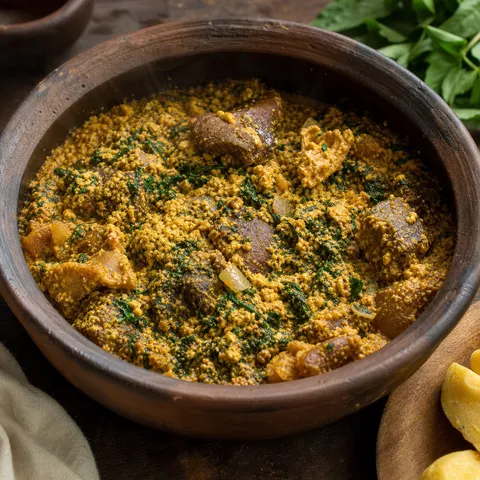 West African Lens Verified Images are for illustrative purposes only, may be inaccurate, and do not guarantee the presence or absence of specific ingredients.
 Egusi Soup
Ground melon seeds simmered with palm oil, leafy greens, and bold spices into a rich, nutty stew that's a cornerstone of Nigerian home cooking.
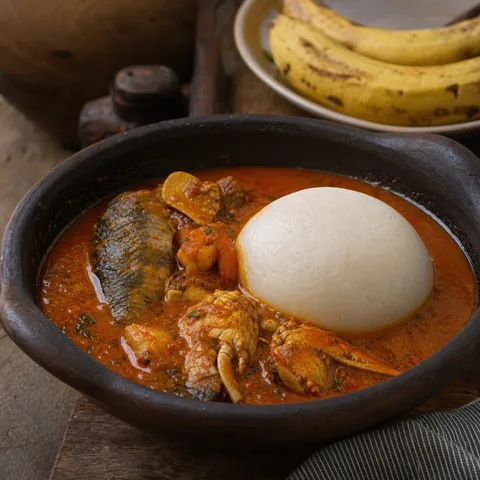 West African Lens Verified Images are for illustrative purposes only, may be inaccurate, and do not guarantee the presence or absence of specific ingredients.
 Banku
A smooth, slightly tangy Ghanaian dough of fermented corn and cassava, cooked to a stretchy consistency — the perfect partner for okra stew or grilled tilapia.
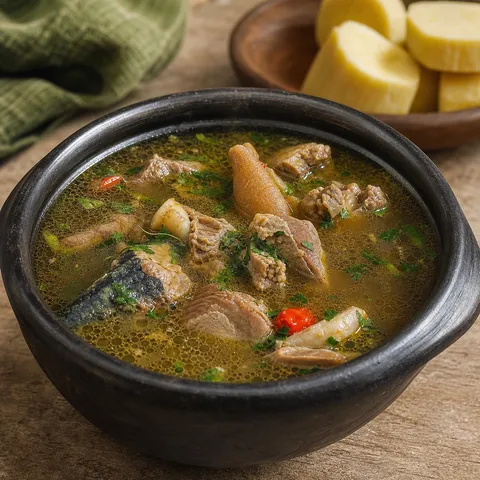 West African Lens Verified Images are for illustrative purposes only, may be inaccurate, and do not guarantee the presence or absence of specific ingredients.
 Pepper Soup
A piercingly spiced, crystal-clear broth simmered with goat meat or catfish and a blend of earthy Nigerian spices — warming, restorative, and intensely aromatic.