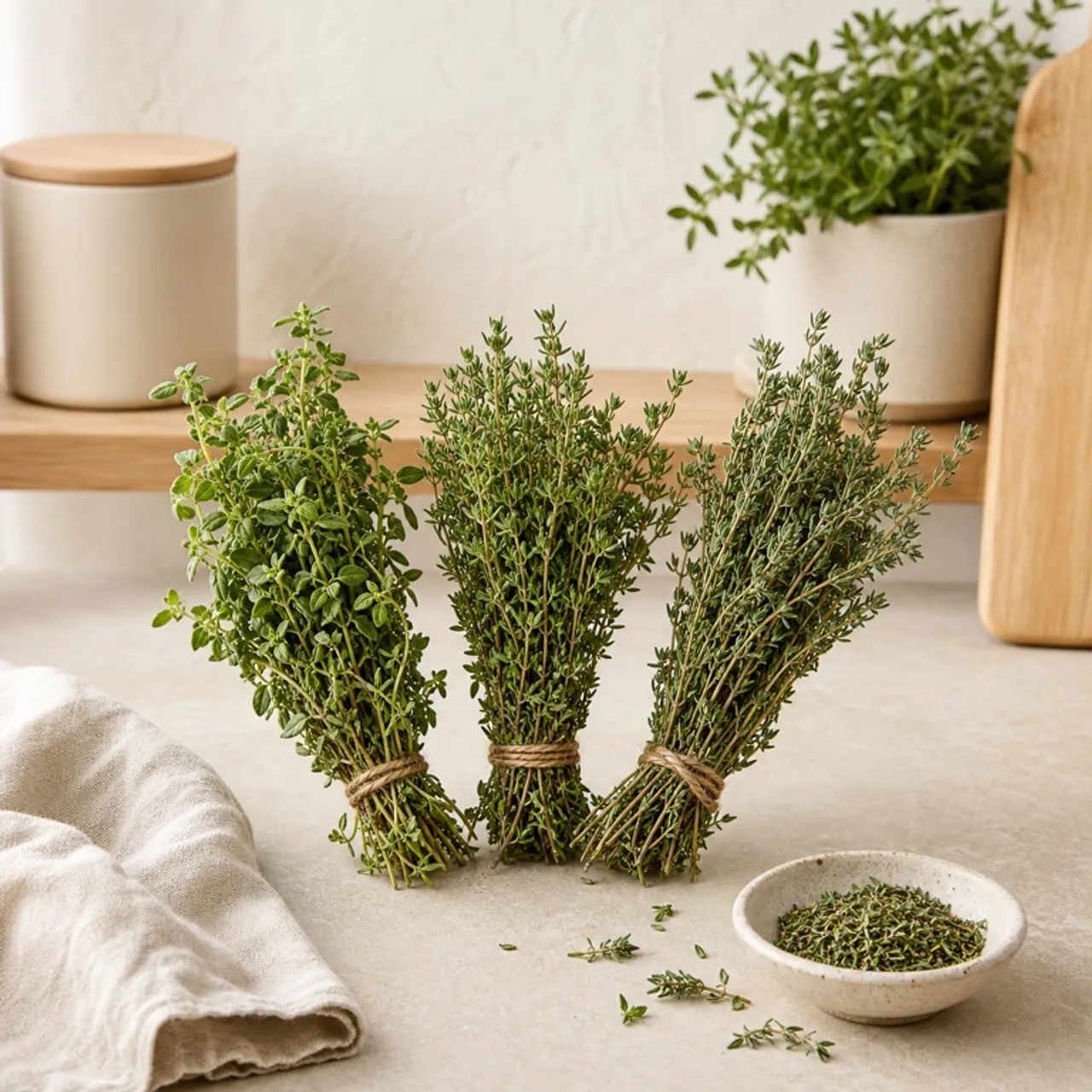
 Food Lens Images are for illustrative purposes only, may be inaccurate, and do not guarantee the presence or absence of specific ingredients.
 Food Lens · Recipe ingredients
Thyme Leaves
Earthy, herby, and slightly floral, with a gentle mint-and-pine warmth and a subtle woodsy bitterness that deepens and mellows with cooking.
Lens VerifiedThe small, earthy leaves of the thyme herb (Thymus vulgaris) — fresh or dried, they deliver a fragrant, slightly minty, woodsy warmth that underpins French, Mediterranean, and Caribbean cooking. A cornerstone of bouquet garni and slow-cooked braises.
Where it comes from
Thyme grew wild across the rocky hillsides of the Mediterranean and was gathered by ancient Egyptians for embalming, by Greeks as an offering to the gods, and by Roman cooks who carried it across the empire as they marched. It naturalized readily wherever Romans settled and became woven into the herb gardens of medieval Europe. Today it is one of the most widely grown culinary herbs in North America, available year-round fresh in supermarkets and in every dried spice rack.
Varieties — Common thyme (the standard culinary herb), lemon thyme (citrus-forward, excellent with fish and chicken), and French thyme (finer leaves, slightly more delicate). Dried thyme is more concentrated than fresh.
In Caribbean cooking, thyme is indispensable in jerk seasoning and stewed meats; in French cooking, it is one of the herbs de Provence and a required member of bouquet garni alongside parsley and bay leaf.
In a modern kitchen — Strip fresh thyme leaves by holding the stem at the top and running your fingers downward against the direction of growth — the leaves release cleanly in one pass.
Buying it
Fresh thyme should have vibrant green-grey leaves with a strong, immediate aroma when rubbed — avoid bunches with yellowing or slimy stems. Dried thyme should be a rich grey-green color with a potent fragrance; if it smells dusty or faint, replace it.
Storing it
Store dried thyme in a sealed jar away from heat and light to preserve its aroma. Fresh thyme sprigs keep best in the fridge, wrapped loosely in a damp towel.
Keeps about 1 year in the pantry.
Out of thyme leaves? Good swaps
- Dried thyme (for fresh) — Use 1 tsp dried for every 1 tbsp fresh — dried is more concentrated; add earlier in cooking as the flavors need time to bloom
- Fresh oregano — 1:1 by volume; similar earthy Mediterranean character but more assertive — reduce slightly in delicate dishes
- Herbes de Provence (blend) — Use the same amount as thyme called for; contains thyme plus savory, rosemary, and lavender — adds more complexity
- Fresh rosemary (in braises and roasts) — Use half the amount; rosemary is much more potent but has a similar woodsy warmth — finely chop before using
General cooking guidance — always check the labels on the products you use. Listahan’s allergen checks run automatically when you plan a recipe in the app. Not medical advice.
Recipes that use thyme leaves
Common questions about thyme leaves
Is thyme leaves vegan?
Thyme Leaves is generally plant-based and suitable for a vegan diet, but brands differ — confirm on the label.
What can I use instead of thyme leaves?
Good swaps include Dried thyme (for fresh), Fresh oregano, Herbes de Provence (blend), Fresh rosemary (in braises and roasts). Each behaves a little differently — see the swaps above for notes, and always check labels for allergens.
How do I store thyme leaves?
Store dried thyme in a sealed jar away from heat and light to preserve its aroma. Fresh thyme sprigs keep best in the fridge, wrapped loosely in a damp towel. It keeps about 1 year in the pantry.
More recipe ingredients
See all


Make thyme leaves about your kitchen — with Listahan Pro
Everything above is free, forever. Pro adds the Household Lens — the same food, seen for your family:
-
Checked for each member
Flags thyme leaves per person against your household's allergies and school rules — not just a generic "contains" tag.
-
Pantry-aware
Knows whether you already have it, what is running low, and the best swap from what is in your kitchen tonight.
-
What it costs near you
A real price from the Presyo community index, so you can plan the budget — not guess.
-
Your household memory
Who likes it, plus your own private notes — brand, where you keep it, who skips it.
Allergen safety is always free — Pro adds the automation, never the safety.
Cook with thyme leaves — safely
Plan a recipe in Listahan and the household allergen check runs automatically — every plan, every swap, every lunchbox. Safety is never paywalled.