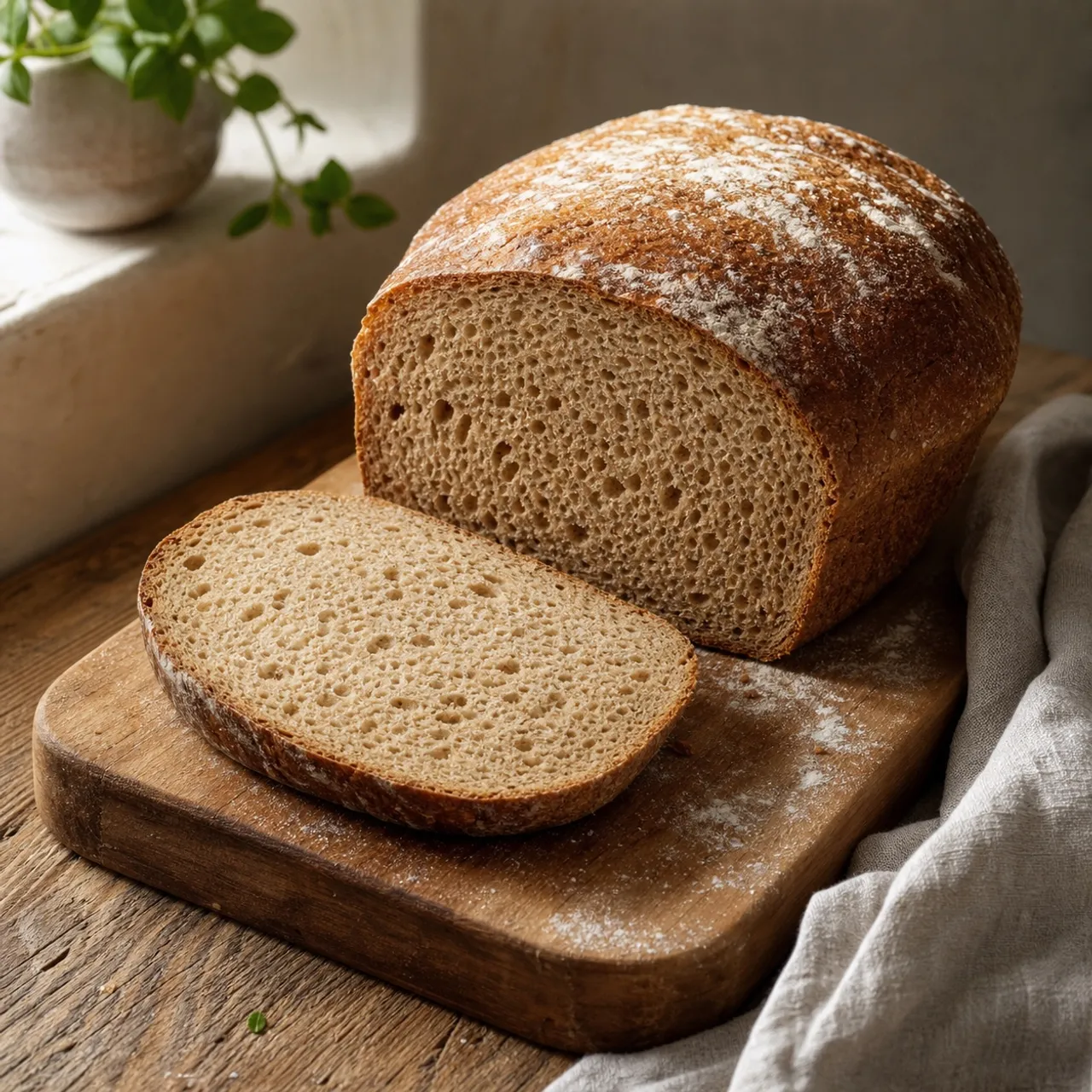
 Breads Images are for illustrative purposes only, may be inaccurate, and do not guarantee the presence or absence of specific ingredients.
 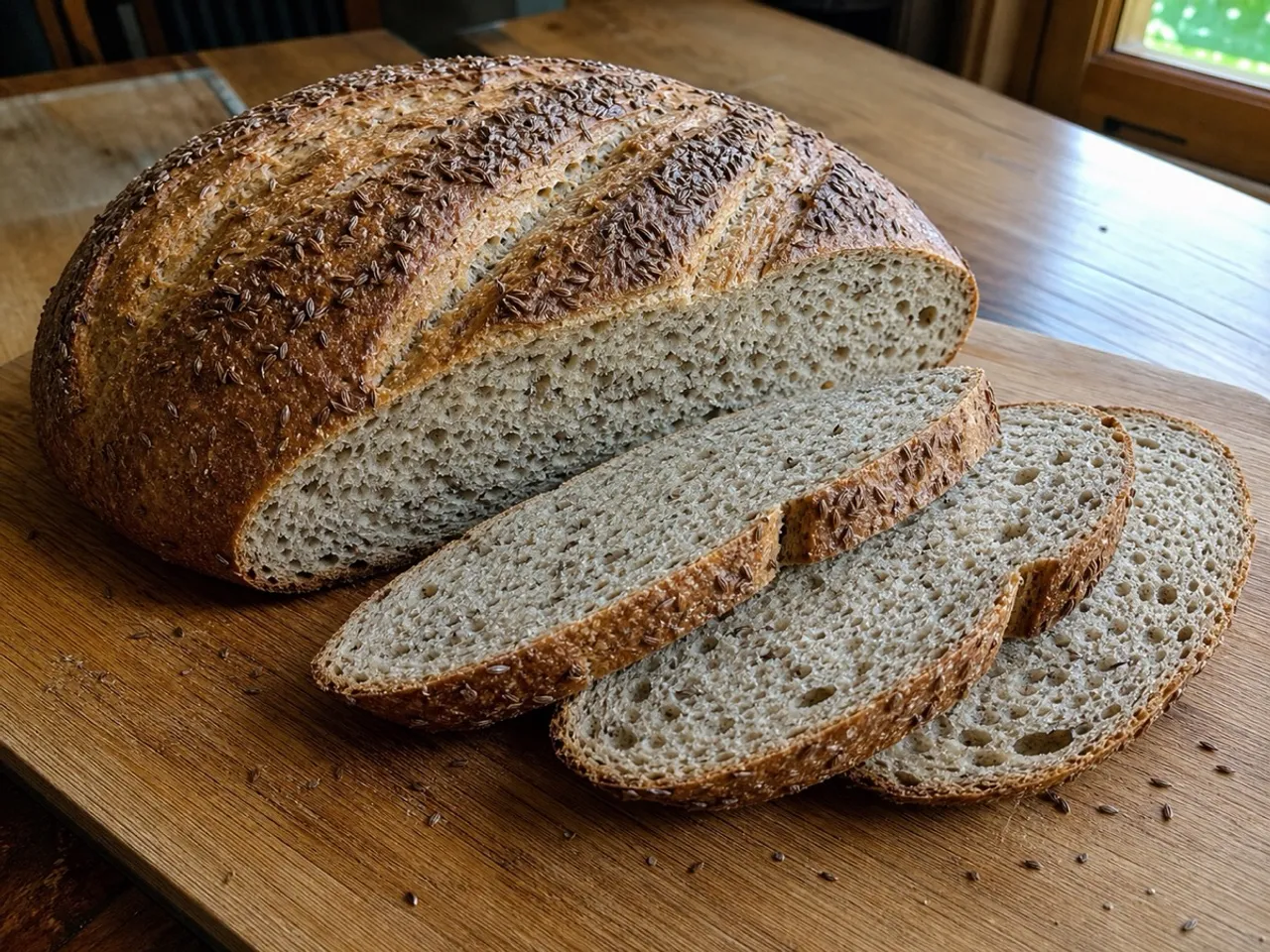 Serving Images are for illustrative purposes only, may be inaccurate, and do not guarantee the presence or absence of specific ingredients.
 Deli-Style Rye Bread
A hearty caraway-scented rye loaf with a chewy crumb and dark, tangy character, ideal for sandwiches.
Contains common allergens
In the app, Listahan checks these against your household automatically.
Instructions
8 steps- 1
Whisk warm water, yeast, and molasses; let stand 5 minutes until foamy.
- 2
Add bread flour, rye flour, salt, caraway seeds, and oil; knead 10 minutes until smooth and elastic (rye dough will feel slightly denser).
- 3
Cover and rise 1.5 hours until nearly doubled.
- 4
Shape dough into an oval loaf and place on a cornmeal-dusted baking sheet.
- 5
Cover and proof 45-60 minutes until puffy.
- 6
Preheat oven to 400°F (200°C). Score the top with a few diagonal slashes.
- 7
Bake 35-40 minutes until deep brown and internal temperature reaches 200°F (93°C).
- 8
Cool completely on a wire rack before slicing.
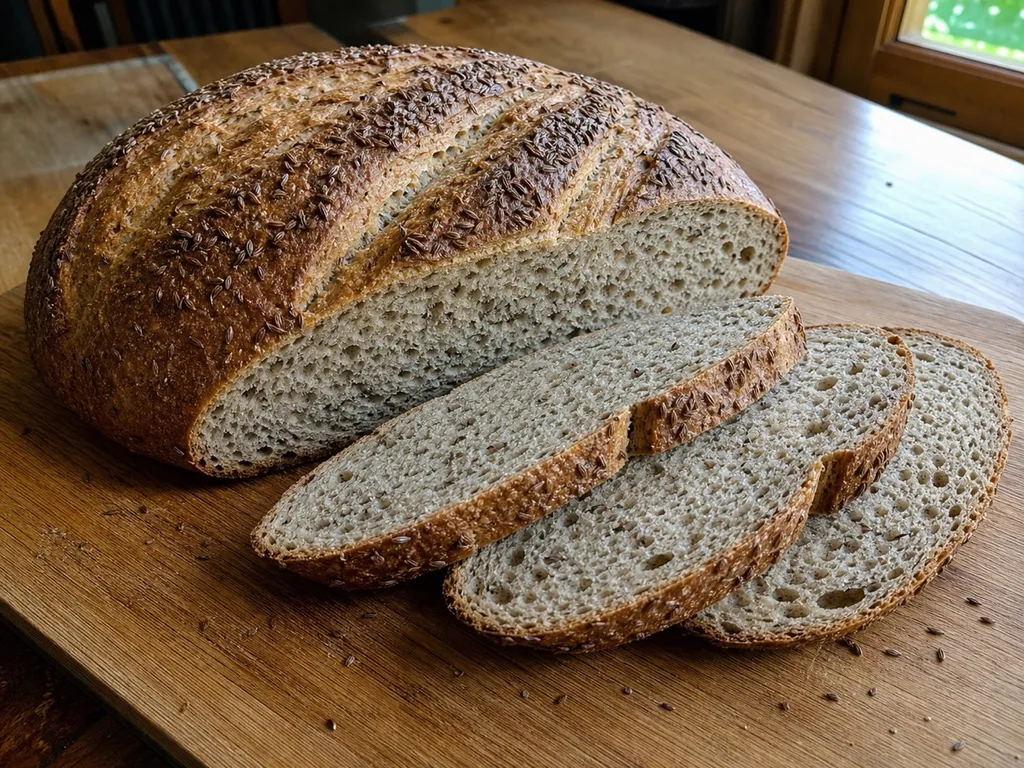 Images are for illustrative purposes only, may be inaccurate, and do not guarantee the presence or absence of specific ingredients.
 Listahan Family Score™
71/100
Good fit for most families
Score reflects how well this recipe fits a typical busy household. In the app, your Family Score is personalized to your household's allergens, kids, and pantry.
Nutrition
per serving180
Calories
5 g
Protein
36 g
Carbs
2 g
Fat
Estimated per serving. Actual values depend on the brands and portions you use.
Listahan cooking guide
Chef notes & practical guide
Technique notes, ingredient swaps, serve-alongside ideas, storage guidance, and equipment for this recipe.
Cultural context
North American deli rye grew out of Central and Eastern European rye-bread traditions, especially the breads brought by Jewish immigrant bakers. In the deli case, rye became a sandwich bread: sturdy enough for pastrami or corned beef, fragrant with caraway, and often lightened with wheat flour so it sliced cleanly.
Listahan note
This version leans into the practical deli-loaf balance: enough rye and molasses for color and character, enough bread flour for chew and structure. The main priority is patience around rising and cooling, because rye bread slices best after the crumb has fully set.
Technique cues
- Rye dough will not feel as springy as an all-wheat dough. Judge it by smoothness and cohesion more than by the dramatic elasticity you might expect from white sandwich bread.
- Molasses does more than sweeten the loaf. It deepens the color, adds a faint bitterness, and helps the bread taste more like a deli rye instead of a plain mixed-flour loaf.
- Cool the loaf completely before slicing. Cutting while warm can compress the rye-heavy crumb and make the center seem gummy even when the bread is fully baked.
Kitchen flow
- Parallel prep
- While the dough rises, clear space for shaping, dust the baking sheet with cornmeal, and set out a rack so the baked loaf has somewhere to cool.
- Make-ahead
- Bake the loaf earlier in the day or the night before; rye bread slices more neatly after it has fully cooled and rested.
- Leftover move
- Toast thick slices for patty melts, open-faced tuna melts, or a sharp cheddar and mustard sandwich.
- Cleanup rhythm
- Rinse the mixing bowl before the dough dries, then wipe scattered caraway and cornmeal from the counter after the loaf goes into the oven.
Ingredient brief
Role, handling, and swap guidance for each key ingredient.
Bread flour
Structure builder
Purpose: Bread flour gives the loaf enough gluten strength to rise into a sliceable sandwich shape despite the rye flour.
Handling: Measure by weight if possible and knead until the dough looks smoother and holds together cleanly.
Adaptation: All-purpose flour can work, but the loaf may be a little softer and less chewy.
Rye flour
Signature grain
Purpose: Rye flour brings the earthy flavor, darker crumb, and deli-style character.
Handling: Mix it evenly with the bread flour before kneading so there are no dry pockets.
Adaptation: Light rye makes a milder loaf, while darker rye gives a stronger grain flavor and denser feel.
Instant yeast
Leavening
Purpose: Instant yeast gives steady lift during the long rise and proof.
Handling: Whisk it with the warm water and molasses as written so you can see that the mixture is active before adding flour.
Adaptation: Active dry yeast can be used in the same amount; give it a few extra minutes to hydrate before mixing the dough.
Molasses
Color and depth
Purpose: Molasses adds the dark, lightly tangy sweetness associated with many deli-style rye loaves.
Handling: Dissolve it fully in the warm water so it distributes through the dough.
Adaptation: Honey gives a lighter flavor and color; brown sugar is simpler and less robust.
Caraway seeds
Classic aroma
Purpose: Caraway gives the bread its familiar sharp, herbal deli-rye scent.
Handling: Stir the seeds into the dough so every slice gets some aroma without a heavy surface crust.
Adaptation: Fennel seed makes the loaf sweeter and more licorice-like; leaving the seeds out makes a plainer rye.
Cornmeal, for the baking sheet
Release layer
Purpose: Cornmeal helps keep the shaped loaf from sticking and adds a little texture to the bottom crust.
Handling: Dust the baking sheet evenly before setting down the shaped loaf.
Adaptation: Parchment paper gives a cleaner release with less crunch on the bottom.
Technique notes
- Use diagonal slashes that are confident but not too deep; they guide expansion without flattening the oval.
- If the dough feels sticky, oil your hands lightly instead of adding a lot more flour, which can make the loaf dry and heavy.
- Bake until the crust is deep brown and the center reaches 200°F; the color matters because pale rye often tastes underdeveloped.
Ingredient swaps
- Milder rye path
- Use light rye flour and reduce the caraway slightly for a loaf that still tastes like rye but works with more fillings.
- Stronger deli profile
- Use dark rye flour and keep the full amount of caraway for a deeper grain flavor and firmer crumb.
- Seedless direction
- Omit the caraway seeds for a plainer sandwich loaf; the bread will lose the classic deli aroma but keep the rye-molasses base.
- Pan loaf option
- Shape the dough into a greased loaf pan instead of an oval for square sandwich slices; watch the top color and temperature rather than the exact bake time.
Serve alongside
- Dill pickle spears
- Potato salad with celery and mustard
- Cabbage slaw
- Tomato soup
- Black coffee
- Celery soda
- Iced tea
Serving suggestions only — check pairings for your household's allergens.
Storage & reheating
- For best texture, keep the cut loaf wrapped at room temperature for 2-3 days; refrigeration firms the crumb and is better reserved for very humid kitchens.
- Refresh slices in a toaster or warm oven until the crust smells nutty and the crumb softens.
- Freeze sliced bread in a sealed bag for up to 2 months; thaw slices at room temperature or toast straight from frozen.
Equipment
- Large mixing bowl
- Bench scraper
- Cornmeal-dusted baking sheet
- Wire cooling rack
Make this household-aware
Listahan Pro checks this recipe against your household's allergens, finds pantry-aware swaps, builds the shopping list, and helps you plan the week around it.
Plan it in Listahan
Add Deli-Style Rye Bread to your week, check it against your household's allergens, and build the shopping list automatically.
More Breads recipes
Rice Crust for Quiches or Pies
A simple pressed crust made from cooked rice that holds savory quiche and pie fillings beautifully.
 Breads Lens Verified Images are for illustrative purposes only, may be inaccurate, and do not guarantee the presence or absence of specific ingredients.
 Kentucky Biscuits
Tall, flaky Southern-style biscuits with a tender crumb, perfect with butter and jam.
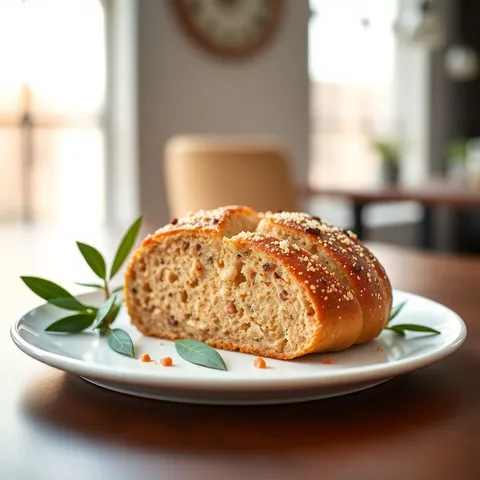 Breads Lens Verified Images are for illustrative purposes only, may be inaccurate, and do not guarantee the presence or absence of specific ingredients.
 Bread Machine Sage-Wheat Bread
A fragrant whole-wheat loaf scented with sage and a hint of cornmeal, made effortlessly in a bread machine.