 French Images are for illustrative purposes only, may be inaccurate, and do not guarantee the presence or absence of specific ingredients.
  Serving Images are for illustrative purposes only, may be inaccurate, and do not guarantee the presence or absence of specific ingredients.
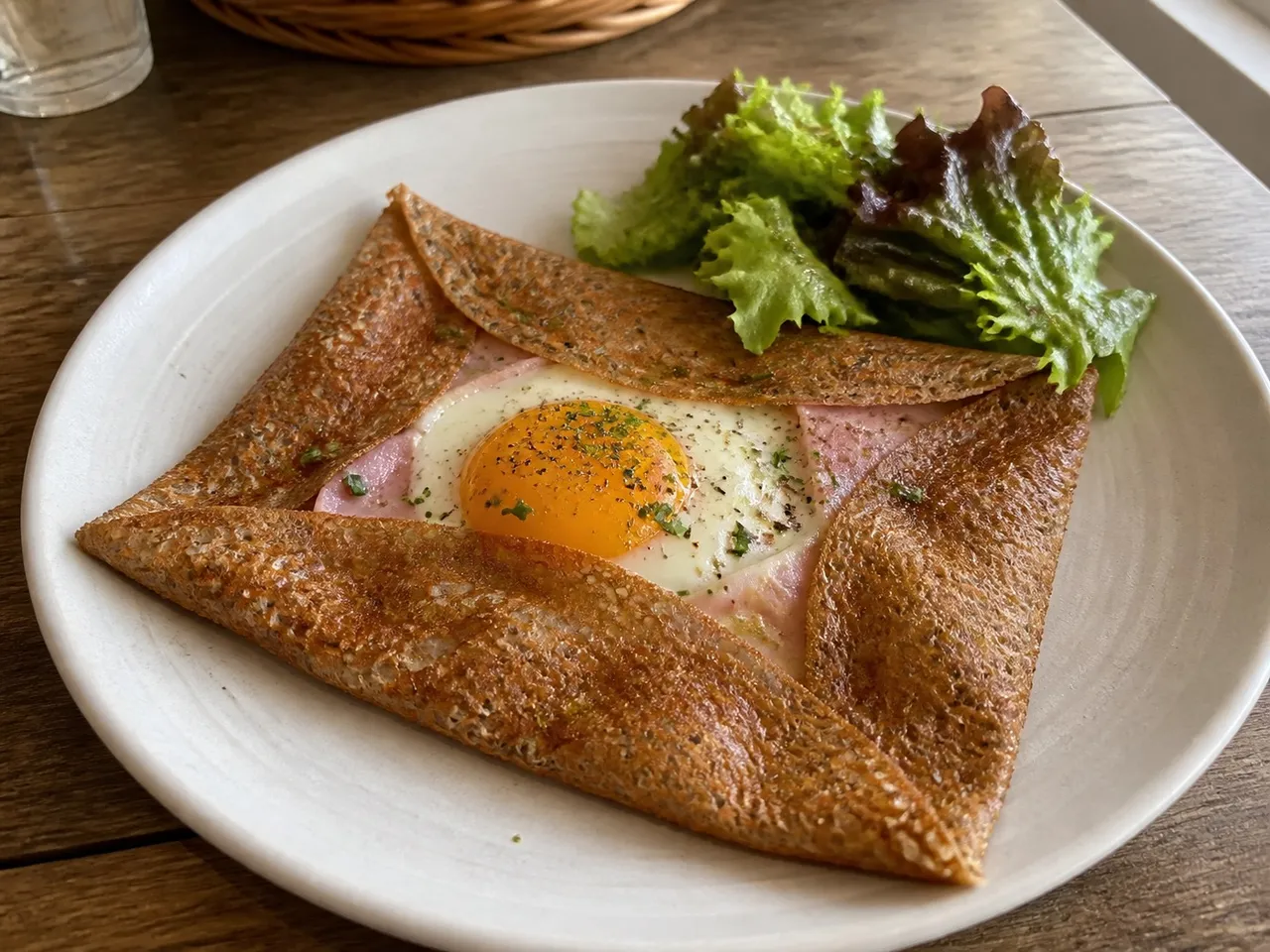
 Galette Bretonne
Buckwheat crêpes from Brittany with a nutty, earthy flavor — wrapped around ham, egg, and cheese for a satisfying, gluten-friendly meal.
Contains common allergens
In the app, Listahan checks these against your household automatically.
Good to know
- Ready in under 30 minutes
Matched from this dish's own ingredients and timing. Browse more: 30-minute meals
Instructions
7 steps- 1
Whisk the buckwheat flour and salt together, then whisk in the 2 eggs and gradually add the water, whisking until you have a smooth, thin batter; whisk in the melted butter and let rest at least 30 minutes, or up to overnight in the fridge.
- 2
Heat a large crepe pan or nonstick skillet over medium-high heat and brush lightly with butter.
- 3
Ladle a thin layer of batter into the pan, swirling quickly to coat the base in an even, lacy layer; cook until the edges lift and the underside is lightly browned, about 2 minutes.
- 4
Scatter grated cheese over the galette, lay a slice of ham on top, and crack an egg into the center.
- 5
Cover the pan or tent with foil and cook until the egg white is just set but the yolk is still runny and the cheese has melted, 2 to 3 minutes.
- 6
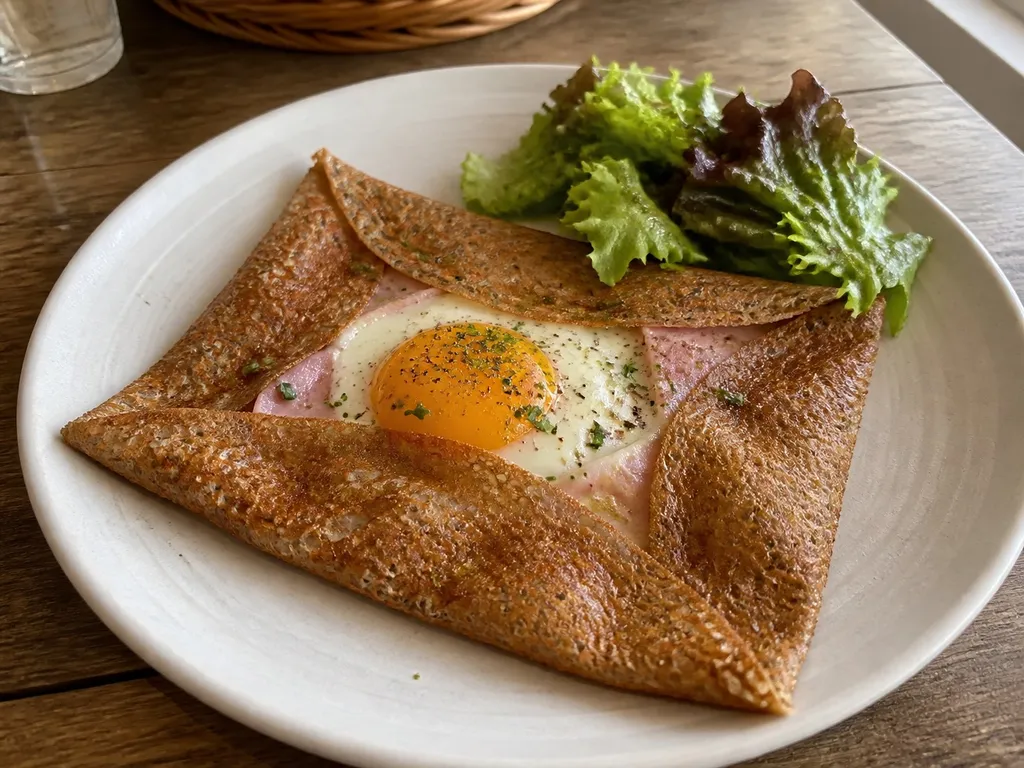
Fold the four edges of the galette inward toward the center to form a square, leaving the egg yolk visible in the middle.
- 7
Slide onto a plate, scatter with chives, and serve immediately while hot.
 Images are for illustrative purposes only, may be inaccurate, and do not guarantee the presence or absence of specific ingredients.
 Listahan Family Score™
81/100
Good fit for most families
Score reflects how well this recipe fits a typical busy household. In the app, your Family Score is personalized to your household's allergens, kids, and pantry.
Nutrition
per serving360
Calories
26 g
Protein
25 g
Carbs
17 g
Fat
Estimated per serving. Actual values depend on the brands and portions you use.
Listahan cooking guide
Chef notes & practical guide
Technique notes, ingredient swaps, serve-alongside ideas, storage guidance, and equipment for this recipe.
Cultural context
Galette bretonne is the buckwheat crepe native to Brittany, the northwest peninsula of France where buckwheat has been cultivated since it was introduced from Asia in the 15th century and where Celtic cultural traditions persist distinctly from the rest of the country. Brittany was historically too cold for wheat, so buckwheat became the staple grain, and the galette — ground buckwheat batter spread thin on a large flat griddle called a billig — developed as the everyday bread of the region. The classic filling of ham, egg, and cheese is known as galette complète and remains the most ordered item in Breton creperies worldwide.
Listahan note
This version focuses on getting the batter right — rested overnight for maximum flavor development — and uses salted Breton butter in and on the galette because the salt is not an afterthought in Breton cooking, it is central to the character.
Technique cues
- Rest the buckwheat batter in the refrigerator for at least 2 hours and ideally overnight; the flour hydrates fully and the batter becomes more cohesive, producing galettes that spread thinner without tearing.
- Heat the pan until a drop of water skips and evaporates immediately before adding butter; too cool a pan produces a galette that sticks and tears rather than releasing cleanly.
- For the classic complète, crack the egg onto the galette after the edges have set and fold the four sides inward to create a square parcel, then cover briefly to set the egg white while leaving the yolk still runny.
Kitchen flow
- Parallel prep
- Mix the batter the night before; in the morning all you need to do is cook the galettes and prep fillings while the pan heats.
- Make-ahead
- Cook plain galettes ahead and stack between parchment sheets; reheat in a warm pan with a little butter for 30 seconds per side before filling.
- Leftover move
- Leftover plain galettes make excellent wraps; fill cold with smoked salmon and creme fraiche for an easy lunch.
- Cleanup rhythm
- Wipe the galette pan between crepes with a folded paper towel held with tongs rather than washing, which cools it and ruins the non-stick surface's temperature.
Ingredient brief
Role, handling, and swap guidance for each key ingredient.
buckwheat flour
batter base
Purpose: Buckwheat is gluten-free and gives galettes their distinctive grey-brown color, earthy flavor, and slightly crispy lacy edges.
Handling: Measure by weight; buckwheat is denser than wheat flour and a volume measurement varies significantly.
Adaptation: There is no substitute that replicates the flavor and texture; a combination of 70% buckwheat and 30% all-purpose flour produces a more pliable galette for beginners.
salted Breton butter
cooking fat and flavor
Purpose: Butter from Brittany is made from cream of notably high fat content and is traditionally salted; it is the single most important ingredient in giving galettes their authentic flavor.
Handling: Use cold butter rubbed on the pan between each galette rather than liquid oil; it produces a better browning pattern.
Adaptation: Good-quality salted European-style butter is the best substitute; avoid American-style butter with low fat content.
eggs
filling protein
Purpose: In the galette complète, the egg cracked directly onto the galette sets into a sunny-side presentation that makes the galette a complete one-plate meal.
Handling: Crack into a small bowl first so you can detect shell fragments before adding it to the galette.
Adaptation: A soft scrambled egg can replace the cracked egg for those who prefer a fully cooked yolk.
cured ham
savory filling
Purpose: Ham provides the salt and depth that anchors the mild earthiness of the buckwheat batter.
Handling: Use thin slices and fold or tear them to fit within the galette border without piling up at one edge.
Adaptation: Smoked salmon is a popular Breton alternative; mushrooms and cheese make an excellent vegetarian option.
Emmental or Gruyere cheese
binding filling element
Purpose: Melted cheese anchors the ham in place and provides the richness that makes the galette feel substantial.
Handling: Grate finely so it melts quickly before the galette over-crisps.
Adaptation: Comte is the most traditional Breton choice; aged cheddar gives more sharpness.
Technique notes
- A well-seasoned crepe pan or carbon steel pan is far superior to a non-stick for galettes; the higher heat tolerance allows the lacy, slightly crispy edges that define a properly made galette.
- The batter should be very thin, nearly the consistency of heavy cream; if it is thicker than this, thin with a little more water — a thick batter produces a doughy, pale galette instead of a translucent, crispy one.
- If the first galette tears, do not panic — it seasons the pan and subsequent ones will release cleanly; most crepe recipes account for this with a sacrificial first attempt.
Ingredient swaps
- Gluten-free direction
- Pure buckwheat batter is already gluten-free; ensure no wheat flour is added and use a certified GF buckwheat flour to avoid cross-contamination.
- Dairy-free direction
- Use water instead of milk in the batter and a neutral oil instead of butter for cooking; the galette will be less rich but the buckwheat flavor remains.
- Vegetarian filling variation
- Fill with sauteed mushrooms, wilted spinach, and Gruyere for a hearty vegetarian galette complète.
Serve alongside
- Lightly dressed green salad with shallot vinaigrette
- Breton cider-braised apples as a simple dessert to follow
- Small cup of simple vegetable soup to start
- Dry Breton cider (cidre brut de Bretagne) served in ceramic bolees
- Cold unsweetened apple juice for a non-alcoholic pairing
Serving suggestions only — check pairings for your household's allergens.
Storage & reheating
- Plain cooked galettes keep refrigerated stacked between parchment for up to 3 days or frozen for 1 month.
- Assembled filled galettes do not store well; fill and serve immediately after cooking.
Equipment
- Carbon steel or well-seasoned cast iron crepe pan (ideally 10 to 12 inches)
- Crepe spreader (rateau) for spreading batter in a thin even circle, or a tilting technique
- Thin offset spatula or flexible crepe spatula for flipping
- Ladle or measuring cup for consistent batter portions
Make this household-aware
Listahan Pro checks this recipe against your household's allergens, finds pantry-aware swaps, builds the shopping list, and helps you plan the week around it.
Plan it in Listahan
Add Galette Bretonne to your week, check it against your household's allergens, and build the shopping list automatically.
More French recipes
 French Lens Verified Images are for illustrative purposes only, may be inaccurate, and do not guarantee the presence or absence of specific ingredients.
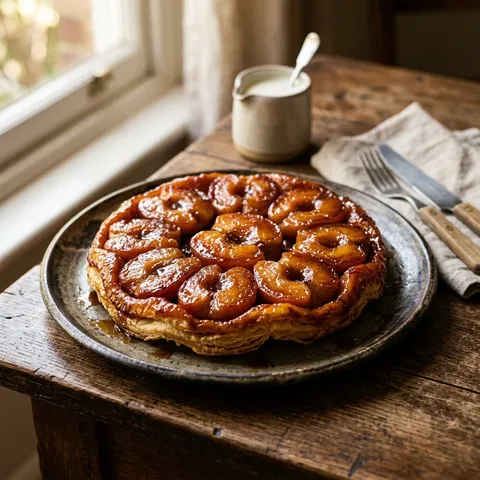
 Tarte Tatin
Apples cooked in caramel until jammy and burnished, then flipped onto buttery pastry — a rustic upside-down tart from the Loire Valley.
 French Lens Verified Images are for illustrative purposes only, may be inaccurate, and do not guarantee the presence or absence of specific ingredients.
 Bouillabaisse
Marseille's legendary saffron-scented fisherman's stew, brimming with fresh seafood and served with garlicky rouille on toasted baguette.
 French Lens Verified Images are for illustrative purposes only, may be inaccurate, and do not guarantee the presence or absence of specific ingredients.
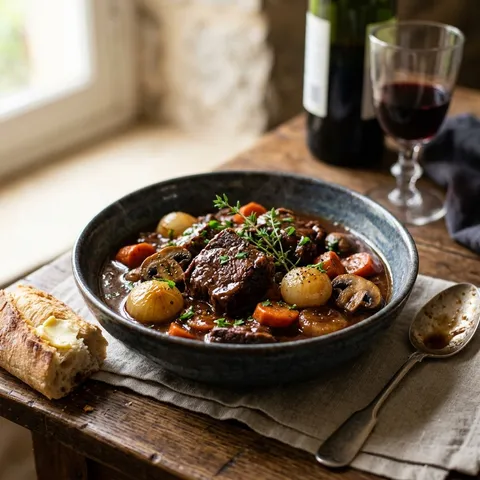
 Bœuf Bourguignon
Burgundy's legendary beef stew — rich, wine-dark, and fall-apart tender after hours of slow braising with carrots, mushrooms, and thyme.