 French Images are for illustrative purposes only, may be inaccurate, and do not guarantee the presence or absence of specific ingredients.
 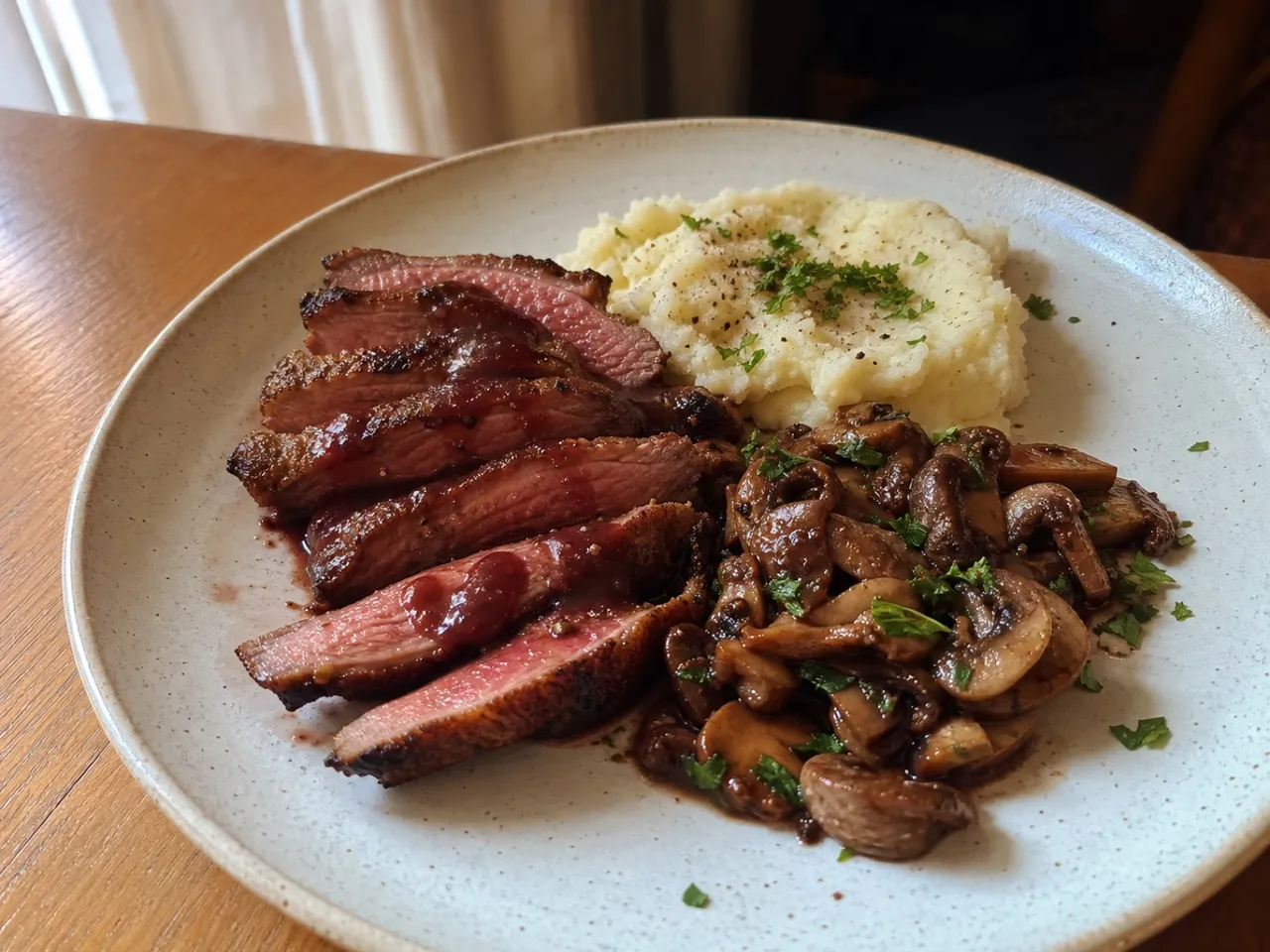 Serving Images are for illustrative purposes only, may be inaccurate, and do not guarantee the presence or absence of specific ingredients.
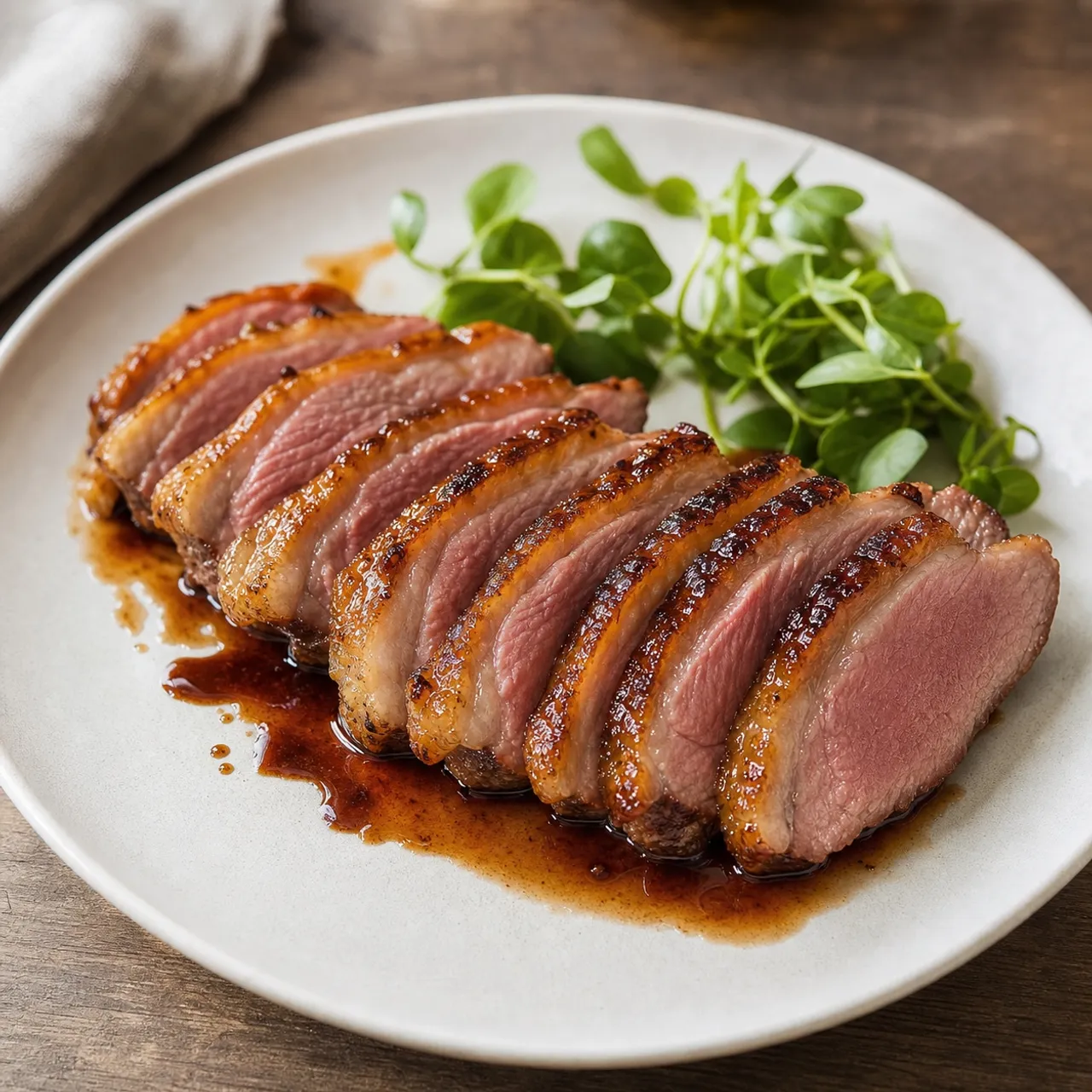
 Magret de Canard
Score-and-sear duck breast with its prized fat layer crisped to crackling perfection, served pink with seasonal fruit sauce or green peppercorns.
Contains common allergens
In the app, Listahan checks these against your household automatically.
Good to know
- Crispy
- Ready in under 30 minutes
Matched from this dish's own ingredients and timing. Browse more: crispy recipes30-minute meals
Instructions
8 steps- 1
Score the fat cap of each duck breast in a tight crosshatch pattern, cutting through the fat but not into the meat, and pat dry.
- 2
Season both sides generously with salt and pepper.
- 3
Place the breasts fat-side down in a cold, heavy skillet and set over medium heat, allowing the fat to render slowly and the skin to crisp, about 10 to 12 minutes, pouring off excess fat as it accumulates.
- 4
Once the fat is deep golden and crackling, flip the breasts and sear the flesh side for 3 to 4 minutes for medium-rare.
- 5
Transfer the duck to a cutting board, tent with foil, and rest 8 to 10 minutes.
- 6
Pour off most of the fat from the skillet, add the peppercorns if using, and deglaze with the red wine, scraping up the browned bits.
- 7
Add the stock and currant jelly and simmer until slightly syrupy, about 4 minutes, then swirl in the cold butter to finish and glaze the sauce.
- 8
Slice the duck breasts on the bias against the grain and fan out on plates, spooning the sauce over the top.
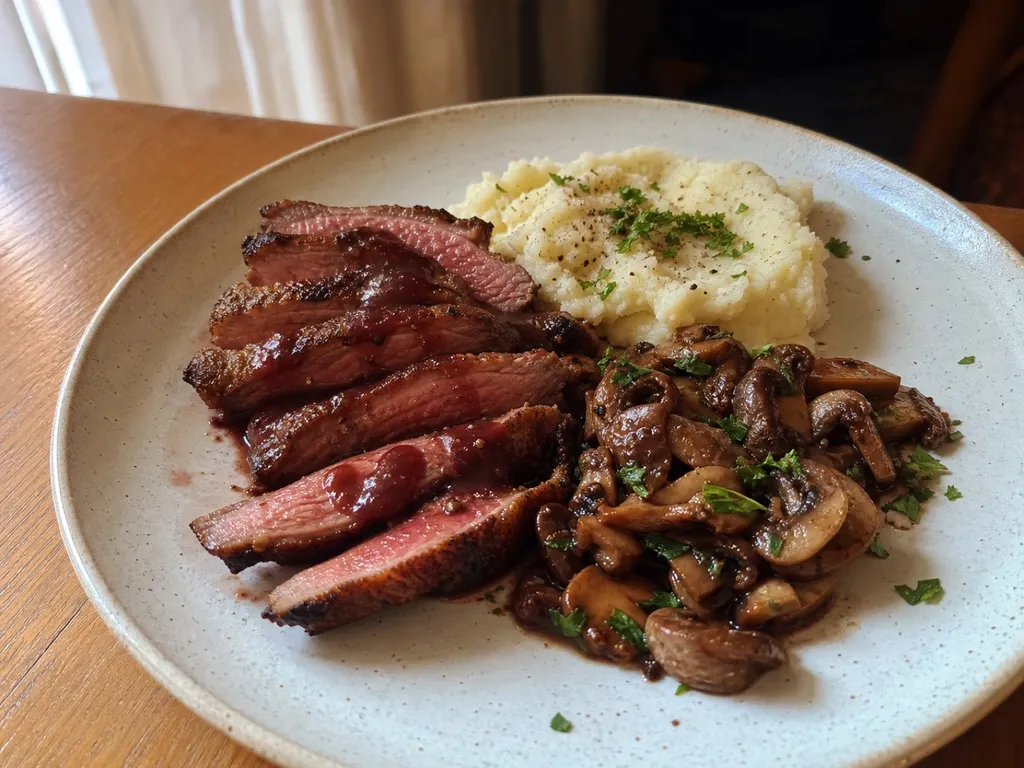 Images are for illustrative purposes only, may be inaccurate, and do not guarantee the presence or absence of specific ingredients.
 Listahan Family Score™
80/100
Good fit for most families
Score reflects how well this recipe fits a typical busy household. In the app, your Family Score is personalized to your household's allergens, kids, and pantry.
Nutrition
per serving30
Calories
0 g
Protein
9 g
Carbs
0 g
Fat
Estimated per serving. Actual values depend on the brands and portions you use.
Listahan cooking guide
Chef notes & practical guide
Technique notes, ingredient swaps, serve-alongside ideas, storage guidance, and equipment for this recipe.
Cultural context
Magret de canard is the breast of a duck raised and fattened specifically for foie gras production, originating in the Gascony and Perigord regions of southwest France where the tradition of duck and goose fattening has been practiced for centuries. Chef Andre Daguin of Hotel de France in Auch is widely credited with popularizing magret as a standalone steak preparation in the 1950s and 60s, treating it like beef with a pink center rather than cooking it through as poultry had previously been prepared. Its rich, deeply flavored flesh and thick cap of fat distinguish it from ordinary duck breast; the scoring and rendering of the fat is the central technical challenge of the dish.
Listahan note
This version starts the magret in a cold pan and renders the fat cap slowly before increasing the heat, producing a crackling-crisp exterior over a ruby-red interior without a drop of added fat.
Technique cues
- Score the fat cap in a crosshatch pattern cutting through only the fat without penetrating the flesh; this allows the fat to render out quickly and the skin to crisp without contracting and buckling the breast.
- Start in a cold dry pan over medium-low heat and pour off the rendered fat as it accumulates; gradually increase heat over 8 minutes so the skin crisps in stages rather than burning before the fat is rendered.
- Rest the breast fat-side up on a warm plate for at least 5 minutes before slicing; the muscle fibers need to relax or the first cut releases all the juices and the remaining slices dry out.
Kitchen flow
- Parallel prep
- While the magret renders, use the time to reduce the sauce liquid and prep any vegetable sides so everything converges at the right moment.
- Make-ahead
- Score and season the magret up to 24 hours ahead and refrigerate uncovered; the dry surface browns more evenly than a freshly salted one.
- Leftover move
- Slice cold leftover magret thin and serve over arugula with a cherry vinaigrette; it reads as a composed salad rather than a leftover.
- Cleanup rhythm
- Pour the rendered duck fat through a fine strainer into a jar as soon as the breast comes out of the pan; it keeps refrigerated for months and is excellent for roasting potatoes.
Ingredient brief
Role, handling, and swap guidance for each key ingredient.
duck magret (duck breast)
main protein
Purpose: Magret's thick fat cap and dark, iron-rich muscle are what make this dish distinctive; without the fat rendering correctly the meat cannot develop its best texture and flavor.
Handling: Score the fat cap 1/4 inch deep in a 1-inch crosshatch and season generously with salt and pepper immediately before cooking.
Adaptation: Regular Pekin or Muscovy duck breast can substitute but has less fat and a milder flavor; adjust cooking time accordingly.
shallots
sauce base
Purpose: Shallots sweated in the duck fat left in the pan provide the aromatic foundation for the pan sauce.
Handling: Mince finely so they caramelize quickly in the residual pan heat.
Adaptation: Red onion gives a sweeter, slightly bolder sauce base.
red wine or Armagnac
deglazing and sauce depth
Purpose: A splash of wine or spirit deglazes the caramelized fond and forms the base of the accompanying sauce.
Handling: Stand back when adding to the hot pan; Armagnac will flame briefly if added near an open flame.
Adaptation: Port or dried fig compote reduced with balsamic gives a fruitier, sweeter sauce common in restaurant preparations.
fresh thyme
aromatic seasoning
Purpose: Thyme pressed against the flesh side of the breast while it rests perfumes the meat gently without competing with the duck's own depth.
Handling: Place a few sprigs under the breast during the rest so the residual heat extracts the oils.
Adaptation: Rosemary is more assertive; juniper berries crushed and pressed into the meat add a wild, game-like note.
Technique notes
- Serve magret at medium-rare (130 F internal), never fully cooked; it shares the eating temperature conventions of beef rather than chicken, and a gray, overcooked magret loses everything that makes it special.
- The rendered fat that accumulates in the pan during cooking is some of the most valuable byproduct in French cooking; strain and store it for potatoes, vegetables, or confiting other duck parts.
- A simple sauce of the fond deglazed with wine and finished with cold butter takes under 3 minutes and elevates the dish far beyond what the effort suggests.
Ingredient swaps
- Fruit sauce variation
- Deglaze with orange juice and a splash of Grand Marnier for a simple version of the classic canard a l'orange pairing.
- Alcohol-free direction
- Use pomegranate juice reduced by half with a splash of balsamic for the pan sauce; the tartness and color mimic a wine-based reduction.
- Budget-friendly variation
- Muscovy duck breast from most supermarkets approximates magret texture and flavor at a lower price point.
Serve alongside
- Sarladaise potatoes (roasted in duck fat with garlic and parsley)
- Haricots verts with toasted hazelnuts
- Braised lentils with shallots and thyme
- Cahors Malbec from southwest France, the classic regional pairing
- Saint-Emilion or Pomerol for a Bordeaux Right Bank option
Serving suggestions only — check pairings for your household's allergens.
Storage & reheating
- Cooked magret keeps refrigerated for up to 3 days; slice and serve cold over salads rather than reheating, as reheating risks overcooking past medium-rare.
- Raw magret freezes well for up to 2 months; thaw overnight in the refrigerator and bring to room temperature before cooking.
Equipment
- Heavy stainless steel or carbon steel skillet that retains heat evenly
- Instant-read thermometer for precision at the critical medium-rare window
- Fine-mesh strainer and jar for capturing and storing the rendered duck fat
- Sharp slicing knife for cutting clean, thin slices across the grain
Make this household-aware
Listahan Pro checks this recipe against your household's allergens, finds pantry-aware swaps, builds the shopping list, and helps you plan the week around it.
Plan it in Listahan
Add Magret de Canard to your week, check it against your household's allergens, and build the shopping list automatically.
More French recipes
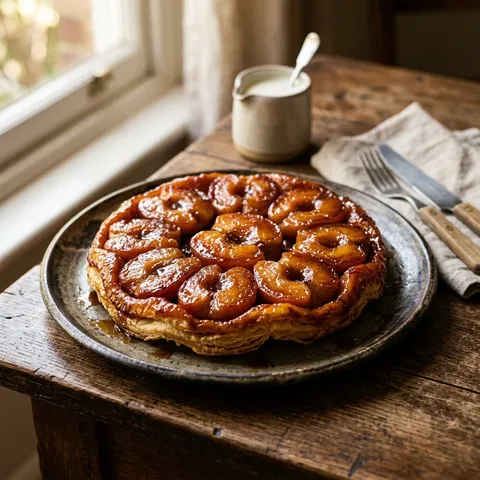 French Lens Verified Images are for illustrative purposes only, may be inaccurate, and do not guarantee the presence or absence of specific ingredients.
 Tarte Tatin
Apples cooked in caramel until jammy and burnished, then flipped onto buttery pastry — a rustic upside-down tart from the Loire Valley.
 French Lens Verified Images are for illustrative purposes only, may be inaccurate, and do not guarantee the presence or absence of specific ingredients.
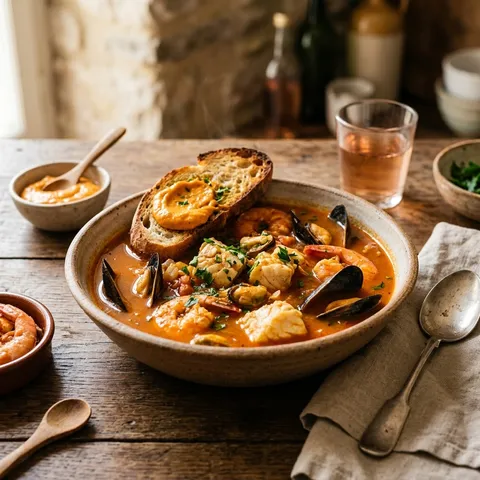
 Bouillabaisse
Marseille's legendary saffron-scented fisherman's stew, brimming with fresh seafood and served with garlicky rouille on toasted baguette.
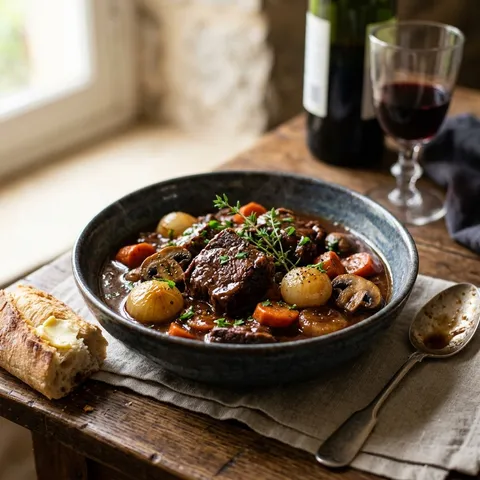 French Lens Verified Images are for illustrative purposes only, may be inaccurate, and do not guarantee the presence or absence of specific ingredients.
 Bœuf Bourguignon
Burgundy's legendary beef stew — rich, wine-dark, and fall-apart tender after hours of slow braising with carrots, mushrooms, and thyme.