 French Images are for illustrative purposes only, may be inaccurate, and do not guarantee the presence or absence of specific ingredients.
 Serving Images are for illustrative purposes only, may be inaccurate, and do not guarantee the presence or absence of specific ingredients.
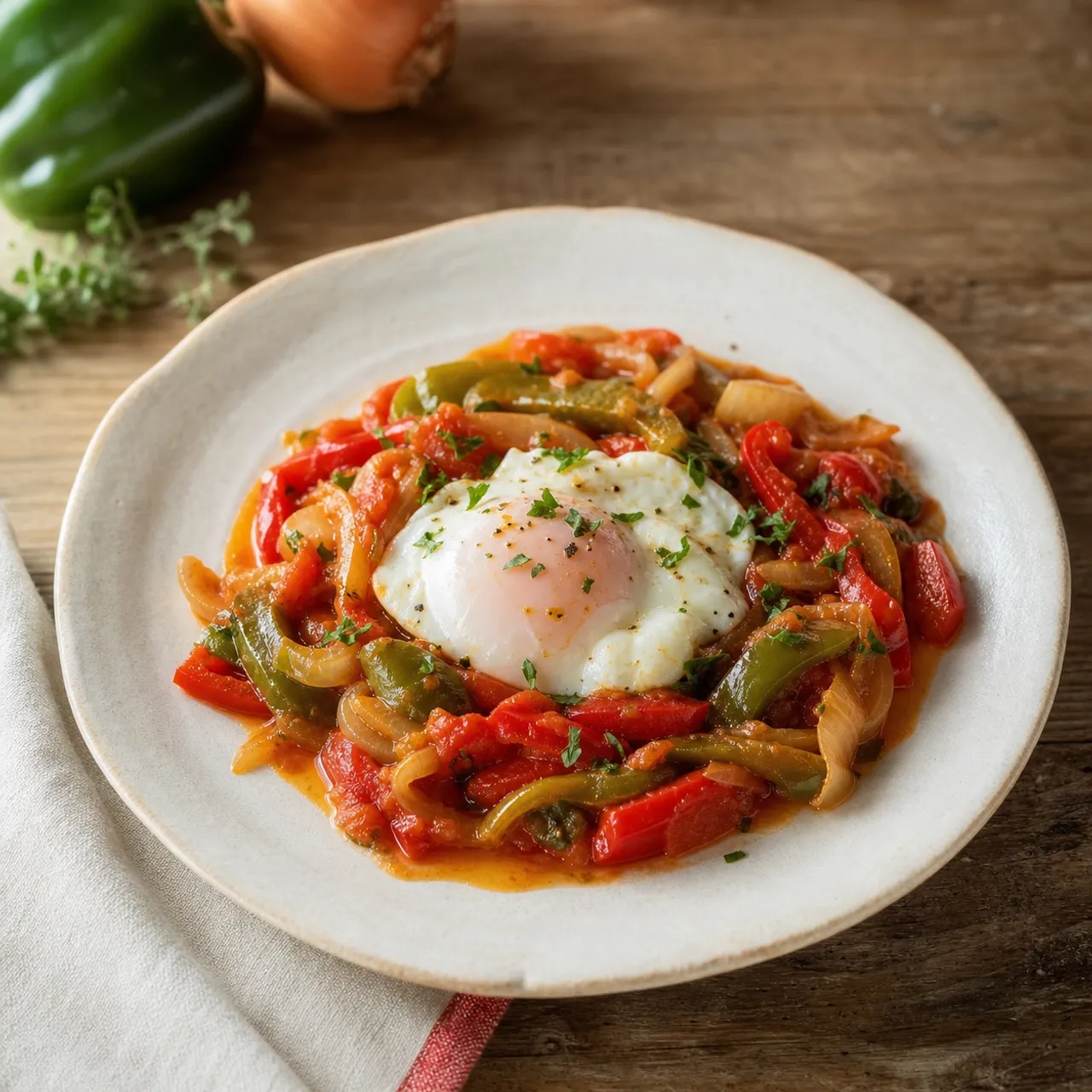
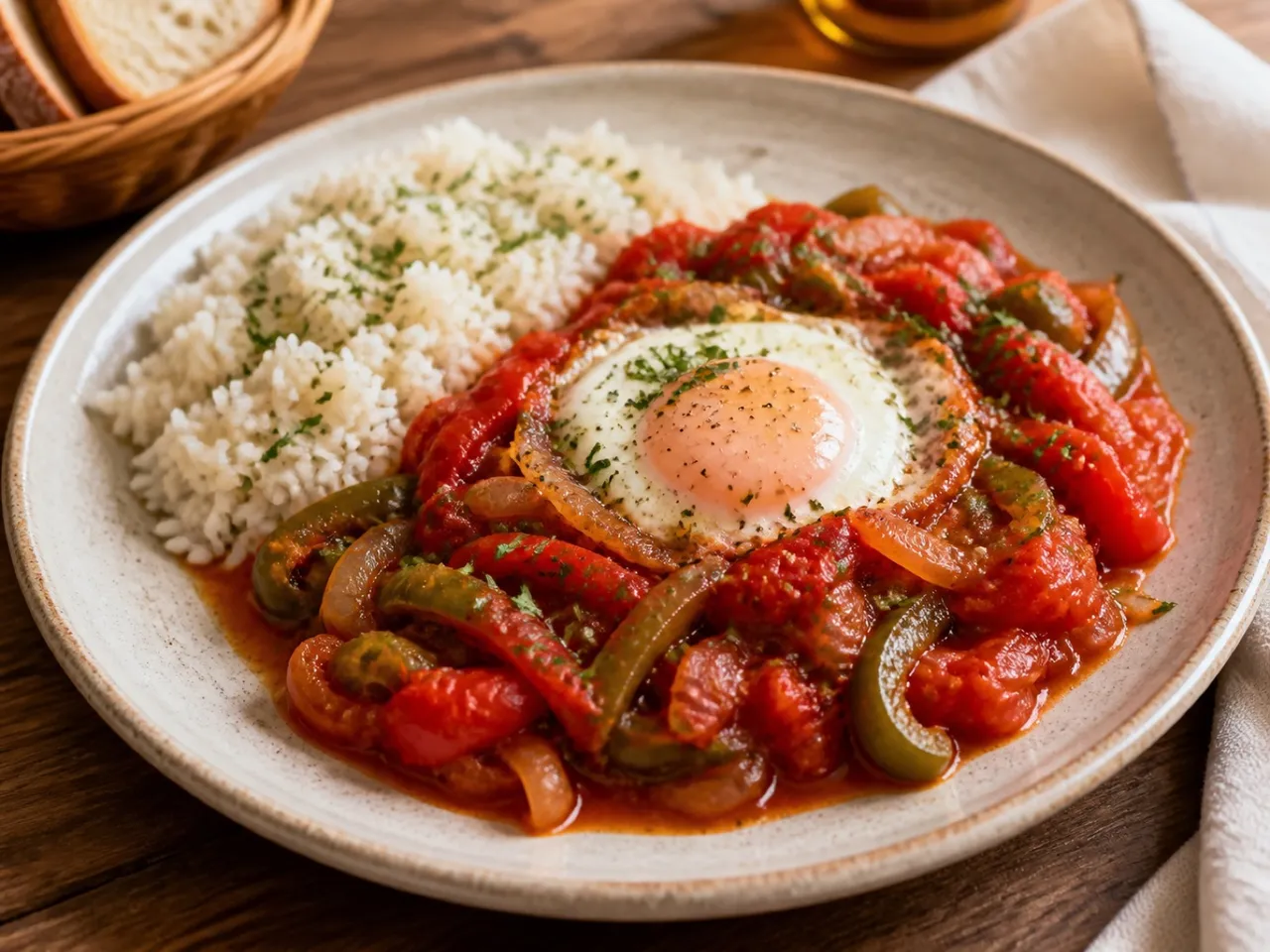
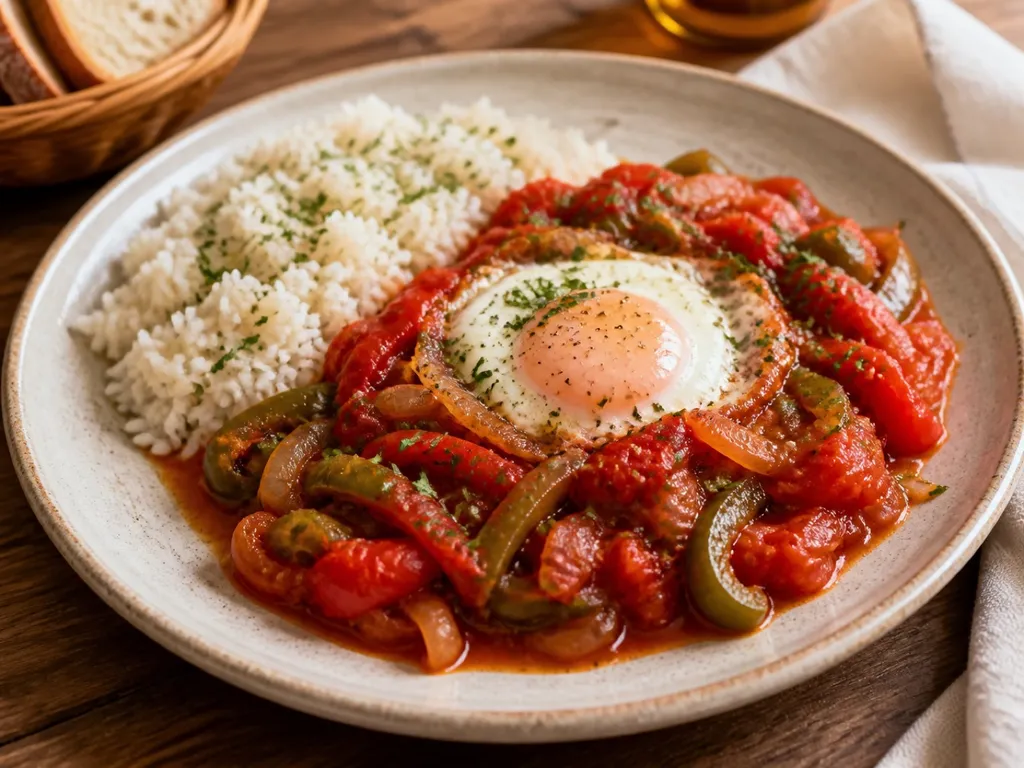
Piperade
A vibrant Basque sauté of sweet red peppers, onions, and ripe tomatoes with Espelette pepper — served as a side or with eggs folded in.
Contains common allergens
In the app, Listahan checks these against your household automatically.
Instructions
8 steps- 1
Heat the olive oil in a wide, heavy skillet over medium heat and add the onions, cooking until soft and translucent, about 8 minutes.
- 2
Add the red and green peppers and cook, stirring occasionally, until they soften and begin to sweeten, about 15 minutes.
- 3
Stir in the garlic and cook 1 minute until fragrant.
- 4
Add the chopped tomatoes, Espelette pepper, and bay leaf, and season with salt.
- 5
Simmer uncovered over low heat, stirring occasionally, until the vegetables melt together into a thick, jammy sauce, about 15 minutes.
- 6
Remove the bay leaf and taste, adjusting salt and Espelette pepper.
- 7
If serving with eggs, make four wells in the piperade, crack an egg into each, cover, and cook over low heat until the whites are just set, about 5 minutes.
- 8
Scatter with parsley and serve warm, with crusty bread or grilled Bayonne ham alongside.
 Images are for illustrative purposes only, may be inaccurate, and do not guarantee the presence or absence of specific ingredients.
Listahan Family Score™
71/100
Good fit for most families
Score reflects how well this recipe fits a typical busy household. In the app, your Family Score is personalized to your household's allergens, kids, and pantry.
Nutrition
per serving130
Calories
9 g
Protein
13 g
Carbs
5 g
Fat
Estimated per serving. Actual values depend on the brands and portions you use.
Listahan cooking guide
Chef notes & practical guide
Technique notes, ingredient swaps, serve-alongside ideas, storage guidance, and equipment for this recipe.
Cultural context
Piperade is the emblematic dish of the Basque Country, a region that straddles the French-Spanish border and maintains its own ancient language and culture entirely distinct from either nation. The dish is a slow-cooked compote of sweet peppers, tomatoes, and onions seasoned with Espelette pepper, the mildly spicy dried chili that defines Basque cooking and carries a French AOC designation protecting its name and production. Piperade is both a sauce and a dish in its own right — beaten eggs stirred into the peppers at the last moment transform it into a soft scramble, or it can be served plain as a condiment alongside grilled meats or fish.
Listahan note
This version cooks the peppers and tomatoes down until they are nearly a jam before adding eggs, so the soft scramble has concentrated sweetness rather than a watery vegetable texture.
Technique cues
- Char the peppers directly over a gas flame or under the broiler before peeling; the slight smokiness that comes with charring is not visible in the finished dish but adds a subtle depth the raw pepper preparation lacks.
- Add the eggs off the heat or over very low heat and stir constantly with a spatula — piperade eggs should be soft and barely set, closer to creamy scrambled eggs than a firm omelette.
- Espelette pepper loses its aroma quickly once opened; buy in small quantities and store the jar tightly sealed away from light.
Kitchen flow
- Parallel prep
- Char the peppers under the broiler while you chop onions and grate tomatoes so all components are ready when the pan is hot.
- Make-ahead
- The pepper-tomato base keeps refrigerated for up to 5 days; reheat it and stir in the eggs only at serving time.
- Leftover move
- Leftover piperade (without eggs) makes an excellent pizza sauce, pasta sauce, or sandwich spread with Bayonne ham.
- Cleanup rhythm
- The charring step creates the most mess; char peppers over foil or in a disposable container for easy cleanup.
Ingredient brief
Role, handling, and swap guidance for each key ingredient.
red and green bell peppers
flavor base
Purpose: The combination of red and green peppers gives piperade its characteristic color and a balance of sweetness and slight bitterness.
Handling: Char and peel before cooking to remove the tough skin and add a subtle smokiness to the finished dish.
Adaptation: All red peppers produce a sweeter, less traditional result; roasted piquillo peppers from a jar speed up prep considerably.
ripe tomatoes
body and acidity
Purpose: Tomatoes provide the liquid and acid that balance the sweetness of the peppers and carry the Espelette heat.
Handling: Grate ripe tomatoes on the large holes of a box grater to get skinless pulp without blanching; discard the skins.
Adaptation: Canned whole peeled San Marzano tomatoes work well outside of peak tomato season.
Espelette pepper
defining spice
Purpose: This mildly hot Basque chili is what distinguishes piperade from a generic pepper ragout; its fruity, moderate heat is not replicated by other chilies.
Handling: Add early in the cooking so it blooms in the oil and permeates the vegetables.
Adaptation: A mix of sweet paprika and a small pinch of cayenne can approximate the flavor when Espelette is unavailable.
eggs
protein and finish
Purpose: Beaten eggs stirred into the hot piperade create the soft scramble that transforms it from a side sauce into a main dish.
Handling: Beat lightly with a fork and season before adding; do not whisk vigorously as fine air bubbles produce a fluffier texture than traditional piperade calls for.
Adaptation: Omit entirely to serve piperade as a vegetarian pepper condiment alongside fish or grilled meats.
Technique notes
- The dish should be served immediately once the eggs are added; scrambled eggs sitting in the pepper sauce continue to cook from residual heat and turn rubbery quickly.
- A slice or two of Bayonne ham (the Basque equivalent of prosciutto) added to the plate or draped over the top is the most traditional way to serve piperade as a main course.
- The pepper base cooked without eggs is called piperade sauce and is one of the best-kept secrets in French cooking — it freezes beautifully and transforms a piece of fish or chicken in minutes.
Ingredient swaps
- Vegan direction
- Omit eggs entirely and serve the pepper compote over polenta or white beans for a satisfying plant-based main.
- Lower-spice direction
- Substitute all sweet paprika for the Espelette and let diners add chili flakes to taste.
- Protein swap
- Stir in cooked chickpeas instead of eggs for a heartier vegetarian version with more substance.
Serve alongside
- Bayonne ham or prosciutto draped alongside
- Crusty bread for scooping up the soft eggs
- Simple green salad with sherry vinegar dressing
- Txakoli (Basque sparkling white wine) or Irouleguy blanc
- Light-bodied Spanish Tempranillo from nearby Rioja
Serving suggestions only — check pairings for your household's allergens.
Storage & reheating
- The pepper base (without eggs) keeps refrigerated up to 5 days and frozen up to 3 months.
- Once eggs are incorporated, serve immediately; the scramble does not reheat or store well.
Equipment
- Large skillet or shallow saute pan for even pepper cooking
- Box grater for quick skinless tomato pulp
- Flexible rubber spatula for gently stirring the eggs
- Tongs for turning peppers during charring
Make this household-aware
Listahan Pro checks this recipe against your household's allergens, finds pantry-aware swaps, builds the shopping list, and helps you plan the week around it.
Plan it in Listahan
Add Piperade to your week, check it against your household's allergens, and build the shopping list automatically.
More French recipes
 French Lens Verified Images are for illustrative purposes only, may be inaccurate, and do not guarantee the presence or absence of specific ingredients.
Tarte Tatin
Apples cooked in caramel until jammy and burnished, then flipped onto buttery pastry — a rustic upside-down tart from the Loire Valley.
 French Lens Verified Images are for illustrative purposes only, may be inaccurate, and do not guarantee the presence or absence of specific ingredients.
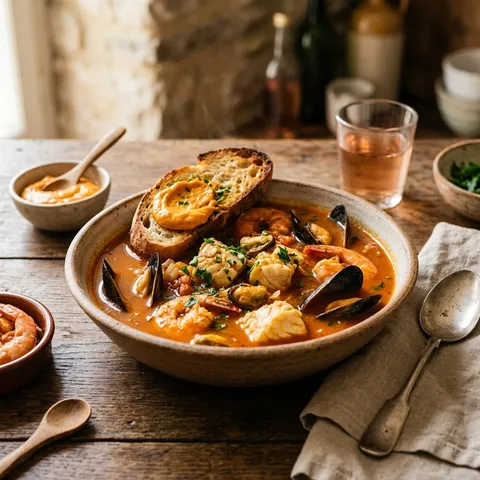
Bouillabaisse
Marseille's legendary saffron-scented fisherman's stew, brimming with fresh seafood and served with garlicky rouille on toasted baguette.
 French Lens Verified Images are for illustrative purposes only, may be inaccurate, and do not guarantee the presence or absence of specific ingredients.
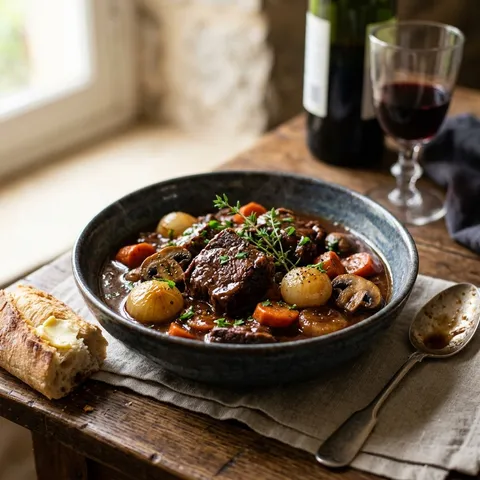
Bœuf Bourguignon
Burgundy's legendary beef stew — rich, wine-dark, and fall-apart tender after hours of slow braising with carrots, mushrooms, and thyme.