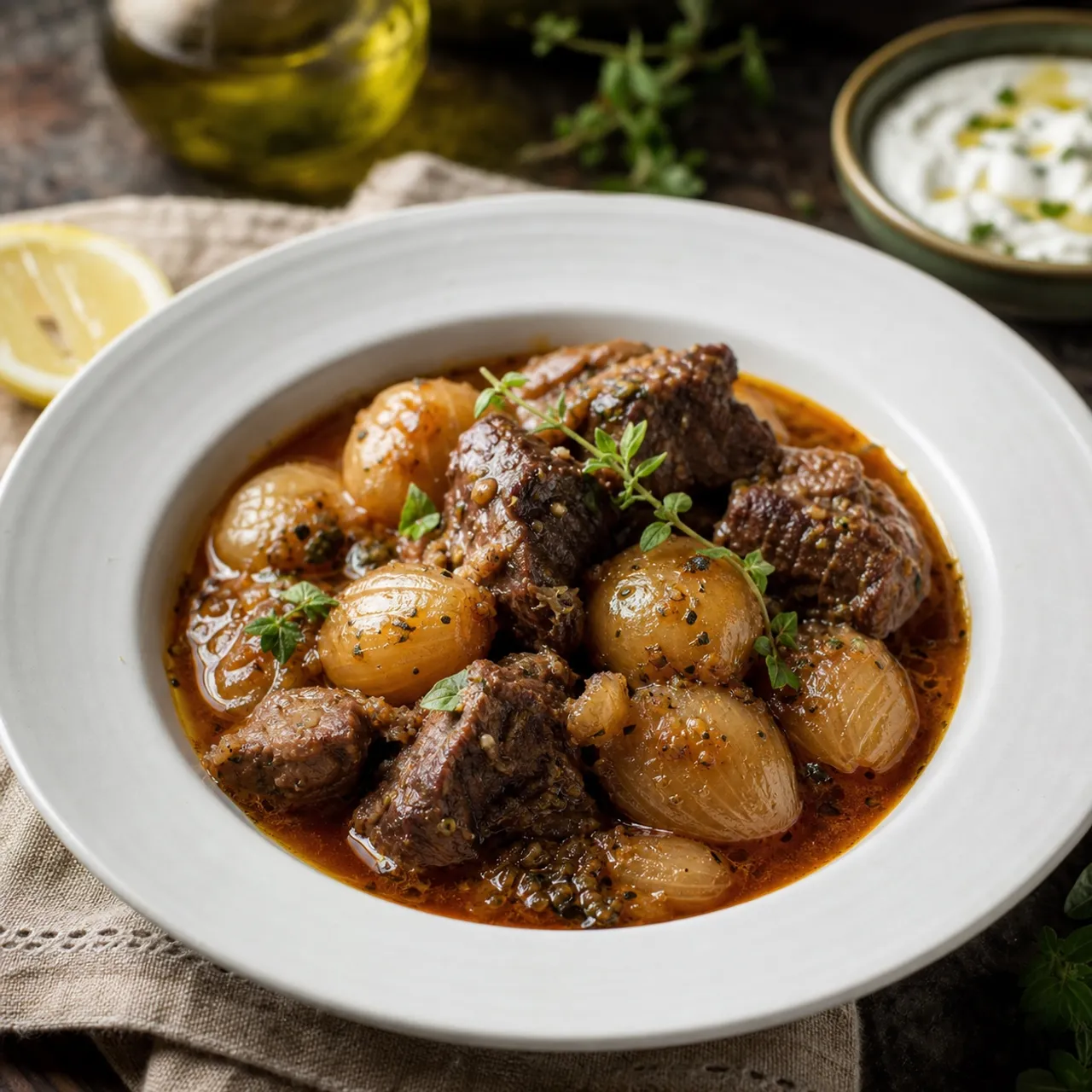
 Greek Images are for illustrative purposes only, may be inaccurate, and do not guarantee the presence or absence of specific ingredients.
 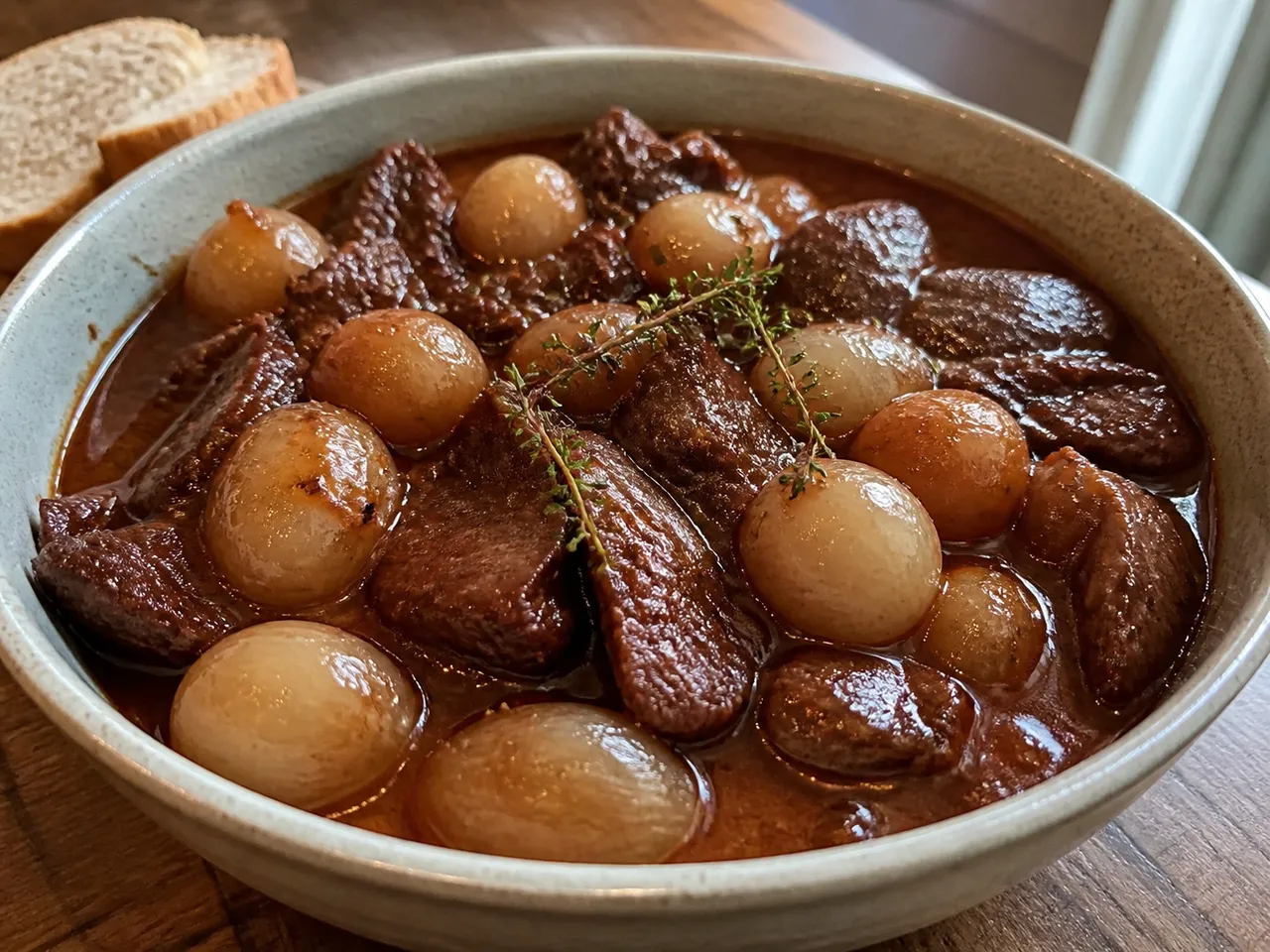 Serving Images are for illustrative purposes only, may be inaccurate, and do not guarantee the presence or absence of specific ingredients.
 Beef Stifado (Greek Beef and Onion Stew)
A rich, slow-braised stew of tender beef and whole baby onions in a fragrant red wine and cinnamon tomato sauce.
No common allergens detected
Based on this recipe's ingredient list. Always verify with your own brands and labels.
Good to know
- One-pot
Matched from this dish's own ingredients and timing. Browse more: one-pot dinners
Instructions
6 steps- 1
Pat the beef dry and season with salt and pepper, then sear in olive oil in a large Dutch oven over high heat until browned on all sides; remove and set aside.
- 2
In the same pot, lightly brown the peeled pearl onions, then add garlic and cook for 1 minute.
- 3
Stir in tomato paste and cook for 1 minute, then add diced tomatoes, red wine, red wine vinegar, bay leaves, cinnamon stick, cloves, and sugar.
- 4
Return the beef to the pot, bring to a simmer, cover, and cook on low heat for 2 to 2.5 hours, stirring occasionally, until the beef is fork-tender.
- 5
Remove the cinnamon stick and bay leaves before serving, and adjust seasoning with salt and pepper.
- 6
Serve hot over rice, orzo, or with crusty bread to soak up the sauce.
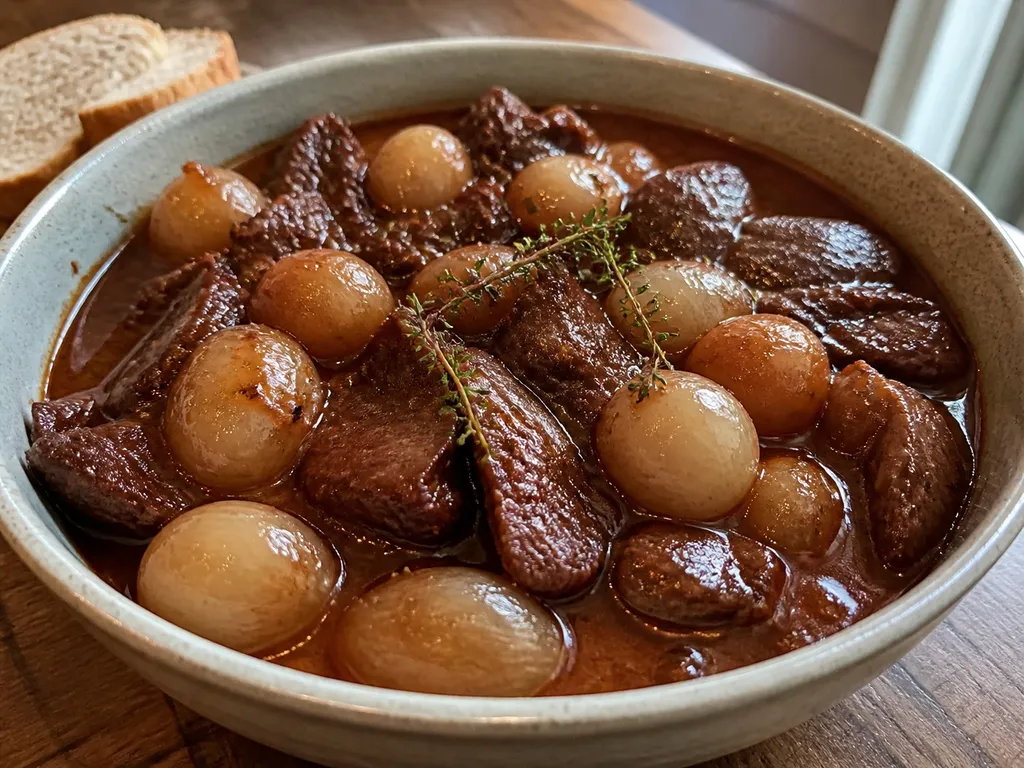 Images are for illustrative purposes only, may be inaccurate, and do not guarantee the presence or absence of specific ingredients.
 Listahan Family Score™
69/100
Works for many families
Score reflects how well this recipe fits a typical busy household. In the app, your Family Score is personalized to your household's allergens, kids, and pantry.
Nutrition
per serving540
Calories
41 g
Protein
15 g
Carbs
30 g
Fat
Estimated per serving. Actual values depend on the brands and portions you use.
Listahan cooking guide
Chef notes & practical guide
Technique notes, ingredient swaps, serve-alongside ideas, storage guidance, and equipment for this recipe.
Cultural context
Stifado is a slow-braised stew whose name comes from the Italian 'stufato,' reflecting centuries of Venetian influence on Greek islands like Corfu and the Ionian coast. What makes it distinctly Greek is the pairing of warm baking spices - cinnamon, cloves, bay leaf - with a generous quantity of whole small onions, a dish traditionally made with wild rabbit or hare before beef became the common home version.
Listahan note
This version keeps the pearl onions whole rather than chopped, essential to stifado's identity - they should hold their shape and turn meltingly soft, almost like a vegetable counterpart to the beef, rather than dissolving into the sauce.
Technique cues
- Searing the beef until well browned on all sides before the onions go in matters because crowding the pot causes the meat to steam rather than develop the deep brown crust that flavors the whole braise.
- The cinnamon stick, whole cloves, and bay leaf should stay whole rather than ground so they can be fished out before serving - ground versions would leave gritty specks throughout the sauce.
- The 2 to 2.5 hour low simmer is non-negotiable for beef chuck; this tough, well-worked cut only becomes fork-tender through slow, moist heat, not a quick braise.
Kitchen flow
- Parallel prep
- While the beef sears in batches, peel the pearl onions - blanching them for a minute first makes the skins slip off easily.
- Make-ahead
- Stifado is genuinely better the next day once the sauce has had time to meld; make it a day ahead and reheat gently before serving.
- Leftover move
- Serve leftovers over a fresh batch of orzo or rice rather than reheating them the same way twice.
- Cleanup rhythm
- Use one Dutch oven for the entire cook - searing, building the sauce, and braising all happen in the same pot with no need to transfer between vessels.
Ingredient brief
Role, handling, and swap guidance for each key ingredient.
beef chuck
main protein
Purpose: its connective tissue breaks down into gelatin over the long simmer, giving the stew a silky, rich body
Handling: cut into large cubes so they hold together after hours of braising
Adaptation: beef short ribs work beautifully and add even more richness, though they need slightly longer to cook
pearl or baby onions
co-star of the dish, not a background aromatic
Purpose: stifado is defined by whole, tender-braised small onions rather than chopped onion as a base
Handling: peel them whole and keep them intact so they hold their shape in the finished stew
Adaptation: quartered regular onions work if pearl onions aren't available, though the presentation changes
red wine and red wine vinegar
braising liquid and acid backbone
Purpose: the wine builds depth over the long cook while the vinegar keeps the rich beef and onions from tasting flat
Handling: use a wine you'd actually drink, since its flavor concentrates as the stew reduces
Adaptation: a dry vermouth can replace the wine in a pinch
cinnamon stick, whole cloves, and bay leaves
warm spice backbone
Purpose: this specific spice combination distinguishes stifado from other beef stews and ties it to Greek and Ottoman-influenced cooking
Handling: add whole and remove before serving
Adaptation: a small pinch of ground allspice can stand in for the cloves if none are on hand, added sparingly since it's more potent
tomato paste and diced tomatoes
body and color of the braising sauce
Purpose: they thicken the liquid into a clingy sauce and balance the wine's acidity
Handling: cook the tomato paste briefly before adding the diced tomatoes to deepen its flavor
Adaptation: a can of crushed tomatoes can replace diced for a smoother sauce
Technique notes
- Resist stirring too often during the long simmer - keep the lid mostly on and check only occasionally, since frequent lifting lets heat escape and extends the cook time.
- Taste the sauce before serving and adjust with a touch more vinegar if it tastes flat, since the long cook can mellow the acidity more than expected.
- Fish out every piece of cinnamon stick, bay leaf, and clove before serving - biting into a whole clove is unpleasantly sharp.
Ingredient swaps
- Gluten-free direction
- This dish is naturally gluten-free; serve over rice or gluten-free orzo instead of wheat pasta.
- Lower-sodium direction
- Use a no-salt-added canned tomato and season to taste at the end rather than throughout the cook.
- Weeknight shortcut
- Make this in a slow cooker on low for 6-7 hours after searing the beef and onions on the stovetop first.
Serve alongside
- orzo pasta
- crusty village bread
- rice pilaf
- a simple green salad with vinegar dressing
- a medium-bodied Greek red like xinomavro
- a dry Corfu-style red blend
Serving suggestions only — check pairings for your household's allergens.
Storage & reheating
- Refrigerate up to 4 days; it tastes better on day two.
- Reheat gently on the stovetop over low heat.
- Freezes well for up to 3 months in an airtight container.
Equipment
- Dutch oven
- sharp knife
- wooden spoon
- tongs
Make this household-aware
Listahan Pro checks this recipe against your household's allergens, finds pantry-aware swaps, builds the shopping list, and helps you plan the week around it.
Plan it in Listahan
Add Beef Stifado (Greek Beef and Onion Stew) to your week, check it against your household's allergens, and build the shopping list automatically.
More Greek recipes
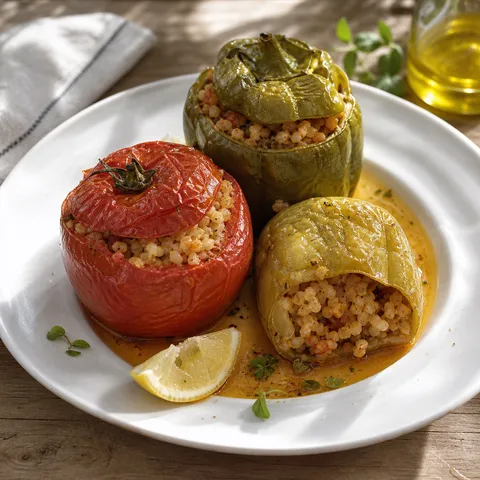 Greek Lens Verified Images are for illustrative purposes only, may be inaccurate, and do not guarantee the presence or absence of specific ingredients.
 Gemista (Stuffed Tomatoes and Peppers with Rice)
Ripe tomatoes and bell peppers hollowed out and stuffed with a savory herbed rice filling, then baked until tender and caramelized.
 Greek Lens Verified Images are for illustrative purposes only, may be inaccurate, and do not guarantee the presence or absence of specific ingredients.
 Kourabiedes (Greek Almond Butter Cookies)
Buttery, crumbly shortbread cookies studded with toasted almonds and generously dusted with powdered sugar.
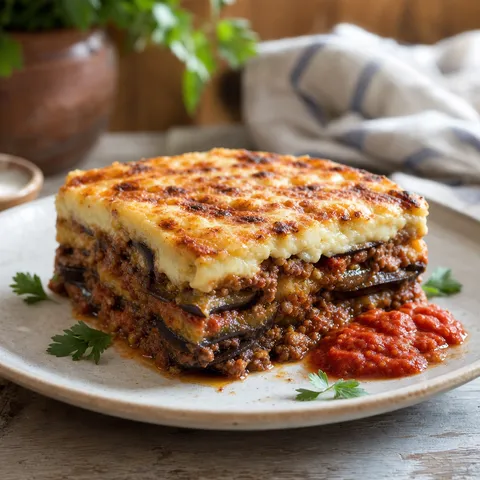 Greek Lens Verified Images are for illustrative purposes only, may be inaccurate, and do not guarantee the presence or absence of specific ingredients.
 Classic Moussaka
A rich, layered Greek casserole featuring roasted eggplant, a hearty spiced meat sauce, and a thick, creamy béchamel topping.