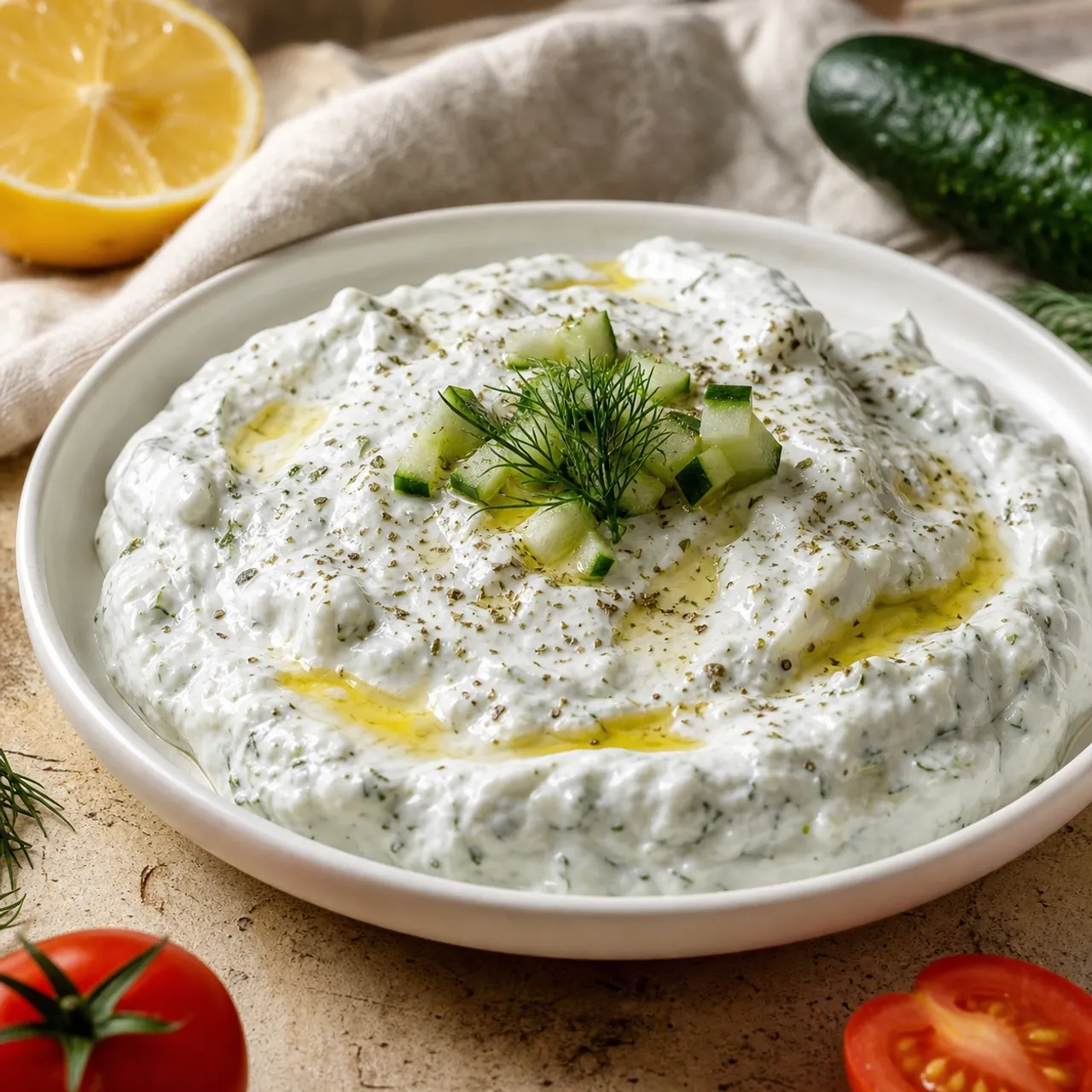
 Greek Images are for illustrative purposes only, may be inaccurate, and do not guarantee the presence or absence of specific ingredients.
 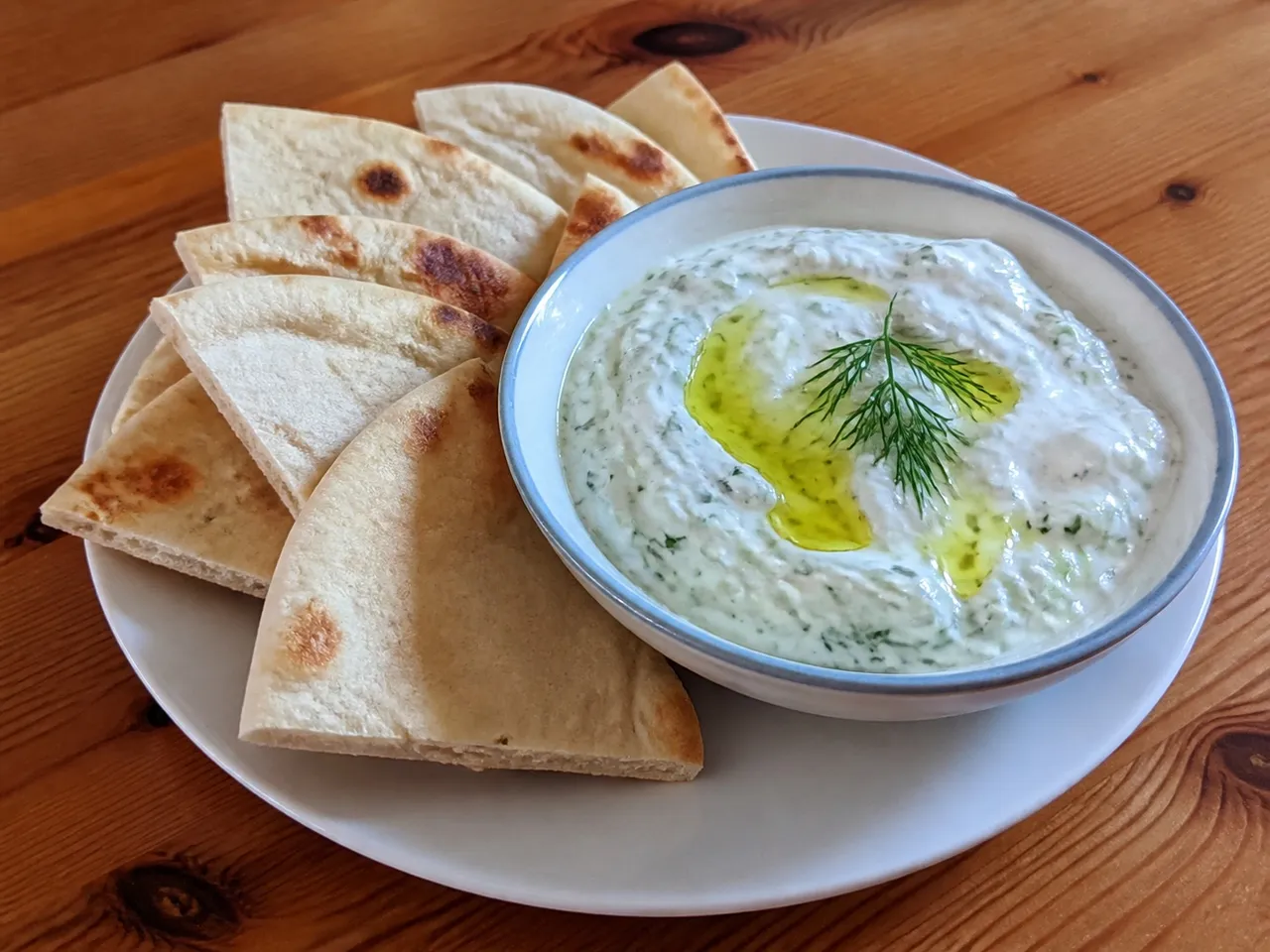 Serving Images are for illustrative purposes only, may be inaccurate, and do not guarantee the presence or absence of specific ingredients.
 Tzatziki (Cucumber Yogurt Dip)
Cool, garlicky Greek yogurt dip studded with grated cucumber and fresh dill, perfect alongside grilled meats or warm pita.
Contains common allergens
In the app, Listahan checks these against your household automatically.
Good to know
- Ready in under 30 minutes
Matched from this dish's own ingredients and timing. Browse more: 30-minute meals
Instructions
5 steps- 1
Grate the cucumber, place it in a clean kitchen towel or cheesecloth, and squeeze out as much liquid as possible.
- 2
In a bowl, combine the Greek yogurt, drained cucumber, garlic, olive oil, lemon juice, dill, salt, and pepper.
- 3
Stir well to combine, tasting and adjusting the garlic and salt to preference.
- 4
Cover and refrigerate for at least 1 hour to let the flavors meld.
- 5
Drizzle with a little extra olive oil before serving with pita bread or fresh vegetables.
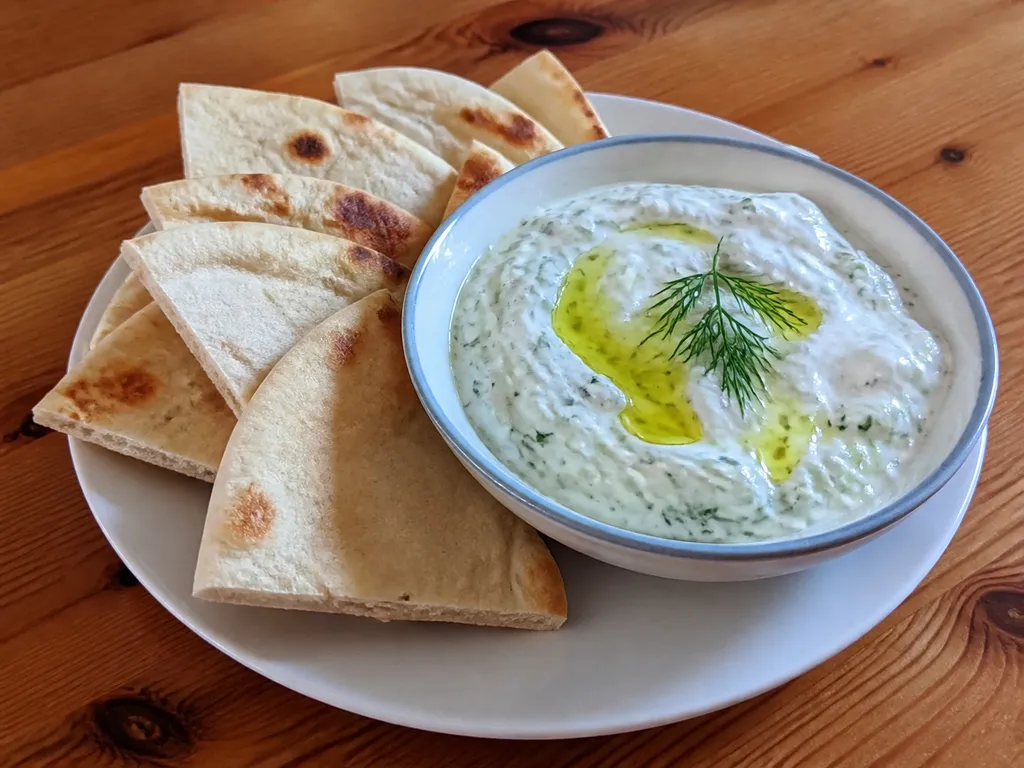 Images are for illustrative purposes only, may be inaccurate, and do not guarantee the presence or absence of specific ingredients.
 Listahan Family Score™
72/100
Good fit for most families
Score reflects how well this recipe fits a typical busy household. In the app, your Family Score is personalized to your household's allergens, kids, and pantry.
Nutrition
per serving100
Calories
9 g
Protein
5 g
Carbs
5 g
Fat
Estimated per serving. Actual values depend on the brands and portions you use.
Listahan cooking guide
Chef notes & practical guide
Technique notes, ingredient swaps, serve-alongside ideas, storage guidance, and equipment for this recipe.
Cultural context
Tzatziki traces back to a broader family of yogurt-and-cucumber preparations found across the Ottoman-influenced eastern Mediterranean, but in Greece it became a fixture alongside grilled meats and fried foods, prized for its cooling effect against char and spice. Its name likely derives from the Turkish 'cacik,' reflecting centuries of shared culinary vocabulary across the region.
Listahan note
This version leans on properly drained cucumber and thick Greek yogurt so the finished dip holds a scoopable texture rather than turning watery, the most common way homemade tzatziki goes wrong.
Technique cues
- Grating the cucumber and squeezing it dry in a towel or cheesecloth is the single most important step in the whole recipe - skipping it releases so much water into the yogurt that the tzatziki turns thin and soupy within an hour.
- Using thick Greek yogurt rather than regular yogurt matters because its lower water content is what gives tzatziki its characteristic body; regular yogurt needs to be strained separately first to match that texture.
- Refrigerating the finished dip for at least an hour before serving lets the raw garlic mellow and the dill's flavor fully distribute, since freshly mixed tzatziki tastes noticeably sharper and less balanced.
Kitchen flow
- Parallel prep
- While the grated cucumber drains in the towel, measure out the yogurt and mince the garlic so mixing goes quickly once the cucumber is ready.
- Make-ahead
- Tzatziki genuinely improves after resting overnight in the fridge, so it's an ideal make-ahead component for a larger Greek meal.
- Leftover move
- Use leftover tzatziki as a sandwich spread or a sauce for roasted vegetables rather than only as a dip.
- Cleanup rhythm
- Grate the cucumber directly over the towel used to squeeze it, then mix everything in one bowl to keep dishes to a minimum.
Ingredient brief
Role, handling, and swap guidance for each key ingredient.
Greek yogurt
the base of the dip
Purpose: its thickness, from straining out whey, gives tzatziki its characteristic body, unlike regular yogurt which would make it runny
Handling: use full-fat for the best texture and flavor
Adaptation: a plant-based Greek-style yogurt works for a dairy-free version, though the tang will differ slightly
cucumber
cooling, crisp textural element
Purpose: it's what makes tzatziki distinct from plain garlic yogurt, but only if its liquid is removed first
Handling: grate on the large holes of a box grater, then squeeze thoroughly in a towel - this step cannot be skipped
Adaptation: English cucumbers have fewer seeds and less water than standard cucumbers, making them easier to drain
garlic
the dip's pungent backbone
Purpose: three cloves is assertive by design, since garlic is meant to be a noticeable presence in tzatziki, not a background note
Handling: mince very finely or use a microplane so there are no large bite-through chunks
Adaptation: reduce to 1-2 cloves for a milder version, especially if serving it the same day rather than after the flavors mellow overnight
fresh dill
signature herbal note
Purpose: its slightly anise-like freshness is the traditional herb pairing for Greek tzatziki, distinct from the mint used in some other regional yogurt dips
Handling: chop finely just before mixing in, since dill loses aroma quickly once cut
Adaptation: fresh mint can replace it for a different but still traditional Mediterranean flavor profile
lemon juice
brightness
Purpose: a small amount balances the richness of the yogurt and the pungency of the raw garlic
Handling: add fresh juice at the end and taste, adjusting since yogurt brands vary in natural tang
Adaptation: white wine vinegar can substitute in a pinch, though the flavor is slightly sharper than lemon
Technique notes
- Taste and adjust the garlic and salt after the dip has chilled for an hour, not right after mixing, since the flavors shift noticeably as they meld.
- If the tzatziki still seems thin after resting, strain it briefly through a cheesecloth-lined sieve rather than adding more yogurt, which would dilute the flavor.
- Drizzle the finishing olive oil just before serving rather than mixing it in, so it stays visible as a glossy top layer rather than disappearing into the dip.
Ingredient swaps
- Dairy-free option
- Use a thick coconut or almond-based yogurt alternative, straining it the same way if it's thinner than dairy Greek yogurt.
- Lower-sodium direction
- Reduce the added salt and let the natural tang of the yogurt and lemon carry more of the flavor.
- Weeknight shortcut
- Use pre-drained Greek yogurt straight from the container and skip a lengthy chill time if serving within the hour, understanding the flavor will be a touch less melded.
Serve alongside
- warm pita
- fresh vegetable sticks
- grilled meats like souvlaki or gyro
- sparkling water with cucumber
- a light Greek white wine
Serving suggestions only — check pairings for your household's allergens.
Storage & reheating
- Refrigerate in an airtight container up to 5 days.
- Do not freeze, since the yogurt and cucumber separate and turn watery when thawed.
- Stir well before each serving as it can weep liquid over time.
Equipment
- box grater
- clean kitchen towel or cheesecloth
- mixing bowl
Make this household-aware
Listahan Pro checks this recipe against your household's allergens, finds pantry-aware swaps, builds the shopping list, and helps you plan the week around it.
Plan it in Listahan
Add Tzatziki (Cucumber Yogurt Dip) to your week, check it against your household's allergens, and build the shopping list automatically.
More Greek recipes
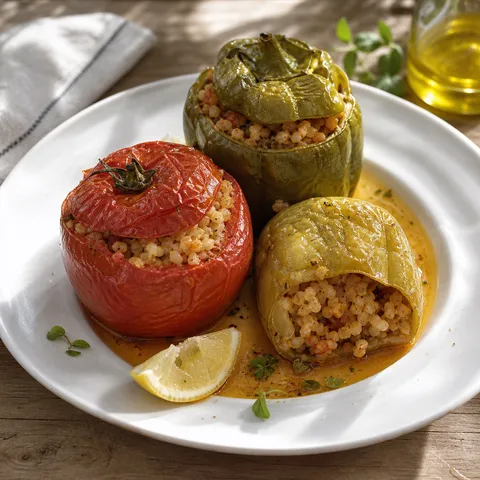 Greek Lens Verified Images are for illustrative purposes only, may be inaccurate, and do not guarantee the presence or absence of specific ingredients.
 Gemista (Stuffed Tomatoes and Peppers with Rice)
Ripe tomatoes and bell peppers hollowed out and stuffed with a savory herbed rice filling, then baked until tender and caramelized.
 Greek Lens Verified Images are for illustrative purposes only, may be inaccurate, and do not guarantee the presence or absence of specific ingredients.
 Kourabiedes (Greek Almond Butter Cookies)
Buttery, crumbly shortbread cookies studded with toasted almonds and generously dusted with powdered sugar.
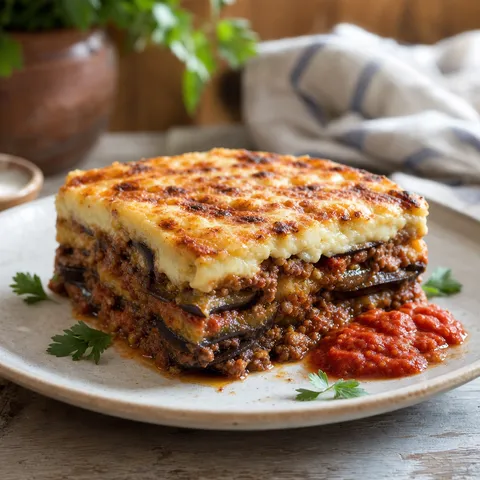 Greek Lens Verified Images are for illustrative purposes only, may be inaccurate, and do not guarantee the presence or absence of specific ingredients.
 Classic Moussaka
A rich, layered Greek casserole featuring roasted eggplant, a hearty spiced meat sauce, and a thick, creamy béchamel topping.