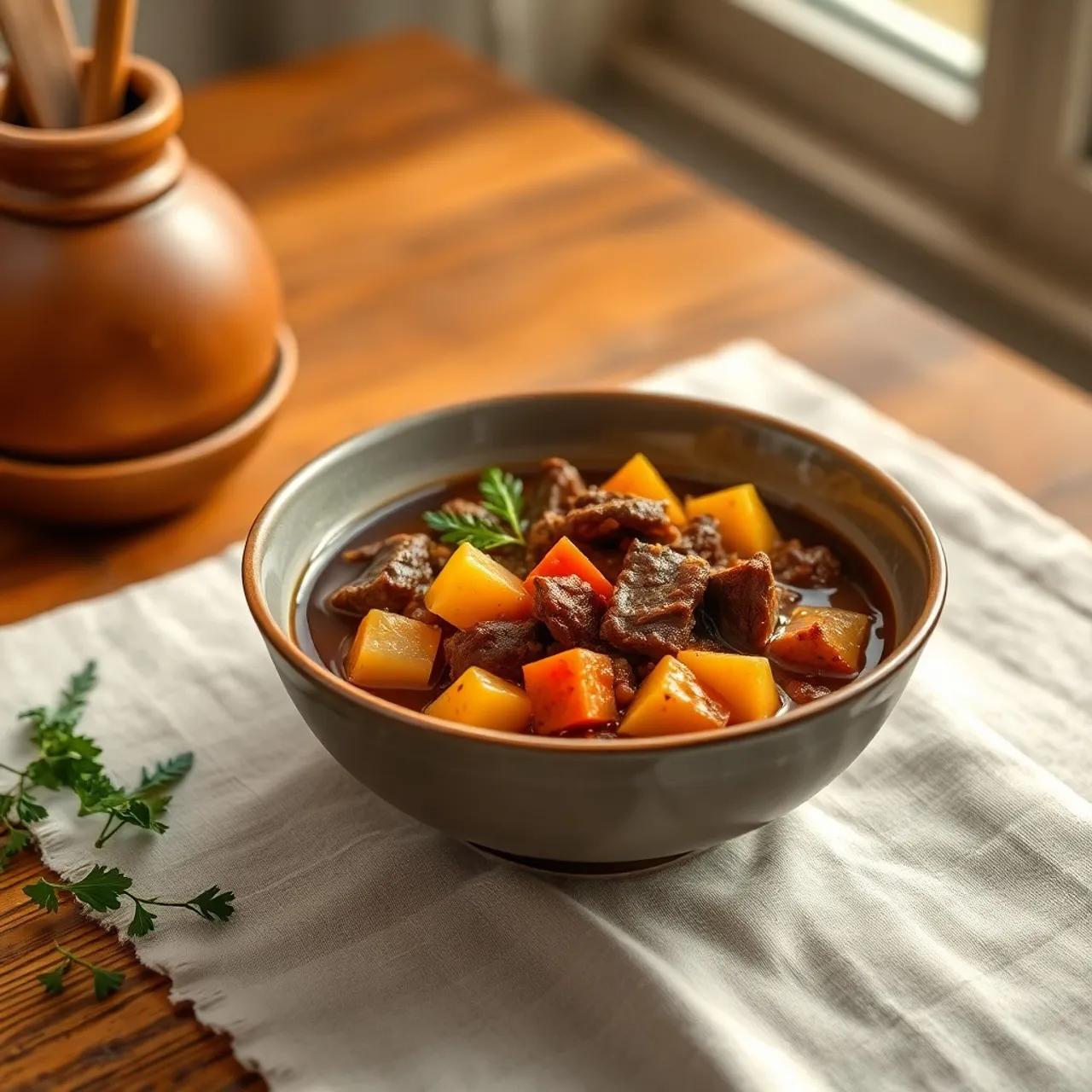
 Hawaiian Images are for illustrative purposes only, may be inaccurate, and do not guarantee the presence or absence of specific ingredients.
 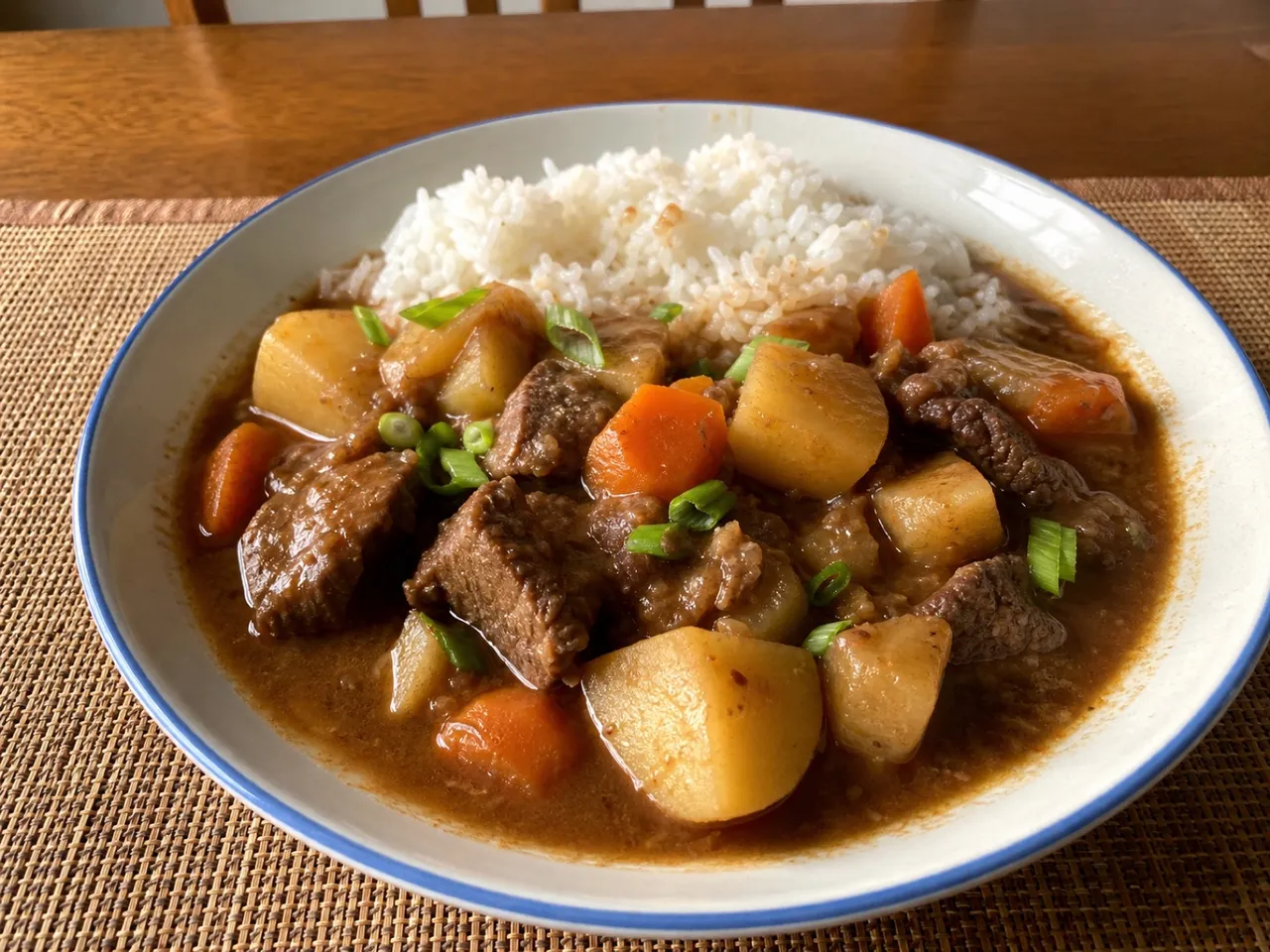 Serving Images are for illustrative purposes only, may be inaccurate, and do not guarantee the presence or absence of specific ingredients.
 Hawaiian Beef Stew
A hearty island take on beef stew, slow-simmered with tomato, root vegetables, and a touch of soy until the meat falls apart.
Contains common allergens
In the app, Listahan checks these against your household automatically.
Good to know
- One-pot
Matched from this dish's own ingredients and timing. Browse more: one-pot dinners
Instructions
6 steps- 1
Pat the beef cubes dry and season with salt and pepper, then sear in the vegetable oil over medium-high heat in batches until deeply browned on all sides, about 6 minutes per batch.
- 2
Remove the beef and add the diced onion and minced garlic to the pot, cooking 3 minutes until softened and fragrant.
- 3
Return the beef to the pot and stir in the tomato sauce, beef broth, and soy sauce, scraping up the browned bits from the bottom.
- 4
Bring to a boil, then reduce to a low simmer, cover, and cook for 1 1/2 hours until the beef is beginning to turn tender.
- 5
Add the carrot and potato chunks and continue simmering uncovered for 45 minutes, until the vegetables are soft and the broth has thickened.
- 6
Taste and adjust seasoning, then serve in bowls over hot rice or with crusty bread to soak up the rich gravy.
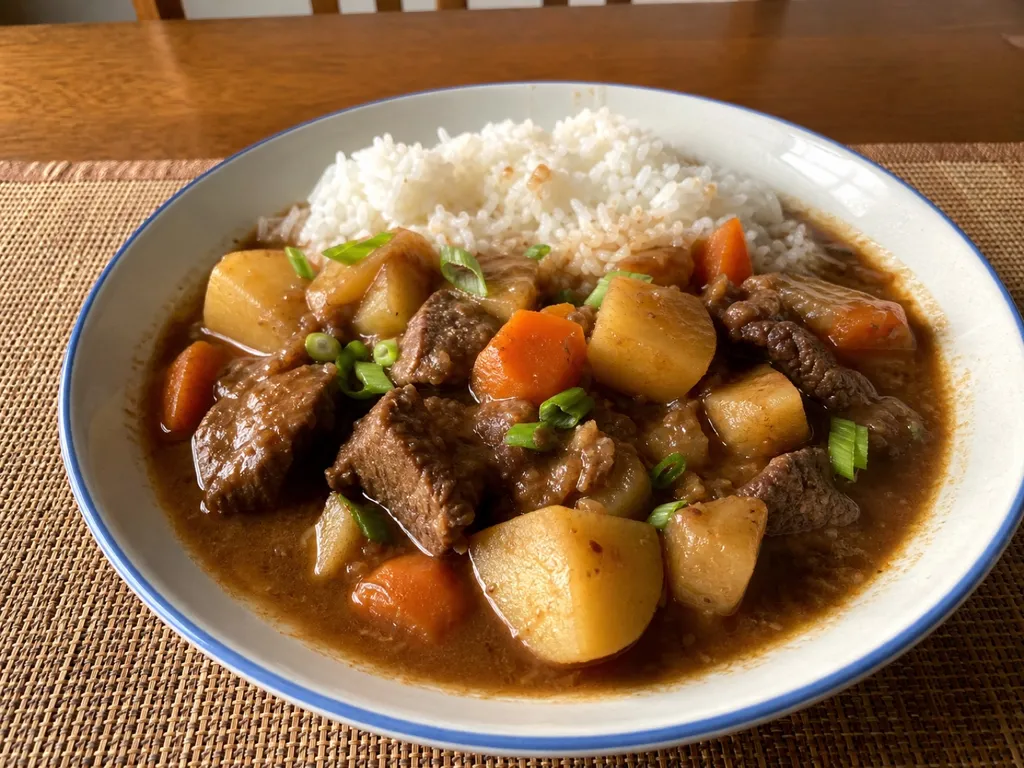 Images are for illustrative purposes only, may be inaccurate, and do not guarantee the presence or absence of specific ingredients.
 Listahan Family Score™
69/100
Works for many families
Score reflects how well this recipe fits a typical busy household. In the app, your Family Score is personalized to your household's allergens, kids, and pantry.
Nutrition
per serving620
Calories
53 g
Protein
22 g
Carbs
33 g
Fat
Estimated per serving. Actual values depend on the brands and portions you use.
Listahan cooking guide
Chef notes & practical guide
Technique notes, ingredient swaps, serve-alongside ideas, storage guidance, and equipment for this recipe.
Cultural context
Hawaiian beef stew grew out of plantation-era cooking, where beef, onions, and a tomato-based gravy — influenced by Portuguese and American ranch traditions on the islands — became a plate-lunch staple, almost always served over a scoop of white rice rather than with bread the way a mainland beef stew might be.
Listahan note
This version sears the beef in batches for a deeply browned base before building the tomato-and-broth gravy, then simmers long enough for the chuck to turn fully tender before the vegetables go in, so nothing overcooks.
Technique cues
- Sear the beef in batches, not all at once — crowding the pot steams the meat grey instead of browning it, and that browning is most of the stew's flavor base.
- Simmer the beef alone for the full 1 1/2 hours before adding vegetables — adding carrots and potatoes too early turns them to mush by the time the beef is actually tender.
- Taste and adjust the soy-and-tomato balance at the end; the soy sauce is meant to season the gravy, not announce itself as a distinct flavor.
Kitchen flow
- Parallel prep
- Peel and chunk the carrots and potatoes while the beef does its first 1 1/2-hour simmer, so they are ready the moment the pot needs them.
- Make-ahead
- Tastes better the next day once the flavors meld — this is a genuine make-ahead dish, not just a reheat.
- Leftover move
- Serve leftovers the same way as the original — ladled hot over freshly steamed rice.
- Cleanup rhythm
- Deglaze and soak the pot right after searing — the browned bits are easiest to lift while the pot is still warm.
Ingredient brief
Role, handling, and swap guidance for each key ingredient.
2 lbs beef chuck, cut into 1 1/2-inch cubes
Main protein
Purpose: Chuck is a well-marbled, connective-tissue-rich cut that needs the long simmer this recipe gives it — that’s what breaks down into the fall-apart tenderness the dish is known for.
Handling: Pat dry and season before searing so it browns instead of steaming in its own moisture.
Adaptation: Beef short ribs or brisket work with a similar long-braise approach; leaner cuts will dry out over this cook time.
2 tbsp soy sauce
Umami and seasoning
Purpose: Soy sauce is the ingredient that gives Hawaiian beef stew its distinct island flavor compared to a mainland tomato-based beef stew — it deepens the gravy without making it taste Asian-inflected on its own.
Handling: Added directly to the simmering broth along with the tomato sauce.
Adaptation: Tamari keeps the same flavor and removes the wheat; coconut aminos works too but changes the flavor slightly and coconut is a tree-nut allergen for some households.
1 can (15 oz) tomato sauce
Gravy base
Purpose: Provides the acidity and body of the gravy, balancing the richness of the beef and giving the stew its characteristic reddish-brown color.
Handling: Stir in along with the broth once the beef and aromatics are ready.
Adaptation: Crushed tomatoes blended smooth work as a substitute with a slightly chunkier result.
4 cups beef broth
Braising liquid
Purpose: Forms the bulk of the stewing liquid that slowly tenderizes the chuck over the long simmer.
Handling: Add after searing the beef and cooking the aromatics, then bring to a boil before reducing to a simmer.
Adaptation: Low-sodium broth lets you control the final salt level better, especially alongside the soy sauce.
3 carrots and 3 medium potatoes, cut into chunks
Vegetables
Purpose: Added later than the beef so they finish tender at the same time the meat does, rather than turning mushy over the beef's longer cook time.
Handling: Cut into even chunks so they cook at the same rate.
Adaptation: Sweet potato or taro can stand in for regular potato for a different texture and a more island-leaning flavor.
Technique notes
- Sear the beef in batches for a deep, browned base — crowding the pot steams it instead.
- Simmer the beef alone until nearly tender before adding vegetables, so nothing turns to mush.
- Taste and adjust the soy-to-tomato balance near the end — it should taste like a rich gravy, not a soy sauce.
Ingredient swaps
- soy sauce
- tamari (wheat-free) or coconut aminos (soy- and gluten-free, though coconut is a tree-nut allergen for some)
- beef chuck
- short ribs or brisket, using the same long-simmer approach
- potato
- sweet potato or taro for a more island-leaning flavor and texture
Serve alongside
- Steamed white rice
- Macaroni salad
- Pickled vegetables
- Iced tea
- Cold water
Serving suggestions only — check pairings for your household's allergens.
Storage & reheating
- Refrigerate in a sealed container for up to 4 days; the flavor deepens by the next day.
- Reheat gently on the stovetop, adding a splash of broth if the gravy has thickened too much in the fridge.
- Freezes well up to 2 months — a classic braised stew holds up better frozen than most dishes.
Equipment
- Dutch oven or soup pot
- Wooden spoon
- Ladle
Make this household-aware
Listahan Pro checks this recipe against your household's allergens, finds pantry-aware swaps, builds the shopping list, and helps you plan the week around it.
Plan it in Listahan
Add Hawaiian Beef Stew to your week, check it against your household's allergens, and build the shopping list automatically.
More Hawaiian recipes
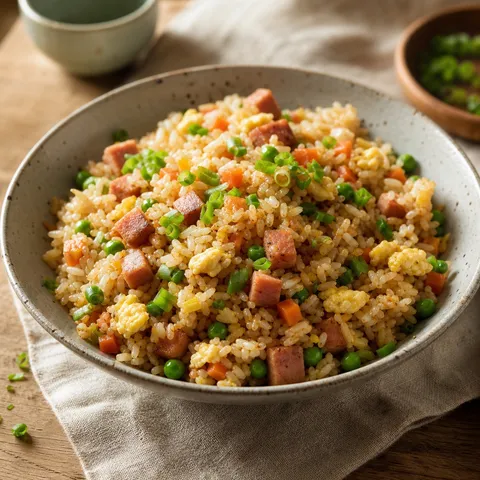 Hawaiian Lens Verified Images are for illustrative purposes only, may be inaccurate, and do not guarantee the presence or absence of specific ingredients.
 Spam Fried Rice
Day-old rice stir-fried with caramelized Spam, egg, soy sauce, and green onion — a quick, satisfying island classic that turns pantry staples into something craveable.
 Hawaiian Lens Verified Images are for illustrative purposes only, may be inaccurate, and do not guarantee the presence or absence of specific ingredients.
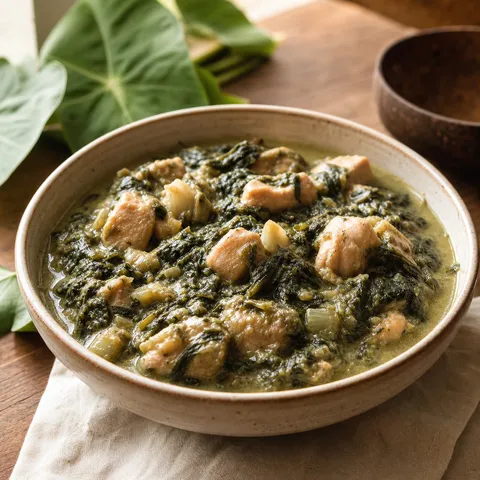
 Chicken Luau
Tender chicken simmered with young taro leaves in coconut milk until velvety and earthy — a quietly comforting Hawaiian stew full of old-fashioned luau warmth.
 Hawaiian Lens Verified Images are for illustrative purposes only, may be inaccurate, and do not guarantee the presence or absence of specific ingredients.
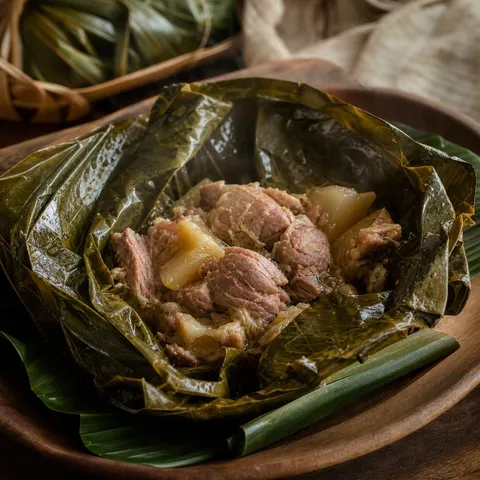
 Lau Lau
Pork shoulder and butterfish bundled in layers of taro leaf and steamed until meltingly tender — earthy, rich, and deeply rooted in Native Hawaiian tradition.