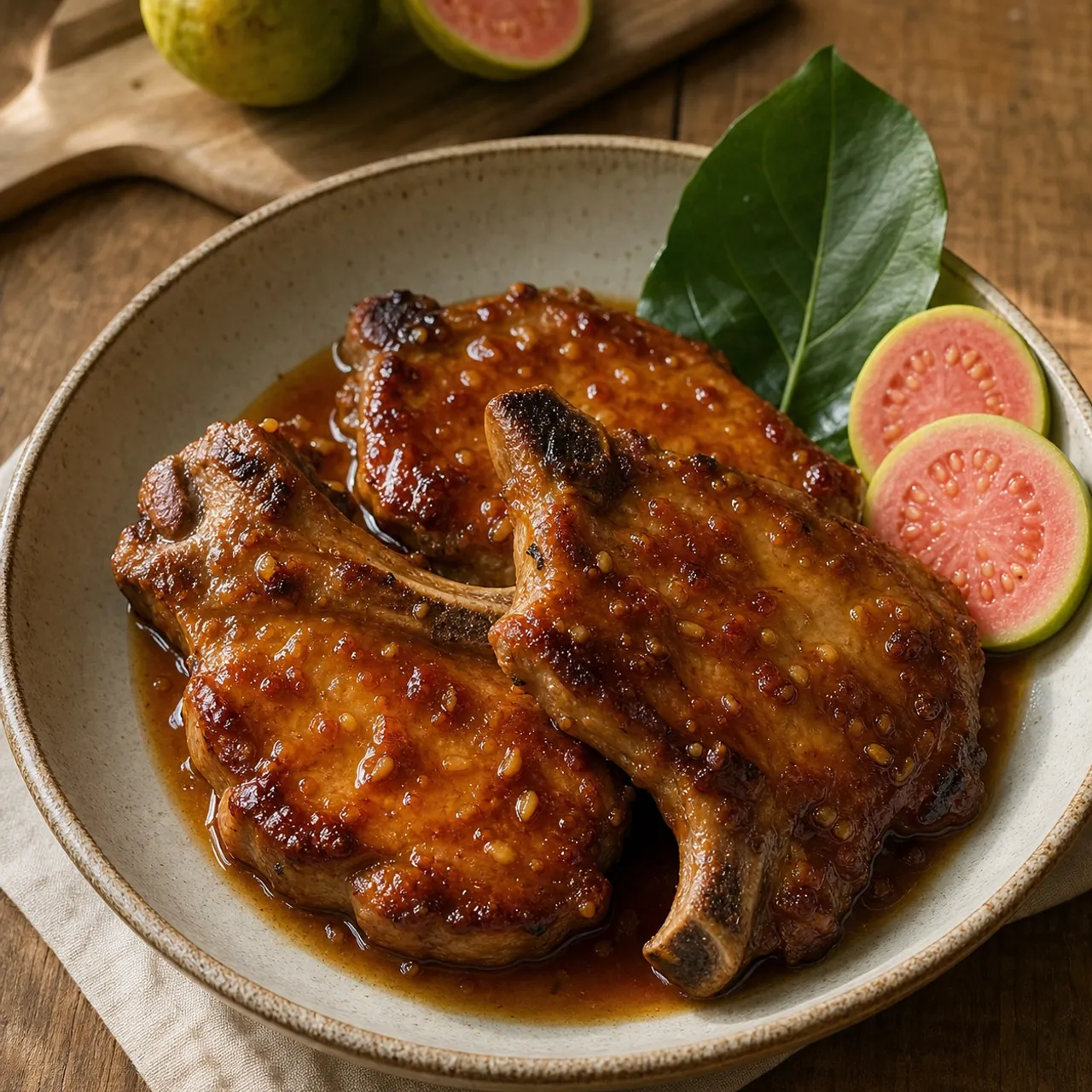
 Hawaiian Images are for illustrative purposes only, may be inaccurate, and do not guarantee the presence or absence of specific ingredients.
 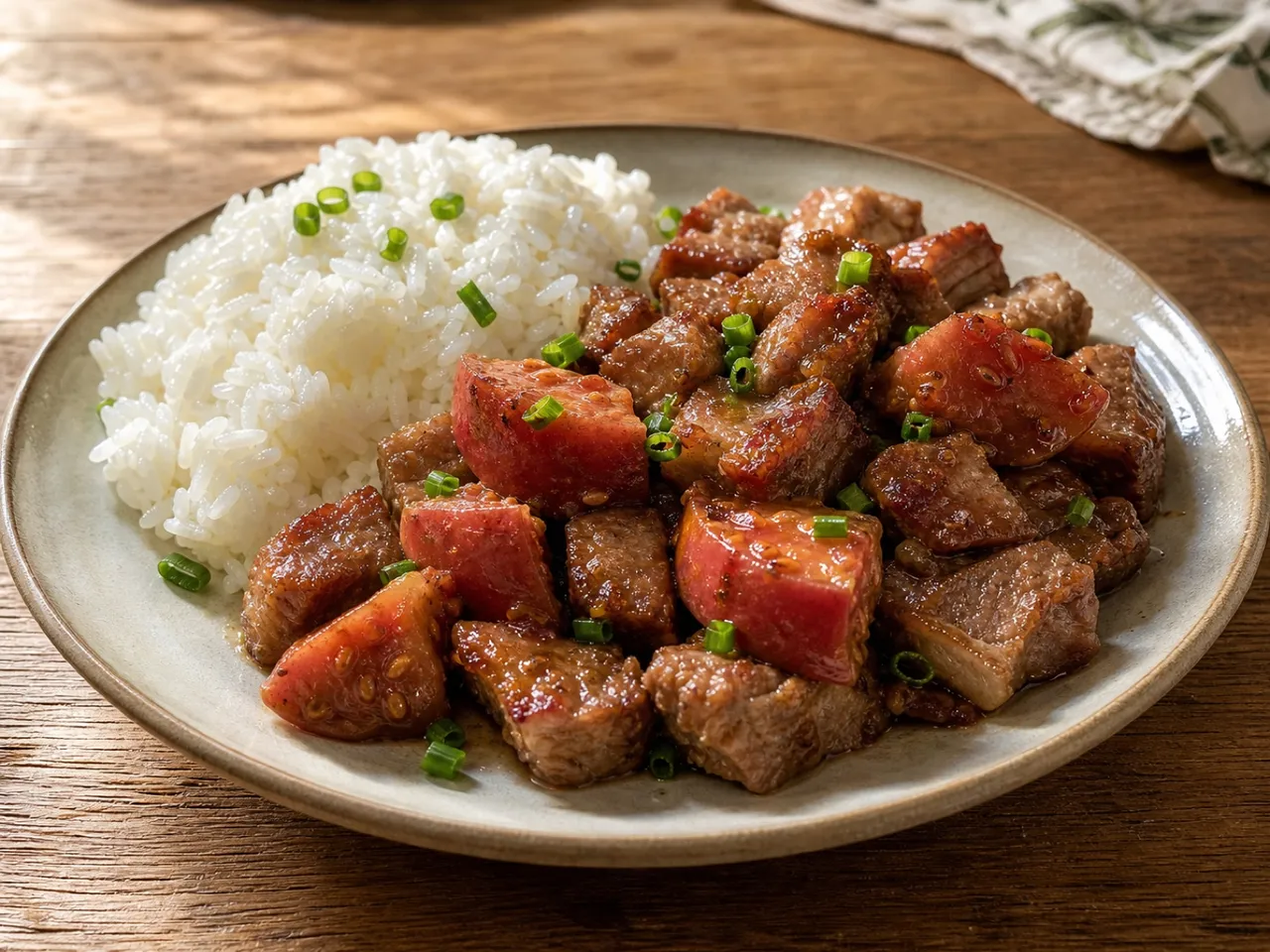 Serving Images are for illustrative purposes only, may be inaccurate, and do not guarantee the presence or absence of specific ingredients.
 Pork Guava
Succulent pork braised in a sweet-tart guava glaze until sticky and caramelized — tropical fruit and savory meat in one of Hawaii's most distinctive island pairings.
Contains common allergens
In the app, Listahan checks these against your household automatically.
Good to know
- Ready in under 30 minutes
Matched from this dish's own ingredients and timing. Browse more: 30-minute meals
Instructions
7 steps- 1
Season the pork cubes with salt and pepper, then sear in the oil over medium-high heat in a heavy skillet until well browned on all sides, about 6 minutes; work in batches so the pieces brown rather than steam.
- 2
Remove the pork and lower the heat, then add the garlic and cook for 30 seconds until fragrant.
- 3
Stir in the guava juice, guava jam, soy sauce, brown sugar, and rice vinegar, scraping up the browned bits from the bottom of the pan.
- 4
Return the pork to the skillet, bring the sauce to a simmer, then cover and cook over low heat for 20 minutes, stirring occasionally.
- 5
Uncover and continue simmering for another 8 to 10 minutes, letting the sauce reduce and thicken until it clings heavily to the pork and turns glossy and sticky.
- 6
Watch closely in the final few minutes, since the sugar in the guava can scorch quickly once the sauce concentrates.
- 7
Rest for a few minutes before serving so the glaze sets slightly, then spoon extra sauce over the pork and serve with steamed rice.
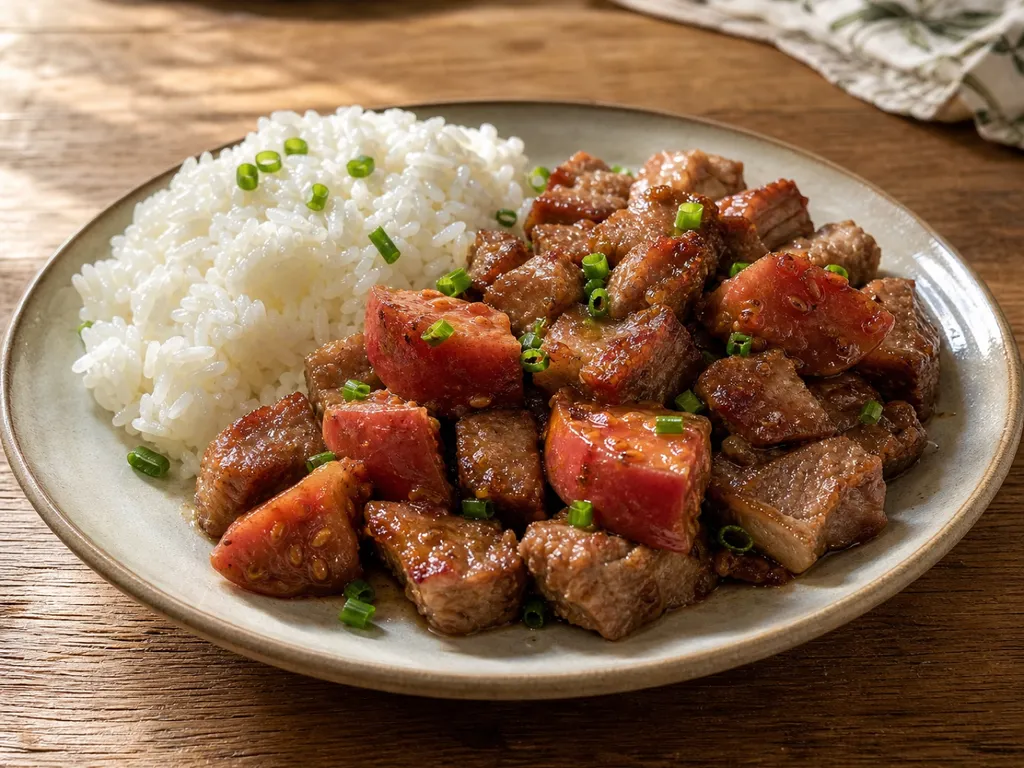 Images are for illustrative purposes only, may be inaccurate, and do not guarantee the presence or absence of specific ingredients.
 Listahan Family Score™
81/100
Good fit for most families
Score reflects how well this recipe fits a typical busy household. In the app, your Family Score is personalized to your household's allergens, kids, and pantry.
Nutrition
per serving105
Calories
1 g
Protein
27 g
Carbs
0 g
Fat
Estimated per serving. Actual values depend on the brands and portions you use.
Listahan cooking guide
Chef notes & practical guide
Technique notes, ingredient swaps, serve-alongside ideas, storage guidance, and equipment for this recipe.
Cultural context
Pork Guava is a distinctly Hawaiian dish that reflects the islands' history with guava — a fruit introduced to Hawaii in the early 19th century that naturalized so successfully it became one of the most abundant wild fruits on the islands. Local cooks began pairing guava's floral tartness with pork, a combination that resonates with the sweet-savory traditions found across Hawaii's pan-Asian culinary culture. The dish became a home-cooking staple celebrated for transforming basic ingredients into something that tastes unmistakably of the islands.
Listahan note
This version uses guava nectar or paste rather than fresh guava to make the dish accessible year-round while keeping the tropical fruit character front and center.
Technique cues
- Sear the pork shoulder or ribs well before braising — the fond from browning is what gives the guava sauce its savory backbone to balance the fruit's sweetness.
- Reduce the guava sauce uncovered in the final 15 minutes of cooking so it thickens enough to coat the pork rather than remaining watery.
- Taste the sauce before serving and adjust with a small splash of rice vinegar if the guava flavor is too sweet — the tartness should be perceptible.
Kitchen flow
- Parallel prep
- Start the rice cooker when you begin the braise — the 90-minute cook time aligns perfectly with most long-grain rice programs.
- Make-ahead
- Pork Guava reheats beautifully and tastes even better the next day as the sauce absorbs further into the meat; make a day ahead and refrigerate.
- Leftover move
- Shred leftover pork and serve in soft rolls with a spoonful of the thickened guava sauce for a quick Hawaiian-style sandwich.
- Cleanup rhythm
- One heavy pot handles everything from searing to braising; deglaze immediately after plating while the glaze is still liquid.
Ingredient brief
Role, handling, and swap guidance for each key ingredient.
pork shoulder or pork ribs
main protein
Purpose: Fatty, connective-tissue-rich cuts braise into tender, fall-apart meat that absorbs the guava sauce deeply.
Handling: Cut shoulder into 2-inch chunks or leave ribs in sections; pat dry and season generously before searing.
Adaptation: Pork belly works for an even richer result; reduce the cooking time slightly as it renders faster.
guava nectar or guava paste
signature flavor
Purpose: Guava provides the floral, tropical sweetness that defines this dish and distinguishes it from any other braised pork.
Handling: If using paste, dissolve it in a cup of warm water or broth before adding to the pot for even distribution.
Adaptation: Mango nectar with a squeeze of lime is a reasonable tropical substitute when guava is unavailable.
soy sauce
savory anchor
Purpose: Soy sauce deepens the glaze and prevents the guava from making the dish taste like dessert.
Handling: Add early in the braise so it mellows and integrates with the fruit.
Adaptation: Coconut aminos for a gluten-free, slightly sweeter alternative.
ginger
aromatic
Purpose: Fresh ginger cuts through the sweetness of the guava and adds warmth that ties the dish to Hawaii's Asian culinary influences.
Handling: Grate finely so it melts into the sauce rather than appearing as visible shreds.
Adaptation: Ground ginger at one-quarter the amount of fresh works in a pinch.
Technique notes
- If the sauce is too thin at the end of braising, remove the pork temporarily and reduce the sauce over high heat for 5-8 minutes to a glaze consistency, then return the meat.
- A small amount of brown sugar added during the last 20 minutes of cooking deepens the caramel notes if the guava nectar is on the tart side.
- This dish rewards a slow braise — 2 hours at low heat produces meat that is far more tender than 90 minutes at medium, so patience pays off.
Ingredient swaps
- Gluten-free direction
- Replace soy sauce with tamari or coconut aminos; verify the guava nectar brand has no added wheat-based ingredients.
- Weeknight shortcut
- Use a pressure cooker or Instant Pot set to high pressure for 40 minutes to achieve the same tenderness in a fraction of the time.
- Lower-sodium direction
- Use low-sodium soy sauce and a reduced-sodium broth; the guava's natural sweetness means less salt is needed than in most braises.
Serve alongside
- steamed white rice
- Hawaiian macaroni salad
- roasted sweet potatoes
- steamed bok choy
- guava juice
- POG juice
- cold local lager
Serving suggestions only — check pairings for your household's allergens.
Storage & reheating
- Refrigerate in a sealed container for up to 4 days; the flavor deepens significantly by day two. Reheat gently over low heat with a splash of water to loosen the sauce. Freeze the braised pork with sauce for up to 3 months.
Equipment
- large Dutch oven or heavy braising pot
- tongs for searing
- wooden spoon
- fine grater for ginger
Make this household-aware
Listahan Pro checks this recipe against your household's allergens, finds pantry-aware swaps, builds the shopping list, and helps you plan the week around it.
Plan it in Listahan
Add Pork Guava to your week, check it against your household's allergens, and build the shopping list automatically.
More Hawaiian recipes
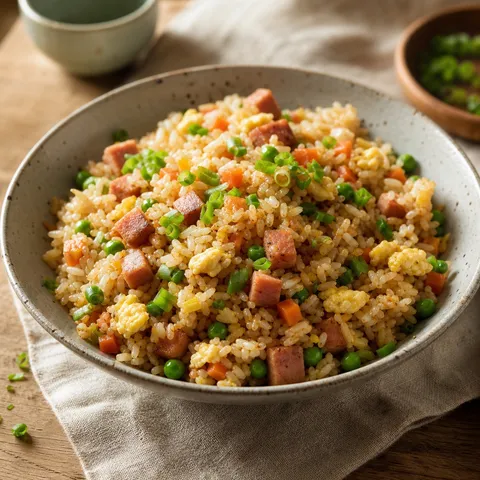 Hawaiian Lens Verified Images are for illustrative purposes only, may be inaccurate, and do not guarantee the presence or absence of specific ingredients.
 Spam Fried Rice
Day-old rice stir-fried with caramelized Spam, egg, soy sauce, and green onion — a quick, satisfying island classic that turns pantry staples into something craveable.
 Hawaiian Lens Verified Images are for illustrative purposes only, may be inaccurate, and do not guarantee the presence or absence of specific ingredients.
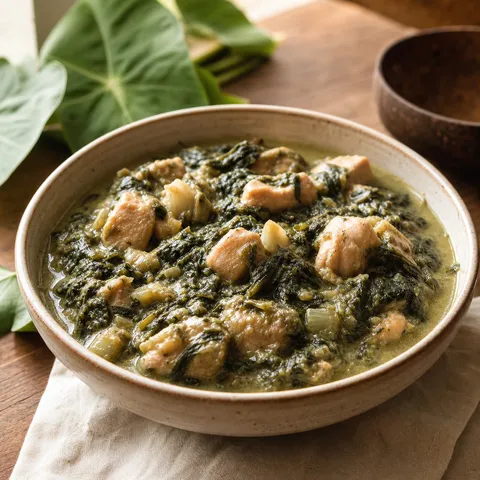
 Chicken Luau
Tender chicken simmered with young taro leaves in coconut milk until velvety and earthy — a quietly comforting Hawaiian stew full of old-fashioned luau warmth.
 Hawaiian Lens Verified Images are for illustrative purposes only, may be inaccurate, and do not guarantee the presence or absence of specific ingredients.
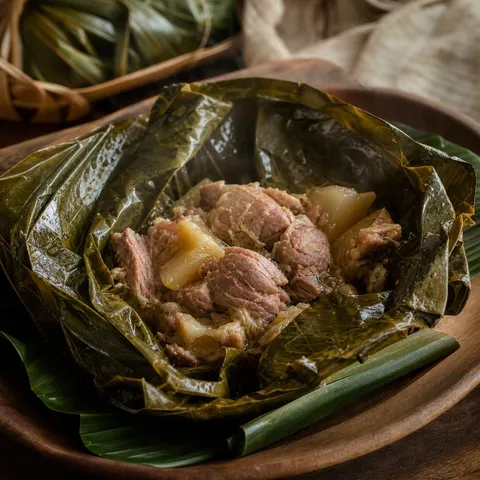
 Lau Lau
Pork shoulder and butterfish bundled in layers of taro leaf and steamed until meltingly tender — earthy, rich, and deeply rooted in Native Hawaiian tradition.