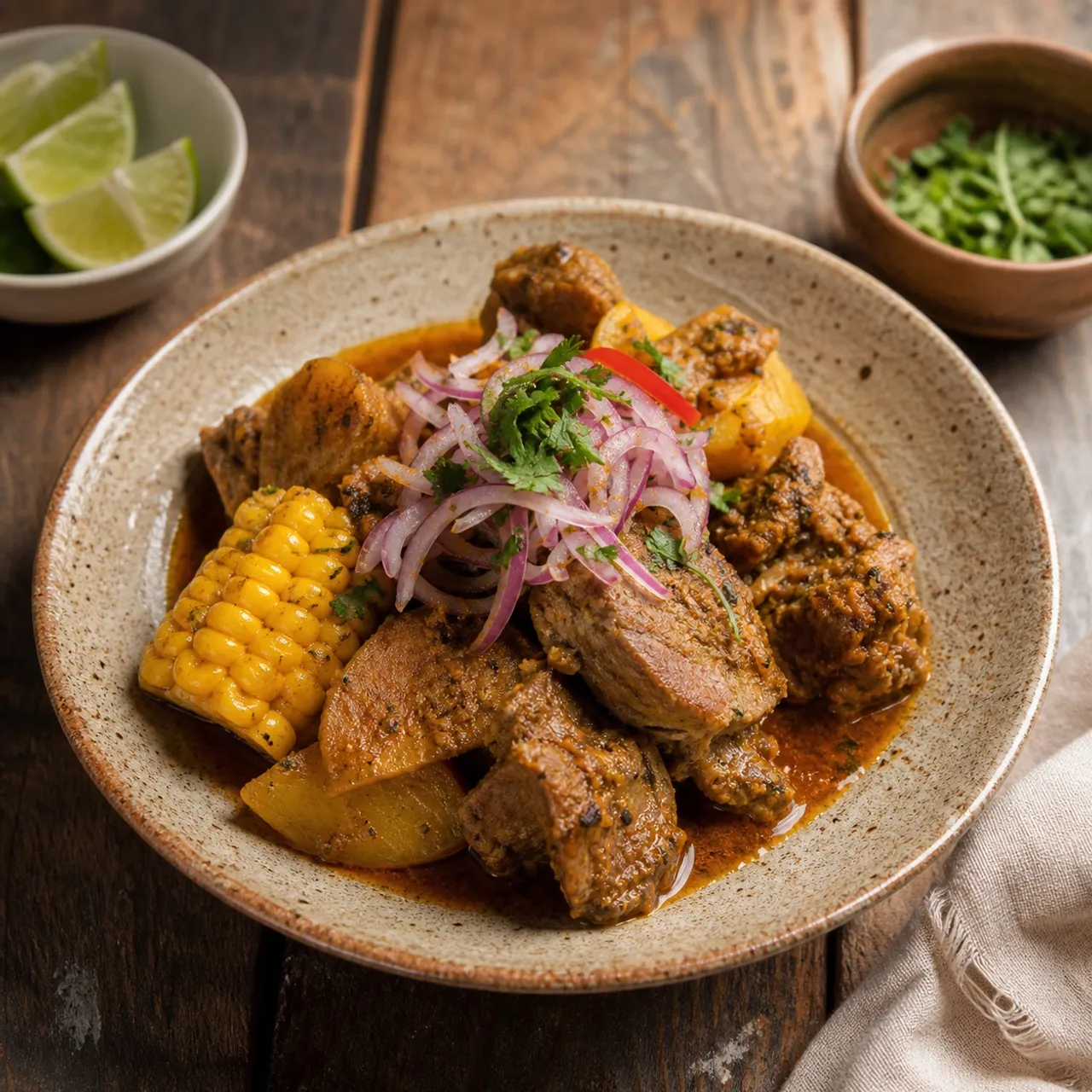
 Peruvian Images are for illustrative purposes only, may be inaccurate, and do not guarantee the presence or absence of specific ingredients.
 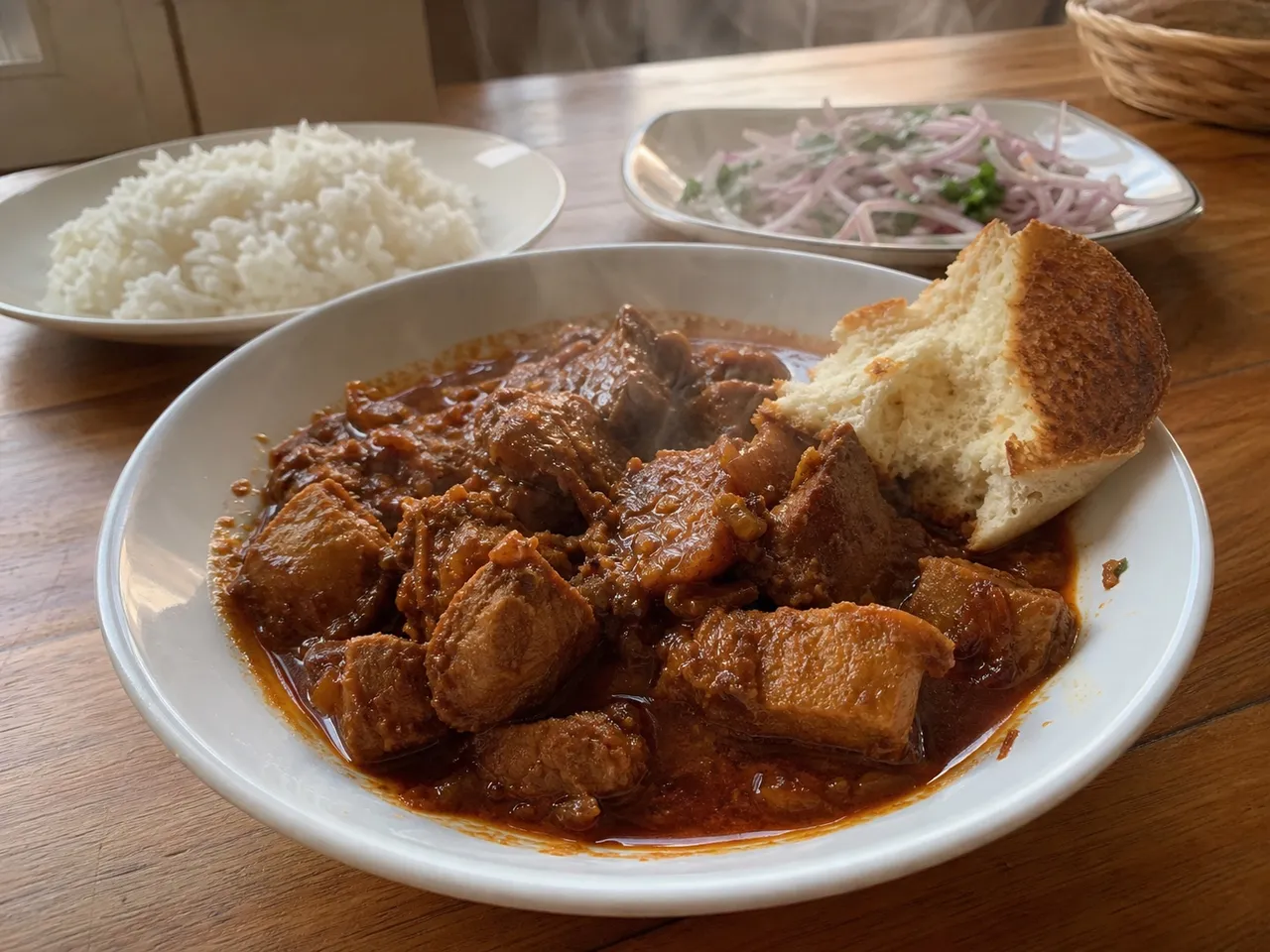 Serving Images are for illustrative purposes only, may be inaccurate, and do not guarantee the presence or absence of specific ingredients.
 Adobo Arequipeño (Spicy Peruvian Pork and Chicha Stew)
A fiery Arequipa specialty of pork marinated overnight in chicha de jora, aji panca, and garlic, then slow-simmered until deeply tender.
No common allergens detected
Based on this recipe's ingredient list. Always verify with your own brands and labels.
Good to know
- One-pot
Matched from this dish's own ingredients and timing. Browse more: one-pot dinners
Instructions
6 steps- 1
Combine the pork with chicha de jora, aji panca paste, aji mirasol paste, garlic, oregano, cumin, bay leaves, salt, and pepper in a bowl.
- 2
Cover and marinate in the refrigerator for at least 6 hours or overnight.
- 3
Heat oil in a heavy pot and brown the marinated pork chunks in batches, reserving the marinade.
- 4
Add the sliced onion and the reserved marinade to the pot, cover, and simmer over low heat for 1 to 1.5 hours until the pork is fork-tender and the sauce has thickened.
- 5
Remove the bay leaves and adjust seasoning.
- 6
Serve with crusty bread or boiled potatoes to soak up the sauce.
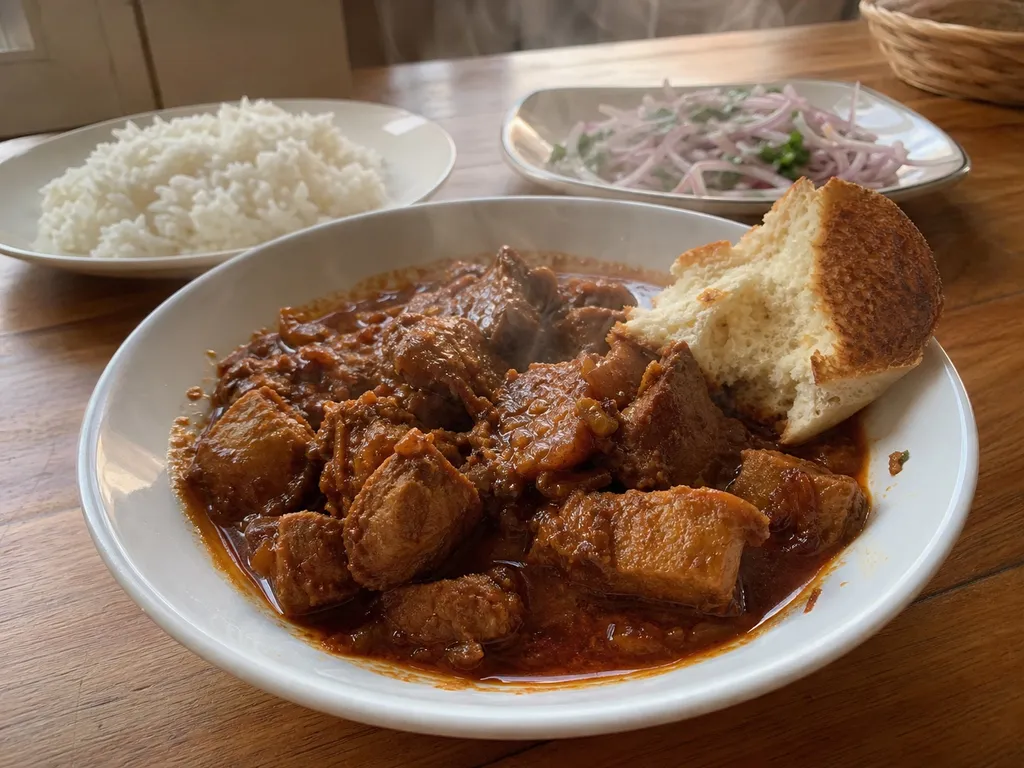 Images are for illustrative purposes only, may be inaccurate, and do not guarantee the presence or absence of specific ingredients.
 Listahan Family Score™
66/100
Works for many families
Score reflects how well this recipe fits a typical busy household. In the app, your Family Score is personalized to your household's allergens, kids, and pantry.
Nutrition
per serving720
Calories
62 g
Protein
9 g
Carbs
40 g
Fat
Estimated per serving. Actual values depend on the brands and portions you use.
Listahan cooking guide
Chef notes & practical guide
Technique notes, ingredient swaps, serve-alongside ideas, storage guidance, and equipment for this recipe.
Cultural context
Adobo arequipeno hails from Arequipa, the volcanic-stone city in southern Peru known for its own distinct, spicier culinary tradition separate from Lima's. This dish is a weekend breakfast staple there, traditionally eaten the morning after a big meal with bread to soak up the fiery, chicha-based marinade.
Listahan note
This version leans on both aji panca and aji mirasol together, which is what gives the marinade its layered heat rather than relying on just one chile for both color and spice.
Technique cues
- Marinating the pork for at least 6 hours, ideally overnight, lets the chile pastes and chicha penetrate past the surface, which is the difference between a dish that tastes seasoned on top versus one that's flavorful all the way through.
- Browning the pork in batches after marinating, rather than simmering it directly in the marinade from raw, builds a seared crust that adds another layer of flavor the braise alone wouldn't achieve.
- Simmering low and slow rather than at a boil is what reduces the chicha and chile marinade into a thick, clinging sauce instead of a thin, separated liquid.
Kitchen flow
- Parallel prep
- Start the pork marinating the night before so the only day-of work is browning and a long, mostly hands-off simmer.
- Make-ahead
- Like most braises, this tastes even better made a day ahead and gently reheated.
- Leftover move
- Shred any leftover pork and use it to fill sandwiches with a bit of the reduced sauce spooned over.
- Cleanup rhythm
- Brown the pork in batches in one pot so there's only a single pan to deglaze and clean at the end.
Ingredient brief
Role, handling, and swap guidance for each key ingredient.
pork shoulder
the primary protein
Purpose: the marbled fat in pork shoulder renders down during the long simmer, keeping the meat tender and enriching the sauce
Handling: cut into large chunks so they hold together through the long braise
Adaptation: beef chuck can stand in, though it changes the dish from its traditional pork base.
aji panca paste
smoky base heat and color
Purpose: aji panca's milder, smokier profile is the foundation the aji mirasol builds sharper heat on top of
Handling: combine directly into the marinade with the other seasonings
Adaptation: smoked paprika with a touch of tomato paste in a pinch, though it will lack real chile heat.
aji mirasol paste
the marinade's sharper, more assertive heat
Purpose: aji mirasol, the dried form of aji amarillo, adds a brighter, more pointed spiciness that complements aji panca's smokiness rather than duplicating it
Handling: whisk into the marinade alongside the aji panca so both chiles are evenly distributed
Adaptation: aji amarillo paste can be used if mirasol isn't available, since it's the same pepper in fresh form, though the flavor is slightly less concentrated.
chicha de jora or dark beer
marinade liquid with fermented depth
Purpose: chicha de jora's tang and slight sourness is traditional to Arequipa's cooking and gives the sauce a depth plain broth lacks
Handling: combine with the chile pastes as the marinade base before it goes over the pork
Adaptation: a dark beer is the most common substitute outside Peru and gives a similar malty depth.
dried oregano
herbal background note
Purpose: oregano is a common thread through many Peruvian braises and rounds out the chile heat with an earthy, slightly bitter note
Handling: add directly to the marinade so it rehydrates and infuses over the marinating time
Adaptation: Mexican oregano has a similar profile if Mediterranean oregano isn't on hand.
Technique notes
- Reserve the marinade when browning the pork rather than discarding it - it's what becomes the braising liquid and eventual sauce, so nothing in it should go to waste.
- Brown the pork in a heavy pot over real heat rather than rushing it; a proper sear on each side before braising adds meaningfully more flavor than skipping straight to simmering.
- Check for doneness by how easily the pork shreds with a fork rather than by the clock, since shoulder cuts vary in how long they take to become fork-tender.
Ingredient swaps
- Alcohol-free direction
- Replace the chicha de jora or beer with pork or chicken broth plus a splash of apple cider vinegar for tang.
- Gluten-free direction
- Use a gluten-free beer or the broth substitution above if avoiding chicha de jora or standard beer.
- Milder heat direction
- Reduce the aji mirasol paste by half and keep the aji panca as written for a gentler, still flavorful version.
Serve alongside
- Crusty rustic bread
- Boiled potatoes
- Rocoto relleno on the side for those who want more heat
- Sliced avocado
- Chicha de jora
- A dark or amber Peruvian beer
- Hot mate de coca
Serving suggestions only — check pairings for your household's allergens.
Storage & reheating
- Refrigerate up to 4 days; the sauce often thickens further and tastes even better the next day
- Reheat gently on the stovetop, adding a splash of broth if needed
- Freezes well up to 3 months
Equipment
- Heavy pot or Dutch oven
- Mixing bowl for marinating
- Tongs for browning
- Ladle
Make this household-aware
Listahan Pro checks this recipe against your household's allergens, finds pantry-aware swaps, builds the shopping list, and helps you plan the week around it.
Plan it in Listahan
Add Adobo Arequipeño (Spicy Peruvian Pork and Chicha Stew) to your week, check it against your household's allergens, and build the shopping list automatically.
More Peruvian recipes
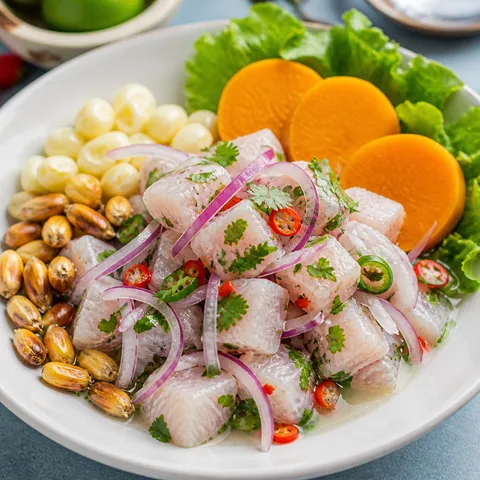 Peruvian Lens Verified Images are for illustrative purposes only, may be inaccurate, and do not guarantee the presence or absence of specific ingredients.
 Ceviche de Pescado
The iconic dish of Peru—exquisitely fresh, raw white fish "cooked" purely by the acidity of freshly squeezed lime juice, infused with chili heat and red onion bite.
 Peruvian Lens Verified Images are for illustrative purposes only, may be inaccurate, and do not guarantee the presence or absence of specific ingredients.
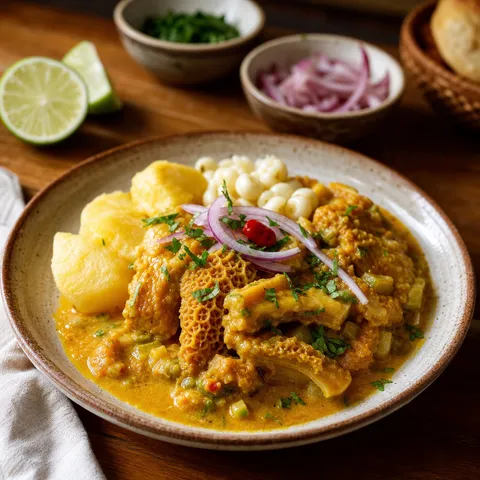
 Cau Cau (Peruvian Tripe Stew)
A hearty yellow stew of tender beef tripe and potatoes simmered in aji amarillo and mint, spooned over rice for a classic home-style meal.
 Peruvian Lens Verified Images are for illustrative purposes only, may be inaccurate, and do not guarantee the presence or absence of specific ingredients.
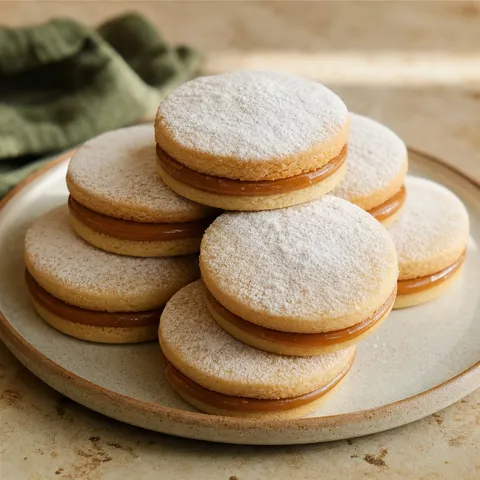
 Alfajores (Peruvian Dulce de Leche Sandwich Cookies)
Delicate, crumbly shortbread cookies sandwiched with rich dulce de leche and dusted with powdered sugar, a favorite Peruvian teatime treat.