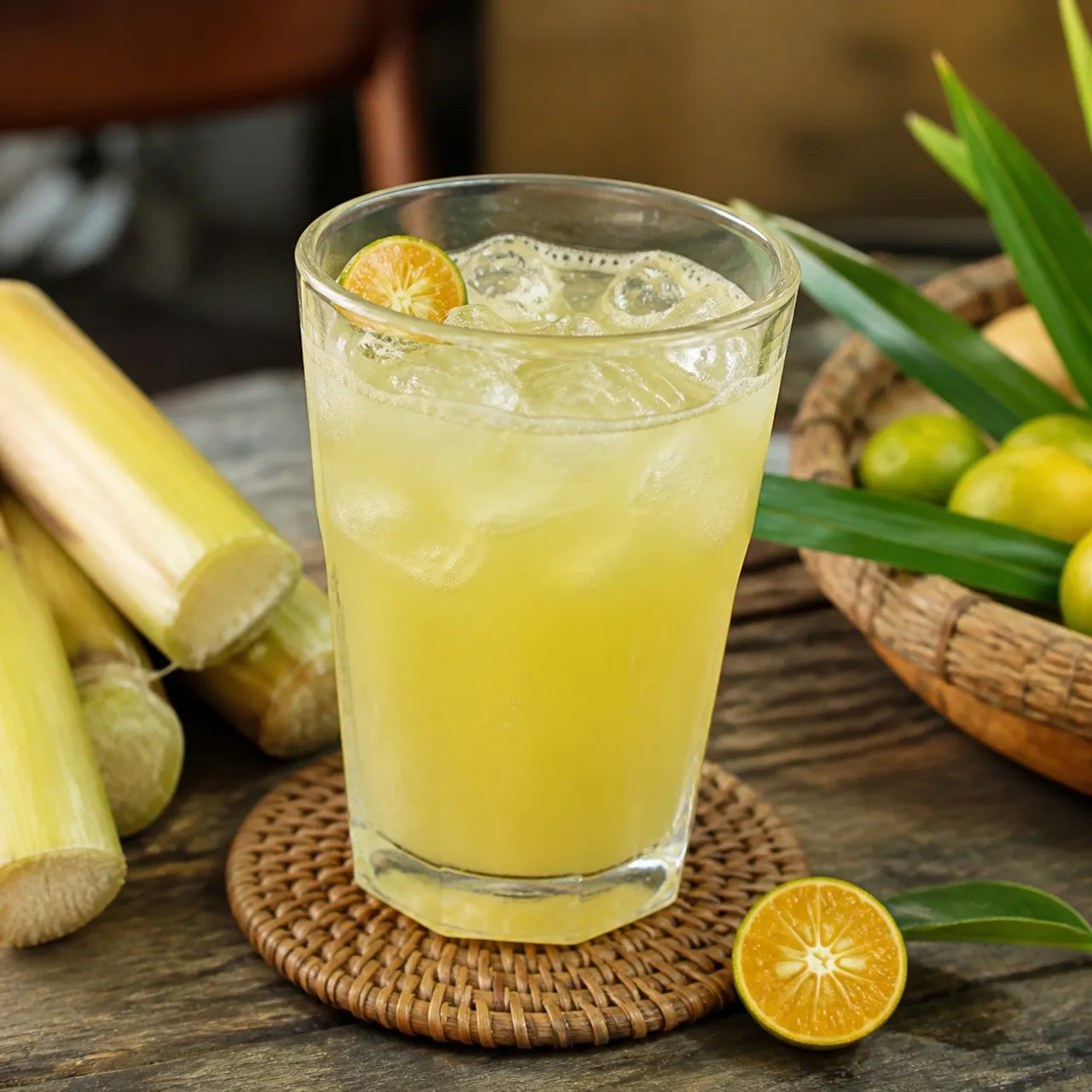
 Vietnamese Images are for illustrative purposes only, may be inaccurate, and do not guarantee the presence or absence of specific ingredients.
 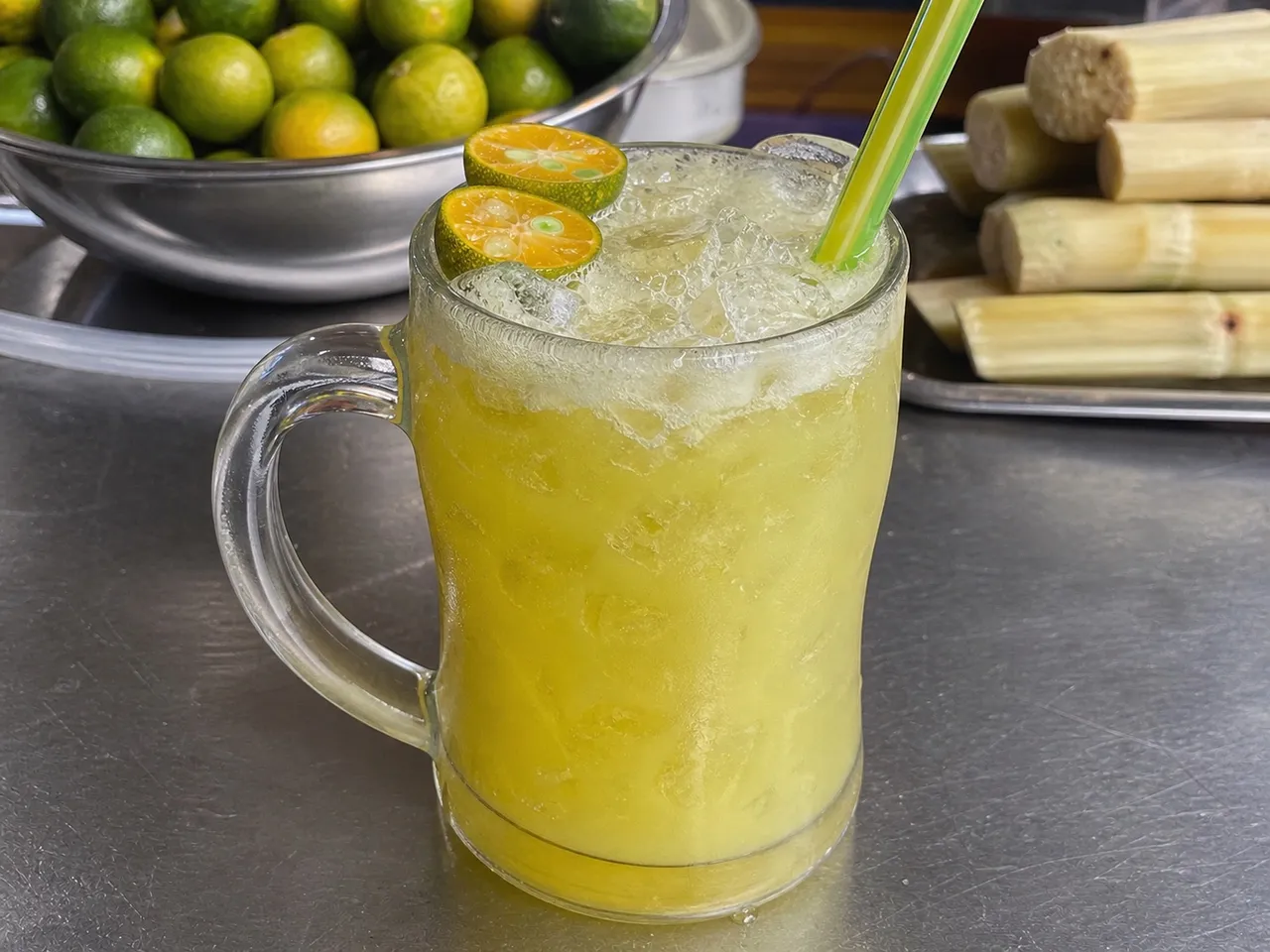 Serving Images are for illustrative purposes only, may be inaccurate, and do not guarantee the presence or absence of specific ingredients.
 Nước Mía (Sugarcane Juice)
A refreshingly sweet, grassy street drink of pressed fresh sugarcane brightened with a squeeze of kumquat or lime over ice.
No common allergens detected
Based on this recipe's ingredient list. Always verify with your own brands and labels.
Good to know
- Ready in under 30 minutes
Matched from this dish's own ingredients and timing. Browse more: 30-minute meals
Instructions
5 steps- 1
If using fresh sugarcane, peel away the tough outer skin and cut the pale inner cane into 2-inch chunks, then add to a heavy-duty blender with 1/2 cup water.
- 2
Blend on high for 1 minute until the cane is broken into fibrous pulp, then strain firmly through a fine-mesh sieve or nut milk bag, pressing hard to extract every drop of the sweet juice.
- 3
Squeeze the kumquats or lime into the juice and add a tiny pinch of salt to round out and amplify the sweetness.
- 4
Fill tall glasses with ice, pour over the chilled sugarcane juice, and drop in the spent kumquat halves for fragrance.
- 5
Stir briefly and serve immediately while ice-cold and frothy, as the fresh juice loses its bright flavor within a few hours.
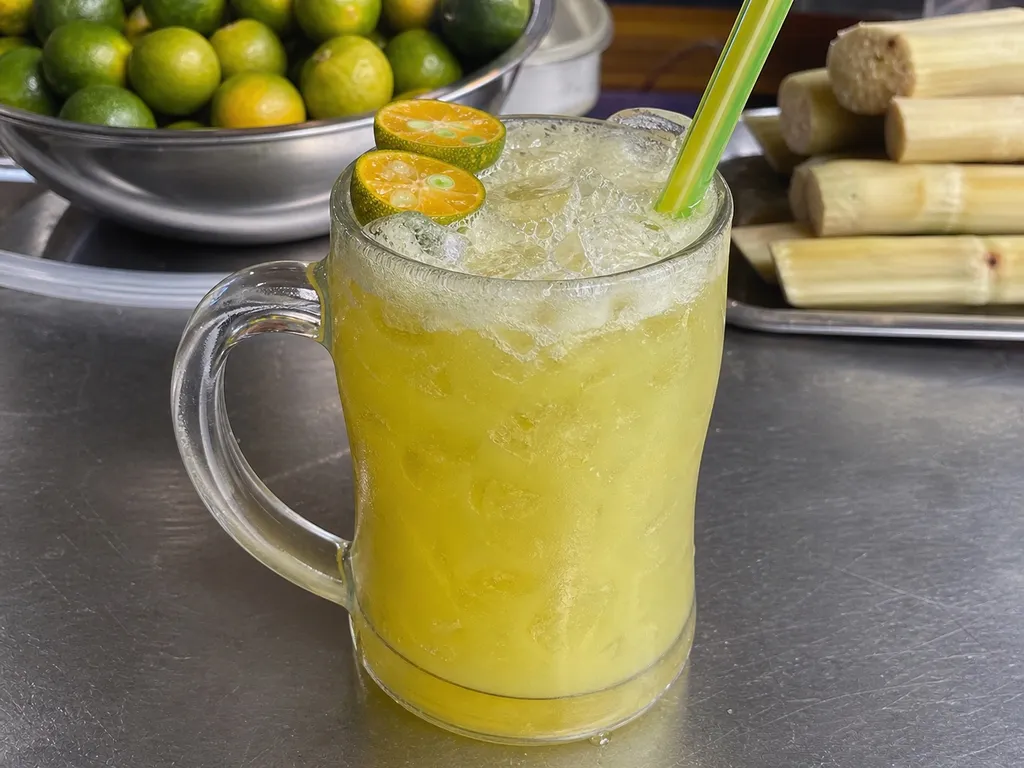 Images are for illustrative purposes only, may be inaccurate, and do not guarantee the presence or absence of specific ingredients.
 Listahan Family Score™
75/100
Good fit for most families
Score reflects how well this recipe fits a typical busy household. In the app, your Family Score is personalized to your household's allergens, kids, and pantry.
Nutrition
per serving0
Calories
0 g
Protein
0 g
Carbs
0 g
Fat
Estimated per serving. Actual values depend on the brands and portions you use.
Listahan cooking guide
Chef notes & practical guide
Technique notes, ingredient swaps, serve-alongside ideas, storage guidance, and equipment for this recipe.
Cultural context
Nuoc mia is one of Southeast Asia's most widespread street drinks, but it occupies a particular place in Vietnamese food culture as the drink most associated with the punishing heat of midday in Saigon and other southern cities, where vendors press whole sugarcane stalks through iron rollers on street corners and hand over a plastic bag filled with cloudy green-gold juice over ice. Vietnam is among the world's top sugarcane producers, and the crop grows abundantly in the Mekong Delta and central coastal provinces, making fresh sugarcane juice an inexpensive daily drink rather than a specialty. The addition of kumquat — squeezed in at the moment of serving — is a southern Vietnamese touch that provides the sharp citrus note to cut through the intense sweetness.
Listahan note
This version works with both freshly pressed sugarcane stalks and bottled sugarcane juice as starting points, and centers the technique on balancing the sweetness with kumquat or lime so the finished drink is refreshing rather than cloying.
Technique cues
- The green-gold color of freshly pressed sugarcane juice comes from the chlorophyll in the cane's rind and begins to oxidize to brown within 20-30 minutes of pressing — nuoc mia is always made and consumed immediately; it is not a make-ahead drink.
- A pinch of salt added to any fresh fruit juice amplifies sweetness perception (as salt suppresses bitterness on the palate) and is the reason street vendors add it even to an already-sweet sugarcane drink — the effect is subtle but makes the finished drink taste more complete.
- The ratio of kumquat to juice is the bartender's balance point: too little and the drink is flat sweet; too much and the citrus overwhelms the delicate cane flavor — start with two kumquat halves per glass and adjust to taste, as kumquats vary significantly in tartness.
Kitchen flow
- Parallel prep
- If using fresh cane, set up the juicer and straining cloth before starting, then prepare ice and squeeze kumquats while the juice strains — the whole process takes under 10 minutes.
- Make-ahead
- Fresh sugarcane juice should not be made more than 30 minutes ahead; it oxidizes quickly and loses its green-gold color and fresh flavor. Bottled juice can be chilled up to a week in advance.
- Leftover move
- Any leftover fresh sugarcane juice can be frozen into popsicle molds with a slice of kumquat for a simple frozen treat; the flavor holds better frozen than refrigerated.
- Cleanup rhythm
- Sticky sugarcane juice runs and coats surfaces quickly; wipe down the juicer and surrounding area with a hot wet cloth immediately after pressing rather than allowing it to dry into a tacky residue.
Ingredient brief
Role, handling, and swap guidance for each key ingredient.
fresh sugarcane stalks, peeled and cut into chunks (or bottled sugarcane juice)
primary liquid and flavor base
Purpose: Freshly pressed sugarcane juice has a grassy, green quality and lighter sweetness than bottled versions, which are often more concentrated and can have a cooked-sugar note from pasteurization.
Handling: If pressing fresh cane, feed chunks through a cold-press juicer (a manual sugarcane press is ideal but a centrifugal juicer with a fine filter works); strain through cheesecloth to remove fibrous particles.
Adaptation: Bottled sugarcane juice (available in cans or cartons at Asian grocery stores) is the practical substitute; dilute slightly with cold water and proceed as directed.
kumquats, halved
citrus balance and flavor lift
Purpose: Kumquats provide a more complex citrus note than lime — their edible rind adds a slight piney bitterness alongside the juice's tartness that prevents the drink from tasting one-dimensional.
Handling: Squeeze directly into the glass by pressing each half between the fingers rather than using a juicer; the hand squeeze also releases some essential oils from the rind, adding complexity.
Adaptation: Fresh lime quarters can substitute for kumquats and are more widely available; the flavor is sharper and less complex, but produces the correct sweet-tart balance.
ice cubes
temperature and dilution
Purpose: Nuoc mia is defined by being extremely cold — the sweetness of undiluted sugarcane juice needs the temperature and mild dilution from ice to be palatable as a refreshing drink rather than a sweet syrup.
Handling: Use a full glass of ice rather than a modest amount; the large quantity keeps the drink genuinely cold through drinking and provides the correct dilution rate.
Adaptation: Crushed ice is traditional on Vietnamese street stalls as it chills faster and more evenly; standard cubes work fine for home preparation.
1 pinch salt
flavor amplifier
Purpose: Salt at trace levels enhances sweetness perception on the palate, rounds out the juice's natural bitterness, and is the seasoning step that separates a vendor's nuoc mia from a flat glass of sweet juice at home.
Handling: Add to the juice before pouring over ice so it disperses evenly; a few grains on top of the finished drink is the street-stall presentation.
Adaptation: A tiny pinch of sea salt or even a drop of mineral water with natural sodium content achieves the same effect.
Technique notes
- Pour the strained juice over ice in one pour rather than adding ice to juice in a blender or shaker — agitation introduces air bubbles that turn the clear juice milky and make the color appear less appetizing, though the flavor is unaffected.
- For a batch version (serving 4-6), press or pour all juice at once, combine with salt and kumquat juice, and serve immediately in individual ice-filled glasses — do not let the combined mixture sit as it browns more quickly once the citrus is added.
- The foam that forms on freshly pressed juice is natural and traditional — do not skim it; Vietnamese vendors serve it with the foam intact as a visual signal of freshness.
Ingredient swaps
- Lower-sugar option
- Dilute the sugarcane juice 1:1 with cold sparkling water for a lighter drink with natural effervescence that extends a single serving and reduces the sugar load.
- Ginger direction
- Add a 1-inch piece of fresh ginger pressed through the juicer with the cane for a warming, slightly spicy variation popular in some central Vietnamese preparations.
- Pandan infusion
- Steep 2 pandan leaves knotted and crushed in the cold juice for 15 minutes before serving; pandan adds a grassy, vanilla-adjacent aroma that complements the cane beautifully.
Serve alongside
- banh mi sandwiches, as the sweetness of nuoc mia counterbalances the salty, pickled filling
- Vietnamese grilled skewers (nem nuong or thit nuong) at a street-food spread
- fresh mango with tajin-style salt and chili for a fruit snack alongside
- served as the drink alongside any Vietnamese noodle dish in a casual setting
- paired with salty snacks (banh trang nuong, grilled rice paper) as the sweetness provides direct contrast
Serving suggestions only — check pairings for your household's allergens.
Storage & reheating
- Fresh sugarcane juice must be consumed within 30 minutes of pressing for best flavor and color; oxidation is rapid and irreversible.
- Bottled sugarcane juice keeps refrigerated for up to 5 days once opened; shake before each pour as natural separation occurs.
- Freeze fresh juice in ice cube trays and store frozen cubes for up to 1 month; use in smoothies or thaw for a quick glass, though some green-fresh notes will be lost.
Equipment
- cold-press juicer or manual sugarcane press (centrifugal juicer with fine strainer as fallback)
- fine-mesh strainer or cheesecloth for removing fibrous particles
- tall glass or plastic cup with a wide straw, traditional street-vendor serving style
- citrus hand squeezer for kumquats or lime
Make this household-aware
Listahan Pro checks this recipe against your household's allergens, finds pantry-aware swaps, builds the shopping list, and helps you plan the week around it.
Plan it in Listahan
Add Nước Mía (Sugarcane Juice) to your week, check it against your household's allergens, and build the shopping list automatically.
More Vietnamese recipes
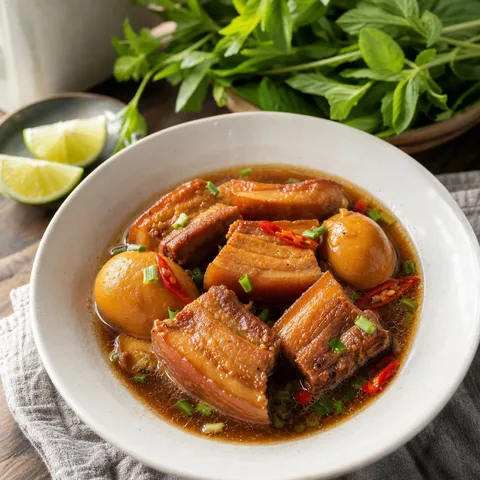 Vietnamese Lens Verified Images are for illustrative purposes only, may be inaccurate, and do not guarantee the presence or absence of specific ingredients.
 Thịt Kho Tàu (Caramelized Pork and Eggs)
Meltingly tender pork belly and hard-boiled eggs braised in a rich, sweet, and savory coconut juice caramel, perfect over steamed rice.
 Vietnamese Lens Verified Images are for illustrative purposes only, may be inaccurate, and do not guarantee the presence or absence of specific ingredients.
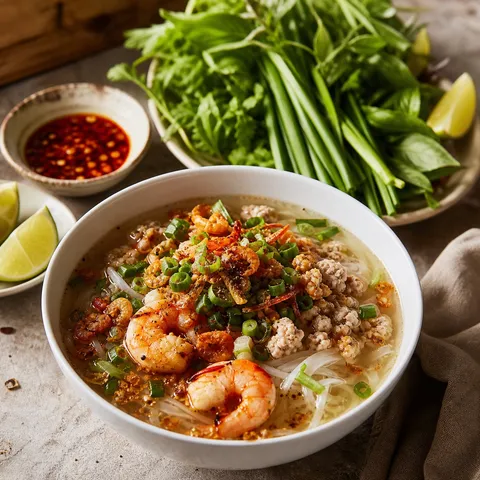
 Hủ Tiếu (Pork and Seafood Noodle Soup)
A Vietnamese pork-bone broth noodle soup loaded with ground pork, shrimp, and dried shrimp over chewy tapioca noodles, finished with garlic chives and fried garlic.
 Vietnamese Lens Verified Images are for illustrative purposes only, may be inaccurate, and do not guarantee the presence or absence of specific ingredients.
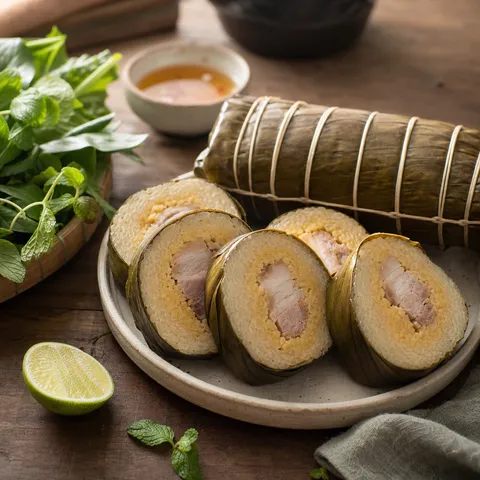
 Bánh Tét (Cylindrical Sticky Rice Cake)
The Southern equivalent of Bánh Chưng, rolled into a cylinder.