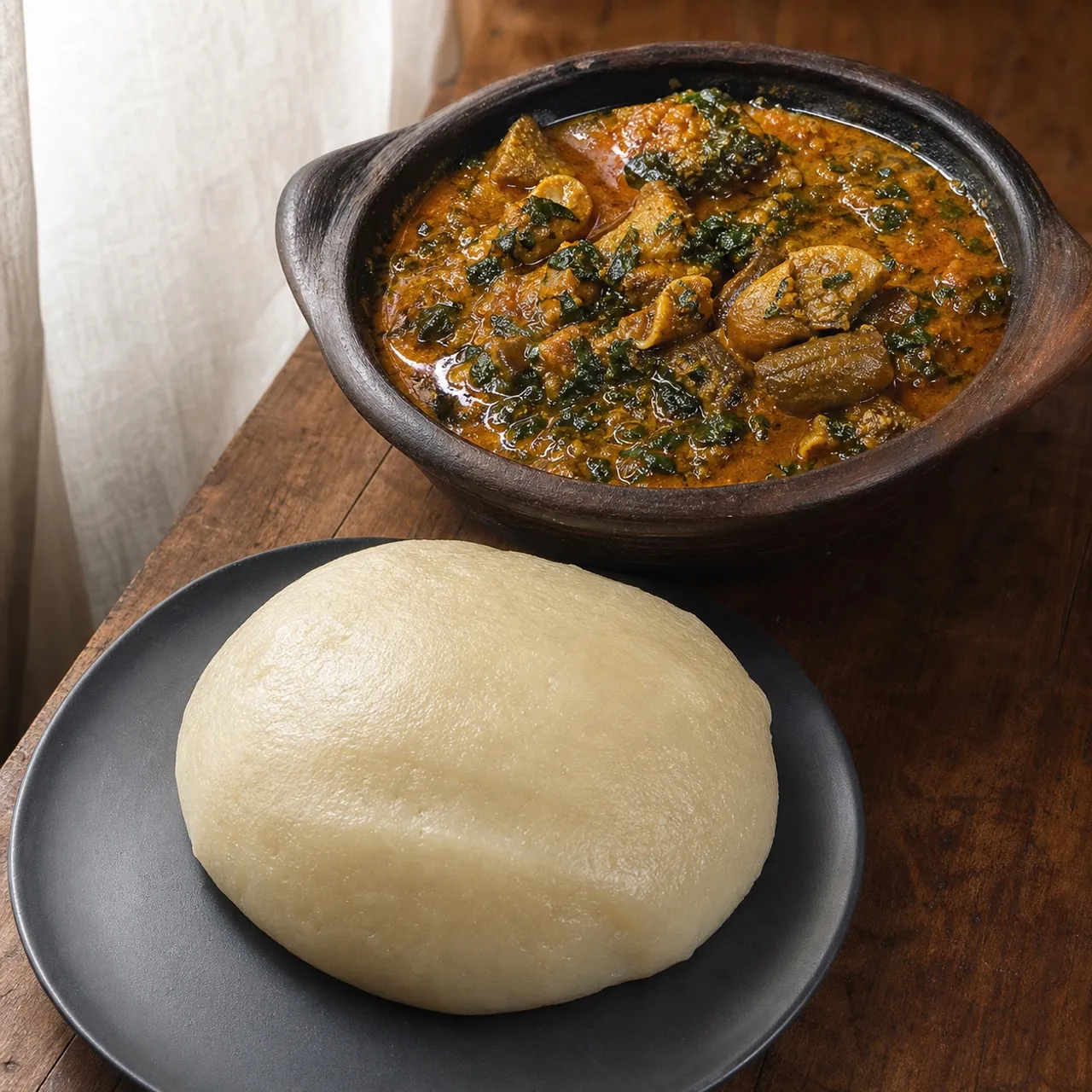
 West African Images are for illustrative purposes only, may be inaccurate, and do not guarantee the presence or absence of specific ingredients.
 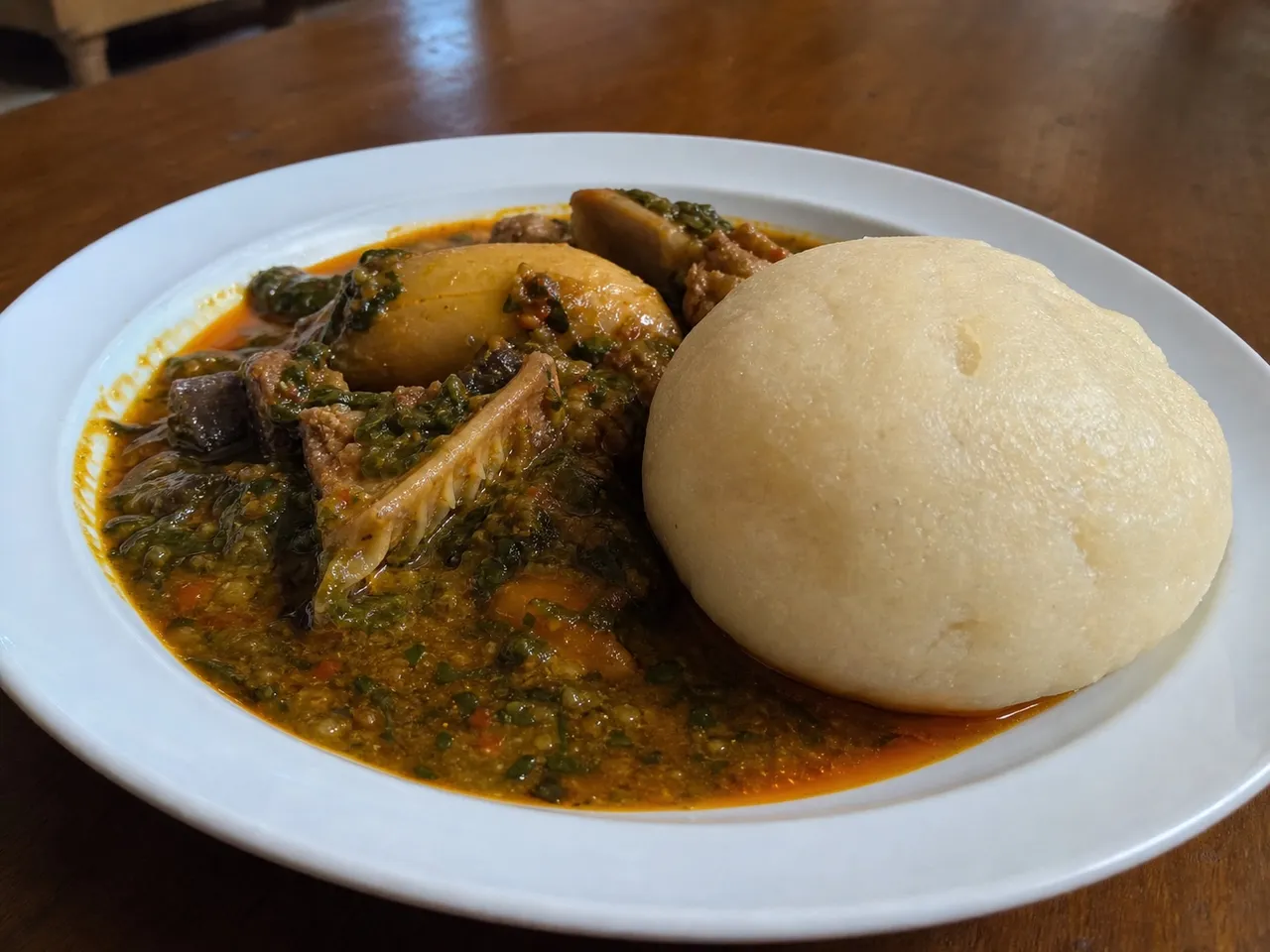 Serving Images are for illustrative purposes only, may be inaccurate, and do not guarantee the presence or absence of specific ingredients.
 Eba
Garri stirred rapidly into boiling water into a firm, golden swallow with a faint sour tang — versatile, filling, and the workhorse companion to virtually every Nigerian soup.
No common allergens detected
Based on this recipe's ingredient list. Always verify with your own brands and labels.
Good to know
- One-pot
- Ready in under 30 minutes
Matched from this dish's own ingredients and timing. Browse more: one-pot dinners30-minute meals
Instructions
7 steps- 1
Bring 2 1/2 cups of the boiling water to a vigorous boil in a heavy pot.
- 2
Reduce the heat to medium and sprinkle in about half of the garri, stirring quickly with a wooden spoon or turning stick to begin forming a paste.
- 3
Add the remaining garri gradually, stirring and pressing firmly against the sides of the pot to break up lumps.
- 4
Turn and fold the mixture vigorously, using firm circular strokes, for 3 to 5 minutes, adding splashes of the extra boiling water as needed, until it comes together into a smooth, stretchy, firm dough with a faint sour tang.
- 5
If the eba feels too stiff, sprinkle in a little more boiling water and continue turning until pliable; if too soft, sprinkle in a little more dry garri.
- 6
Wet your hands with the cold water, or lightly oil them, and mold the eba into smooth, rounded balls.
- 7
Serve immediately, hot, alongside any Nigerian soup such as ewedu, gbegiri, or ogbono.
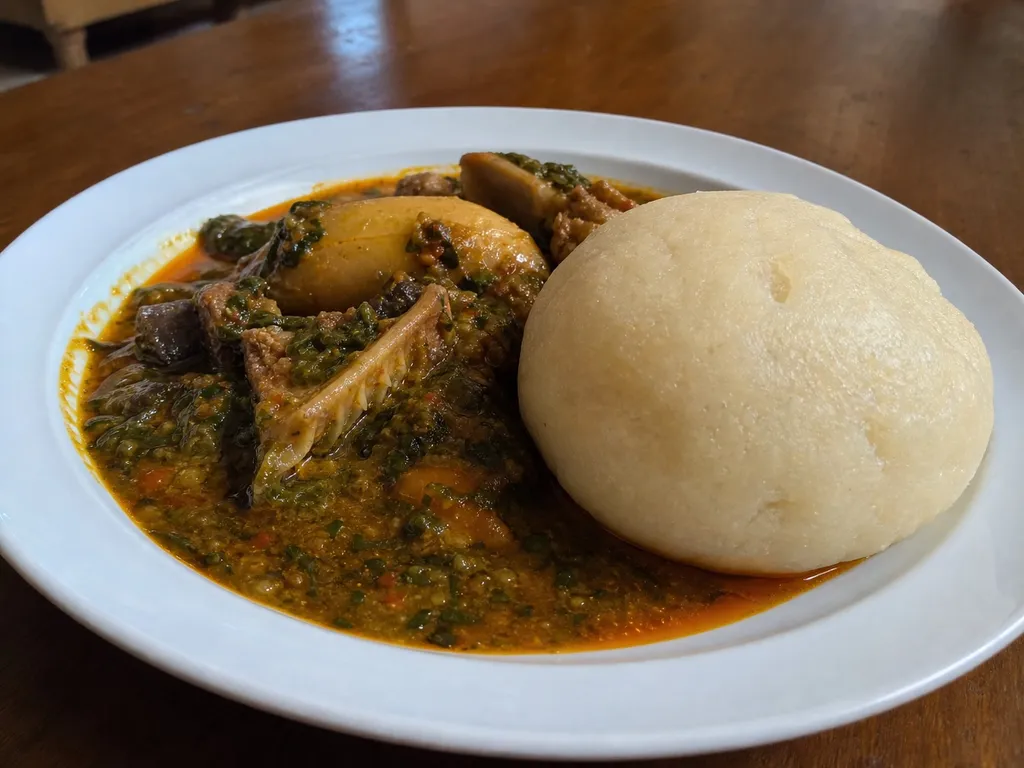 Images are for illustrative purposes only, may be inaccurate, and do not guarantee the presence or absence of specific ingredients.
 Listahan Family Score™
77/100
Good fit for most families
Score reflects how well this recipe fits a typical busy household. In the app, your Family Score is personalized to your household's allergens, kids, and pantry.
Nutrition
per serving0
Calories
0 g
Protein
0 g
Carbs
0 g
Fat
Estimated per serving. Actual values depend on the brands and portions you use.
Listahan cooking guide
Chef notes & practical guide
Technique notes, ingredient swaps, serve-alongside ideas, storage guidance, and equipment for this recipe.
Cultural context
Eba is a Nigerian staple swallow made by stirring garri, the toasted, fermented cassava granule, into hot water until it forms a smooth, stretchy dough. It is one of the most common everyday foods in southern and western Nigeria, eaten by pinching off a piece and using it to scoop up soups like egusi, okra, or ewedu. Its mild tang and elastic texture come entirely from the fermented cassava, with no flour or grain involved.
Listahan note
This version focuses on the ratio and stirring technique that gives eba a smooth, lump-free, pliable texture. It is built to partner with a rich, brothy soup rather than to stand alone.
Technique cues
- Add the garri gradually to the hot water and let it absorb for a moment before stirring, which prevents dry lumps in the center.
- Use water that is just off the boil, since water too cool leaves the eba grainy and water too violent makes it splatter.
- Work the dough firmly against the side of the pot to develop the smooth, slightly elastic pull that makes it easy to mold and dip.
Kitchen flow
- Parallel prep
- Have the soup hot and ready first, because eba is made to order and stiffens as it sits, so it should be the last thing you make.
- Make-ahead
- Eba is best fresh, but you can keep the garri measured and the water hot so assembly takes under five minutes at mealtime.
- Leftover move
- Wrap leftover eba tightly while warm; the next day, steam or microwave it with a splash of water to soften it back to pliable.
- Cleanup rhythm
- Soak the pot and spatula immediately, since cassava dough dries to a stubborn film if left to sit.
Ingredient brief
Role, handling, and swap guidance for each key ingredient.
garri (toasted cassava granules)
the entire base
Purpose: Fermented, toasted cassava is what eba is; its starch swells and binds into the characteristic stretchy swallow.
Handling: Sprinkle it in gradually rather than dumping it, so it hydrates evenly.
Adaptation: There is no true substitute, but other cassava swallows like fufu serve the same role at the table.
hot water
hydration and cooking
Purpose: Near-boiling water gelatinizes the cassava starch instantly, which is what sets the texture.
Handling: Bring it to a near boil and pour it over or into the garri off direct high heat.
Adaptation: No substitute; the temperature is the active ingredient here.
ice-cold water (optional, for soaking)
texture control
Purpose: Some cooks briefly soak garri in cold water first for a softer eba, a small choice that changes the final chew.
Handling: Soak only a moment if at all, then drain before adding the hot water.
Adaptation: Skip soaking entirely for a firmer, more traditional eba.
accompanying soup (egusi, okra, or ewedu)
the essential partner
Purpose: Eba is never eaten alone; the soup it scoops is integral to the dish as it is actually served.
Handling: Have a rich, brothy soup hot and ready before molding the eba.
Adaptation: Any thick Nigerian soup works, from egusi to ogbono to vegetable soup.
Technique notes
- Wrap the finished eba in plastic and briefly mold it into a smooth ball for a cleaner texture and easier scooping.
- If it turns out too stiff, sprinkle in a little hot water and work it again rather than starting over.
- Wet your hands or the spatula to handle the hot dough without it sticking as you shape it.
Ingredient swaps
- Lighter swallow direction
- Use less garri for a softer, looser eba that is gentler to eat, accepting that it holds its shape less firmly.
- Different swallow direction
- Swap to pounded yam or amala if you want a different texture or color alongside the same soups.
- Allergen note
- Eba is naturally gluten-free and made only from cassava and water, suiting wheat-free households.
Serve alongside
- egusi soup
- ewedu and gbegiri
- okra soup with assorted meats
- chilled palm wine
- zobo hibiscus drink
- cold water (the traditional accompaniment)
Serving suggestions only — check pairings for your household's allergens.
Storage & reheating
- Eba is best eaten immediately while warm and pliable. Wrap leftovers tightly and refrigerate for up to two days, then steam or microwave with a sprinkle of water to restore softness. It does not freeze well, as the texture turns crumbly.
Equipment
- small heavy pot
- sturdy wooden spatula or omorogun
- kettle for hot water
- plastic wrap for molding
Make this household-aware
Listahan Pro checks this recipe against your household's allergens, finds pantry-aware swaps, builds the shopping list, and helps you plan the week around it.
Plan it in Listahan
Add Eba to your week, check it against your household's allergens, and build the shopping list automatically.
More West African recipes
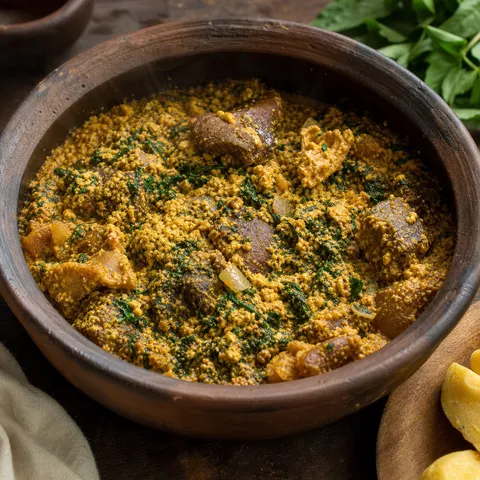 West African Lens Verified Images are for illustrative purposes only, may be inaccurate, and do not guarantee the presence or absence of specific ingredients.
 Egusi Soup
Ground melon seeds simmered with palm oil, leafy greens, and bold spices into a rich, nutty stew that's a cornerstone of Nigerian home cooking.
 West African Lens Verified Images are for illustrative purposes only, may be inaccurate, and do not guarantee the presence or absence of specific ingredients.
 Banku
A smooth, slightly tangy Ghanaian dough of fermented corn and cassava, cooked to a stretchy consistency — the perfect partner for okra stew or grilled tilapia.
 West African Lens Verified Images are for illustrative purposes only, may be inaccurate, and do not guarantee the presence or absence of specific ingredients.
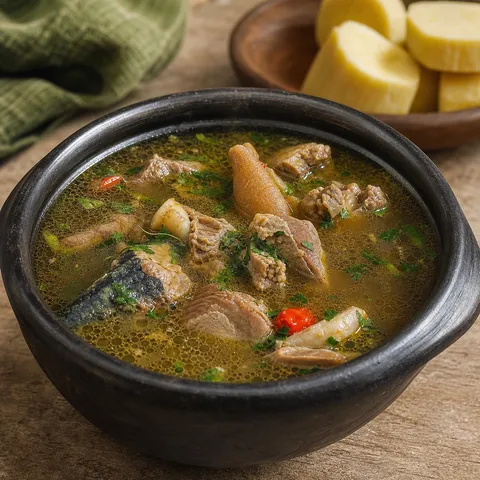
 Pepper Soup
A piercingly spiced, crystal-clear broth simmered with goat meat or catfish and a blend of earthy Nigerian spices — warming, restorative, and intensely aromatic.