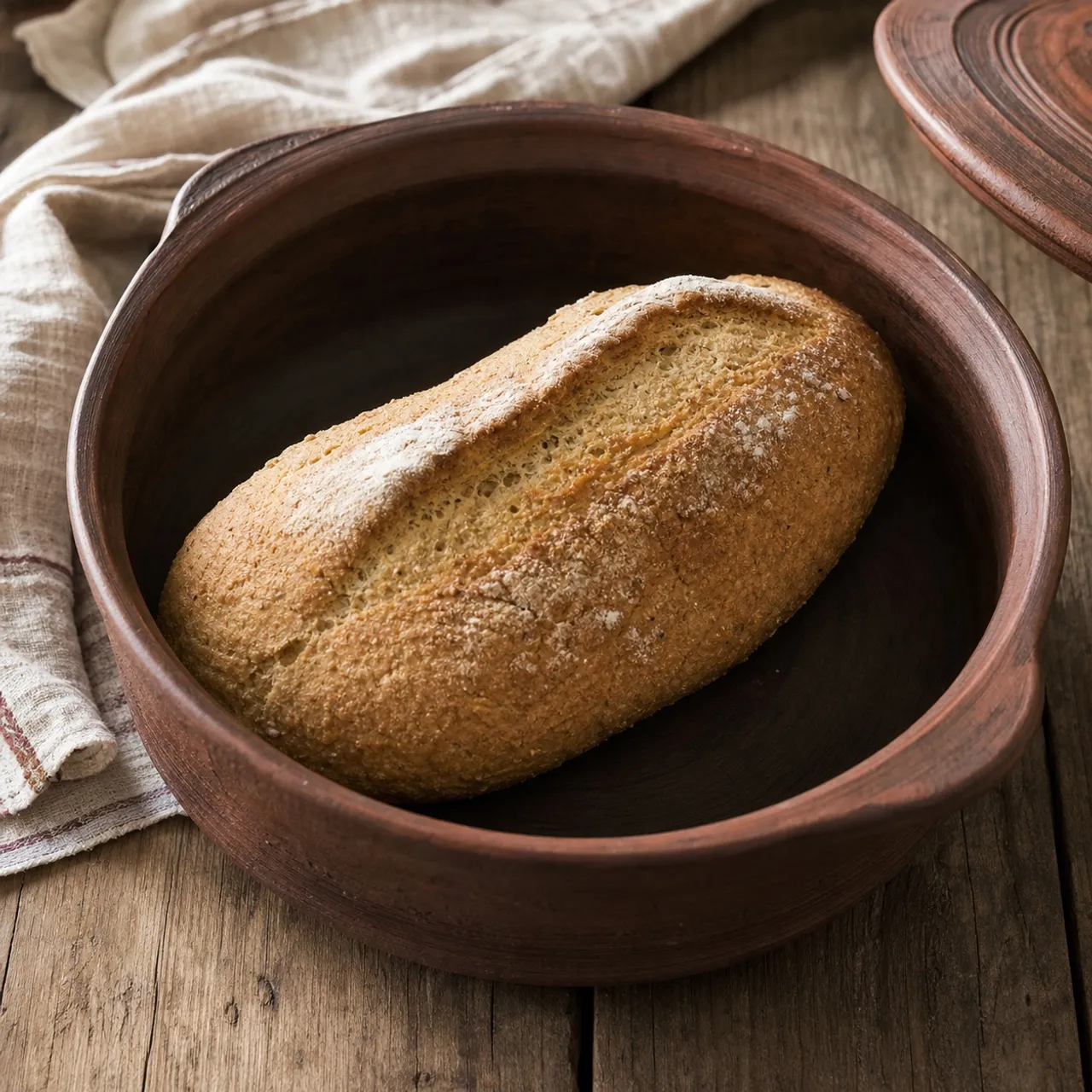
 West African Images are for illustrative purposes only, may be inaccurate, and do not guarantee the presence or absence of specific ingredients.
 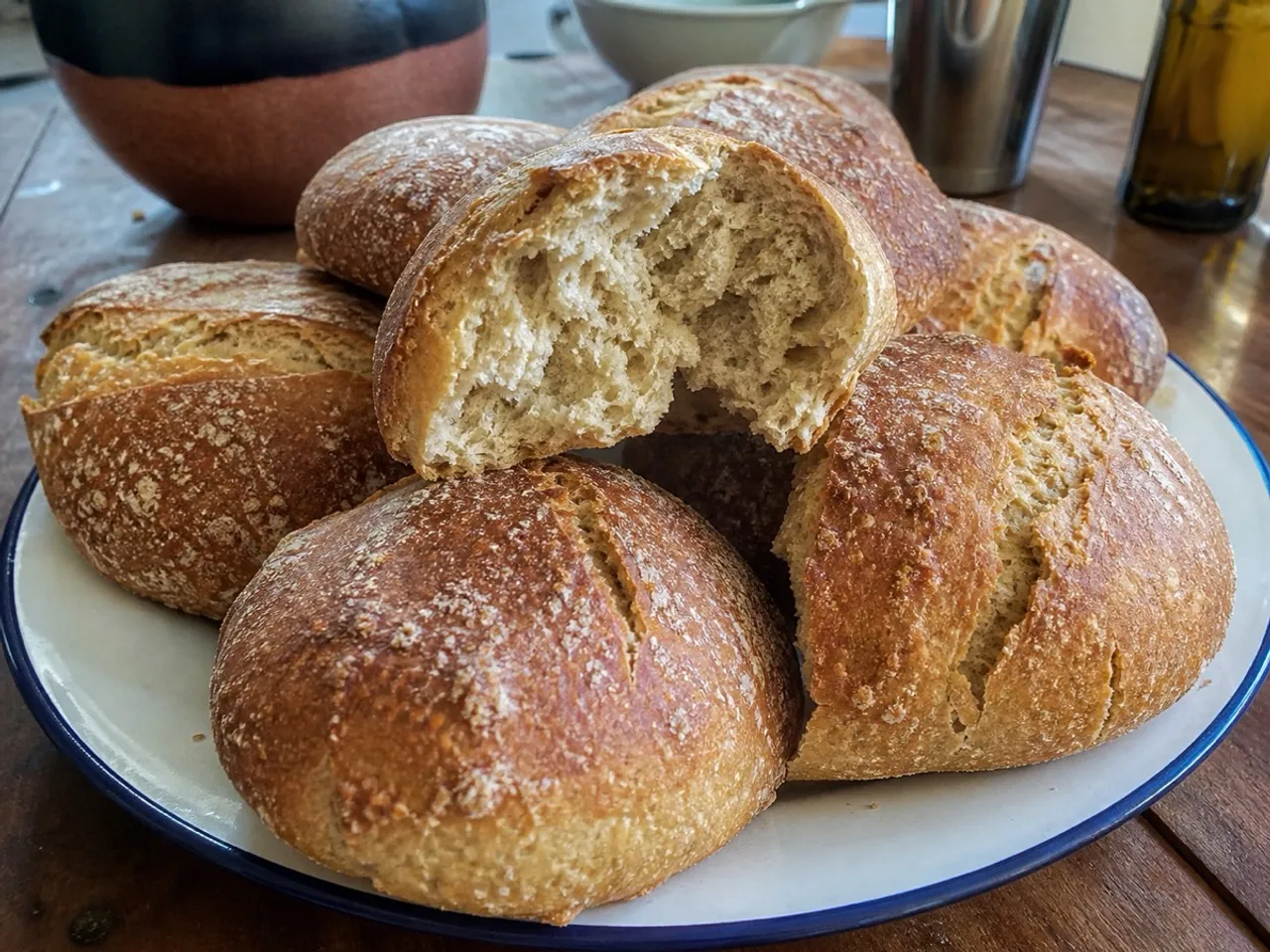 Serving Images are for illustrative purposes only, may be inaccurate, and do not guarantee the presence or absence of specific ingredients.
 Tapalapa
West Africa's crusty artisan bread — baked in wood-fired clay ovens for a shatteringly crisp crust and a chewy, slightly earthy interior perfect for mopping up stew.
Contains common allergens
In the app, Listahan checks these against your household automatically.
Good to know
- Crispy
Matched from this dish's own ingredients and timing. Browse more: crispy recipes
Instructions
8 steps- 1
In a large bowl, dissolve the yeast and sugar in the warm water and let stand for 5 to 10 minutes, until foamy.
- 2
Stir in the flour and salt, then knead the dough on a floured surface for 10 minutes, until smooth, elastic, and no longer sticky, adding the oil partway through kneading.
- 3
Place the dough in an oiled bowl, cover, and let rise in a warm spot for 1 hour, until doubled in size.
- 4
Punch down the dough and divide it into 4 equal pieces, shaping each into a tight oval loaf with tapered ends.
- 5
Place the loaves on a cornmeal-dusted baking sheet, cover loosely, and let rise again for 30 to 40 minutes, until puffy.
- 6
Preheat the oven to its highest setting, ideally 475F, with a baking stone or heavy sheet inside if available, and place a pan of water on the bottom rack for steam.
- 7
Slash the tops of the loaves with a sharp knife and bake for 20 to 25 minutes, until the crust is deeply golden and shatteringly crisp and the loaves sound hollow when tapped.
- 8
Cool on a wire rack for at least 15 minutes before tearing to serve alongside a stew.
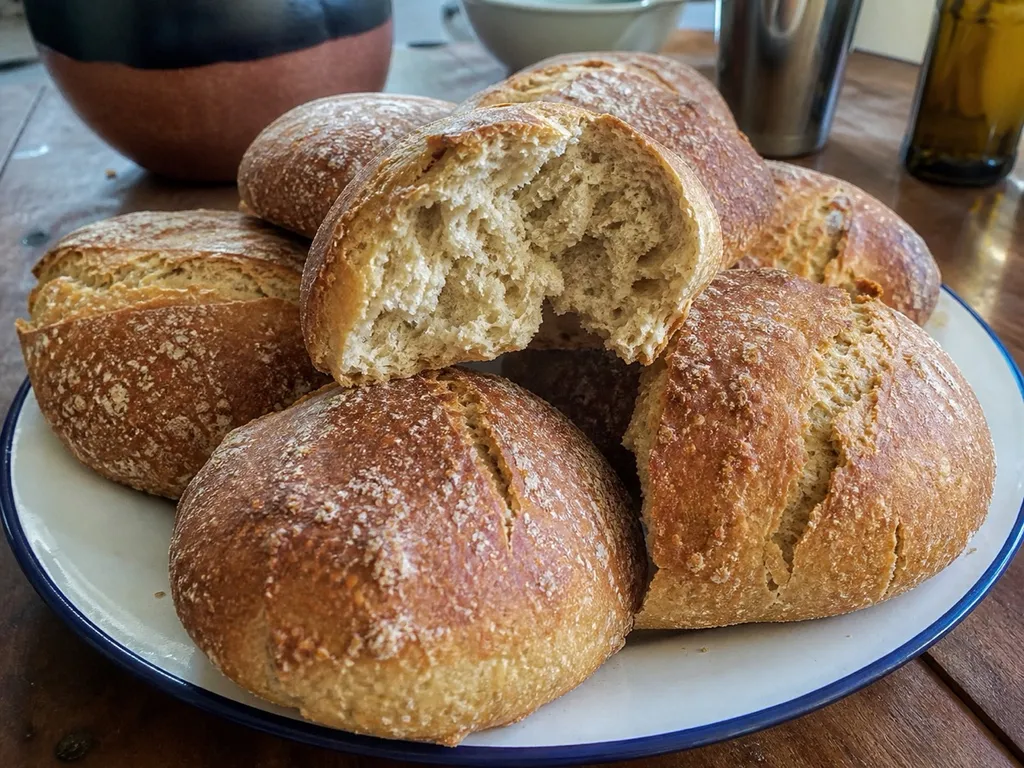 Images are for illustrative purposes only, may be inaccurate, and do not guarantee the presence or absence of specific ingredients.
 Listahan Family Score™
74/100
Good fit for most families
Score reflects how well this recipe fits a typical busy household. In the app, your Family Score is personalized to your household's allergens, kids, and pantry.
Nutrition
per serving30
Calories
1 g
Protein
6 g
Carbs
0 g
Fat
Estimated per serving. Actual values depend on the brands and portions you use.
Listahan cooking guide
Chef notes & practical guide
Technique notes, ingredient swaps, serve-alongside ideas, storage guidance, and equipment for this recipe.
Cultural context
Tapalapa is the everyday bread of Senegal, the Gambia, and Guinea-Bissau, a long crusty loaf traditionally baked in wood-fired clay ovens and sold warm from roadside stalls each morning. What distinguishes it is the blend of wheat flour with millet, corn, or peanut flour, which gives a denser, more rustic crumb than a French baguette while keeping a shatteringly crisp crust. It is the bread that anchors breakfast and street sandwiches across the region, split and stuffed with beans, fish, or eggs.
Listahan note
This version uses a wheat base lifted with a portion of millet or corn flour for that characteristic rustic bite. It builds flavor with a slow rise so the loaf tastes of more than just yeast.
Technique cues
- Mix in the millet or corn flour only as a portion of the total, since too much weakens the gluten and gives you a crumbly loaf that will not hold a sandwich.
- Give the dough a long, cool rise so it develops a deeper, faintly sour flavor that plain quick breads lack.
- Bake with steam in the first minutes, either with a pan of water or a covered vessel, so the crust stays soft long enough to spring before it sets crisp.
Kitchen flow
- Parallel prep
- While the dough does its bulk rise, position a baking stone or heavy tray in the oven and set a metal pan on the bottom rack for steam.
- Make-ahead
- Mix the dough and let it rise slowly in the fridge overnight, then shape and bake the next morning for fresher, more flavorful bread.
- Leftover move
- Split stale tapalapa, brush with oil, and toast it hard for a sandwich base, or cube and dry it for breadcrumbs.
- Cleanup rhythm
- Soak the mixing bowl in warm water right away so dried dough lifts off easily, and brush flour off the counter before it cakes.
Ingredient brief
Role, handling, and swap guidance for each key ingredient.
bread flour
structure
Purpose: Its higher protein builds the strong gluten that gives tapalapa its chew and lets it hold a crackly crust.
Handling: Combine with the other flours and salt before adding water so everything hydrates evenly.
Adaptation: All-purpose flour works but yields a slightly softer, less chewy crumb.
millet flour
rustic character
Purpose: It is the traditional regional grain that gives the loaf its denser texture and mildly nutty, earthy flavor.
Handling: Use it as roughly a quarter to a third of the flour weight, no more, to protect the rise.
Adaptation: Fine cornmeal or peanut flour both stand in and each shifts the flavor in its own direction.
instant yeast
leavening
Purpose: It drives the rise and, given time, develops the gentle tang of a well-fermented loaf.
Handling: Stir it into the dry flours; no blooming is needed for instant yeast.
Adaptation: Active dry yeast works if bloomed first in the warm water.
salt
seasoning and gluten control
Purpose: It seasons the bread and tightens the gluten so the dough holds its long shape rather than spreading flat.
Handling: Add it with the flours rather than directly onto the yeast.
Adaptation: Any fine sea salt works; reduce slightly if using a coarse flaky salt by volume.
warm water
hydration
Purpose: It activates the yeast and brings the flours into a supple, workable dough.
Handling: Keep it lukewarm, around body temperature, so it wakes the yeast without killing it.
Adaptation: No real substitute; just adjust the amount slightly for humidity and flour absorbency.
Technique notes
- Shape the loaves into long tapered logs and slash the tops just before baking so they open evenly instead of bursting at a weak point.
- Throw the loaves into a fully preheated oven; a hot start gives the burst of oven spring that defines the open ends.
- Tap the bottom of a finished loaf and listen for a hollow knock, the most reliable sign it is baked through.
Ingredient swaps
- Whole-grain direction
- Swap a portion of the bread flour for whole wheat to deepen the flavor, adding a splash more water to compensate for the thirstier flour.
- Nut-free note
- Use cornmeal or millet rather than peanut flour for the secondary grain if a peanut allergy is a concern.
- Weeknight shortcut
- Skip the long cold rise and do a single warm two-hour proof; the loaf will be a touch less complex but still good.
Serve alongside
- Senegalese accara bean fritters
- spiced kidney bean stew
- fried egg with onion and chili
- café Touba spiced coffee
- bissap hibiscus drink
- fresh tamarind juice
Serving suggestions only — check pairings for your household's allergens.
Storage & reheating
- Keep tapalapa in a paper bag at room temperature for a day to protect the crust; a plastic bag softens it. Refresh a day-old loaf in a hot oven for five minutes to crisp the crust again. Sliced loaves freeze well for up to a month and toast straight from frozen.
Equipment
- large mixing bowl
- baking stone or heavy sheet pan
- lame or sharp serrated knife for slashing
- metal pan for oven steam
Make this household-aware
Listahan Pro checks this recipe against your household's allergens, finds pantry-aware swaps, builds the shopping list, and helps you plan the week around it.
Plan it in Listahan
Add Tapalapa to your week, check it against your household's allergens, and build the shopping list automatically.
More West African recipes
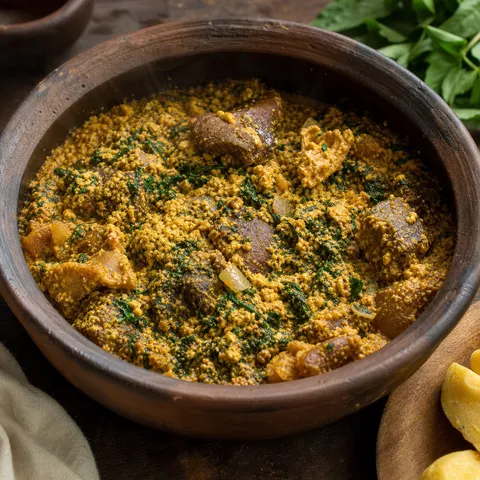 West African Lens Verified Images are for illustrative purposes only, may be inaccurate, and do not guarantee the presence or absence of specific ingredients.
 Egusi Soup
Ground melon seeds simmered with palm oil, leafy greens, and bold spices into a rich, nutty stew that's a cornerstone of Nigerian home cooking.
 West African Lens Verified Images are for illustrative purposes only, may be inaccurate, and do not guarantee the presence or absence of specific ingredients.
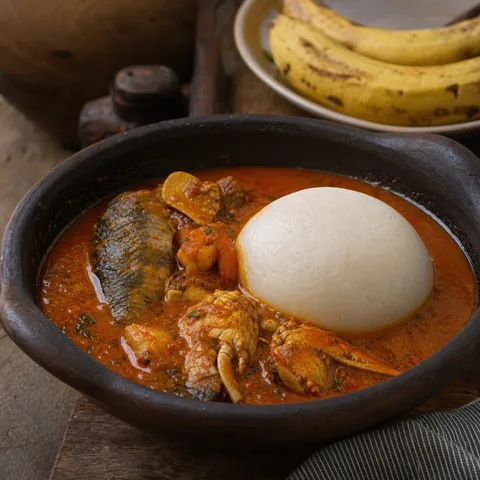
 Banku
A smooth, slightly tangy Ghanaian dough of fermented corn and cassava, cooked to a stretchy consistency — the perfect partner for okra stew or grilled tilapia.
 West African Lens Verified Images are for illustrative purposes only, may be inaccurate, and do not guarantee the presence or absence of specific ingredients.
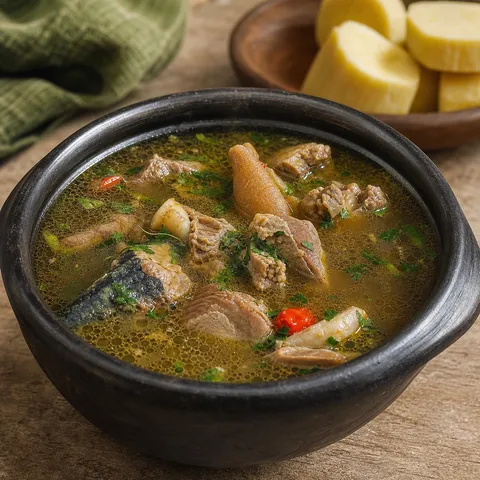
 Pepper Soup
A piercingly spiced, crystal-clear broth simmered with goat meat or catfish and a blend of earthy Nigerian spices — warming, restorative, and intensely aromatic.