 Food Lens Images are for illustrative purposes only, may be inaccurate, and do not guarantee the presence or absence of specific ingredients.
 Food Lens · Pantry
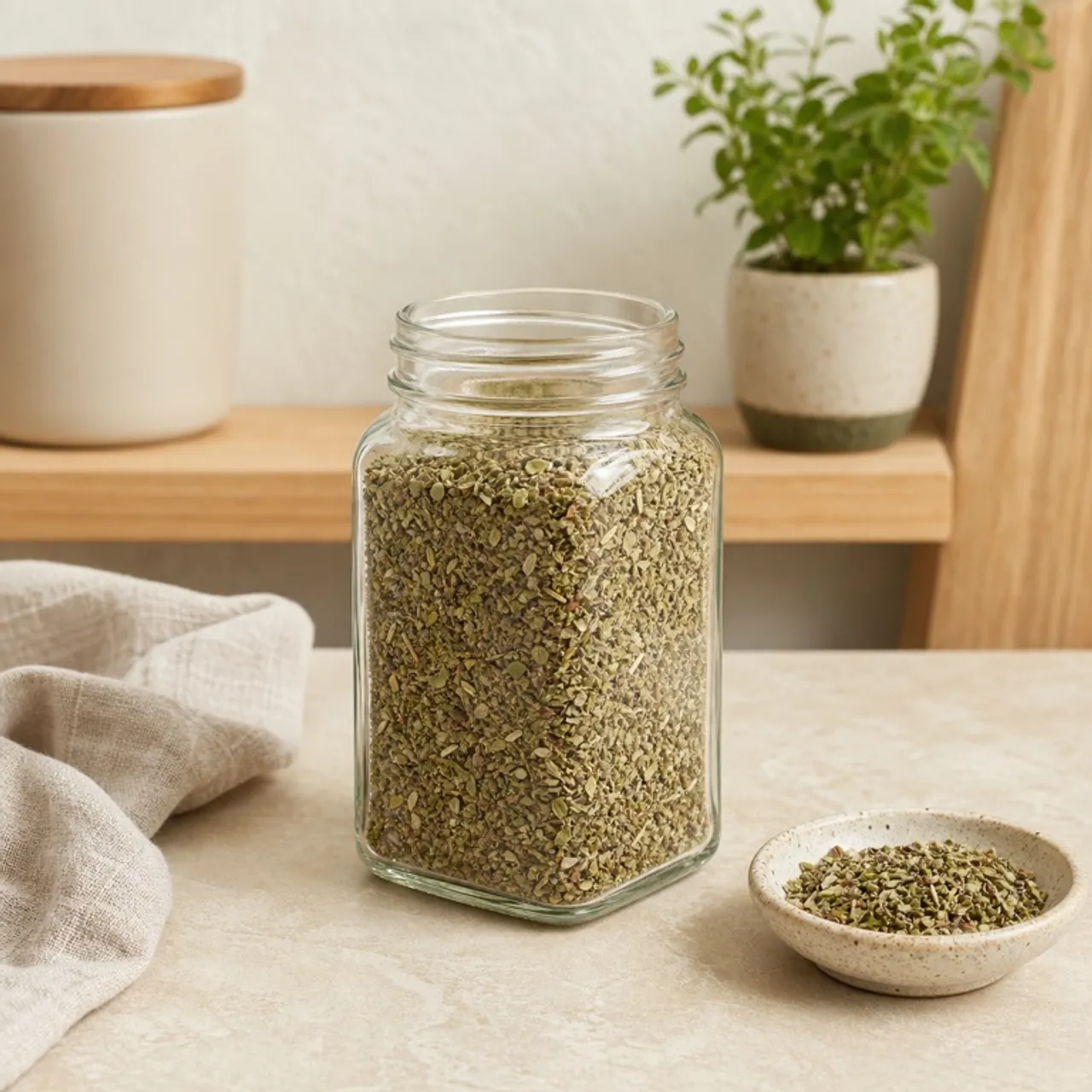
Italian seasoning
Herbaceous, earthy, and mildly aromatic with a bright oregano-basil sweetness and a woodsy rosemary-thyme undertone.
Lens VerifiedItalian seasoning is a dried herb blend combining oregano, basil, thyme, rosemary, and often marjoram and sage, designed as a one-jar shortcut to the herbaceous backbone of Italian-American cooking. It is a pantry staple for seasoning pasta sauces, pizza, roasted vegetables, and grilled meats.
Where it comes from
The herbs in Italian seasoning — oregano, basil, thyme, rosemary — have grown wild across the hillsides of southern Italy and the Mediterranean for millennia, and Italian immigrant cooks arriving in North America in the late 19th and early 20th centuries carried those flavor instincts with them. American spice companies packaged those flavors into a convenient blend, and Italian seasoning became a fixture in the North American spice cabinet, inseparable from the Italian-American food traditions that shaped a generation of home cooking.
Varieties — Standard Italian seasoning blends vary by brand but typically include oregano, basil, thyme, rosemary, and marjoram. Some also add sage, savory, or red pepper flakes for a kick. McCormick, Spice Islands, and Trader Joe's all carry popular versions.
Italian seasoning reflects the Italian-American cooking tradition that developed in cities like New York, Boston, and Chicago, where immigrant cooks simplified and adapted the herb profiles of southern Italy into pantry-friendly blends for the American kitchen. Authentic Italian cooking typically uses individual herbs rather than blends.
In a modern kitchen — Italian seasoning benefits from 'blooming' — adding it to warm olive oil for 30 seconds before adding other ingredients releases its oils and dramatically deepens the flavor compared to sprinkling it cold into a sauce.
Buying it
Check that the blend smells vibrantly herbal — it should be notably aromatic when you open the jar. Blends with large oregano and basil proportions are generally more useful than those heavy on woody rosemary alone. Replace every 12–18 months; dried herbs lose aroma far faster than whole spices.
Storing it
Keep in a sealed container away from heat and light. Dried herb blends lose their aroma well before they're truly 'expired' — if it smells flat, it's time to replace.
Keeps about 2 years in the pantry.
Out of italian seasoning? Good swaps
- Herbes de Provence — Use 1:1 — similar Southern European herb blend but includes lavender and is slightly more floral; works in most Italian applications.
- Dried oregano alone — Use half the quantity of Italian seasoning — oregano is the dominant flavor and covers most bases in tomato-based dishes.
- Fresh herbs (mixed) — Use 3x the amount of Italian seasoning called for — combine fresh basil, thyme, and oregano for a more vivid, fresher result.
General cooking guidance — always check the labels on the products you use. Listahan’s allergen checks run automatically when you plan a recipe in the app. Not medical advice.
Recipes that use italian seasoning
Common questions about italian seasoning
Is italian seasoning vegan?
Italian seasoning is generally plant-based and suitable for a vegan diet, but brands differ — confirm on the label.
What can I use instead of italian seasoning?
Good swaps include Herbes de Provence, Dried oregano alone, Fresh herbs (mixed). Each behaves a little differently — see the swaps above for notes, and always check labels for allergens.
How do I store italian seasoning?
Keep in a sealed container away from heat and light. Dried herb blends lose their aroma well before they're truly 'expired' — if it smells flat, it's time to replace. It keeps about 2 years in the pantry.
More pantry
See all


Make italian seasoning about your kitchen — with Listahan Pro
Everything above is free, forever. Pro adds the Household Lens — the same food, seen for your family:
-
Checked for each member
Flags italian seasoning per person against your household's allergies and school rules — not just a generic "contains" tag.
-
Pantry-aware
Knows whether you already have it, what is running low, and the best swap from what is in your kitchen tonight.
-
What it costs near you
A real price from the Presyo community index, so you can plan the budget — not guess.
-
Your household memory
Who likes it, plus your own private notes — brand, where you keep it, who skips it.
Allergen safety is always free — Pro adds the automation, never the safety.
Cook with italian seasoning — safely
Plan a recipe in Listahan and the household allergen check runs automatically — every plan, every swap, every lunchbox. Safety is never paywalled.