 Brazilian Images are for illustrative purposes only, may be inaccurate, and do not guarantee the presence or absence of specific ingredients.
  Serving Images are for illustrative purposes only, may be inaccurate, and do not guarantee the presence or absence of specific ingredients.
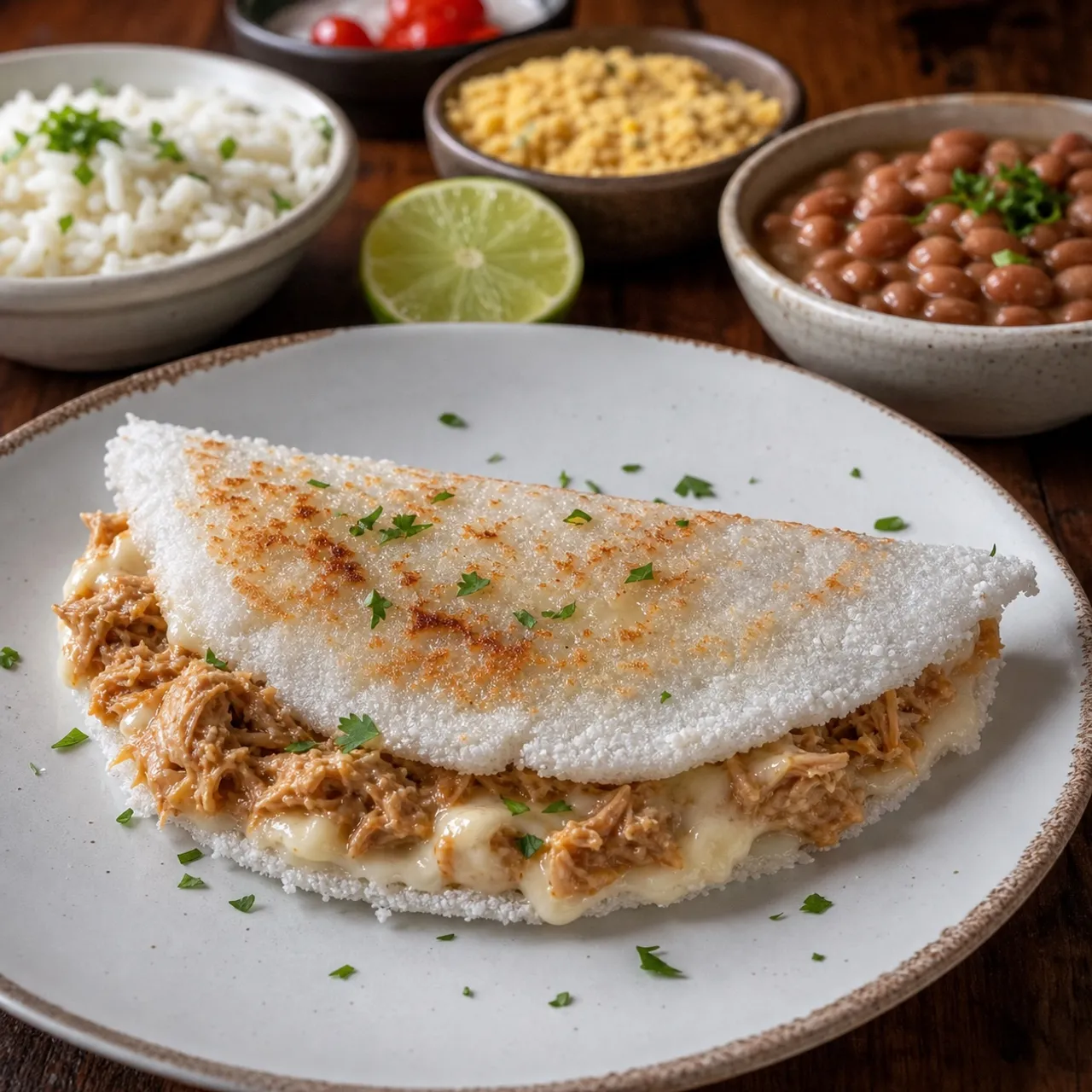
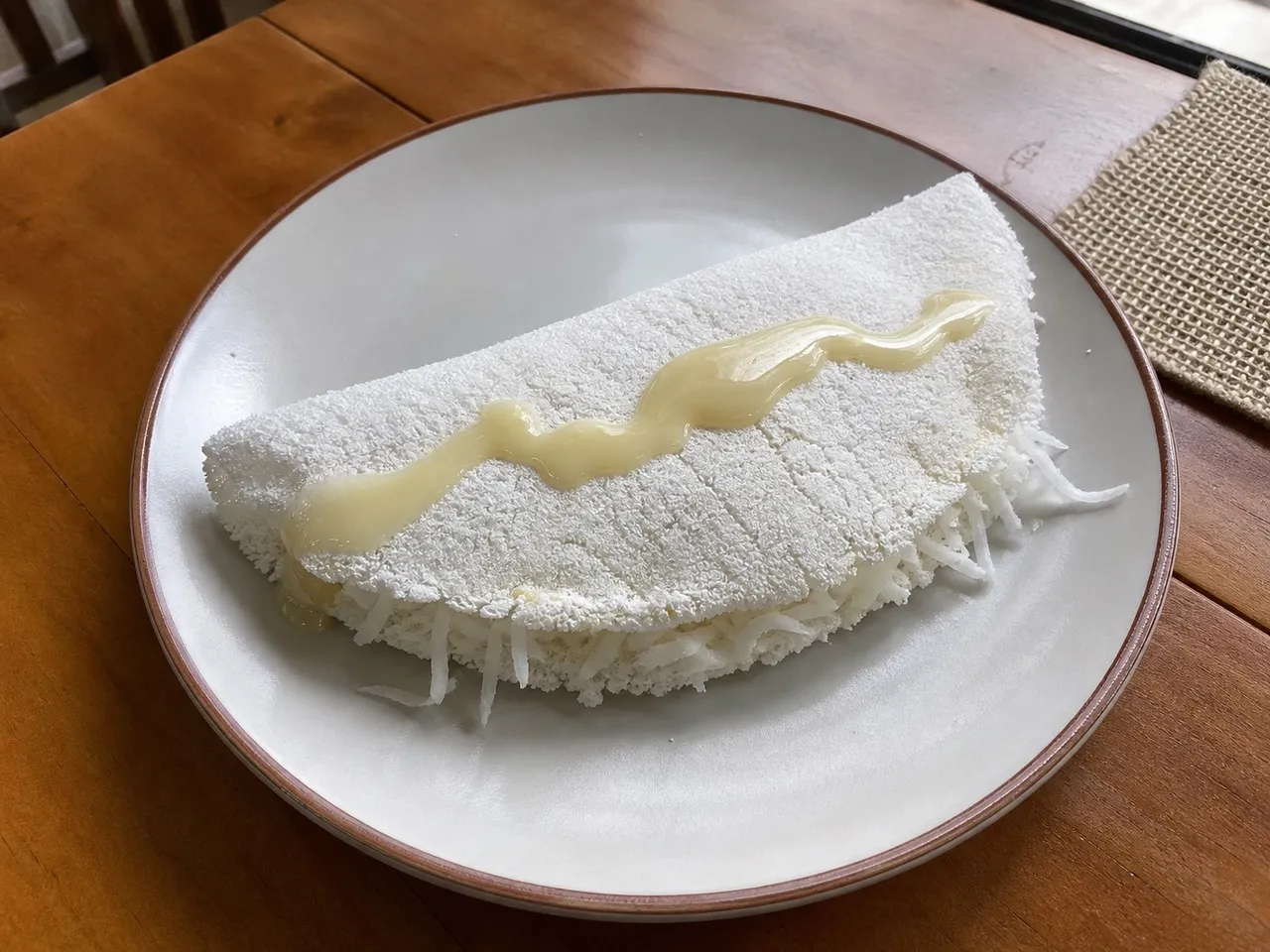
 Tapioca Recheada (Stuffed Tapioca Crepe)
A naturally gluten-free crepe made from hydrated tapioca starch, griddled until it sets into a soft flatbread and folded around cheese and coconut.
Contains common allergens
In the app, Listahan checks these against your household automatically.
Good to know
- Ready in under 30 minutes
Matched from this dish's own ingredients and timing. Browse more: 30-minute meals
Instructions
7 steps- 1
In a bowl, mix the tapioca starch with salt and rub it between your fingers to break up any clumps; it should look like coarse sand.
- 2
Heat a nonstick skillet over medium heat and sprinkle in a thin, even layer of the tapioca starch to cover the bottom.
- 3
Cook for 1-2 minutes until the starch grains fuse together into a solid, flexible crepe.
- 4
Flip carefully and sprinkle the shredded cheese over one half of the crepe.
- 5
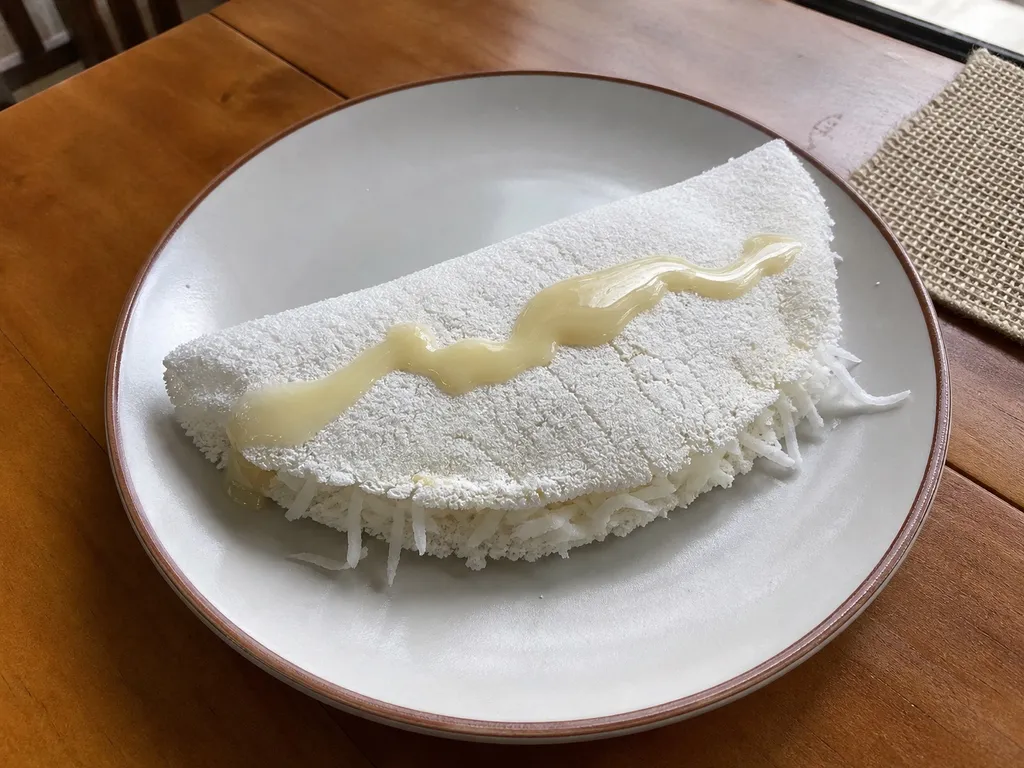
Once the cheese melts, add shredded coconut and a drizzle of condensed milk, then fold the crepe in half.
- 6
Slide onto a plate and repeat with the remaining tapioca starch.
- 7
Serve warm.
 Images are for illustrative purposes only, may be inaccurate, and do not guarantee the presence or absence of specific ingredients.
 Listahan Family Score™
80/100
Good fit for most families
Score reflects how well this recipe fits a typical busy household. In the app, your Family Score is personalized to your household's allergens, kids, and pantry.
Nutrition
per serving475
Calories
16 g
Protein
72 g
Carbs
14 g
Fat
Estimated per serving. Actual values depend on the brands and portions you use.
Listahan cooking guide
Chef notes & practical guide
Technique notes, ingredient swaps, serve-alongside ideas, storage guidance, and equipment for this recipe.
Cultural context
Tapioca crepes come from Brazil's Nordeste, where polvilho (cassava starch) has been a staple since long before European contact and street vendors called tapioqueiras still griddle them fresh on beach boardwalks and corner carts. Unlike a wheat crepe, the starch grains fuse into a chewy, slightly springy sheet the moment they hit a hot dry pan, no batter or egg required. It travelled south as a beach-food favorite in Rio before becoming a national breakfast and snack item.
Listahan note
This version keeps it dessert-leaning and kid-friendly with cheese, coconut, and condensed milk, the classic combination sold at Nordeste tapioca stands, and it comes together fast enough for a weekday breakfast.
Technique cues
- The starch needs to be rubbed between your fingers before cooking to break up clumps into a fine, even texture, otherwise the crepe cooks unevenly with dry pockets and gummy patches.
- There is no liquid batter here: the dry starch grains only fuse into a solid sheet from direct pan heat, so a nonstick or well-seasoned surface and even heat distribution matter more than with a flour crepe.
- Fold the fillings in while the crepe is still pliable and warm from the pan; it firms up and can crack within a minute or two off the heat.
Kitchen flow
- Parallel prep
- Shred the cheese and measure the coconut and condensed milk while the pan preheats so each crepe can be filled the moment it's ready.
- Make-ahead
- The starch mixture itself can be sifted and stored in an airtight container a day ahead, but the crepes are best cooked and filled just before eating.
- Leftover move
- Leftover unfilled crepes reheat in a dry skillet for a minute per side; refill with fresh cheese and coconut rather than microwaving a pre-filled one, which turns rubbery.
- Cleanup rhythm
- Wipe the skillet with a paper towel between crepes rather than washing, since any oil residue keeps the starch from fusing into a solid sheet.
Ingredient brief
Role, handling, and swap guidance for each key ingredient.
granulated tapioca starch (polvilho azedo or doce)
the entire crepe body
Purpose: polvilho is dehydrated cassava starch that fuses into a chewy sheet under dry heat instead of needing egg or liquid batter
Handling: sift or hand-rub it to remove clumps before it hits the pan
Adaptation: polvilho doce (sweet/plain) gives a softer, more neutral crepe than polvilho azedo (sour, fermented), which has a subtle tang; either works but they are not identical in flavor
shredded mozzarella or coalho cheese
savory melting filling
Purpose: coalho cheese is the traditional choice because it holds shape and gets pleasantly squeaky when warmed, but mozzarella melts more readily for a gooier bite
Handling: shred while cold so it distributes evenly and melts quickly on the warm crepe
Adaptation: a dairy-free shredded cheese alternative works but will not brown or pull the same way
sweetened shredded coconut
textural and flavor contrast to the cheese
Purpose: adds a sweet, chewy counterpoint that is classic in the coconut-condensed-milk version sold at Nordeste stands
Handling: no prep needed beyond measuring
Adaptation: unsweetened coconut plus an extra drizzle of condensed milk keeps the sweetness level similar
sweetened condensed milk
binding sweet sauce
Purpose: ties the coconut and cheese together and is the defining drizzle of the sweet-savory Brazilian version
Handling: drizzle it on right after folding while the crepe is still warm so it doesn't pool and run
Adaptation: dulce de leche works as a thicker, caramel-forward substitute
Technique notes
- A too-hot pan scorches the starch before it fully fuses; medium heat gives the grains time to bond into a cohesive, flexible sheet.
- Use a thin, even hand when sprinkling the starch, a patchy layer leaves holes that tear when you try to flip and fold.
- Flip only once the underside looks set and slightly translucent at the edges; flipping too early causes the crepe to break apart.
Ingredient swaps
- Dairy-free option
- Swap in a plant-based shredded cheese and coconut condensed milk to keep the dish milk-free while preserving the sweet-savory profile.
- Savory-only direction
- Skip the coconut and condensed milk and fill with cheese plus shredded chicken or scrambled eggs for a fully savory breakfast crepe.
- Weeknight shortcut
- Pre-portion the starch into individual servings the night before so mornings are just pan, sprinkle, fill, and fold.
Serve alongside
- fresh mango or papaya slices
- pao de queijo
- a simple fruit vitamina (blended fruit smoothie)
- cafezinho (strong sweetened Brazilian coffee)
- fresh-squeezed orange juice
- chilled coconut water
Serving suggestions only — check pairings for your household's allergens.
Storage & reheating
- Best eaten immediately; unfilled crepes keep in an airtight container at room temperature for a day.
- Reheat plain crepes in a dry skillet over low heat for about a minute per side before filling.
- Not recommended for freezing, the starch texture turns gummy once thawed.
Equipment
- nonstick or well-seasoned skillet
- fine sieve or your hands for sifting the starch
- flexible spatula
- measuring cups
Make this household-aware
Listahan Pro checks this recipe against your household's allergens, finds pantry-aware swaps, builds the shopping list, and helps you plan the week around it.
Plan it in Listahan
Add Tapioca Recheada (Stuffed Tapioca Crepe) to your week, check it against your household's allergens, and build the shopping list automatically.
More Brazilian recipes
 Brazilian Lens Verified Images are for illustrative purposes only, may be inaccurate, and do not guarantee the presence or absence of specific ingredients.
 Pudim de Leite (Brazilian Flan)
A silky caramel-topped milk pudding made with sweetened condensed milk, the most requested dessert at any Brazilian family gathering.
 Brazilian Lens Verified Images are for illustrative purposes only, may be inaccurate, and do not guarantee the presence or absence of specific ingredients.
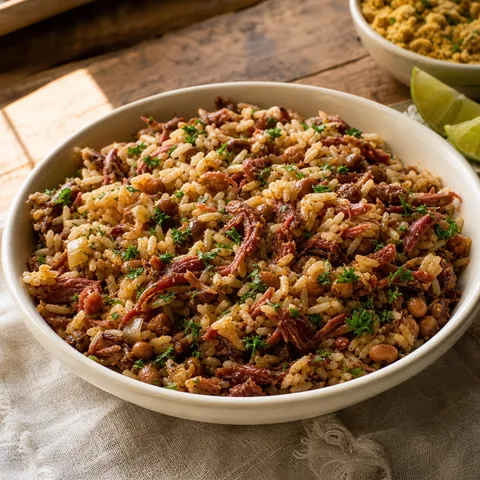
 Arroz Carreteiro (Brazilian Rice with Dried Beef)
A smoky one-pot rice from the gaúcho cattle-drivers of southern Brazil, cooked with shredded dried beef, tomato, and peppers.
 Brazilian Lens Verified Images are for illustrative purposes only, may be inaccurate, and do not guarantee the presence or absence of specific ingredients.
 Vaca Atolada (Beef and Cassava Stew)
"Stuck cow" stew: fall-apart beef short ribs braised with cassava until the pot turns thick and glossy, a Minas Gerais farmhouse classic.