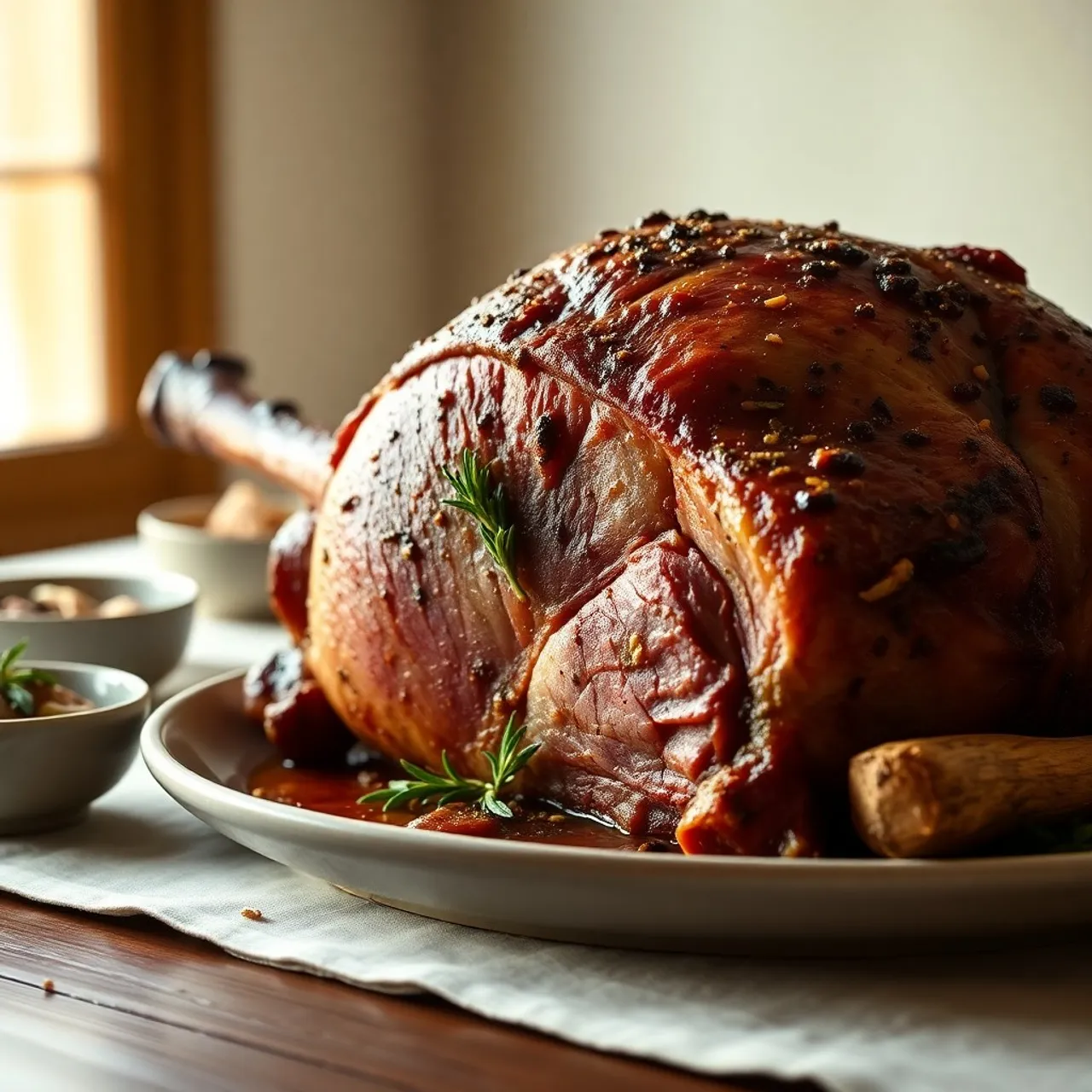
 French Images are for illustrative purposes only, may be inaccurate, and do not guarantee the presence or absence of specific ingredients.
 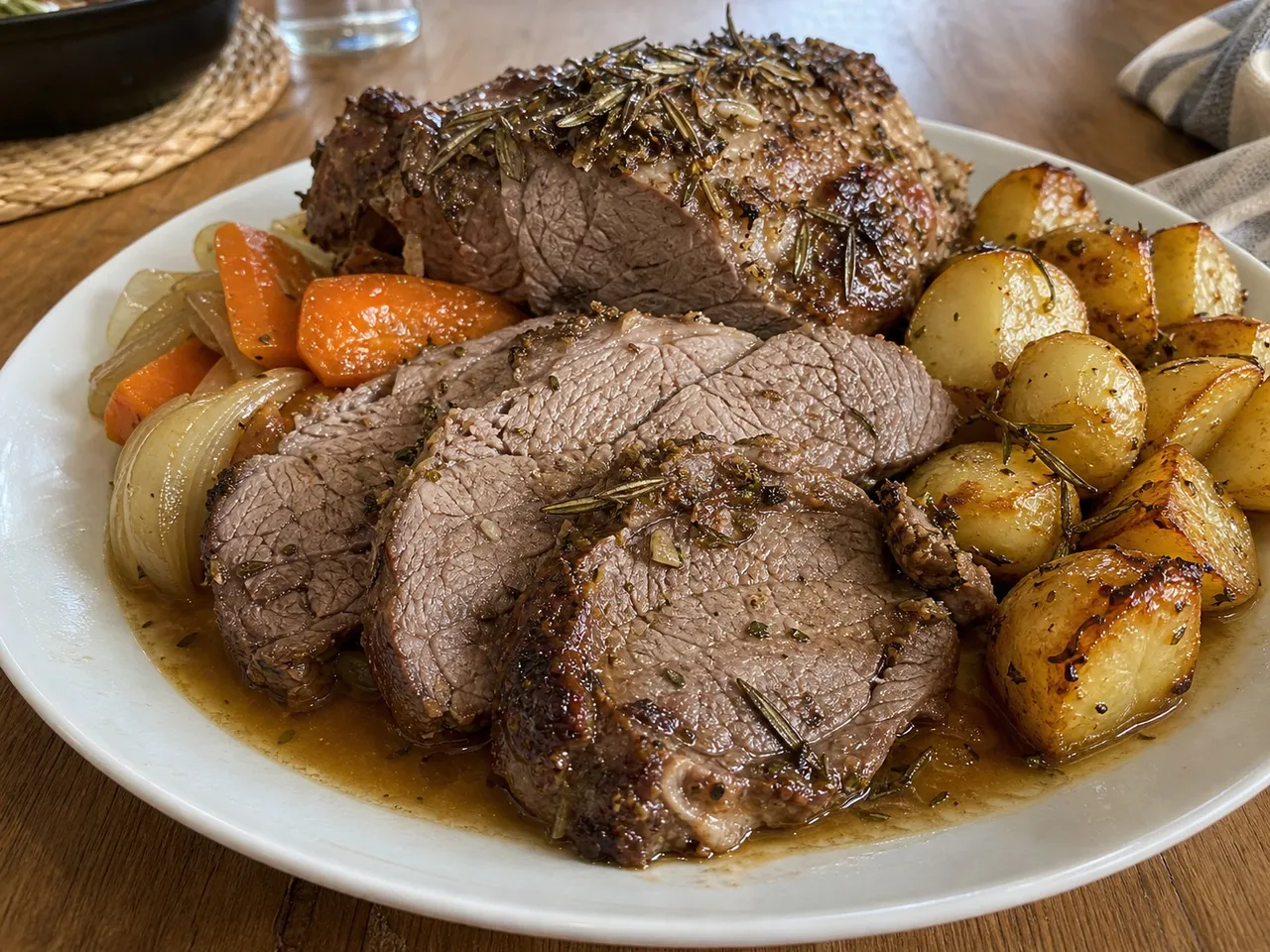 Serving Images are for illustrative purposes only, may be inaccurate, and do not guarantee the presence or absence of specific ingredients.
 Gigot d'Agneau
A whole leg of lamb studded with garlic and rosemary, roasted until the crust is golden and the meat is blushing pink and utterly tender.
No common allergens detected
Based on this recipe's ingredient list. Always verify with your own brands and labels.
Instructions
8 steps- 1
Bring the lamb to room temperature and pat dry, then cut small slits all over the leg with a paring knife and insert the garlic slivers deep into the meat.
- 2
Mix the minced garlic, chopped rosemary, olive oil, salt, and pepper into a paste and rub it all over the surface of the lamb.
- 3
Scatter the onions and carrots in the bottom of a roasting pan and place the lamb on top, tucking a few rosemary sprigs underneath.
- 4
Roast at 425F for 20 minutes to brown the exterior, then reduce the oven to 325F.
- 5
Pour the wine and stock into the pan and continue roasting, basting occasionally, until an instant-read thermometer inserted into the thickest part reads 130F for medium-rare, about 1 1/4 to 1 1/2 hours more.
- 6
Transfer the lamb to a cutting board, tent loosely with foil, and rest at least 15 to 20 minutes before carving.
- 7
Strain the pan juices into a saucepan, skim off excess fat, and simmer briefly to concentrate the flavor for a light jus.
- 8
Carve the lamb against the grain into thick slices and serve with the roasted vegetables and jus.
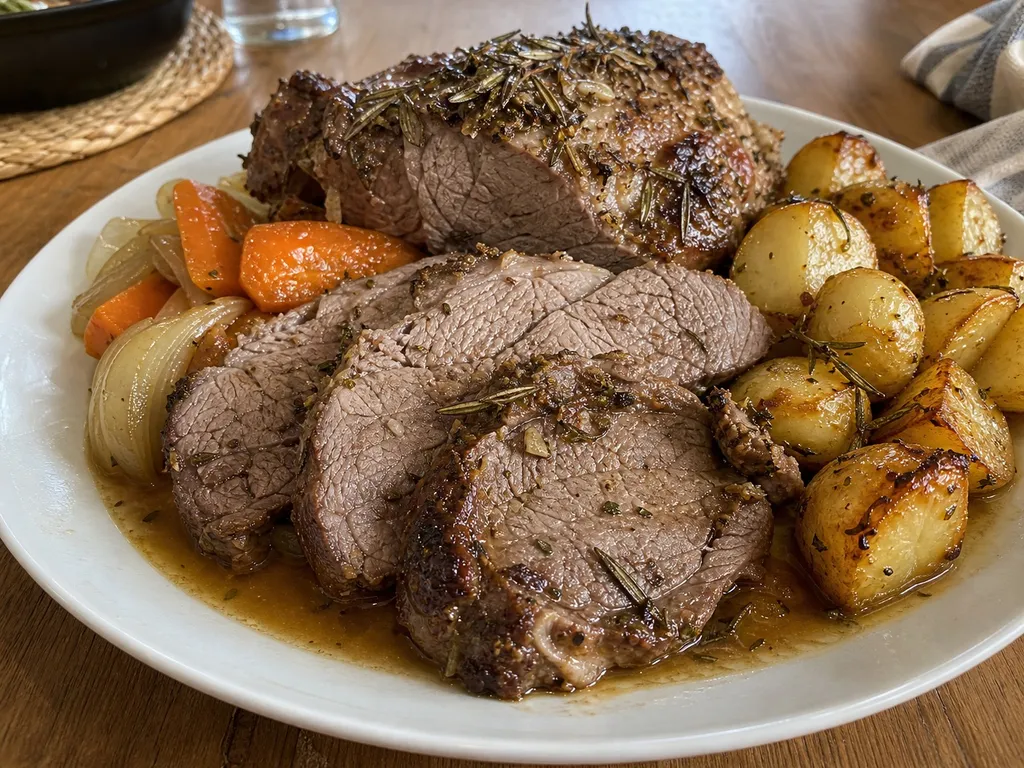 Images are for illustrative purposes only, may be inaccurate, and do not guarantee the presence or absence of specific ingredients.
 Listahan Family Score™
69/100
Works for many families
Score reflects how well this recipe fits a typical busy household. In the app, your Family Score is personalized to your household's allergens, kids, and pantry.
Nutrition
per serving1105
Calories
94 g
Protein
1 g
Carbs
79 g
Fat
Estimated per serving. Actual values depend on the brands and portions you use.
Listahan cooking guide
Chef notes & practical guide
Technique notes, ingredient swaps, serve-alongside ideas, storage guidance, and equipment for this recipe.
Cultural context
Gigot d'agneau — roasted leg of lamb — is the centerpiece dish of the French Easter table and one of the most celebrated presentations in the French roasting tradition, associated with family feasts and the arrival of spring lamb that was historically the season's first fresh meat. The preparation is minimal by French haute cuisine standards: a leg studded with garlic, rubbed with herbs, and roasted in a very hot oven until the exterior is deeply caramelized while the interior remains pink, relying entirely on the quality of the lamb and the cook's ability to read the meat's internal temperature. The jus made from the pan drippings, with nothing added but a little water or white wine to deglaze, is often more flavorful than composed sauces.
Listahan note
This version relies on deep garlic insertion into the meat and a bold herb rub applied the night before so the flavors penetrate beyond the surface, turning what looks like a simple roast into something deeply seasoned.
Technique cues
- Insert garlic slivers deep into the meat using the tip of a paring knife — push them in at 45-degree angles so they do not fall out during roasting; garlic that sits on the surface burns before it flavors the meat.
- Roast at high heat (425 F) for the first 20 minutes to set a dark, fragrant crust, then lower to 350 F to finish; this produces better color than roasting at a single moderate temperature throughout.
- Rest the leg uncovered for at least 15 minutes before carving; the internal temperature will rise another 5 degrees and the juices will redistribute so slices are pink and juicy to the bone.
Kitchen flow
- Parallel prep
- While the lamb rests after roasting, make the pan jus by deglazing with white wine and a splash of water on the stovetop; 5 minutes produces a sauce.
- Make-ahead
- Apply the garlic and herb rub the night before and refrigerate uncovered; the surface dries slightly, producing a better crust, and the flavors penetrate deeper.
- Leftover move
- Cold leftover lamb sliced thin makes exceptional sandwiches with Dijon, arugula, and shaved Parmesan; the meat is also excellent reheated in broth for a simple soup.
- Cleanup rhythm
- Deglaze the roasting pan immediately while it is still hot; the caramelized fond dissolves easily into the jus liquid but sets hard when cold.
Ingredient brief
Role, handling, and swap guidance for each key ingredient.
bone-in leg of lamb
main protein
Purpose: The bone conducts heat more evenly than boneless and adds flavor to the pan jus; it also provides the dramatic presentation associated with gigot.
Handling: Trim excess surface fat to about 1/4 inch — enough to baste the meat but not so much that it pools and smokes in the pan.
Adaptation: Bone-in shoulder is a more forgiving and economical cut that benefits from longer, slower cooking rather than quick roasting.
garlic cloves
internal seasoning
Purpose: Garlic slivers inserted throughout the leg perfume the meat from inside as the heat opens the surrounding flesh and releases their aroma.
Handling: Cut each clove into 3 or 4 thin slivers; larger pieces do not penetrate as easily or distribute as evenly.
Adaptation: Anchovy fillets cut in slivers can be inserted in the same way for a more savory, less pungent variation popular in Provence.
fresh rosemary
herbal crust
Purpose: Rosemary is the most traditional herb for lamb in French cooking; its resinous oils caramelize into the fat layer during roasting.
Handling: Strip leaves from tough stems and chop roughly; press into the fat cap and surface of the leg before roasting.
Adaptation: Thyme, herbes de Provence, or a mix of both gives a more complex herbal profile.
Dijon mustard
surface coating and flavor
Purpose: A thin mustard coat applied before the herb rub acts as an adhesive for herbs and adds a pungent, tangy note to the caramelized exterior.
Handling: Brush onto the lamb after inserting the garlic but before roasting; the mustard will bake into the crust and become mild and sweet.
Adaptation: Whole-grain mustard gives a slightly more rustic texture and milder flavor.
Technique notes
- Remove the lamb from the refrigerator at least an hour before roasting; a cold leg from the fridge takes significantly longer to reach medium-rare at the bone center.
- For medium-rare lamb, pull from the oven at 130 to 135 F and let the carry-over cooking bring it to 135 to 140 F during the rest; the interior near the bone will always be slightly less cooked.
- A proper pan jus needs only the brown fond, a splash of wine, and a little water — do not add stock or thickening agents; the natural gelatin from the bone creates a light, clean sauce that lets the lamb speak.
Ingredient swaps
- Smaller-cut variation
- Use 4 lamb shoulder chops instead of a whole leg for a weeknight version; rub and sear in a cast iron skillet, then finish in the oven.
- Alcohol-free direction
- Replace white wine with low-sodium chicken stock and a splash of lemon juice for deglazing.
- Provencal variation
- Add halved garlic heads, whole tomatoes, and olives to the roasting pan so they cook in the lamb drippings and become the side dish.
Serve alongside
- Gratin Dauphinois (creamy potato gratin)
- Haricots verts with garlic and olive oil
- Flageolet beans braised with herbs and garlic
- Red Bordeaux or Medoc (Cabernet-based blends complement the gaminess of lamb)
- Crozes-Hermitage or Northern Rhone Syrah
Serving suggestions only — check pairings for your household's allergens.
Storage & reheating
- Leftover lamb keeps refrigerated up to 4 days; reheat slices in a covered pan with a splash of water or broth to prevent drying.
- The roasted leg freezes well for up to 2 months; slice before freezing for easier portioning.
Equipment
- Large roasting pan with a rack to elevate the lamb from the drippings
- Instant-read thermometer for precise doneness readings
- Paring knife for inserting the garlic slivers deep into the meat
- Carving fork and long slicing knife for presenting and cutting at the table
Make this household-aware
Listahan Pro checks this recipe against your household's allergens, finds pantry-aware swaps, builds the shopping list, and helps you plan the week around it.
Plan it in Listahan
Add Gigot d'Agneau to your week, check it against your household's allergens, and build the shopping list automatically.
More French recipes
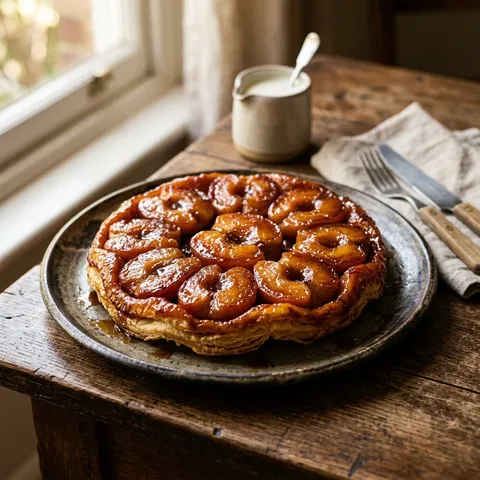 French Lens Verified Images are for illustrative purposes only, may be inaccurate, and do not guarantee the presence or absence of specific ingredients.
 Tarte Tatin
Apples cooked in caramel until jammy and burnished, then flipped onto buttery pastry — a rustic upside-down tart from the Loire Valley.
 French Lens Verified Images are for illustrative purposes only, may be inaccurate, and do not guarantee the presence or absence of specific ingredients.
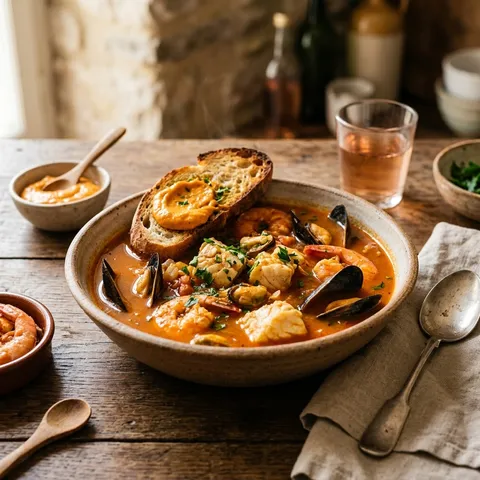
 Bouillabaisse
Marseille's legendary saffron-scented fisherman's stew, brimming with fresh seafood and served with garlicky rouille on toasted baguette.
 French Lens Verified Images are for illustrative purposes only, may be inaccurate, and do not guarantee the presence or absence of specific ingredients.
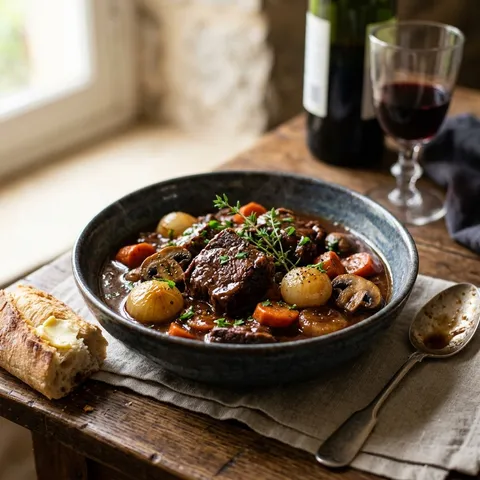
 Bœuf Bourguignon
Burgundy's legendary beef stew — rich, wine-dark, and fall-apart tender after hours of slow braising with carrots, mushrooms, and thyme.