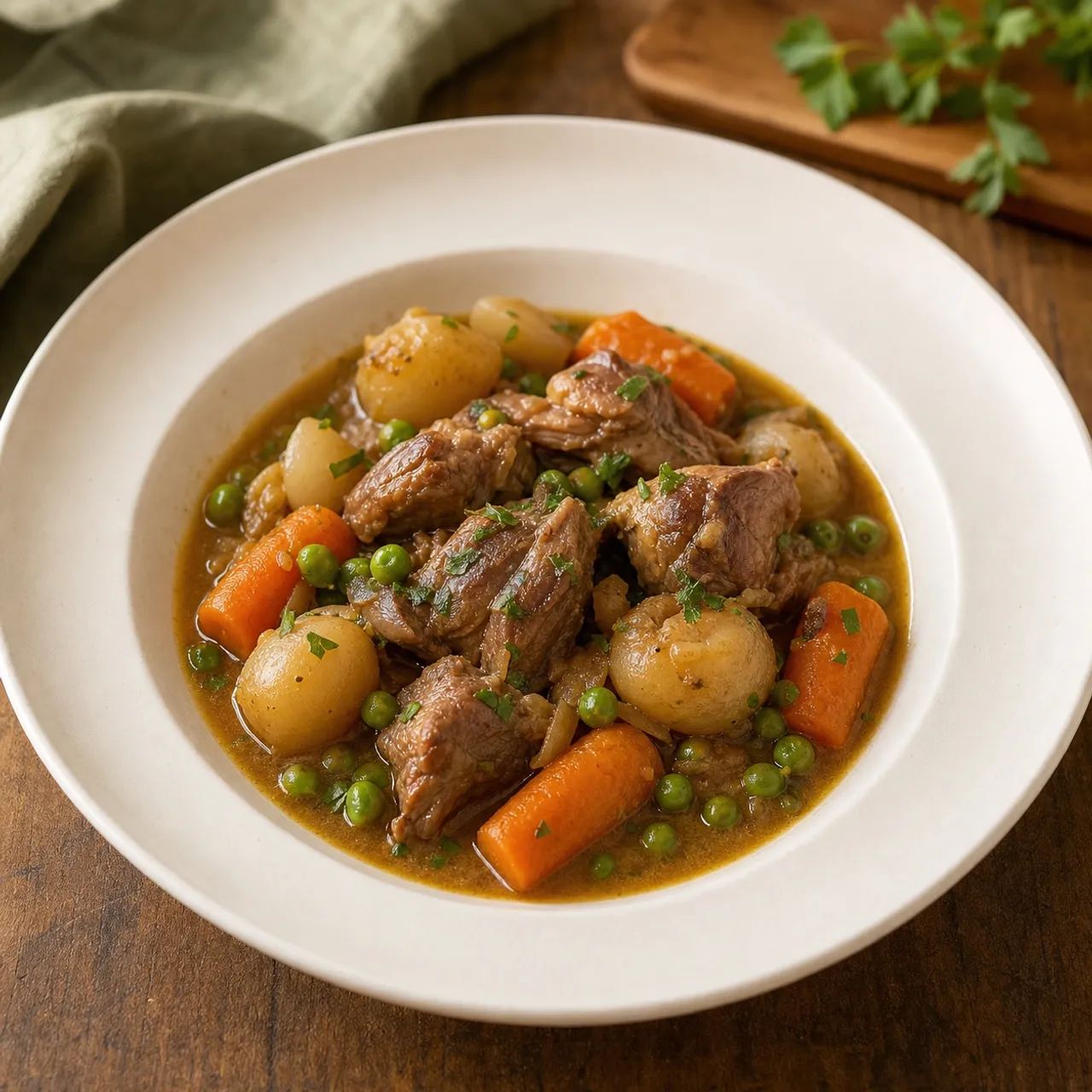
 French Images are for illustrative purposes only, may be inaccurate, and do not guarantee the presence or absence of specific ingredients.
 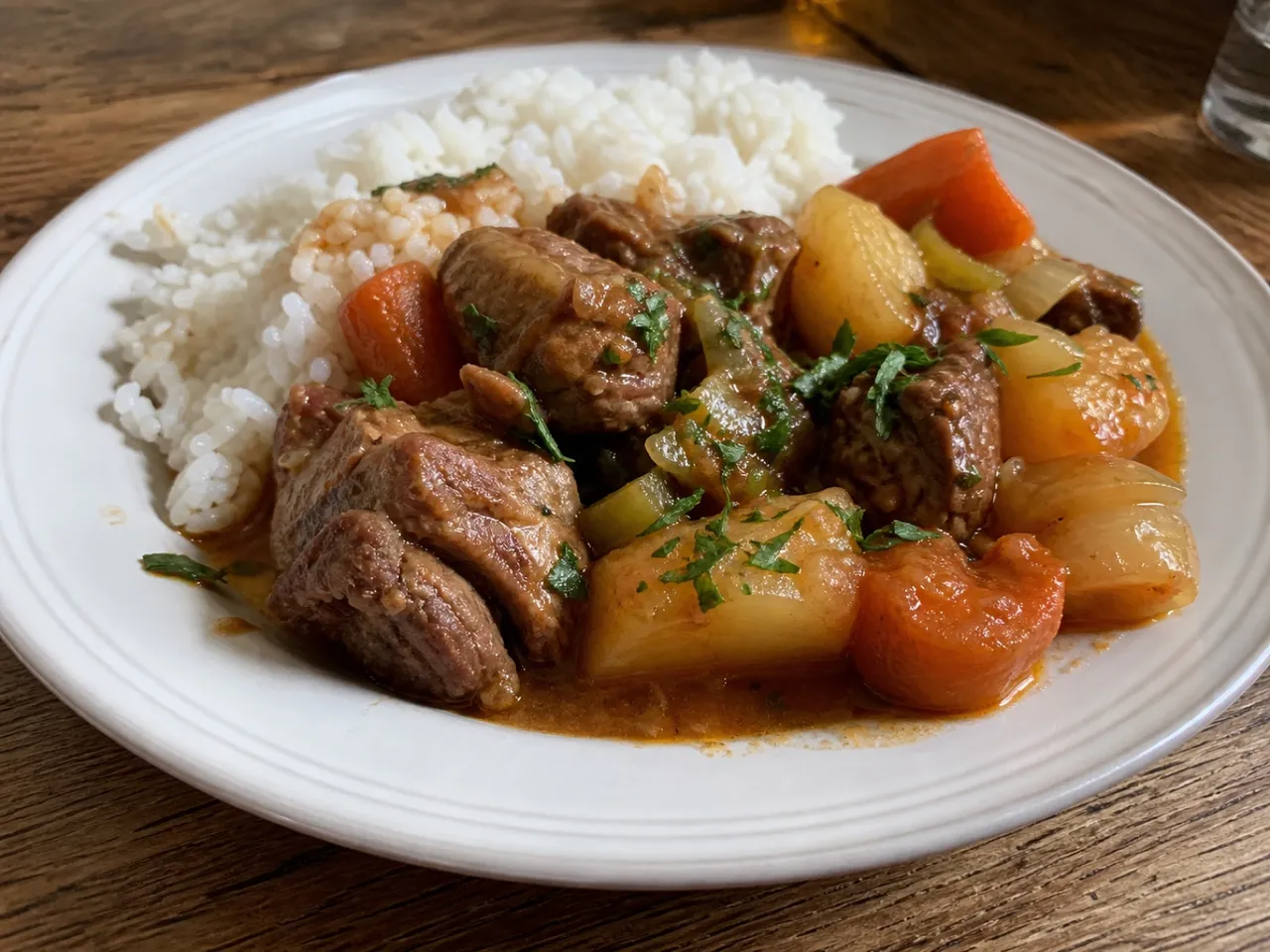 Serving Images are for illustrative purposes only, may be inaccurate, and do not guarantee the presence or absence of specific ingredients.
 Navarin d'Agneau
A tender spring lamb stew brightened with young carrots, turnips, peas, and new potatoes — fresh, fragrant, and perfect for the season.
Contains common allergens
In the app, Listahan checks these against your household automatically.
Good to know
- One-pot
Matched from this dish's own ingredients and timing. Browse more: one-pot dinners
Instructions
8 steps- 1
Pat the lamb dry, season with salt and pepper, and toss with the flour to coat lightly.
- 2
Heat the olive oil in a large Dutch oven over medium-high heat and brown the lamb in batches, about 4 minutes per side, transferring to a plate as it browns.
- 3
Add the tomato paste and garlic to the pot and cook 1 minute until fragrant.
- 4
Deglaze with the white wine, scraping up the browned bits, and simmer 3 minutes.
- 5
Return the lamb to the pot, add the stock and bouquet garni, bring to a simmer, cover, and cook over low heat for 1 hour until the lamb is nearly tender.
- 6
Add the pearl onions, carrots, and turnips, and continue simmering, covered, for 25 minutes.
- 7
Add the potatoes and cook until all the vegetables and lamb are tender, about 20 more minutes.
- 8
Stir in the peas during the last 5 minutes, remove the bouquet garni, adjust seasoning, and serve in shallow bowls with the fragrant broth spooned over.
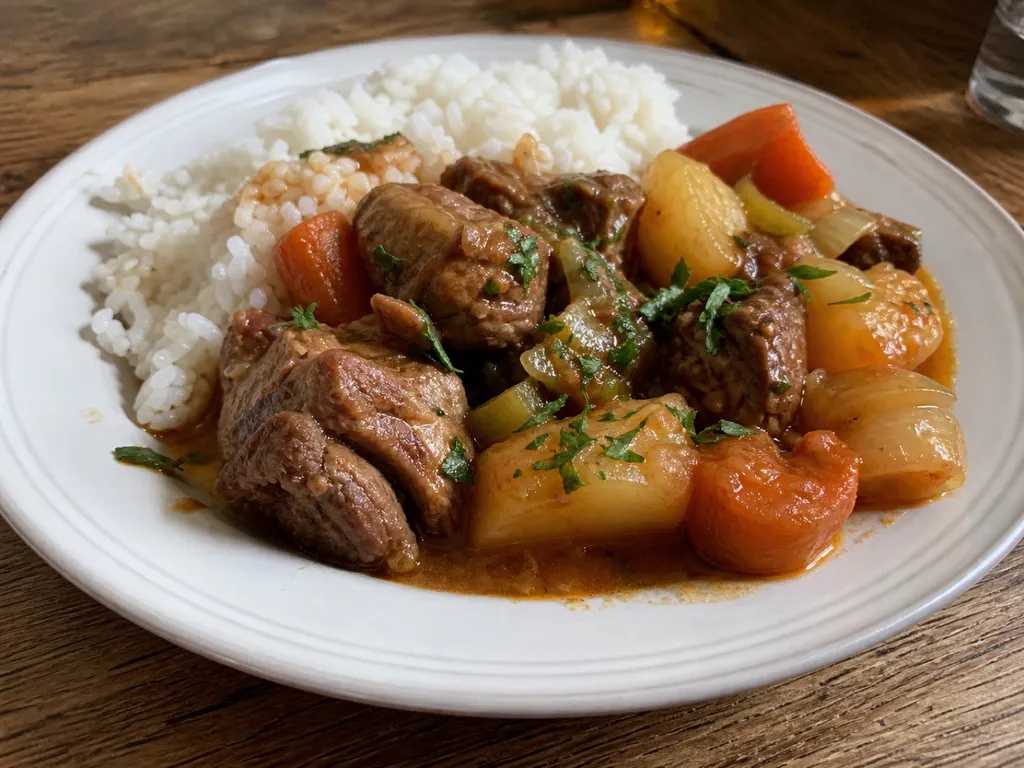 Images are for illustrative purposes only, may be inaccurate, and do not guarantee the presence or absence of specific ingredients.
 Listahan Family Score™
63/100
Works for many families
Score reflects how well this recipe fits a typical busy household. In the app, your Family Score is personalized to your household's allergens, kids, and pantry.
Nutrition
per serving590
Calories
46 g
Protein
18 g
Carbs
36 g
Fat
Estimated per serving. Actual values depend on the brands and portions you use.
Listahan cooking guide
Chef notes & practical guide
Technique notes, ingredient swaps, serve-alongside ideas, storage guidance, and equipment for this recipe.
Cultural context
Navarin d'agneau is a French spring lamb stew whose name likely derives from the navet, or turnip, one of its signature vegetables. It became a fixture of French bourgeois cooking in the 19th century, celebrating the season when young lamb and new-crop root vegetables arrived at market simultaneously. The 'printanier' (spring) version uses whatever tender young vegetables are available, making the dish an annual ritual tied to the agricultural calendar rather than a fixed formula.
Listahan note
This version leans into the brightness of spring vegetables so the broth stays light rather than heavy; browning the lamb well at the start is the single step that makes the biggest difference in depth of flavor.
Technique cues
- Brown the lamb pieces in batches without crowding -- steam traps moisture and you get grey, not browned meat, which starves the broth of the fond that gives navarin its richness.
- Add the root vegetables (turnips, carrots) before the tender spring peas and green beans; staggering the additions keeps each vegetable at the right texture rather than turning everything to mush.
- A small spoonful of tomato paste stirred into the pan after the flour gives the broth a rosy color and a round, slightly sweet acidity that balances the lamb fat.
Kitchen flow
- Parallel prep
- While the lamb browns in batches, peel and cut turnips and carrots. Have the aromatics (onion, garlic, tomato paste) measured and ready so you can build the braise without pausing.
- Make-ahead
- The stew tastes better the next day. Cook through the root vegetable stage, cool completely, and refrigerate. Reheat gently on the stovetop and add peas and green beans in the last 5 minutes.
- Leftover move
- Shred any remaining lamb from the bone, stir back into the broth, and serve over wide egg noodles or crusty bread for a quick shepherd-style lunch.
- Cleanup rhythm
- Use a single heavy Dutch oven from browning through serving to minimize dishes. Deglaze immediately after browning while the fond is still loose -- it cleans itself.
Ingredient brief
Role, handling, and swap guidance for each key ingredient.
bone-in lamb shoulder or neck
primary protein and broth builder
Purpose: Bone-in cuts release gelatin during the long braise, giving the broth a silky body that boneless lamb cannot provide.
Handling: Cut into 2-inch chunks and pat completely dry so the surface browns rather than steams.
Adaptation: Bone-in lamb leg chunks work, though they are leaner and need slightly less cook time.
turnips
defining vegetable
Purpose: Young turnips are the traditional signature of navarin; they absorb the braising liquid and provide a mild, slightly sweet earthiness.
Handling: Quarter small turnips or cut larger ones into wedges; peel only if the skin feels thick.
Adaptation: Parsnips have a similar starchy texture and can replace turnips if unavailable.
carrots
sweetness and color
Purpose: Carrots add natural sweetness that tempers the lamb's richness and gives the broth a warm golden hue.
Handling: Cut on the diagonal into 1-inch pieces so they cook evenly with the turnips.
Adaptation: Baby carrots left whole are a convenient option with no additional prep needed.
all-purpose flour
thickening agent
Purpose: Dusting the browned lamb with flour and cooking it briefly creates a light roux in the pan that thickens the broth without the need for a separate slurry.
Handling: Sprinkle over the browned meat in the pot and stir for 1-2 minutes over medium heat before adding liquid.
Adaptation: A tablespoon of arrowroot stirred into cold stock and added at the end works as a gluten-free thickening option.
fresh or frozen peas
spring brightness
Purpose: Peas added in the final few minutes stay vivid green and contribute sweetness that signals this is a spring dish, not a heavy winter braise.
Handling: If using fresh peas, shell just before using; frozen peas need no thawing -- add directly from frozen.
Adaptation: Edamame provides a similar pop of green color and a slightly nuttier flavor.
dry white wine
deglazing liquid and acid balance
Purpose: White wine lifts the fond from the pan and adds brightness that keeps the broth from tasting heavy.
Handling: Pour in immediately after the flour cooks, scraping up all browned bits with a wooden spoon.
Adaptation: An equal amount of low-sodium chicken stock with a squeeze of lemon juice delivers comparable acidity without alcohol.
Technique notes
- Skimming the foam that rises during the first 10 minutes of simmering is worth the effort -- it removes proteins that would otherwise cloud the broth and dull its flavor.
- If the sauce looks thin after the vegetables are tender, remove the lid and simmer uncovered for 5-10 minutes; the broth will concentrate and cling to the lamb without any extra starch.
- Finish with a small handful of fresh flat-leaf parsley stirred in off the heat -- it adds color and a grassy freshness that cuts through the richness at the table.
Ingredient swaps
- Gluten-free direction
- Skip the flour dusting on the lamb. Instead, whisk 1 tablespoon of arrowroot or cornstarch into 2 tablespoons of cold water and stir into the broth in the last 10 minutes of cooking.
- Weeknight shortcut
- Use a pressure cooker: brown the lamb and build the base as written, then pressure-cook for 25 minutes. Release pressure, add tender vegetables, and simmer uncovered for 5 minutes to finish.
- Lower-sodium direction
- Use unsalted homemade or low-sodium store-bought stock and taste before adding any salt at the end, since the broth concentrates considerably during braising.
Serve alongside
- Buttered egg noodles
- Crusty sourdough baguette
- Steamed new potatoes with parsley
- Cotes du Rhone rouge
- Sparkling water with lemon
Serving suggestions only — check pairings for your household's allergens.
Storage & reheating
- Refrigerate cooled stew in an airtight container for up to 3 days; the flavor deepens overnight as the lamb absorbs the broth.
- Freeze without the peas and green beans for up to 2 months; thaw overnight in the refrigerator and add fresh tender vegetables when reheating.
Equipment
- 6-quart enameled cast-iron Dutch oven -- retains even heat for browning and long braising
- Wide slotted spoon or spider -- for removing lamb pieces cleanly between batches
- Instant-read thermometer -- confirms the lamb is probe-tender at the thickest cut
Make this household-aware
Listahan Pro checks this recipe against your household's allergens, finds pantry-aware swaps, builds the shopping list, and helps you plan the week around it.
Plan it in Listahan
Add Navarin d'Agneau to your week, check it against your household's allergens, and build the shopping list automatically.
More French recipes
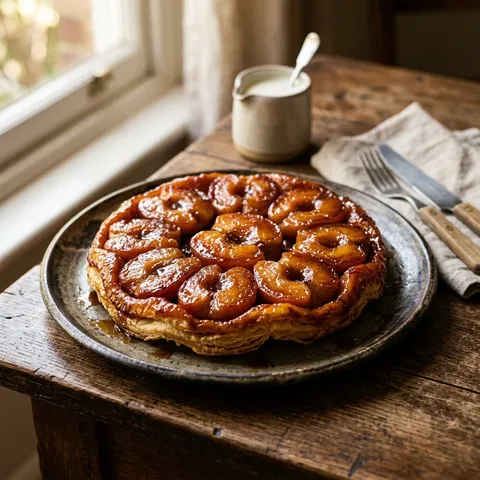 French Lens Verified Images are for illustrative purposes only, may be inaccurate, and do not guarantee the presence or absence of specific ingredients.
 Tarte Tatin
Apples cooked in caramel until jammy and burnished, then flipped onto buttery pastry — a rustic upside-down tart from the Loire Valley.
 French Lens Verified Images are for illustrative purposes only, may be inaccurate, and do not guarantee the presence or absence of specific ingredients.
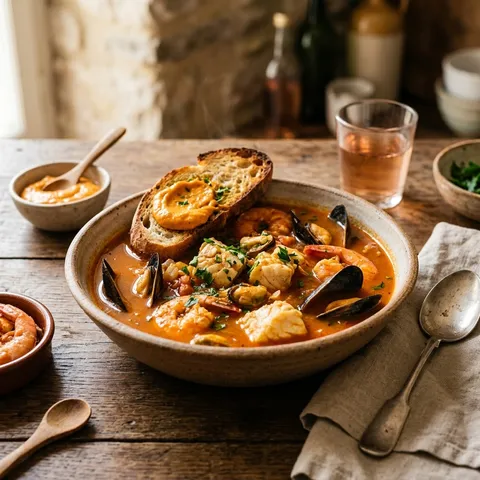
 Bouillabaisse
Marseille's legendary saffron-scented fisherman's stew, brimming with fresh seafood and served with garlicky rouille on toasted baguette.
 French Lens Verified Images are for illustrative purposes only, may be inaccurate, and do not guarantee the presence or absence of specific ingredients.
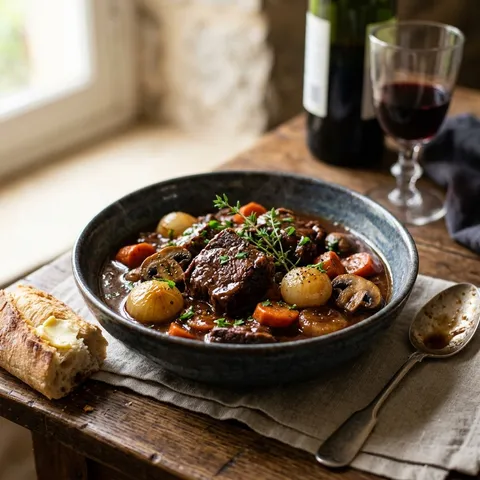
 Bœuf Bourguignon
Burgundy's legendary beef stew — rich, wine-dark, and fall-apart tender after hours of slow braising with carrots, mushrooms, and thyme.