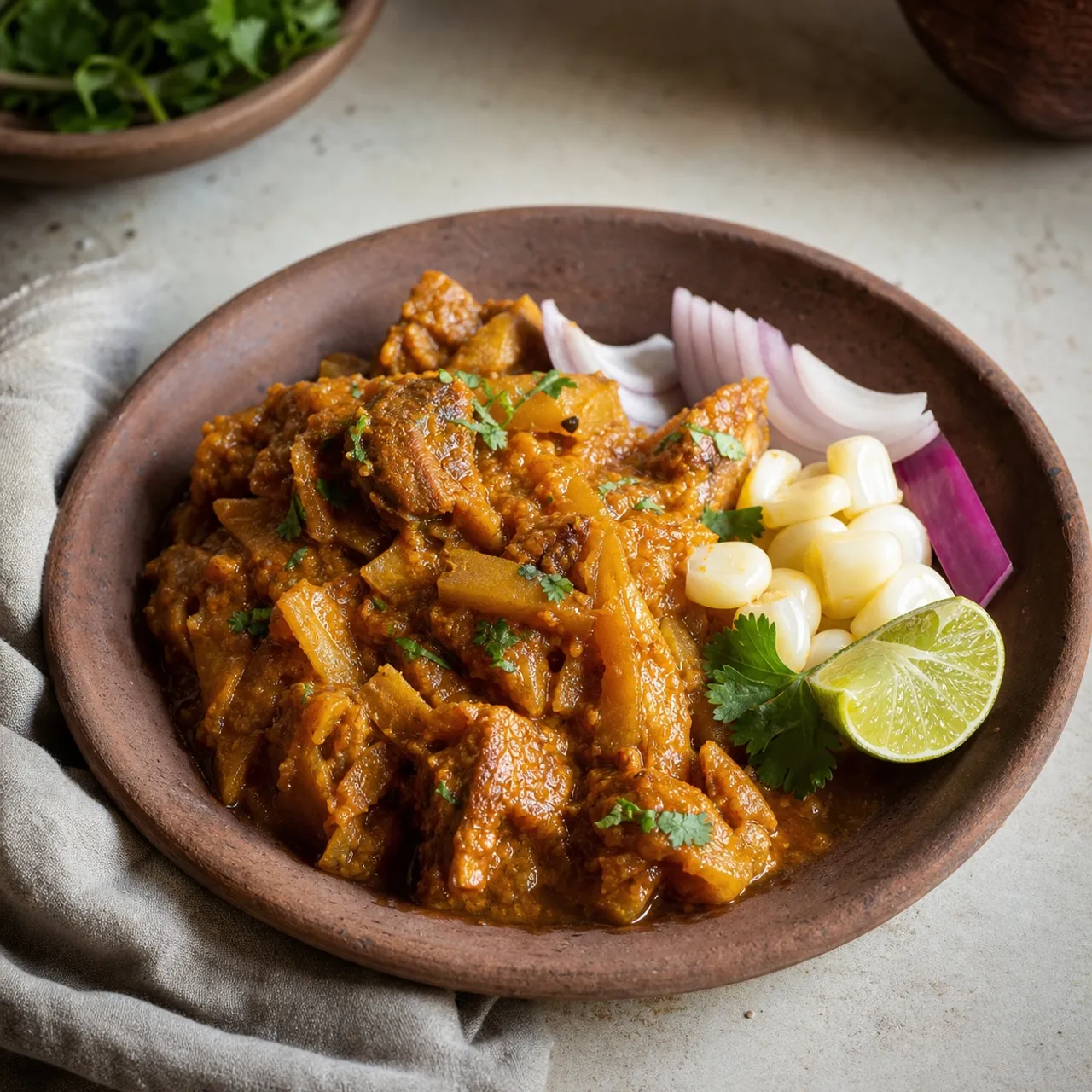
 Peruvian Images are for illustrative purposes only, may be inaccurate, and do not guarantee the presence or absence of specific ingredients.
 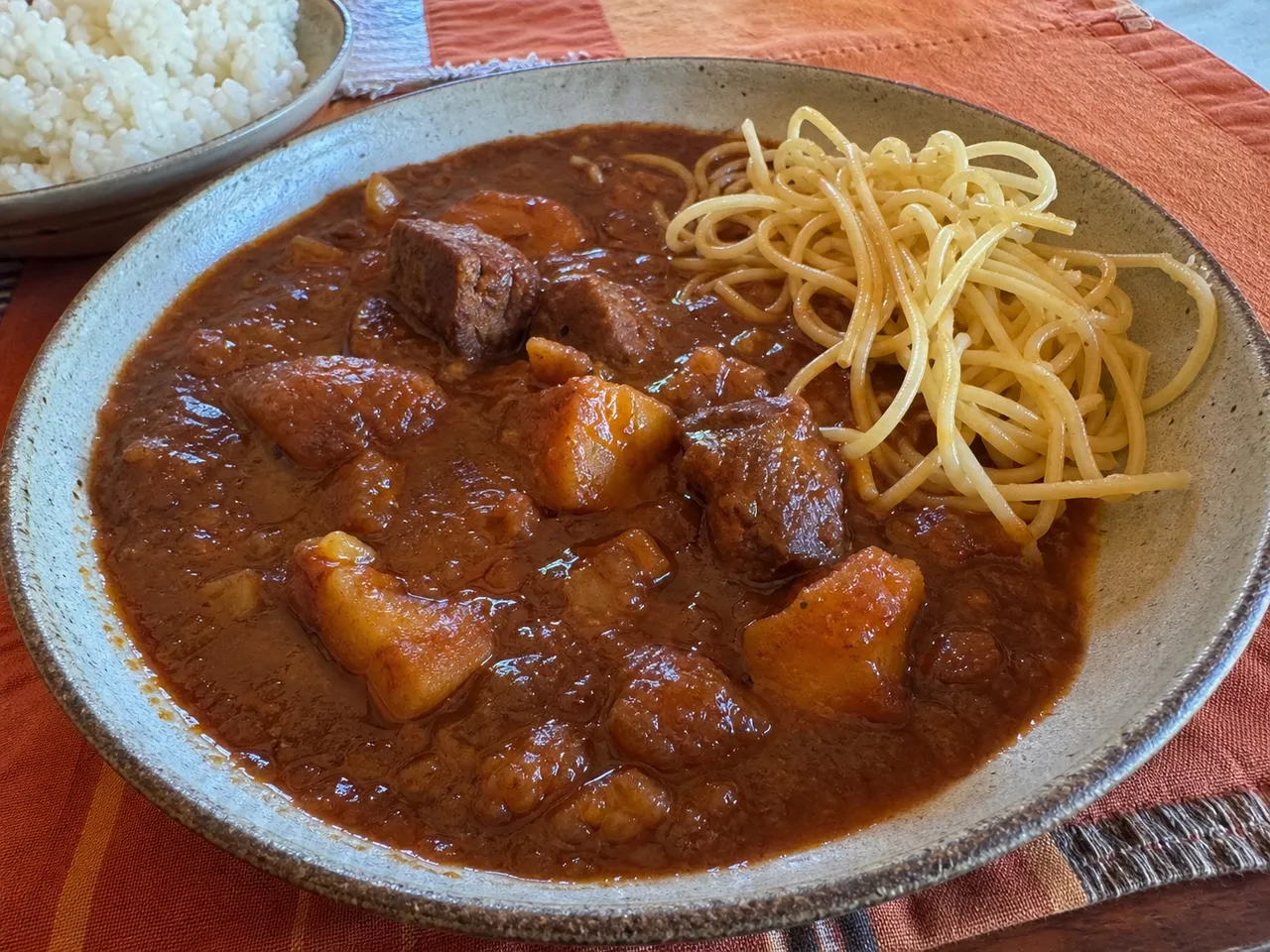 Serving Images are for illustrative purposes only, may be inaccurate, and do not guarantee the presence or absence of specific ingredients.
 Carapulcra (Peruvian Dried Potato and Pork Stew)
A rich Afro-Peruvian stew of pork and rehydrated dried potatoes simmered with peanuts, chiles, and warm spices, traditionally paired with sopa seca.
Contains common allergens
In the app, Listahan checks these against your household automatically.
Good to know
- One-pot
Matched from this dish's own ingredients and timing. Browse more: one-pot dinners
Instructions
6 steps- 1
Drain the soaked dried potatoes and set aside.
- 2
Season the pork with salt and pepper, then brown in oil in a large pot; remove and set aside.
- 3
Sauté the onion and garlic in the same pot until soft, then add the aji panca paste, ground peanuts, cumin, cloves, and cinnamon stick.
- 4
Return the pork to the pot along with the broth and simmer, covered, for 30 minutes.
- 5
Add the rehydrated dried potatoes and continue simmering for 20-25 minutes until thickened and the pork is tender.
- 6
Remove the cinnamon stick, adjust seasoning, and serve hot with rice or sopa seca.
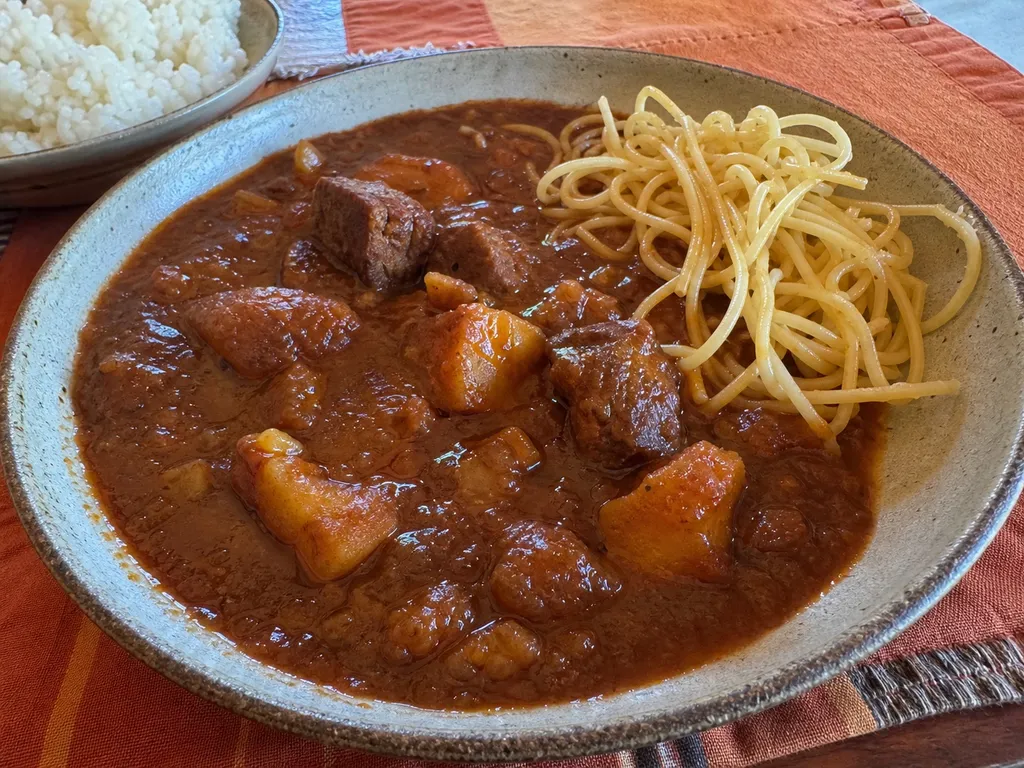 Images are for illustrative purposes only, may be inaccurate, and do not guarantee the presence or absence of specific ingredients.
 Listahan Family Score™
67/100
Works for many families
Score reflects how well this recipe fits a typical busy household. In the app, your Family Score is personalized to your household's allergens, kids, and pantry.
Nutrition
per serving620
Calories
53 g
Protein
9 g
Carbs
41 g
Fat
Estimated per serving. Actual values depend on the brands and portions you use.
Listahan cooking guide
Chef notes & practical guide
Technique notes, ingredient swaps, serve-alongside ideas, storage guidance, and equipment for this recipe.
Cultural context
Carapulcra is considered one of Peru's oldest surviving dishes, with roots reaching back to pre-Columbian Andean cooking through its use of papa seca, potatoes dehydrated and preserved in the cold mountain air as a way to store food through the winter. The Afro-Peruvian community later paired it with pork and peanuts, and it's traditionally served alongside sopa seca noodles.
Listahan note
This version rehydrates the dried potatoes right in the simmering stew rather than pre-cooking them separately, so they absorb the peanut and aji panca sauce as they soften.
Technique cues
- Papa seca needs its full soaking time before cooking - it's freeze-dried potato that's rock-hard until rehydrated, and skipping or shortening the soak leaves gritty, undercooked bits in the final stew.
- Toasting the ground peanuts briefly with the aji panca paste and spices before adding liquid deepens their flavor the way toasting any nut does, rather than letting them taste raw and flat in the finished stew.
- The whole cloves and cinnamon stick are meant to be aromatic background notes, not dominant flavors - they're pulled before serving specifically so their flavor threads through the stew without anyone biting into a whole clove.
Kitchen flow
- Parallel prep
- Start soaking the papa seca right when you begin browning the pork, so both are ready to combine at the same stage.
- Make-ahead
- This stew reheats and deepens in flavor a day later, making it a good candidate to cook fully ahead of serving.
- Leftover move
- Serve leftovers over sopa seca noodles the way it's traditionally paired, rather than on their own.
- Cleanup rhythm
- Grind the peanuts before starting the stew so the grinder or mortar is cleaned up before the cooking gets underway.
Ingredient brief
Role, handling, and swap guidance for each key ingredient.
dried papa seca
the dish's defining ingredient
Purpose: papa seca's freeze-dried, chewy texture once rehydrated is entirely unique to this dish and is what separates carapulcra from any other pork stew
Handling: soak for the full 30 minutes as directed, then drain well before adding to the pot
Adaptation: there is no real substitute that keeps this as carapulcra; in a pinch, regular potatoes added later in cooking give a completely different but still tasty stew.
pork shoulder
the primary protein
Purpose: pork shoulder's fat content keeps it tender through the long simmer needed for the papa seca to fully soften
Handling: cube evenly and brown well before braising for deeper flavor
Adaptation: chicken thighs work if pork isn't available, though the stew becomes lighter and less traditional.
roasted peanuts, ground
what thickens and enriches the sauce
Purpose: ground peanuts are the Afro-Peruvian contribution to this dish, adding body and a subtle nuttiness that distinguishes carapulcra from other aji panca-based stews
Handling: grind coarsely, not into a smooth butter, so some texture remains in the sauce
Adaptation: there is no nut-free equivalent that preserves the dish's character; a tablespoon of tahini gives some richness but changes the flavor significantly and isn't a true substitute.
aji panca paste
the stew's chile base
Purpose: aji panca's smoky, mild sweetness works with the warm spices rather than against them, unlike a sharper chile would
Handling: toast briefly in the fat left from browning the pork before adding the peanuts and spices
Adaptation: smoked paprika with a touch of tomato paste approximates the color and mild sweetness.
cinnamon stick and whole cloves
warm spice background
Purpose: these give carapulcra its distinct warm, almost dessert-adjacent spice note that sets it apart from other Peruvian stews
Handling: add whole and remove before serving so no one bites into a hard clove or splinter of cinnamon
Adaptation: a pinch of ground cinnamon and ground cloves can be used, added a bit later in cooking, though whole spices give a cleaner background flavor.
Technique notes
- Brown the pork in batches rather than all at once - crowding the pot drops the temperature and steams the meat instead of building a fond.
- Check the papa seca's texture at the 20-minute mark rather than assuming it's done; depending on how finely it was dried, it can need slightly more or less time to fully soften.
- Remove the cinnamon stick before serving and taste the sauce one more time; the long simmer can mellow the aji panca's flavor enough that it needs a touch more salt or paste at the end.
Ingredient swaps
- Nut-free direction
- There is no substitute that keeps this authentically carapulcra, since peanuts are essential to the dish; this recipe should be treated as unsafe for peanut allergies rather than adapted.
- Gluten-free direction
- This dish has no gluten-containing ingredients as written.
- Weeknight shortcut
- A pressure cooker cuts the pork tenderizing and papa seca rehydrating time by roughly half.
Serve alongside
- Sopa seca (dry noodle side dish)
- White rice
- Salsa criolla
- Boiled yuca
- Chicha morada
- A dark Peruvian beer
- Hot mate de coca or herbal tea
Serving suggestions only — check pairings for your household's allergens.
Storage & reheating
- Refrigerate up to 4 days; the flavor often deepens by the next day
- Reheat gently on the stovetop with a splash of broth to loosen the sauce
- Freezes well up to 3 months
Equipment
- Large heavy pot or Dutch oven
- Mortar and pestle or spice grinder for the peanuts
- Fine-mesh strainer for draining the soaked potatoes
- Wooden spoon
Make this household-aware
Listahan Pro checks this recipe against your household's allergens, finds pantry-aware swaps, builds the shopping list, and helps you plan the week around it.
Plan it in Listahan
Add Carapulcra (Peruvian Dried Potato and Pork Stew) to your week, check it against your household's allergens, and build the shopping list automatically.
More Peruvian recipes
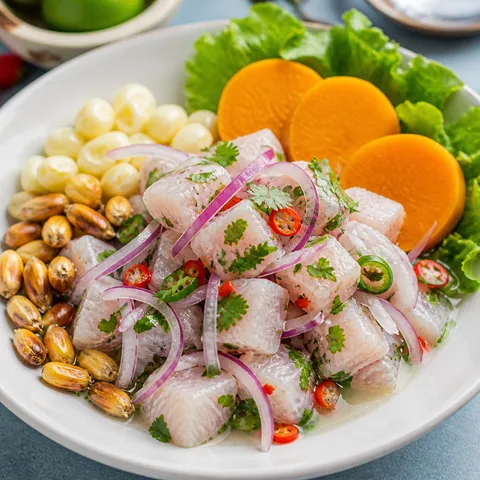 Peruvian Lens Verified Images are for illustrative purposes only, may be inaccurate, and do not guarantee the presence or absence of specific ingredients.
 Ceviche de Pescado
The iconic dish of Peru—exquisitely fresh, raw white fish "cooked" purely by the acidity of freshly squeezed lime juice, infused with chili heat and red onion bite.
 Peruvian Lens Verified Images are for illustrative purposes only, may be inaccurate, and do not guarantee the presence or absence of specific ingredients.
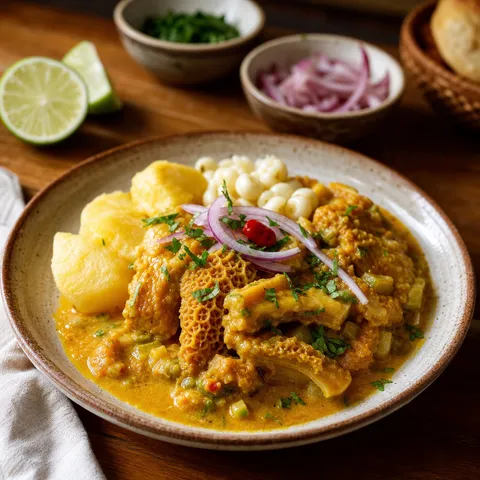
 Cau Cau (Peruvian Tripe Stew)
A hearty yellow stew of tender beef tripe and potatoes simmered in aji amarillo and mint, spooned over rice for a classic home-style meal.
 Peruvian Lens Verified Images are for illustrative purposes only, may be inaccurate, and do not guarantee the presence or absence of specific ingredients.
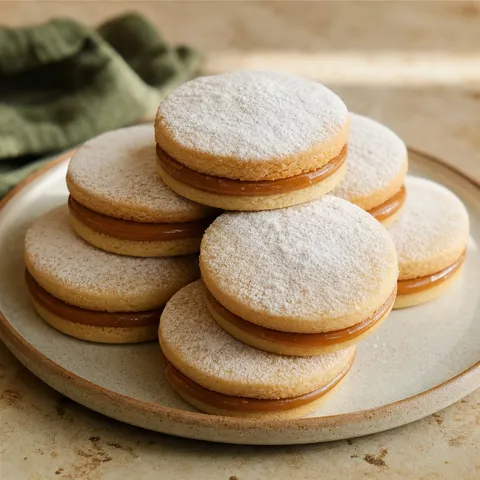
 Alfajores (Peruvian Dulce de Leche Sandwich Cookies)
Delicate, crumbly shortbread cookies sandwiched with rich dulce de leche and dusted with powdered sugar, a favorite Peruvian teatime treat.